
As temperatures shift from the deep chill of winter to the mild breezes of spring, many people wonder whether they need a separate scarf for each season—or if their favorite winter wrap can simply carry over. The truth lies somewhere in between. While some scarves are built specifically for extreme cold, others offer enough versatility to transition smoothly into spring. Understanding the differences in fabric, weight, function, and styling can help you make smarter choices about your wardrobe rotation—and possibly save space in your closet.
The Functional Differences Between Winter and Spring Scarves
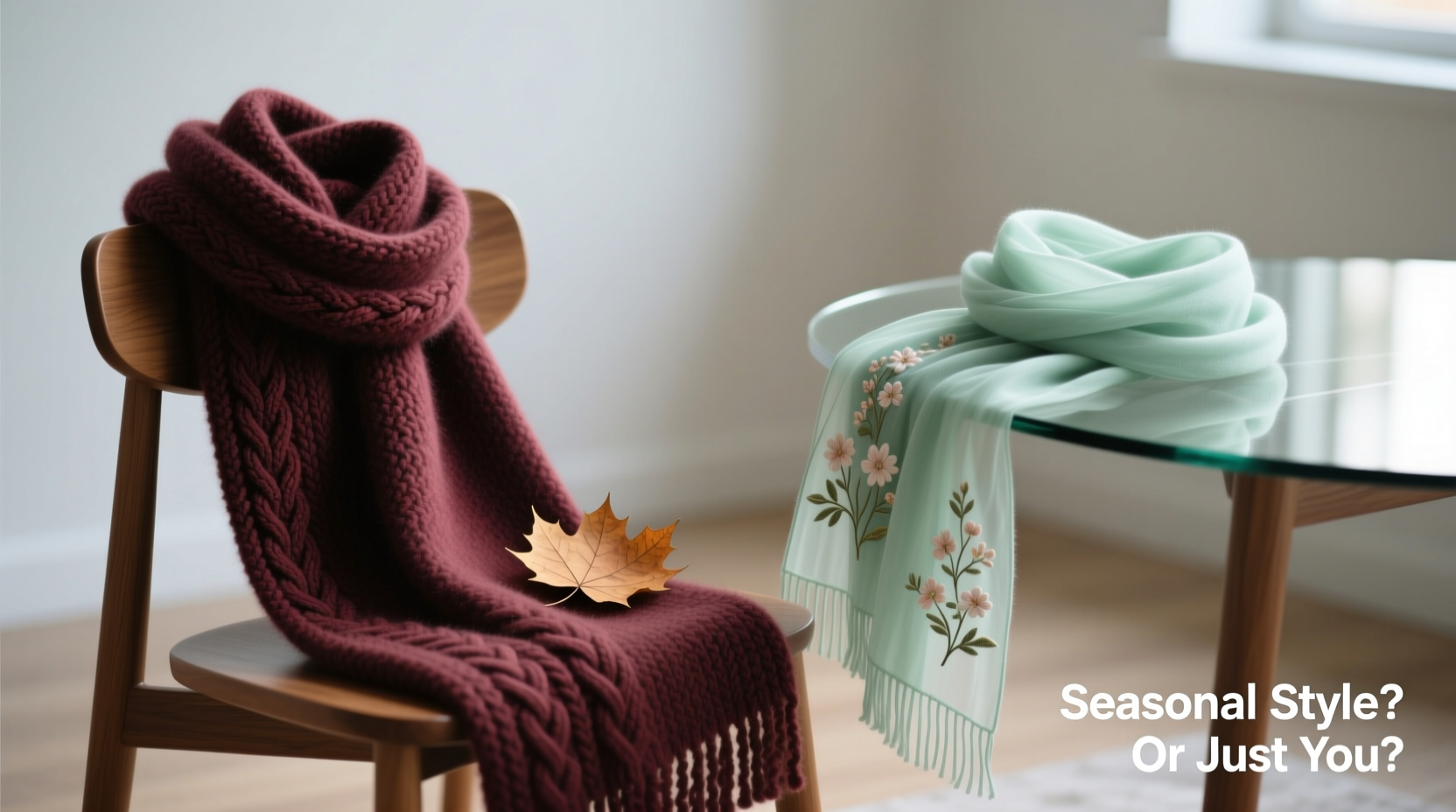
At first glance, a scarf is just a piece of fabric around your neck. But functionality tells a different story. Winter scarves are designed with insulation as the primary goal. They’re typically made from thick, dense materials like wool, cashmere, or acrylic blends that trap body heat and protect against wind and snow. These scarves often feature tight weaves and heavier textures—think cable knits, chunky loops, or fleece-lined wraps.
In contrast, spring scarves prioritize breathability and light coverage. As the weather warms, the need for heavy insulation fades. Instead, scarves serve more as fashion accessories or protection against cool mornings and evening breezes. Spring styles lean toward lightweight fabrics such as cotton, silk, linen, or thin merino wool. These materials allow airflow while still offering a layer of comfort without overheating.
Material Matters: What Works Year-Round?
Not all scarves are seasonal. Some materials bridge the gap between winter warmth and spring ease. The key is choosing mid-weight, breathable, and adaptable textiles. Merino wool, for example, is naturally temperature-regulating. It keeps you warm in cold weather but wicks moisture and prevents overheating when temperatures rise. A finely knit merino scarf can easily move from December to April with no issues.
Silk and cotton blends also offer excellent transitional potential. Silk provides a subtle sheen and drapes beautifully, making it ideal for layering under a coat in late winter or tying loosely over a sweater in early spring. Cotton scarves, especially in gauze or voile weaves, are perfect for unpredictable spring days when the sun heats things up by noon.
However, avoid heavy alpaca, sherpa-lined, or oversized cable-knit scarves in spring. These are engineered for sub-freezing conditions and will feel cumbersome once temperatures climb above 60°F (15°C).
“Scarves should respond to both climate and context. A well-chosen mid-weight wool can be more versatile than three seasonal-specific ones.” — Lena Patel, Textile Stylist & Sustainable Fashion Consultant
Comparison Table: Winter vs Spring Scarves
| Feature | Winter Scarf | Spring Scarf |
|---|---|---|
| Primary Purpose | Insulation, wind protection | Style, light warmth, sun/cool breeze protection |
| Fabric Types | Wool, cashmere, acrylic, sherpa, alpaca | Cotton, silk, linen, fine merino, rayon |
| Weight | Heavy to medium-heavy | Light to medium |
| Weave | Dense, tight, or textured (cable knit) | Open, airy, or smooth (twill, crepe) |
| Color & Pattern Trends | Earthy tones, navies, blacks, plaids | Pastels, florals, brights, abstract prints |
| Wear Frequency in Spring | Rarely suitable beyond early March (in temperate zones) | Ideal from March through May |
Real-World Example: Transitioning a Wardrobe in Portland, OR
Consider Sarah, a resident of Portland, Oregon, where winters are damp and chilly but springs arrive with sudden warmth. In January, she relies on a thick charcoal-gray cashmere blend scarf to stay warm during her commute. By late February, she notices she’s removing it by mid-morning. Instead of buying a new spring scarf immediately, she opts for a lighter alternative: a soft, heathered merino loop scarf in oatmeal color.
This single piece becomes her go-to for March and April. She pairs it with trench coats, denim jackets, and even dresses for outdoor brunches. When temperatures hit 70°F (21°C), she switches to a large cotton gauze scarf in a botanical print—light enough to drape over shoulders without discomfort. Her strategy? Own three core scarves: one heavy winter, one transitional, and one ultra-light spring option. This approach minimizes clutter while maximizing usability.
Can You Wear the Same Scarf All Year? A Practical Checklist
The answer depends on your climate, lifestyle, and the scarf itself. Use this checklist to determine if your current scarf can go year-round:
- ✅ Is it made from a breathable, temperature-regulating fabric like merino wool or silk?
- ✅ Does it weigh less than 150 grams (about 5 oz)?
- ✅ Can it be styled loosely or as a shoulder wrap in warmer weather?
- ✅ Is it neutral enough in color to pair with both winter coats and spring layers?
- ✅ Do you find yourself taking it off within 30 minutes of wearing it in 60°F (15°C) weather?
If you answered “yes” to the first four and “no” to the last, your scarf likely has year-round potential. If not, consider rotating based on seasonal needs.
How to Style One Scarf Across Seasons: A Step-by-Step Guide
Even if you keep one scarf for multiple seasons, how you wear it should change. Follow this simple guide to adapt your look:
- Winter (Below 45°F / 7°C): Wrap tightly around the neck, double-loop for extra coverage, and tuck under your coat collar to block wind.
- Early Spring (45–60°F / 7–15°C): Loosely drape around the neck with one end longer than the other. Try a single knot at the front or side for a relaxed look.
- Late Spring (60–70°F / 15–21°C): Use the scarf as a shawl or shoulder cover. Fold into a long strip and tie around the neck with ends hanging down the back.
- Versatile Styling Hack: Roll or fold a medium-weight scarf into a bandana-style triangle and tie it around your neck like a kerchief for a fresh spring aesthetic.
Frequently Asked Questions
Can I wear a wool scarf in spring?
Yes, but only if it’s lightweight or finely woven. Heavy wool will feel too hot. Opt for merino, lambswool, or wool-silk blends, which are breathable and less bulky.
What’s the best fabric for a year-round scarf?
Merino wool is widely regarded as the most versatile. It’s warm when needed, wicks moisture, resists odor, and remains comfortable in mild conditions. Silk-cotton blends are also excellent for urban climates with moderate seasonal shifts.
Should I have separate scarves for fashion and function?
It’s wise to differentiate. Keep one functional winter scarf for cold protection and one or two lighter, stylish options for spring and transitional use. This way, you don’t compromise warmth for aesthetics—or vice versa.
Final Thoughts: Balance Practicality and Style
There is a real difference between winter and spring scarves, rooted in material science and seasonal necessity. However, that doesn’t mean you need a complete wardrobe overhaul every few months. With thoughtful selection, a few well-chosen scarves—one heavy, one medium, one light—can cover all your needs efficiently.
The goal isn’t to eliminate seasonal changes but to embrace them intelligently. Rotate your scarves like you would shoes or outerwear: align function with forecast, and let style follow. Whether you’re bundling up in January or strolling through cherry blossoms in April, the right scarf enhances both comfort and confidence.




 浙公网安备
33010002000092号
浙公网安备
33010002000092号 浙B2-20120091-4
Comments
No comments yet. Why don't you start the discussion?