
Backing up safely is one of the most critical aspects of daily driving—especially in crowded parking lots, narrow driveways, or when towing trailers. With blind spots behind vehicles often extending several feet, relying solely on mirrors or instinct is risky. That’s where rear visibility technology comes in. Two popular solutions dominate the aftermarket: wireless backup cameras and rearview mirror backup cameras. While both aim to enhance safety and clarity during reversing, they differ significantly in design, functionality, and image quality. Understanding these differences helps drivers make informed decisions about which system delivers the clearest reverse view for their specific needs.
How Wireless Backup Cameras Work
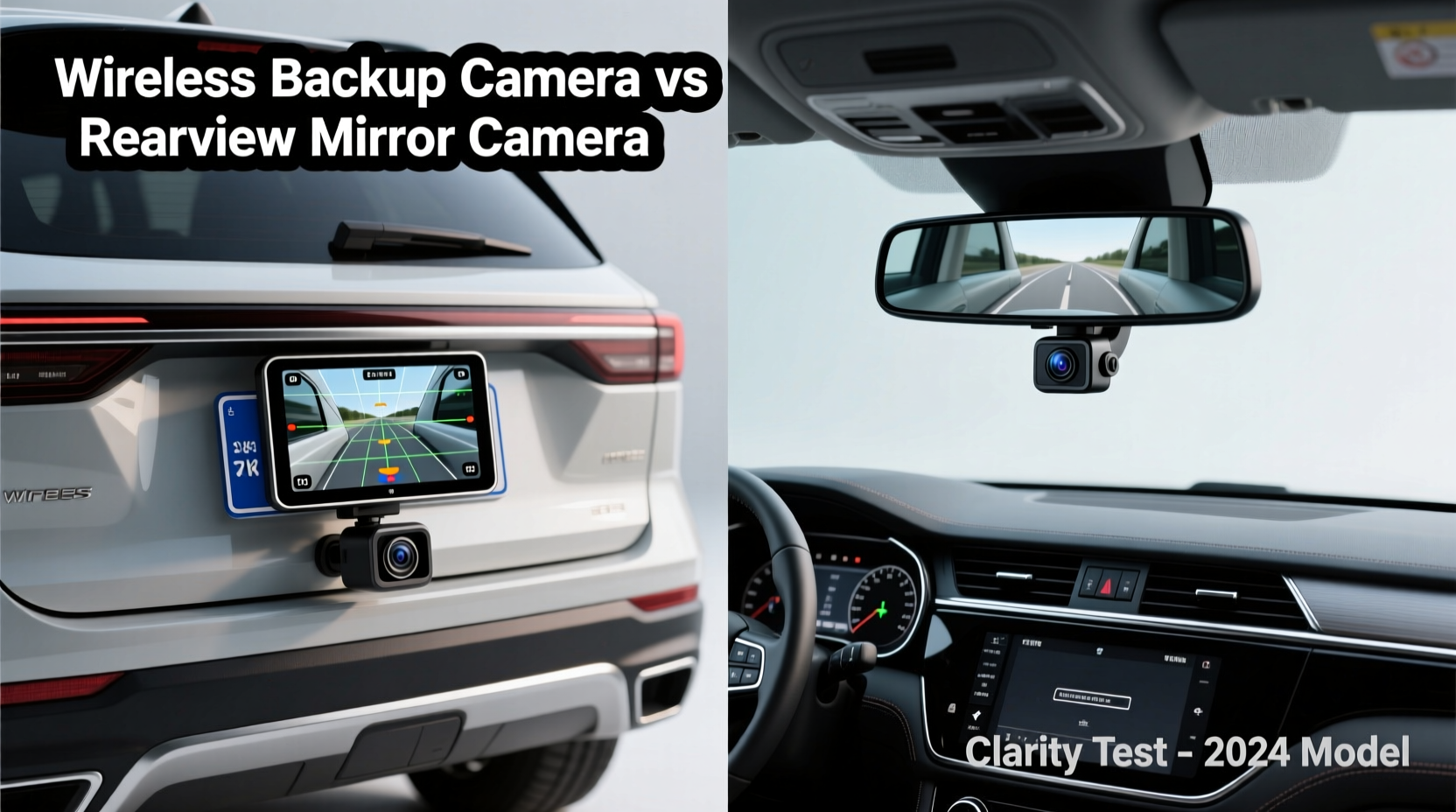
A wireless backup camera system consists of two main components: a camera mounted at the rear of the vehicle and a display screen, typically installed on the dashboard, sun visor, or integrated into an infotainment unit. The camera transmits video footage via a wireless signal—usually using 2.4GHz or 5.8GHz radio frequencies—to the receiver connected to the display. When the vehicle shifts into reverse, the camera activates automatically and sends a live feed to the screen.
These systems eliminate the need for long video cables running from the back to the front of the car, simplifying installation. However, wireless transmission introduces potential challenges such as signal interference, latency (delay), and reduced resolution due to compression. Image quality can degrade if obstacles like metal frames or electronic devices interfere with the signal path between the camera and receiver.
Understanding Rearview Mirror Backup Cameras
Rearview mirror backup cameras integrate the display directly into the existing rearview mirror housing. Instead of replacing your entire mirror with a standalone screen, this hybrid solution maintains the mirror function while transforming the surface into a digital display when the vehicle is in reverse. These units are typically wired, meaning they use a physical cable to transmit high-definition video from the rear-mounted camera to the mirror unit inside the cabin.
Because the connection is direct and wired, data transfer is more stable and consistent than wireless alternatives. This allows for higher-resolution feeds, minimal lag, and better color accuracy. Most modern mirror cameras support HD (720p or 1080p) output, dynamic guidelines that adjust based on steering angle, and night vision enhancements using infrared LEDs.
The seamless integration makes them aesthetically pleasing and less intrusive than adding a separate monitor. Drivers benefit from a familiar viewing position—looking forward toward the windshield—without having to shift focus downward to a dash-mounted screen.
“Integrated mirror displays reduce cognitive load by keeping the driver’s eyes closer to the natural line of sight.” — Dr. Alan Zhou, Human Factors Engineer at AutoSafety Labs
Image Clarity Comparison: Key Technical Factors
When evaluating which system offers a clearer reverse view, several technical elements must be considered: resolution, latency, field of view, low-light performance, and signal reliability.
| Feature | Wireless Backup Camera | Rearview Mirror Camera |
|---|---|---|
| Resolution | Typically 480p–720p; limited by wireless bandwidth | Commonly 720p–1080p; full HD supported via wired link |
| Latency | Noticeable delay (up to 300ms); affects real-time response | Near-instantaneous (<50ms); smoother operation |
| Signal Stability | Vulnerable to interference from other electronics | Stable wired connection; no dropouts |
| Field of View | Wide-angle lenses common (120°–170°) | Also wide-angle but often includes distortion correction |
| Night Vision | Infrared support varies; some struggle in pitch darkness | Better IR integration; enhanced contrast algorithms |
| Installation Complexity | Easier setup; no wiring through firewall needed | More complex; requires routing power and video cable |
From this comparison, it's evident that rearview mirror cameras generally offer superior image clarity due to higher resolution, lower latency, and stable signal transmission. The wired architecture avoids compression artifacts and buffering issues inherent in many wireless models. Additionally, advanced mirror units include features like auto-brightness adjustment and anti-glare coatings, further improving visibility under varying lighting conditions.
Real-World Performance: A Driver’s Perspective
Consider Maria, a delivery driver operating a mid-sized SUV in a dense suburban area. She frequently reverses into tight alleyways and narrow garages. Initially, she installed a budget wireless backup camera because of its easy plug-and-play setup. While functional during daylight, she noticed significant graininess at dusk and occasional freezing of the image when passing near large trucks or construction zones—likely due to RF interference.
Frustrated after nearly hitting a mailbox in low light, Maria upgraded to a rearview mirror system with 1080p resolution and dynamic gridlines. Immediately, she noticed improvements: the image was sharper, startup time was faster, and the display adjusted brightness automatically as ambient light changed. More importantly, the lack of lag gave her confidence when backing quickly into loading docks. Over six months, she reported zero close calls compared to multiple near-misses previously.
This case illustrates how real-world conditions expose the limitations of wireless systems. Environmental variables such as weather, electromagnetic noise, and physical obstructions impact performance. In contrast, wired mirror-based systems deliver consistent clarity regardless of surroundings, making them more reliable for frequent or professional use.
Choosing Based on Use Case and Vehicle Type
The ideal choice depends not only on image quality but also on vehicle configuration and user priorities.
- For DIY Installers & Rented Vehicles: Wireless systems are preferable due to minimal modification. Renters or those uncomfortable with drilling wires through trim will appreciate the simplicity.
- For Full-Time Drivers & Fleet Operators: Mirror-integrated cameras provide long-term value through durability and visual precision. The initial effort pays off in daily usability and safety.
- For Towing & RVs: Many mirror systems support multiple camera inputs (e.g., hitch cam, side blind-spot cams), offering comprehensive coverage beyond what basic wireless kits allow.
- For Older Cars Without Factory Screens: Mirror cameras add modern tech without cluttering the dashboard, preserving interior aesthetics.
Step-by-Step Guide to Evaluating Your Needs
- Assess Installation Comfort Level: Are you willing to route wires through door jams and pillars? If not, lean toward wireless.
- Determine Usage Frequency: Daily reversing demands reliability—favor wired mirror systems.
- Check Power Access: Some wireless receivers draw power from cigarette ports; ensure availability.
- Evaluate Display Position Preference: Do you prefer glancing up at the windshield (mirror) or down at the dash?
- Test Sample Footage: Before buying, review sample videos in daylight and nighttime settings to judge clarity.
- Verify Compatibility: Ensure the camera triggers correctly with your vehicle’s reverse light circuit.
- Review Expandability Options: Future-proof by selecting a mirror system that supports additional cameras.
Common Pitfalls to Avoid
Even experienced buyers can fall into traps when selecting backup cameras. Here are key mistakes to avoid:
- Ignoring Night Vision Quality: Don’t assume all IR-equipped cameras perform equally. Look for units with at least 50-foot night range and adaptive exposure control.
- Overlooking Weatherproofing: Outdoor cameras should have at least IP66 rating to withstand rain, dust, and temperature swings.
- Choosing Ultra-Wide Angles Blindly: Fisheye distortion can misrepresent distances. Opt for models with digital correction or moderate FOV (120°–140°).
- Prioritizing Price Over Signal Type: Cheap wireless kits often use outdated analog transmission, resulting in poor clarity and interference susceptibility.
FAQ
Can I install a rearview mirror camera myself?
Yes, though it requires more effort than wireless options. You’ll need to remove interior panels to run the video cable from the rear bumper to the cabin and connect power from the reverse light circuit. Basic tools and wiring knowledge are essential. Many kits come with detailed instructions, but consulting a professional ensures clean results and avoids damaging trim or electrical systems.
Do wireless cameras drain the car battery?
Not significantly. Both wireless and wired cameras activate only when the vehicle is in reverse, drawing power briefly. However, poorly designed units with faulty shut-off circuits may remain powered after ignition off, leading to parasitic drain. Choose reputable brands with automatic cut-off features to prevent this issue.
Which system lasts longer?
Rearview mirror cameras tend to last longer due to higher build quality and protected internal wiring. Wireless receivers exposed to heat and sunlight (e.g., on dashboards) may degrade faster. Additionally, external antennas on wireless systems are prone to damage during car washes or vandalism.
Final Verdict: Which Offers a Clearer Reverse View?
While both wireless backup cameras and rearview mirror cameras improve rear visibility, the latter consistently delivers a clearer, more reliable reverse view. The combination of higher resolution, minimal latency, stable wired transmission, and intelligent display positioning gives mirror-integrated systems a decisive edge in image quality and usability.
Wireless models serve well for temporary setups, rental vehicles, or users prioritizing ease of installation. But for drivers seeking optimal clarity, consistency, and long-term performance, a rearview mirror backup camera is the superior investment. It transforms a standard mirror into a powerful safety tool without compromising ergonomics or visual fidelity.




 浙公网安备
33010002000092号
浙公网安备
33010002000092号 浙B2-20120091-4
Comments
No comments yet. Why don't you start the discussion?