
In the modern era of smartphones, tablets, and wearables, charging methods have evolved significantly. While traditional cable charging has long dominated, wireless charging pads have surged in popularity thanks to their convenience and sleek design. But as adoption grows, a critical question emerges: when comparing wireless charging pads and wired cables, which option delivers better speed and safety? The answer isn't always straightforward—it depends on technology standards, device compatibility, usage habits, and environmental factors.
This article dives deep into both methods, examining their technical underpinnings, real-world performance, safety profiles, and practical trade-offs. Whether you're deciding between charging solutions for daily use or optimizing your home and office setup, understanding the nuances will help you make an informed choice.
How Charging Speed Works: The Basics
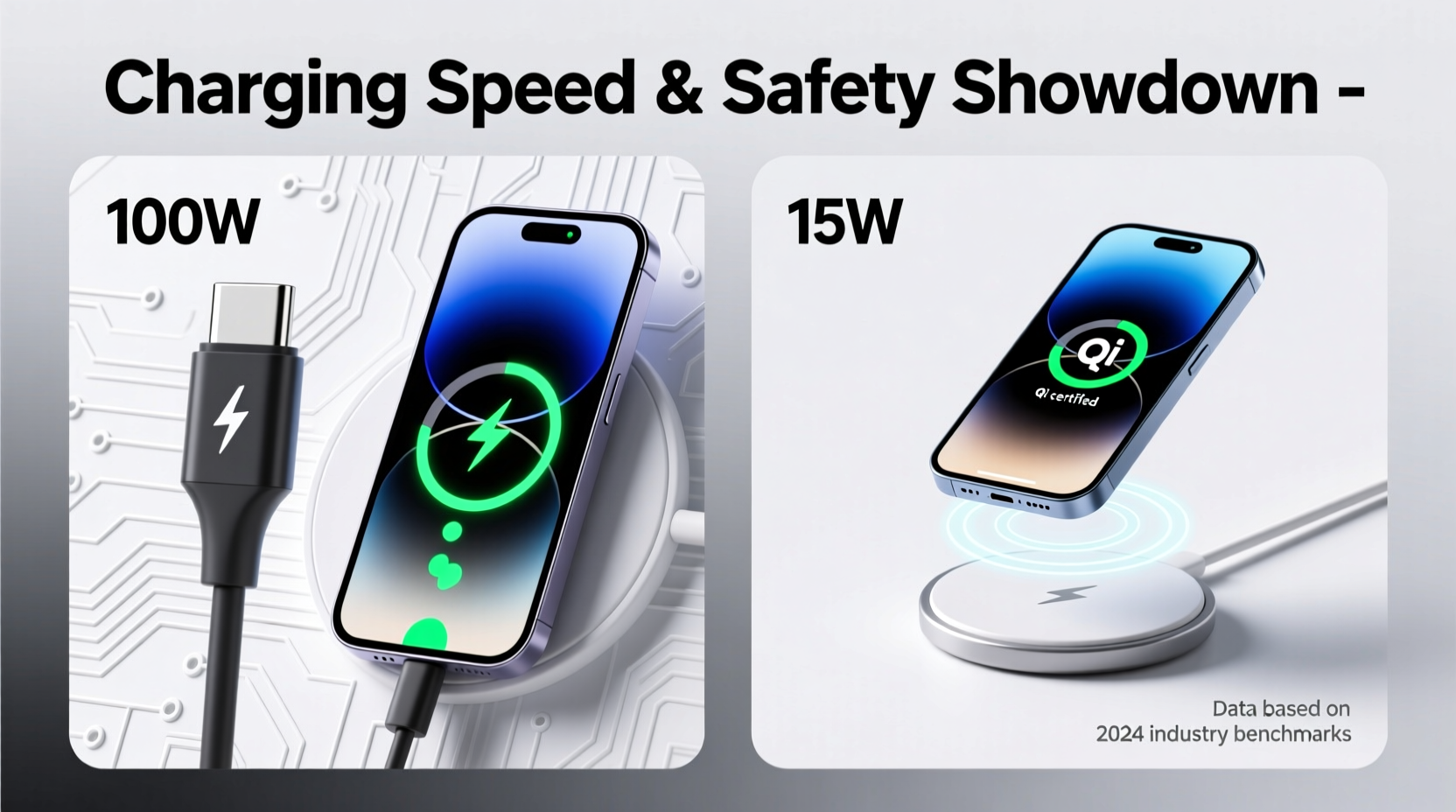
Charging speed is primarily determined by power delivery—measured in watts (W)—and how efficiently that power is transferred from the source to the battery. Wired charging typically uses USB Power Delivery (USB-PD) or Qualcomm Quick Charge standards, capable of delivering up to 100W or more in some cases. In contrast, most consumer-grade wireless chargers operate within 5W to 15W, with premium models reaching up to 50W under ideal conditions.
The key factor limiting wireless speed is energy loss during transfer. Wireless charging relies on electromagnetic induction: a coil in the pad generates a magnetic field, which induces current in a corresponding coil inside the phone. This process inherently loses energy as heat—typically around 20–30% less efficient than direct wired transmission.
For example, a smartphone supporting 30W wired fast charging might only accept 15W via Qi-standard wireless charging. Even newer technologies like MagSafe (Apple) or proprietary systems from Samsung and Xiaomi max out below their wired counterparts. This gap means wired charging consistently wins in raw speed across nearly all devices.
Safety: Heat, Overcharging, and Long-Term Battery Health
Safety concerns often center on heat generation, overcharging risks, and long-term battery degradation. Both wired and wireless methods are generally safe when using certified equipment, but they present different risk profiles.
Wireless charging generates more heat due to inefficiencies in energy transfer. Elevated temperatures can accelerate lithium-ion battery wear over time. Studies from battery research firms like Battery University suggest prolonged exposure to heat above 35°C (95°F) reduces cycle life. Because wireless pads trap heat between the phone and charger, especially if covered by cases or placed on soft surfaces, thermal buildup becomes a legitimate concern.
Wired charging produces less ambient heat and allows for tighter control over voltage and current flow. Modern devices regulate input precisely, stopping charge once 100% is reached. However, low-quality cables or counterfeit adapters can introduce risks such as short circuits, unstable voltage, or even fire hazards.
“While both methods are engineered with safety in mind, consistent overheating from wireless charging can degrade battery capacity faster than controlled wired sessions.” — Dr. Alan Reyes, Electrical Engineer & Mobile Power Systems Researcher
Comparative Performance: Real-World Data
To illustrate differences clearly, consider a side-by-side test using a flagship smartphone (e.g., iPhone 15 Pro Max or Samsung Galaxy S24 Ultra) charged from 20% to 80%, a common benchmark for fast-charging performance:
| Charging Method | Power Output | Time (20% → 80%) | Avg. Temperature Rise | Energy Efficiency |
|---|---|---|---|---|
| Wired (USB-PD 30W) | 30W | ~30 minutes | +8°C | ~90–95% |
| Qi Wireless Standard | 7.5–10W | ~90 minutes | +18°C | ~70% |
| MagSafe (Apple) | 15W | ~65 minutes | +15°C | ~75% |
| Samsung Fast Wireless 2.0 | 15W | ~60 minutes | +16°C | ~73% |
| Xiaomi 50W Turbo Wireless | 50W | ~34 minutes | +22°C | ~65% |
As shown, even the fastest wireless systems lag behind mid-tier wired chargers in efficiency and temperature management. Only specialized, high-end wireless setups approach wired speeds—and at the cost of increased heat and reduced overall efficiency.
Practical Considerations: Convenience vs. Performance
Despite slower speeds, wireless charging offers undeniable lifestyle advantages. Placing a phone on a pad without fumbling for a port promotes habitual charging, especially on nightstands, desks, or car consoles. It also reduces wear on physical charging ports, which can accumulate lint and suffer mechanical damage over time.
However, convenience comes with caveats:
- Alignment matters: Misalignment between coils reduces efficiency and may halt charging entirely.
- Cases interfere: Thick or metal-backed cases can block inductive transfer.
- No multitasking: You can’t easily use the phone while it’s charging wirelessly unless propped upright.
- Single-device limitation: Most pads charge one device, whereas multi-port hubs support several via cable.
In contrast, cables allow full device mobility during charging, support data transfer, and work universally across brands and models. USB-C has become a standardized solution, further boosting cable versatility.
Mini Case Study: Office Worker Charging Routine
Jamie, a project manager in Toronto, uses both methods strategically. At her desk, she keeps a wireless pad for passive top-ups throughout the day—plugging in her phone whenever she sets it down. This maintains her battery between 40% and 70%, avoiding deep discharges. But when preparing for her evening commute, she switches to a 30W USB-C cable. Within 20 minutes, her phone gains over 50% charge, ensuring full power for navigation and calls. By combining both approaches, Jamie maximizes convenience without sacrificing emergency readiness.
Expert Tips for Safe and Efficient Charging
Regardless of method, best practices enhance safety and prolong battery lifespan. Follow this checklist to optimize your routine:
- Use certified accessories: Look for Qi certification (wireless), USB-IF logos (cables), or manufacturer approval.
- Avoid overnight wireless charging: Prolonged heat exposure degrades batteries faster. Use timers or smart plugs if needed.
- Charge in cool environments: Keep devices away from direct sunlight, hot cars, or heated surfaces.
- Unplug once fully charged: Or enable optimized charging features (available on iOS and Android).
- Inspect cables regularly: Frayed or bent connectors increase resistance and fire risk.
- Keep ports clean: Use a dry brush or compressed air to remove debris from charging ports.
Future Trends: Closing the Gap?
Emerging technologies aim to narrow the divide between wired and wireless performance. Resonant wireless charging, currently in limited commercial use, allows greater spatial freedom and slightly improved efficiency. Companies like Energous and Ossia are developing far-field wireless systems that could charge devices across rooms—but these remain years from mainstream viability due to regulatory and efficiency hurdles.
Meanwhile, improvements in thermal management, such as graphene cooling layers and AI-driven charge modulation, are being integrated into premium smartphones and chargers. These innovations may eventually make high-speed wireless charging safer and more sustainable.
Until then, wired charging remains the gold standard for speed and reliability. For users prioritizing battery longevity and quick turnaround, cables are still unmatched.
Frequently Asked Questions
Is wireless charging bad for my phone's battery?
Not inherently, but frequent overheating from wireless charging can accelerate battery aging. Lithium-ion batteries degrade faster when exposed to sustained high temperatures. To minimize risk, avoid using wireless charging overnight and remove insulating cases during charging.
Can I use any cable with fast charging?
No. Fast charging requires both a compatible power adapter and a cable rated for higher wattage (e.g., USB-C to USB-C with E-Marker chips for 60W+). Using substandard cables limits speed and poses safety risks. Always check manufacturer specifications.
Why does my wireless charger stop working sometimes?
Common causes include misalignment, foreign object detection (FOD), case interference, or overheating protection kicking in. Ensure the phone is centered, remove metal objects, and verify that the charger supports your device’s protocol (e.g., Qi, MagSafe).
Conclusion: Choose Based on Your Needs
The debate between wireless charging pads and cables ultimately hinges on priorities. If speed, efficiency, and long-term battery health are paramount, wired charging is superior. It delivers faster results, generates less heat, and works reliably across diverse conditions. On the other hand, wireless charging excels in convenience and daily usability, making it ideal for low-stress, incremental top-ups.
The smartest approach isn’t choosing one over the other—it’s using both strategically. Reserve wired charging for urgent top-ups and full cycles, and leverage wireless pads for maintenance charging during work, meals, or relaxation. With certified gear and mindful habits, you can enjoy the strengths of each method while minimizing drawbacks.




 浙公网安备
33010002000092号
浙公网安备
33010002000092号 浙B2-20120091-4
Comments
No comments yet. Why don't you start the discussion?