
Choosing the right doorbell system for your home isn't just about convenience—it's a decision that directly affects your household’s safety. As technology evolves, homeowners face a growing dilemma: stick with a simple wireless doorbell or invest in a smart video model? While both serve the basic function of alerting you to someone at the door, their capabilities, security benefits, and long-term value differ significantly. Understanding these differences is key to making an informed choice that enhances real home security.
A traditional wireless doorbell may seem sufficient—press the button, hear the chime—but it offers no visibility, no recording, and no remote access. In contrast, smart video doorbells integrate cameras, motion detection, two-way audio, cloud storage, and smartphone connectivity. These features don’t just add bells and whistles—they transform a passive notification into an active security tool.
Understanding the Core Differences
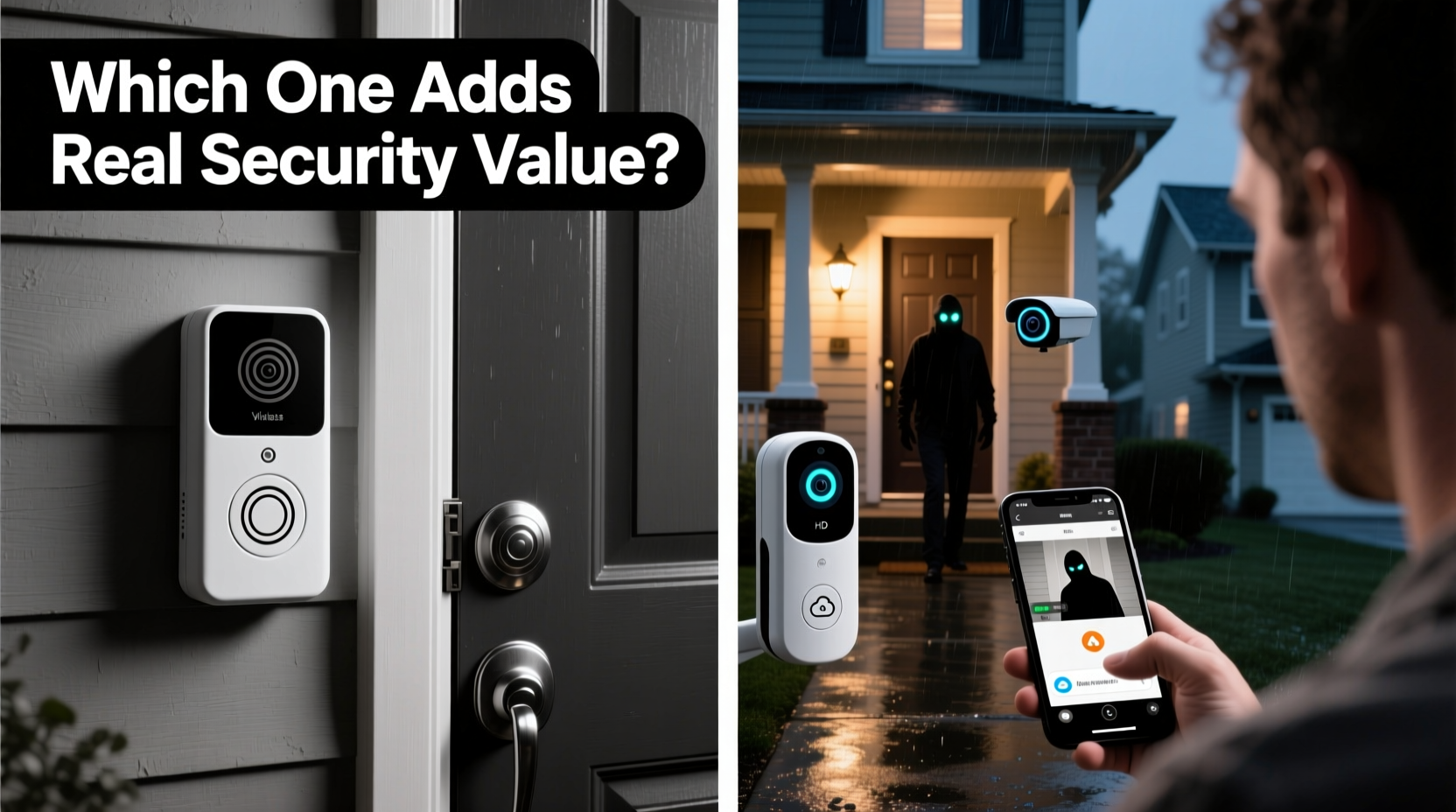
The most fundamental distinction lies in functionality. A standard wireless doorbell consists of a button outside and a receiver inside that plays a sound when pressed. It operates on radio frequency (typically 433 MHz or 2.4 GHz), requires minimal setup, and functions independently of your Wi-Fi network. It's affordable and easy to install but provides zero visual confirmation of who’s at the door.
Smart video doorbells, on the other hand, are part of the broader smart home ecosystem. They connect to your home Wi-Fi, feature HD cameras, night vision, motion sensors, and send real-time alerts to your phone. Most allow live viewing, video playback, and even deterrence through two-way talk. Brands like Ring, Google Nest, and Arlo dominate this space, offering layered security features that go far beyond a chime.
This divergence means that while both systems notify you of visitors, only the smart video doorbell gives you context—and context is critical in assessing potential threats.
Security Value: What Actually Protects Your Home?
Real home security isn’t just about awareness—it’s about prevention, documentation, and response. Let’s break down how each type performs across these dimensions.
Prevention Through Deterrence
Criminals often target homes that appear unmonitored. The visible presence of a camera—especially one with a glowing status light or brand insignia—acts as a deterrent. Studies support this: according to a 2020 University of North Carolina study, 60% of convicted burglars said they would avoid homes with visible security cameras.
Wireless doorbells offer no such deterrent. They’re often discreet, lack branding, and provide no visual cues that surveillance is active. In contrast, smart video doorbells are designed to be seen. Their prominent lens, LED indicators, and sometimes even warning labels (“This area is under surveillance”) signal that activity is being monitored.
Documentation and Evidence
If a suspicious incident occurs—a package theft, trespassing, or attempted break-in—having video evidence is invaluable. Police departments routinely request footage from doorbell cameras during investigations. A 2022 report from Ring indicated that over 500,000 videos had been shared with law enforcement globally, aiding in arrests and community safety initiatives.
Wireless doorbells produce no record. You might hear someone rang, but if you weren’t watching the door, you have no idea who it was or what they did. Smart models automatically record events, store clips (locally or in the cloud), and allow you to review them later. Some even use AI to distinguish between people, animals, and vehicles, reducing false alerts.
Remote Monitoring and Response
One of the most powerful advantages of smart video doorbells is remote accessibility. Whether you're at work, on vacation, or simply in another room, you can see and speak to visitors in real time. This capability allows you to respond to situations proactively—telling a delivery driver where to leave a package or warning off a loiterer.
In emergencies, this can make a difference. For example, if a stranger lingers near your door while you're away, you can contact neighbors or authorities immediately, armed with visual proof.
“Home security today is less about locks and more about awareness. A camera at the door turns passive residents into active guardians.” — Mark Delaney, Security Technology Analyst at TechRadar
Comparative Analysis: Features That Matter
| Feature | Wireless Doorbell | Smart Video Doorbell |
|---|---|---|
| Audio Chime | ✔️ Local only | ✔️ Local + app notification |
| Video Feed | ❌ None | ✔️ HD, often with night vision |
| Motion Detection | ❌ No | ✔️ Adjustable zones and sensitivity |
| Two-Way Audio | ❌ No | ✔️ Speak from phone to visitor |
| Cloud/Local Storage | ❌ No recording | ✔️ Yes (subscription often required) |
| Integration with Smart Home | ❌ Rare | ✔️ Works with Alexa, Google Assistant, etc. |
| Installation Complexity | ✔️ Very simple | ⚠️ Requires wiring or battery management |
| Upfront Cost | 💰 $20–$50 | 💰 $100–$250+ |
| Ongoing Costs | None | ⚠️ Cloud subscriptions ($3–$10/month) |
The table highlights a clear trade-off: simplicity and low cost versus comprehensive security and long-term value. While wireless doorbells win on ease and price, smart models deliver measurable protection benefits that justify their investment for most homeowners.
When a Wireless Doorbell Might Suffice
There are scenarios where a basic wireless doorbell remains a reasonable choice:
- Rental properties where tenants cannot modify wiring or install internet-connected devices.
- Secondary entrances like back doors or garages where full surveillance isn’t necessary.
- Budget constraints—if $200 for a doorbell exceeds your current priority list.
- Low-risk environments, such as quiet rural homes with strong neighborhood watch programs.
Even then, consider future-proofing. Many modern smart doorbells are battery-powered and DIY-friendly, eliminating complex installations. The barrier to entry is lower than ever.
Real-World Impact: A Mini Case Study
Consider the experience of Sarah M., a homeowner in Austin, Texas. She initially installed a $35 wireless doorbell after moving into a suburban neighborhood. Six months later, she began experiencing frequent package thefts. One morning, her neighbor mentioned seeing someone on her porch late at night—but without video, there was no way to confirm or report it.
Frustrated, Sarah upgraded to a Ring Video Doorbell. Within two weeks, the camera captured a man grabbing a delivery box and fleeing. She shared the footage with local police, who used it to identify and apprehend the suspect. More importantly, thefts in her cul-de-sac dropped by 70% over the next three months—likely due to increased perceived surveillance.
Sarah’s story isn’t unique. Across communities using smart doorbells, a “network effect” often emerges: as more homes adopt cameras, crime tends to shift to less-monitored areas. This collective impact amplifies individual security investments.
Step-by-Step Guide to Choosing the Right System
Follow this timeline to evaluate and select the best option for your needs:
- Week 1: Assess Your Risk Profile
Evaluate your neighborhood crime rate, package delivery frequency, and home layout. High foot traffic or past incidents suggest a need for video monitoring. - Week 2: Review Your Internet and Power Setup
Ensure stable Wi-Fi at your front door. Check if your existing doorbell wiring supports 16–24V AC (required for hardwired smart models). If not, opt for battery-powered versions. - Week 3: Compare Models and Subscriptions
Test options like Ring Wired, Google Nest Doorbell, or Eufy (which offers local-only storage). Factor in monthly fees for cloud storage if you want event history. - Week 4: Install and Test
Mount the unit, configure the app, adjust motion zones, and test alerts. Ensure coverage includes the walkway and porch area. - Ongoing: Monitor and Optimize
Review footage weekly, update firmware, and share relevant clips with trusted contacts or neighborhood groups if appropriate.
Common Misconceptions About Smart Doorbells
Despite their benefits, several myths persist:
- “They’re too complicated.” Most modern models take under 30 minutes to install and come with intuitive apps.
- “They invade privacy.” Responsible use—including proper camera angle adjustment and data encryption—minimizes risks. Many brands now include privacy zones you can mask in recordings.
- “They’re only for catching thieves.” Beyond security, they help manage deliveries, greet guests remotely, and monitor children or pets arriving home.
FAQ
Do smart doorbells work during power outages?
Battery-powered models will continue functioning until the battery depletes. Hardwired units with battery backup also maintain operation temporarily. However, if your Wi-Fi router goes down, connectivity is lost unless you have a backup system.
Can I use a smart doorbell without a subscription?
Yes, many models offer basic functionality—live view and instant alerts—without a fee. However, you’ll lose motion-based event history and cloud storage unless you subscribe. Some brands, like Eufy, store video locally on a microSD card, avoiding recurring costs.
Are wireless doorbells obsolete?
Not entirely. They still serve niche roles where simplicity, cost, or lack of internet access are primary concerns. But for anyone prioritizing security, they lack essential features available in smart alternatives.
Checklist: Is a Smart Video Doorbell Right for You?
Answer “yes” to three or more of these to justify the upgrade:
- Do you receive regular deliveries?
- Has your neighborhood experienced property crime recently?
- Are you often away from home during the day?
- Do you want to monitor who visits when you’re not there?
- Are you comfortable using a smartphone app for home control?
- Would video evidence be valuable in case of an incident?
If so, investing in a smart video doorbell isn’t just convenient—it’s a strategic step toward proactive home security.
Conclusion: Prioritize Protection Over Simplicity
In the debate between wireless doorbells and smart video models, the answer to “which adds real home security value?” is unequivocal: smart video doorbells do. While both alert you to visitors, only the smart model empowers you with visual intelligence, remote interaction, and forensic evidence. These capabilities don’t just enhance convenience—they actively reduce risk.
Technology has redefined what basic home protection looks like. Today, a doorbell isn’t just a chime—it’s a sentinel. Whether you're safeguarding against porch pirates, monitoring elderly parents’ comings and goings, or simply gaining peace of mind, a smart video doorbell delivers tangible, lasting value.




 浙公网安备
33010002000092号
浙公网安备
33010002000092号 浙B2-20120091-4
Comments
No comments yet. Why don't you start the discussion?