
For many fitness enthusiasts, wireless earbuds are essential workout companions—delivering motivation through music, podcasts, or coaching cues without the hassle of wires. But nothing disrupts a solid training session faster than constantly adjusting earbuds that keep slipping out. Whether you're sprinting on the treadmill, lifting weights, or hitting a HIIT class, loose-fitting earbuds can be more than just annoying—they can break your rhythm and even pose safety risks.
The good news: most fit issues aren’t due to defective gear. More often, they stem from mismatched earbud design, improper insertion technique, or environmental factors like sweat and movement. With the right adjustments, nearly anyone can achieve a secure, comfortable fit—even during intense physical activity. This guide dives into practical, field-tested solutions to keep your earbuds locked in place so you can focus on your performance, not your audio gear.
Why Wireless Earbuds Fall Out During Exercise
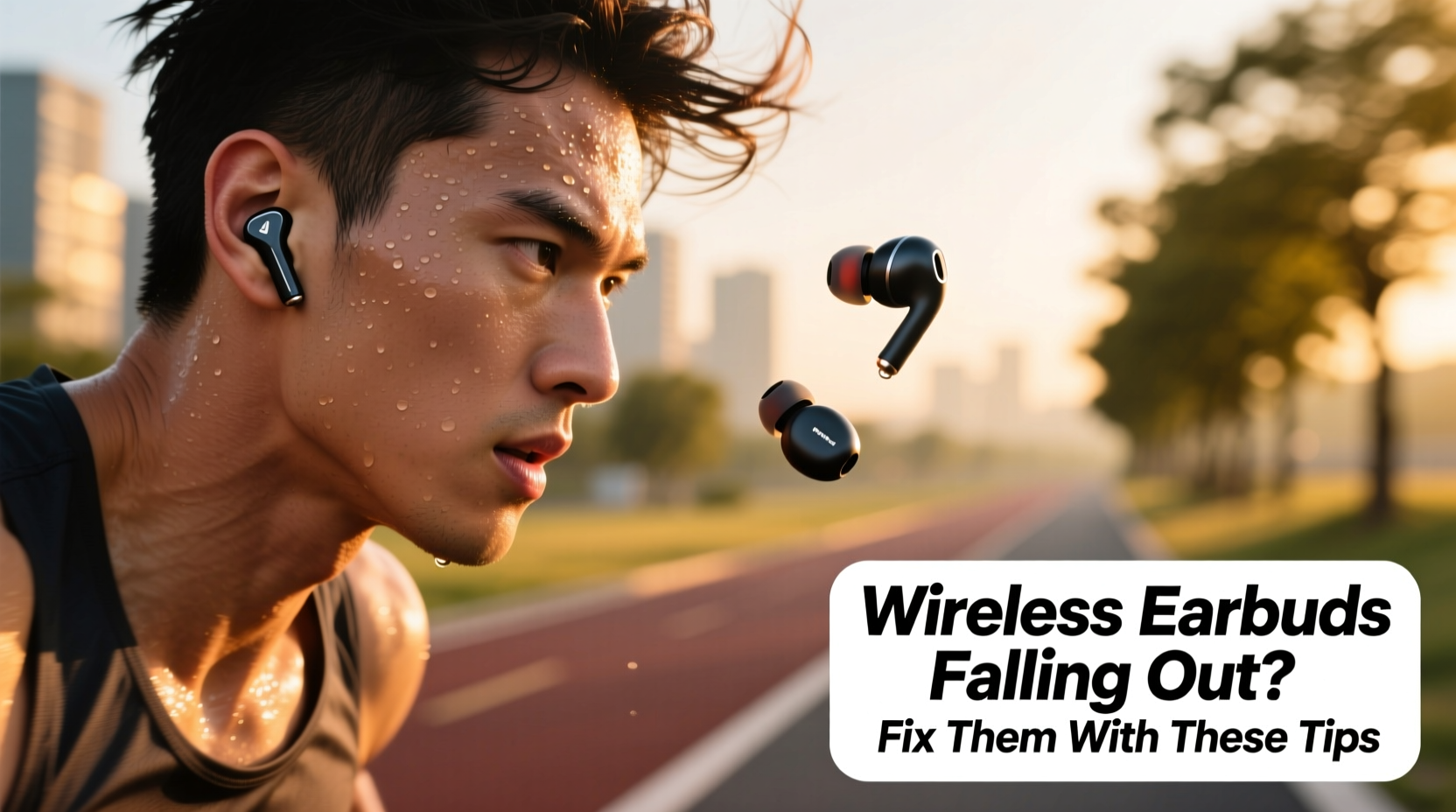
Understanding why earbuds dislodge during workouts is the first step toward fixing the problem. The human ear varies widely in shape and size, and most earbuds are designed with an “average” ear canal in mind. When combined with dynamic head movements, vibrations from jumping or running, and moisture buildup from sweat, even well-fitting earbuds can become unstable.
Mechanically, three primary forces act against earbud retention:
- Inertial movement: Rapid head turns, bouncing, or sudden stops create momentum that pulls earbuds outward.
- Sweat lubrication: Moisture reduces friction between the earbud and ear canal, making slippage more likely.
- Poor anatomical match: If the earbud’s angle, wing, or tip doesn’t align with your ear’s contours, it won’t stay put under stress.
As audiologist Dr. Lena Torres explains:
“Ear canal geometry is as unique as fingerprints. Off-the-shelf earbuds may fit one person perfectly but fall out of another’s ears during light walking, let alone vigorous exercise.” — Dr. Lena Torres, Clinical Audiologist
This variability means that finding a secure fit isn’t about luck—it’s about smart selection and adjustment.
Step-by-Step Guide to Securing Your Earbuds
Follow this systematic approach to improve earbud stability during workouts. Each step builds on the last, helping you identify and correct the root cause of slippage.
- Check your insertion technique. Most people insert earbuds incorrectly. Gently pull your ear upward and backward to straighten the ear canal, then twist the earbud slightly as you push it in. You should feel a snug seal.
- Test different ear tip sizes. Use the smallest tip first. If sound lacks bass or feels “loose,” try larger sizes. The ideal fit creates passive noise isolation and resists ejection.
- Experiment with ear fin or wing attachments. Many models include stabilizing fins (e.g., Jabra, Powerbeats). Attach them and orient them to hook behind the anti-helix fold of your ear.
- Adjust orientation for your ear shape. Some ears require earbuds to point forward; others need a backward tilt. Rotate the earbud gently until it locks in naturally.
- Use tape as a temporary aid. In extreme cases, a small piece of medical tape across the top of the earbud can prevent fallout. Avoid occluding the microphone ports.
- Let sweat work for you. Counterintuitively, a light layer of sweat can improve grip. Wait a few minutes into your warm-up before relying on fit stability.
Best Earbud Features for Active Use
Not all wireless earbuds are created equal when it comes to workout durability and fit. Choosing a model designed for sports significantly increases your chances of success. Look for these key features:
| Feature | Why It Matters | Top Models That Include It |
|---|---|---|
| Ear Wings or Fins | Provides anchor points behind ear ridges to resist movement | Jabra Elite series, Powerbeats Pro, Shokz OpenFit |
| IPX7+ Water Resistance | Withstands heavy sweat and allows rinsing after use | Sony WF-1000XM5, Beats Fit Pro, JBL Endurance Peak 3 |
| Customizable Eartips | Enables precise fit tuning for different ear shapes | Audeze Euclid, Sennheiser Momentum True Wireless 3 |
| Secure Loop Design | Wraps around the ear for maximum stability | Powerbeats Pro, Jaybird Vista 2 |
| Lightweight Build | Reduces gravitational pull and pressure fatigue | Shokz OpenRun Pro, Bose Sport Earbuds |
While high-end models offer advanced ergonomics, even budget-friendly options like Anker Soundcore Life P3 or Haylou GT1 can perform well if properly fitted. The takeaway? Prioritize fit and stability over raw sound specs when shopping for workout earbuds.
Real-World Case: From Dropout to Marathon Ready
Take the example of Marcus R., a recreational runner who struggled with earbuds falling out during long-distance training. He used standard AirPods Pro for months, relying on the default silicone tips. Despite their reputation, they slipped out consistently by mile four of his runs—especially when he increased pace or ran downhill.
Frustrated, Marcus visited a specialty audio store for a fitting consultation. The technician observed his ear anatomy and recommended switching to Comply Foam Tips in medium size, known for superior grip and expansion inside the ear canal. They also advised him to rotate the earbuds 15 degrees forward upon insertion to align with his ear canal angle.
After implementing these changes, Marcus completed a half-marathon without a single earbud adjustment. He reported improved comfort and confidence, noting that the foam tips absorbed vibration better and maintained seal despite sweating. His experience underscores how small tweaks—based on individual anatomy—can lead to dramatic improvements in real-world performance.
DIY Fixes and Accessories for Better Retention
If you’re not ready to upgrade your earbuds, several low-cost modifications can enhance fit and security:
- Upgrade to memory foam tips: Brands like Comply offer sweat-resistant foam sleeves that expand gently inside the ear for a custom-like fit.
- Add third-party wings: Products like EarHooks or StayHear+ wraps are compatible with many earbud models and provide additional anchoring.
- Use hypoallergenic tape: A tiny strip of Nexcare or kinesiology tape can stabilize earbuds without damaging skin or devices.
- Create a sweat barrier: Apply a light dusting of antiperspirant behind the ears (not in the ear canal) to reduce slip caused by perspiration.
Checklist: Secure Your Earbuds Before Every Workout
Before starting your next session, run through this quick checklist to ensure optimal earbud retention:
- ✅ Verified correct ear tip size using the seal test (deep bass = good seal)
- ✅ Inserted with ear pulled up and back for straightened canal
- ✅ Twisted into final position for mechanical lock
- ✅ Tested with head shakes and light jumps
- ✅ Confirmed secure placement of ear fins or wings (if applicable)
- ✅ Cleaned earbuds and tips to remove old earwax or residue affecting grip
- ✅ Activated transparency mode if needed for outdoor safety
This routine takes less than two minutes but can save you from repeated interruptions mid-set or mid-mile.
FAQ: Common Questions About Workout Earbud Stability
Can I wear earbuds safely while running outdoors?
Yes, but consider models with ambient sound modes or open-ear designs (like bone conduction) if you need situational awareness. Always keep volume low enough to hear traffic and surroundings, especially on roads or trails.
Do expensive earbuds stay in better?
Not necessarily. Price often reflects sound quality, battery life, or brand prestige—not fit security. Some affordable models outperform premium ones in retention due to better ergonomics or included accessories.
How often should I replace ear tips?
Every 1–3 months depending on usage and hygiene. Cracked, hardened, or dirty tips lose elasticity and grip. Regular cleaning with mild soap and water extends their lifespan.
Final Thoughts: Consistency Starts with Comfort
Your earbuds shouldn’t distract you from your goals. Whether you're pushing for a new personal record or simply trying to stay consistent with daily movement, reliable audio support makes a tangible difference. By understanding your ear anatomy, selecting the right gear, and applying simple but effective techniques, you can eliminate the frustration of falling earbuds for good.
Don’t accept instability as inevitable. Experiment with tips, angles, and accessories until you find what works for your body. The perfect fit isn’t universal—it’s personal. And once you achieve it, your workouts will flow smoother, your focus will sharpen, and your rhythm will stay uninterrupted.




 浙公网安备
33010002000092号
浙公网安备
33010002000092号 浙B2-20120091-4
Comments
No comments yet. Why don't you start the discussion?