
For many fitness enthusiasts, wireless earbuds are essential workout companions—delivering motivation through music, podcasts, or coaching cues without the hassle of wires. But nothing disrupts a solid session faster than an earbud slipping out mid-sprint, jumping jack, or weightlift. This common frustration isn’t just annoying; it can break focus, reduce performance, and even pose safety risks during outdoor runs.
The issue is widespread enough that countless users abandon otherwise high-performing models simply because they don’t stay put. The good news: this isn’t inevitable. With the right understanding of fit mechanics, ear anatomy, and product selection, you can find a solution that keeps your audio locked in—no matter how intense your movement gets.
Why Wireless Earbuds Fall Out During Exercise
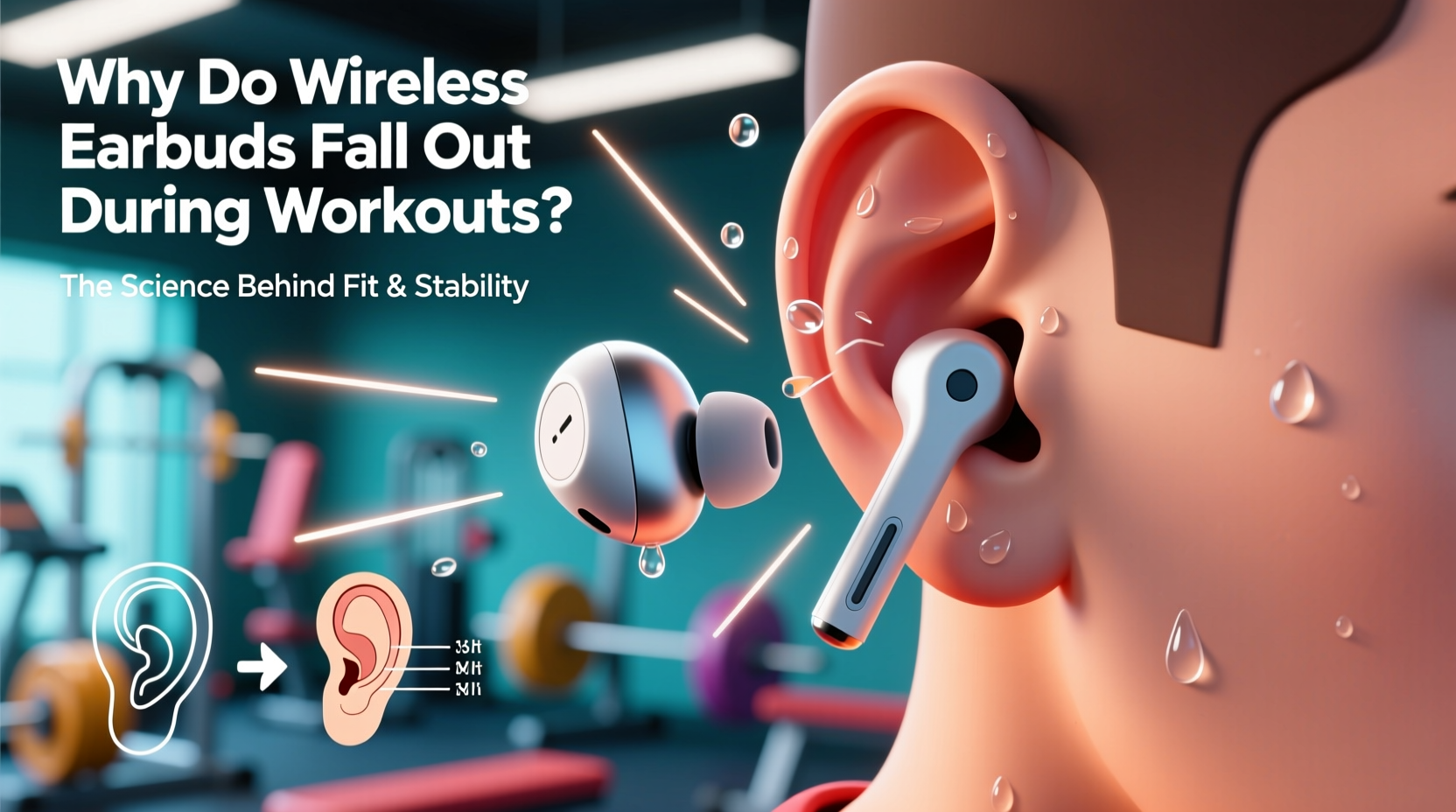
The root cause of earbud slippage lies in the mismatch between design assumptions and real-world motion. Most earbuds are engineered with static or light-activity use in mind—commuting, walking, office work—not the dynamic forces generated by running, HIIT, or gym routines.
When you move vigorously, several physical factors come into play:
- Inertia and momentum: Sudden head turns, jumps, or lateral movements create forces that dislodge loosely fitting buds.
- Sweat-induced lubrication: Moisture reduces friction between the earbud and ear canal, making slippage more likely.
- Ear canal deformation: Facial muscle contractions during exertion subtly reshape the ear canal, potentially loosening the seal.
- Poor anatomical match: No two ears are identical. Generic earbud shapes often fail to conform to individual ear geometry.
Manufacturers attempt to address these issues with wingtips, fins, or foam tips, but not all solutions work universally. A bud that stays secure for one person may pop out instantly for another—simply due to differences in ear size, shape, or cartilage structure.
“Even high-end earbuds fail during workouts if they don’t account for dynamic ear movement. Fit is not just about comfort—it’s biomechanics.” — Dr. Lena Torres, Audio Ergonomics Researcher, MIT Media Lab
How Ear Anatomy Affects Fit and Stability
Your ears aren’t just holes in the side of your head—they’re complex 3D structures composed of ridges, curves, and cavities that vary significantly from person to person. Understanding this anatomy helps explain why some earbuds stay in while others don’t.
The key areas involved in earbud retention include:
- Tragus: The small flap in front of the ear canal. Many earbuds rest against it for stability.
- Antitragus: Opposite the tragus, this ridge can anchor wing-style stabilizers.
- Concha bowl: The hollow area leading into the ear canal. Deep-fitting earbuds use this as a cradle.
- Ear canal angle: Varies widely—some slope forward, others backward, affecting insertion depth and hold.
If an earbud’s shape doesn’t align with these contours, it will act like a lever under motion, prying itself loose. This is especially true during repetitive motions such as running, where each foot strike sends subtle vibrations through the skull.
Choosing the Right Earbuds for Active Use
Not all wireless earbuds are created equal when it comes to sports performance. Prioritize models designed specifically for active lifestyles. Look beyond marketing claims and examine actual engineering features.
| Feature | Why It Matters | Recommended For |
|---|---|---|
| Ear Wings / Fins | Anchor the bud in the concha bowl, resisting lateral movement | Runners, HIIT athletes |
| Interchangeable Ear Tips (Silicone & Foam) | Foam compresses for tighter seal; multiple sizes ensure proper fit | All active users |
| IPX7+ Water/Sweat Resistance | Withstands heavy sweat without internal damage | Gym-goers, endurance athletes |
| Lightweight Design (<6g per bud) | Less inertia = less chance of dislodging during motion | Aerial sports, dancers |
| Secure Loop or Hook Designs | Wrap around the ear for mechanical lock-in | Professional athletes, cyclists |
Top performers in this category include the Shokz OpenRun Pro (bone conduction), Jabra Elite Active 8i, and Sony WF-SP800N. These models combine secure ergonomics with durability and sound quality tailored for motion.
Step-by-Step Guide to Achieving a Secure Fit
Even the best earbuds need proper setup. Follow this sequence to maximize retention during workouts:
- Determine your ear type: Use a mirror or ask someone to observe your ear shape. Are your concha bowls deep or shallow? Is your ear canal angled forward?
- Test all included ear tip sizes: Start with medium, then try smaller and larger. The correct size creates a gentle suction seal without pain.
- Experiment with fin/wing orientation: Rotate stabilizers to find the position where they nestle into ear ridges without pressure.
- Insert correctly: Pull the top of your ear upward to straighten the canal, then insert the bud at a slight forward angle.
- Check seal and stability: Play a bass-heavy track. If sound feels weak or “tinny,” the seal is poor. Shake your head gently—if it stays, you’re close.
- Simulate workout motion: Jump, turn, nod, and shake your head. Adjust until no movement dislodges the bud.
- Consider third-party accessories: Aftermarket memory foam tips (like Comply) or over-ear hooks (StayHear+) can enhance grip.
“Most people wear their earbuds wrong. Proper insertion technique improves both fit and hearing protection.” — Dr. Alan Park, Audiologist and Hearing Safety Advocate
Real-World Case: From Frustration to Freedom
Maya, a 32-year-old CrossFit coach, struggled for months with her premium wireless earbuds falling out during box jumps and kettlebell swings. She tried taping them, using hair ties, and even wrapping them in rubber bands—none worked reliably.
After consulting a hearing specialist, she discovered her ear canals were unusually narrow and sloped backward. The standard tips couldn’t form a seal. She switched to a model with ultra-slim profile and memory foam tips (Comply Sport), sized down to XS. Combined with a minor adjustment in insertion angle, the new setup stayed secure through double-unders and burpees.
Her takeaway: “It wasn’t the brand or price that fixed it—it was matching the tech to my anatomy.”
DIY Fixes and Accessories That Actually Work
Before replacing your current earbuds, try these proven enhancements:
- Memory foam tips: Expand slowly inside the ear for a custom-like fit. Ideal for sweaty conditions as they absorb moisture.
- Over-ear hooks: Flexible wires that loop around the ear, anchoring the bud. Brands like StayHear+ and Westone offer universal kits.
- Sweatbands with pockets: Some athletic headbands have built-in slots to hold earbuds in place.
- Adhesive grips: Micro-silicone stickers applied to the earbud housing increase friction (use sparingly to avoid residue).
Common Mistakes That Cause Slippage
Avoid these pitfalls that undermine even the best gear:
- Using only one size of ear tip: Most people default to medium, missing optimal fit.
- Ignoring ear dominance: Your left and right ears may require different tip sizes.
- Wearing earbuds too deep: Over-insertion causes discomfort and instability as muscles flex.
- Skipping warm-up tests: Always check fit before starting a workout, not after the first rep.
- Assuming waterproof = secure: IP ratings protect against water, not movement.
Frequently Asked Questions
Can I make my existing earbuds stay in better without buying new ones?
Yes. Try replacing stock silicone tips with memory foam ones, adding over-ear hooks, or using a sport headband. Often, these low-cost upgrades dramatically improve retention.
Are bone conduction headphones a good alternative for workouts?
They can be excellent for runners and outdoor athletes who need situational awareness. Since they don’t go in the ear canal, they never “fall out.” However, they lack bass and aren’t ideal in noisy environments.
Why do my earbuds feel fine at rest but fall out when I exercise?
At rest, your ear muscles are relaxed and stable. During exercise, facial and jaw movements deform the ear canal slightly, breaking the seal. Sweat also reduces surface tension. Dynamic testing is crucial.
Final Checklist: Secure Your Earbuds for Any Workout
- ✅ Assess your ear anatomy and choose a compatible earbud style.
- ✅ Test all ear tip sizes and materials (silicone vs. foam).
- ✅ Use stabilizing wings, fins, or over-ear hooks if needed.
- ✅ Insert properly: pull up on the ear, angle forward, press gently.
- ✅ Validate fit with head movement simulation before exercising.
- ✅ Maintain hygiene—clean earbuds weekly to preserve grip and prevent infections.
- ✅ Replace worn tips every 3–6 months; degraded silicone slips easily.
Conclusion: Train Harder With Confidence
Your workout should challenge your body—not your earbuds. Falling earbuds aren’t a minor annoyance; they interrupt rhythm, compromise safety, and erode confidence in your gear. By understanding the biomechanics of fit, selecting purpose-built equipment, and applying simple but effective adjustments, you can eliminate this frustration for good.
Whether you're sprinting toward a personal record or powering through the final round of a circuit, your audio should stay locked in—just like your focus. Take the time to get the fit right. Your next breakthrough might just come with the perfect beat.




 浙公网安备
33010002000092号
浙公网安备
33010002000092号 浙B2-20120091-4
Comments
No comments yet. Why don't you start the discussion?