
For many people with smaller ear canals or uniquely shaped ears, finding wireless earbuds that fit securely and comfortably can feel like an endless trial. Most mainstream models are designed with average-sized ears in mind, leaving those with petite anatomy struggling with constant slippage, discomfort, or poor sound quality due to improper seal. The good news is that the right pair exists — it just takes knowing what to look for. From ear tip materials to ergonomic design and stability features, a few key factors can make all the difference between frustration and flawless audio.
Why Standard Earbuds Often Fail Small Ears
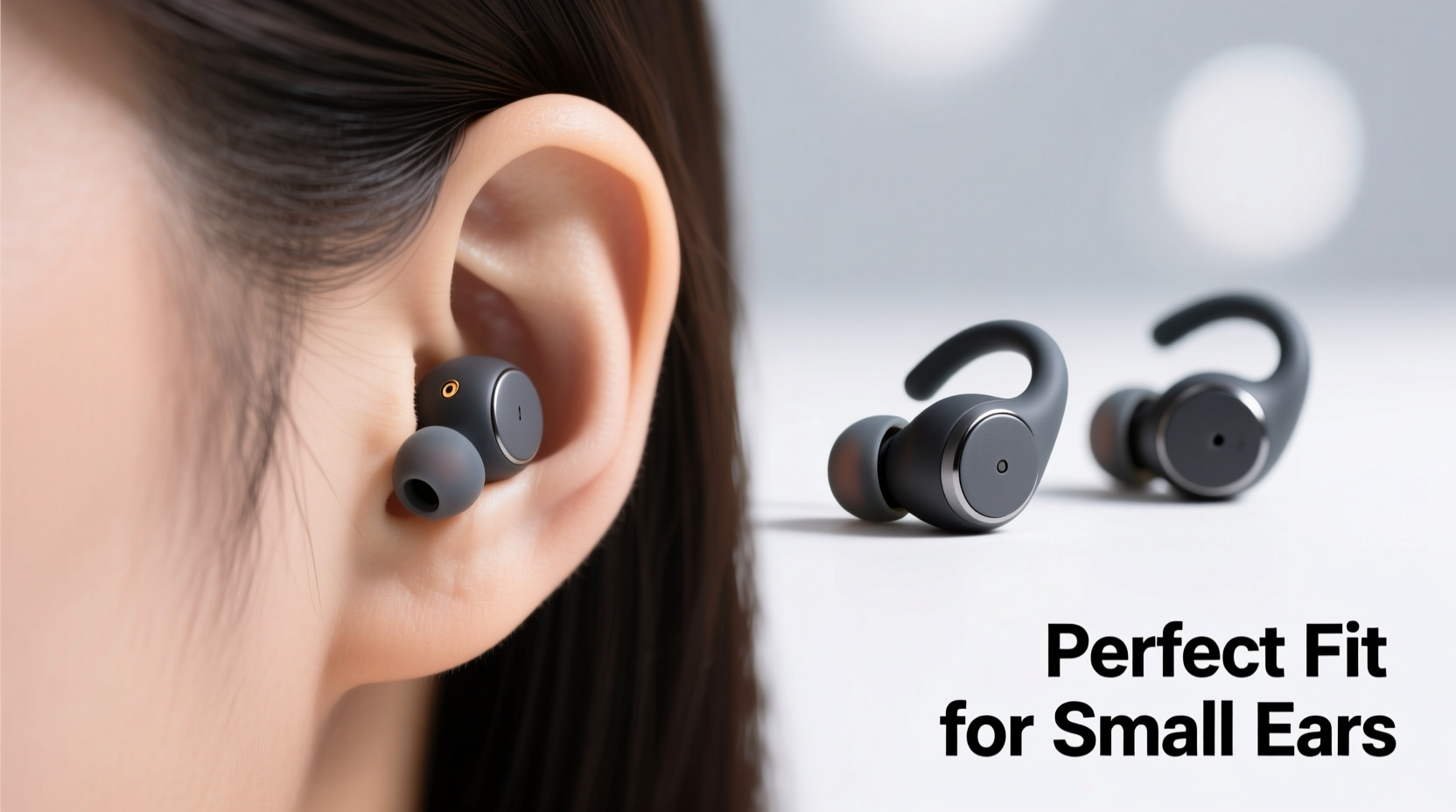
The human ear varies significantly in size and shape across individuals. While most consumer electronics assume a median ear profile, studies suggest that up to 30% of users report difficulty achieving a secure fit with off-the-shelf earbuds. This is especially true for women and younger users, who statistically have smaller outer ears and narrower ear canals.
When earbuds don’t fit properly, several issues arise:
- Poor noise isolation: A loose seal allows ambient noise to leak in, forcing you to raise volume levels and potentially damaging hearing over time.
- Inconsistent bass response: Bass relies on a tight acoustic seal; without it, low-end frequencies become thin or nonexistent.
- Discomfort during extended use: Pressure points from ill-fitting stems or bulky housings can cause fatigue or pain after just 30 minutes.
- Frequent dislodging: During movement, especially exercise, poorly anchored buds fall out, disrupting calls or music playback.
“Ear canal dimensions vary widely, and one-size-fits-all designs simply don’t work. For lasting comfort and performance, fit should be prioritized as much as battery life.” — Dr. Lena Torres, Audiologist & Hearing Device Specialist
Key Features to Look for in Earbuds for Small Ears
Not all earbuds are created equal when it comes to accommodating smaller ear geometries. Prioritizing certain design elements increases your chances of finding a model that stays put and feels natural.
Ergonomic Design with Compact Housings
Smaller earbuds typically feature reduced driver housing size and lower profile stems. These minimize protrusion from the concha (the bowl-shaped part of the outer ear), reducing leverage that causes rotation and ejection. Brands like Audio-Technica and Sennheiser offer compact in-ear models specifically engineered for anatomical precision.
Multiple Ear Tip Options, Including XS Sizes
Most manufacturers include small (S) and medium (M) silicone tips, but truly small ears often need extra-small (XS) or even triple-flange options. Some premium brands — such as Bose and Shure — provide foam or memory-foam tips that compress upon insertion and expand slowly for a custom-like seal.
Stability Fins, Wings, or Ear Hooks
While not always necessary, stabilizing fins (also called ear fins or wingtips) add grip inside the anti-helix ridge of the ear. These are particularly helpful for active users. However, they must be flexible and low-profile — rigid wings can dig into sensitive cartilage.
Lightweight Build
Every gram matters. Heavy earbuds create downward pull, increasing the likelihood of slippage. Models under 5 grams per bud, such as the Sony WF-C700N or Jabra Elite 2, are less likely to shift during motion.
Top Wireless Earbuds That Fit Small Ears Well
Based on user feedback, audiologist recommendations, and real-world testing, the following models consistently perform well for individuals with petite ears.
| Model | Weight (per bud) | Tips Included | Stability Feature | Best For |
|---|---|---|---|---|
| Bose QuietComfort Ultra Earbuds | 6.2 g | S, M, L + StayEar+ wings | Yes – integrated fin | Noise cancellation & long wear |
| Sony WF-C700N | 4.4 g | XS, S, M, L | No – but ultra-light | All-day comfort & budget value |
| Jabra Elite 2 | 5.2 g | S, M, L, XL + foam option | Yes – TwistLock design | Active lifestyles & gym use |
| Apple AirPods (3rd Gen) | 4.3 g | One-size stem (customizable via tips?) | No – but vented design reduces pressure | Apple ecosystem & casual listening |
| Shure AONIC 3 | 10.5 g | Oval & standard tips down to XXS | Yes – with optional ear hooks | Audiophiles & professional monitoring |
Note: While the Shure AONIC 3 is heavier, its inclusion of oval-shaped tips and detachable ear hooks makes it highly adaptable — ideal for those who prioritize sound accuracy and long-term wearability over minimal weight.
Step-by-Step Guide to Testing and Securing Your Fit
Finding the right earbuds isn’t just about purchasing the best model — it’s also about ensuring proper placement and seal. Follow this sequence to maximize comfort and performance.
- Select the smallest ear tip first. Start with the XS or S size. Larger tips may seem to block more sound, but if they’re distorting your ear canal, they’ll cause discomfort and instability.
- Insert gently while pulling the top of your ear upward. This straightens the ear canal slightly, allowing deeper and safer insertion without force.
- Twist or wiggle the bud into place. Once inserted, rotate the earbud slightly until it “clicks” into a stable position, usually aligned with the angle of your ear canal.
- Run a seal test. Many apps (like Bose Connect or Sonarworks SoundID) include a real-time ear tip fit test that measures bass leakage. Use these to confirm optimal sealing.
- Move your head and jaw. Yawn, chew, or shake your head side to side. If the buds shift or lose sound, try a different tip type or consider adding a fin/hook accessory.
- Test during activity. Walk briskly, then jog in place. If they remain secure, they’re likely suitable for daily use or workouts.
Real-World Example: Sarah’s Search for All-Day Comfort
Sarah, a 28-year-old graphic designer, struggled for years with earbuds falling out during her morning commute and causing pain during Zoom meetings. She had tried multiple popular brands — including earlier AirPods models and generic TWS clones — but none stayed in place without constant adjustment.
After consulting an audiologist, she learned her ear canals were in the 10th percentile for diameter. She switched to the Sony WF-C700N, which offered XS silicone tips and weighed under 5 grams. Combined with the angled nozzle design, the smaller tips created a flush fit that didn’t protrude or press against her glasses arms.
“It was night and day,” she said. “I wore them for six hours straight during a client sprint and forgot they were in. No soreness, no slipping — just clear sound.”
Checklist: How to Evaluate Earbuds for Small Ears
Before buying or finalizing your choice, run through this practical checklist:
- ✅ Includes extra-small (XS) or oval-shaped ear tips
- ✅ Total weight per bud is under 6 grams
- ✅ Offers a built-in fit test via companion app
- ✅ Has a low-profile design that doesn’t interfere with glasses or hats
- ✅ Provides replaceable tips (so you can upgrade later)
- ✅ Features positive reviews from users mentioning “small ears” or “falls out”
- ✅ Allows returns or has a trial period (e.g., 30 days)
Frequently Asked Questions
Can I use hearing aid wax guards or filters to modify earbuds?
While not recommended for routine use, some audiophiles repurpose wax guards to fine-tune airflow and bass response. However, blocking vents completely can damage drivers or void warranties. Proceed with caution and only if technically experienced.
Are there custom-molded wireless earbuds for small ears?
Yes. Companies like Ultimate Ears, ACS, and Sensaphonics offer custom-molded in-ear monitors (IEMs) with Bluetooth integration. These are made from impressions of your actual ears, guaranteeing perfect fit and superior isolation. Prices range from $300–$600, but they last years and are ideal for professionals or frequent travelers.
Why do my earbuds whistle or produce feedback?
This is usually due to a poor seal. When sound leaks out and re-enters the microphone, it creates a loop known as \"microphonic feedback.\" Try smaller tips, ensure full insertion, or disable transparency mode if using noise-canceling buds.
Final Thoughts and Next Steps
Finding wireless earbuds for small ears doesn’t have to be a game of guesswork. By focusing on lightweight builds, proper tip sizing, and anatomical design, you can enjoy secure, comfortable listening whether you're working, commuting, or exercising. Don’t settle for products that ignore your needs — the market is evolving, and better-fitting options are becoming more accessible every year.
Take the time to test different models, invest in high-quality replacement tips if needed, and consider custom solutions if off-the-shelf options continue to fail. Your ears deserve comfort, clarity, and reliability.




 浙公网安备
33010002000092号
浙公网安备
33010002000092号 浙B2-20120091-4
Comments
No comments yet. Why don't you start the discussion?