
City noise is relentless—honking horns, construction drills, subway rumbles, and crowded sidewalks form a constant auditory backdrop for urban dwellers. For those seeking peace during commutes or focused work in public spaces, wireless earbuds have become essential tools. But a critical question remains: do wireless earbuds with Active Noise Cancellation (ANC) truly outperform those without when it comes to blocking out city noise? The answer isn't just about technology—it's about understanding sound physics, fit, usage context, and realistic expectations.
While passive noise isolation from well-fitted earbuds can reduce some ambient sound, ANC introduces an advanced layer of acoustic engineering that actively counteracts external noise. This article breaks down the real-world performance differences, explores how each type handles urban environments, and provides actionable guidance for making an informed purchase decision based on your lifestyle and listening needs.
How Noise Blocking Works: Passive vs Active
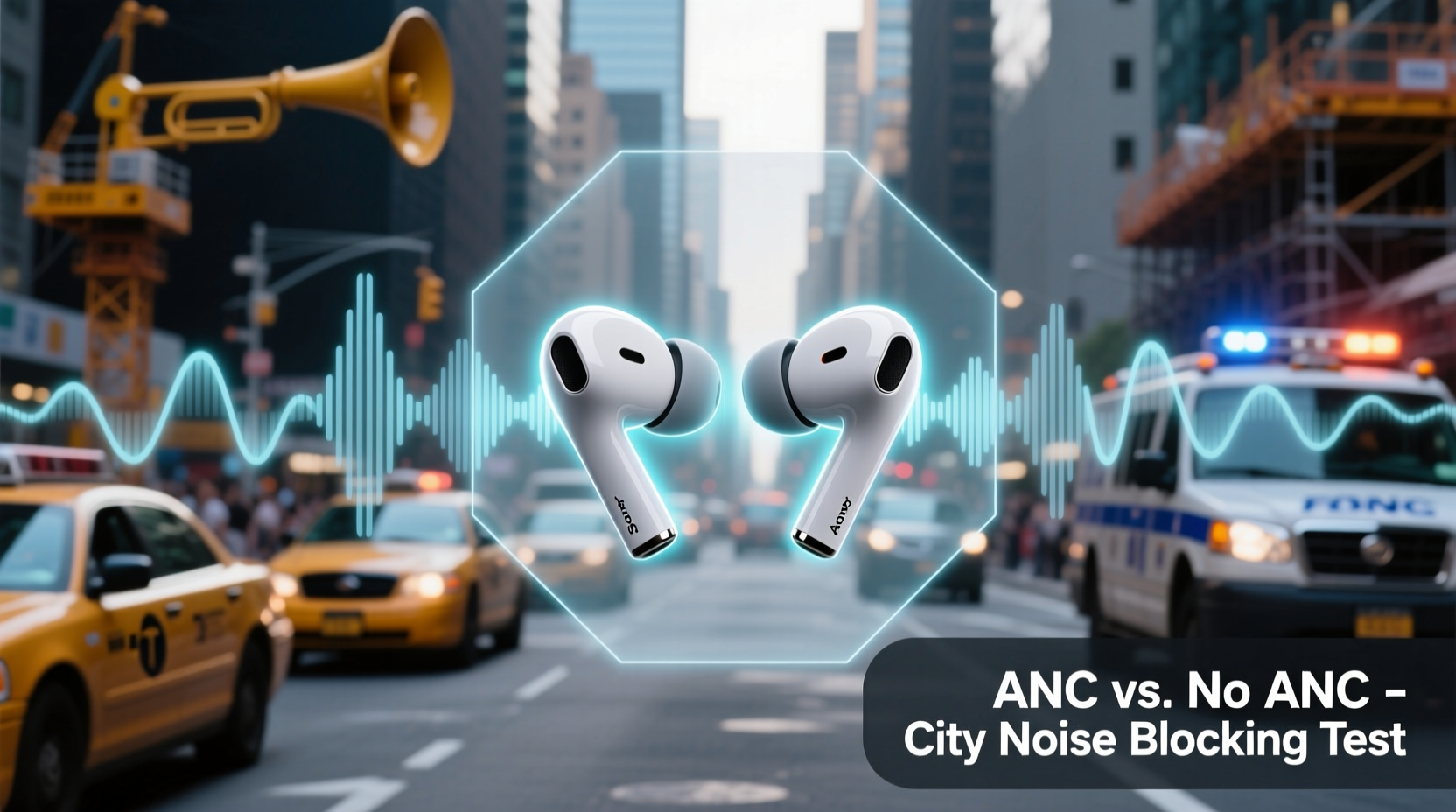
Noise reduction in earbuds occurs through two primary mechanisms: passive isolation and active cancellation. Understanding the distinction is key to evaluating performance in noisy city settings.
Passive noise isolation relies entirely on physical barriers. When properly fitted, silicone or foam ear tips create a seal in the ear canal, blocking external sound waves from entering. This method is effective against higher-frequency sounds like chatter, birdsong, or clinking dishes but struggles with low-frequency rumbles such as traffic engines, subway trains, or HVAC systems.
In contrast, Active Noise Cancellation (ANC) uses built-in microphones to detect incoming ambient noise, then generates inverse sound waves—anti-noise—that cancel out the external sound before it reaches your ears. This process, known as destructive interference, is particularly effective at neutralizing consistent low-frequency background noise, precisely the kind dominant in city environments.
Real-World Performance: ANC vs Non-ANC in Urban Settings
To assess which type performs better in cities, consider three common scenarios: commuting on public transit, walking along busy streets, and working in a café.
- Subway or bus rides: These environments are dominated by low-frequency engine rumble and track vibrations. ANC earbuds excel here, reducing up to 70–80% of this persistent drone. Non-ANC models may block conversation and footsteps but leave the underlying hum largely intact.
- City sidewalks: Foot traffic, sirens, and sudden horn blasts create unpredictable mid- to high-frequency noise. While ANC helps with background vehicle idling, non-ANC earbuds with deep-insertion foam tips can perform surprisingly well due to their strong passive seal.
- Cafés and co-working spaces: A mix of voices, coffee machines, and music creates complex noise profiles. ANC reduces the overall volume of background activity, allowing users to focus with lower playback levels. Without ANC, listeners often increase volume to compensate, risking long-term hearing damage.
“Urban noise pollution averages between 70–85 dB in major cities—levels that impair concentration and elevate stress. ANC-equipped earbuds aren’t just convenience; they’re auditory wellness tools.” — Dr. Lena Torres, Acoustic Health Researcher, MIT Media Lab
Comparative Analysis: ANC vs Non-ANC Earbuds
The table below summarizes key differences relevant to city noise blocking:
| Feature | ANC Earbuds | Non-ANC Earbuds |
|---|---|---|
| Low-Frequency Noise Reduction | Excellent (engine rumble, AC units) | Poor to moderate |
| High-Frequency Noise Reduction | Moderate (enhanced by passive seal) | Good (with proper fit) |
| Battery Dependency | Required for ANC function | Not applicable |
| Price Range (USD) | $100–$350+ | $30–$150 |
| Sound Quality with ANC Off | May sound thinner or processed | Natural audio profile |
| Best Use Case | Commuting, travel, focus in noise | Workouts, short walks, quiet offices |
One critical insight: ANC doesn’t eliminate all noise. It manages predictable, continuous frequencies most effectively. Sudden sounds—like a siren or someone calling your name—still penetrate, though at reduced intensity. Meanwhile, non-ANC earbuds depend heavily on fit quality. Memory foam tips, such as those found in models like the Shure SE215, offer superior passive isolation, sometimes rivaling entry-level ANC performance in mid-range frequencies.
Choosing the Right Fit: Why Seal Matters More Than Tech
Noise blocking—whether passive or active—begins with fit. An imperfect seal undermines even the most advanced ANC algorithms. Consider this real-world example:
Mini Case Study: Commuter Experience in New York City
Alex uses budget earbuds without ANC during his daily subway commute. Despite decent sound quality, he finds himself constantly adjusting volume due to train noise. After switching to mid-tier ANC earbuds with medium silicone tips, he notices improvement—but still hears significant rumble. Only after experimenting with foam tips does the noise drop dramatically. The lesson: ANC enhanced the result, but the physical seal made the decisive difference.
Earpiece design plays a crucial role. In-ear monitors (IEMs) that sit inside the ear canal provide better passive isolation than shallow-fitting designs. Over-ear styles like ear hooks or winged stabilizers improve retention during movement but don’t directly enhance noise blocking unless they contribute to a better seal.
Step-by-Step Guide to Maximizing Noise Blocking
Whether you own ANC or non-ANC earbuds, follow these steps to get the best possible noise reduction in city environments:
- Test different ear tips: Swap between silicone and memory foam options. Insert them correctly—pull your ear slightly upward to straighten the canal for deeper placement.
- Check the seal: Play a low-frequency tone or white noise. If you hear a noticeable boost in bass response when inserting the buds, the seal is good. A hollow or weak sound indicates leakage.
- Enable ANC wisely: On ANC models, turn on noise cancellation only when needed. Some systems adapt to environment (adaptive ANC), while others offer fixed modes—choose “Transport” or “Outdoor” presets if available.
- Use transparency mode selectively: When crossing streets or needing situational awareness, switch to transparency mode instead of removing the earbuds entirely.
- Maintain hygiene: Clean ear tips weekly with mild soap and water. Wax buildup degrades both sound quality and sealing performance.
- Store properly: Keep earbuds in a closed case to prevent dust or moisture from affecting microphone ports or speaker grilles—especially important for ANC models with external mics.
Frequently Asked Questions
Do ANC earbuds block all city noise?
No. ANC is most effective against continuous low-frequency sounds like engine hums or air conditioning. Sudden, sharp noises (horns, shouts) are reduced but not eliminated. High-frequency sounds are primarily blocked through passive isolation, so fit remains essential.
Can I use ANC earbuds without playing audio?
Yes. ANC operates independently of media playback. You can wear them silently to reduce environmental noise, ideal for napping on planes or focusing in open offices. However, battery life will be shorter compared to passive-only use.
Are expensive ANC earbuds always better at noise blocking?
Not necessarily. While premium models (e.g., Sony WF-1000XM5, Bose QuietComfort Ultra) offer industry-leading ANC, several mid-range options (such as Anker Soundcore Liberty 4 NC) deliver 80–90% of the performance at half the price. Real-world testing matters more than brand reputation.
Expert Recommendations and Final Insights
According to audio engineers at SonarLab, a leading consumer electronics testing facility, “The gap between top-tier and budget ANC has narrowed significantly since 2022. Modern hybrid ANC systems combine feedforward and feedback microphones, allowing even sub-$100 models to achieve meaningful noise reduction.”
That said, limitations remain. ANC requires processing power and battery drain, which affects total usage time. Most ANC earbuds offer 4–6 hours of runtime with noise cancellation enabled, versus 8–10 hours without. Additionally, some users report a slight pressure sensation—a “eardrum suck”—when ANC is active, especially in pressurized environments like elevators or airplanes.
For those prioritizing maximum city noise blocking, the optimal solution combines advanced ANC with excellent passive isolation. Look for models featuring:
- Hybrid ANC with dual microphones per earbud
- Multiple ear tip options, including foam
- IPX4 or higher rating for durability in variable weather
- Transparency mode with voice boost for conversations
- Customizable EQ and ANC intensity via companion app
Conclusion: Making the Right Choice for Your Urban Lifestyle
When it comes to blocking city noise, wireless earbuds with ANC clearly outperform those without—especially in environments dominated by low-frequency sounds. However, the advantage hinges on proper fit, usage habits, and realistic expectations. ANC is not a magic mute button; it’s a sophisticated tool designed to reduce auditory fatigue and improve listening comfort in noisy settings.
If you spend significant time in transit, bustling urban centers, or noisy workplaces, investing in ANC earbuds is justified—not just for sound quality, but for mental clarity and long-term hearing health. For casual users or those on tight budgets, high-quality non-ANC models with foam tips can still offer respectable noise reduction, particularly in less extreme environments.




 浙公网安备
33010002000092号
浙公网安备
33010002000092号 浙B2-20120091-4
Comments
No comments yet. Why don't you start the discussion?