
Choosing wireless earbuds has become more complicated than ever. At one end of the spectrum are compact, affordable models that deliver solid sound and basic functionality. At the other are high-end earbuds equipped with active noise cancellation (ANC), spatial audio, superior microphone arrays, and advanced battery intelligence. The price gap between these tiers can exceed $200. So, is the jump from a $50 pair to a $250 set truly justified?
The answer depends on how and where you use your earbuds. For some, ANC is transformative—turning chaotic commutes into peaceful listening sessions. For others, it’s an overpriced gimmick that drains battery life without meaningful benefit. This article dissects the real differences, evaluates performance across environments, and helps you decide whether the premium is worth the investment.
Understanding the Core Differences
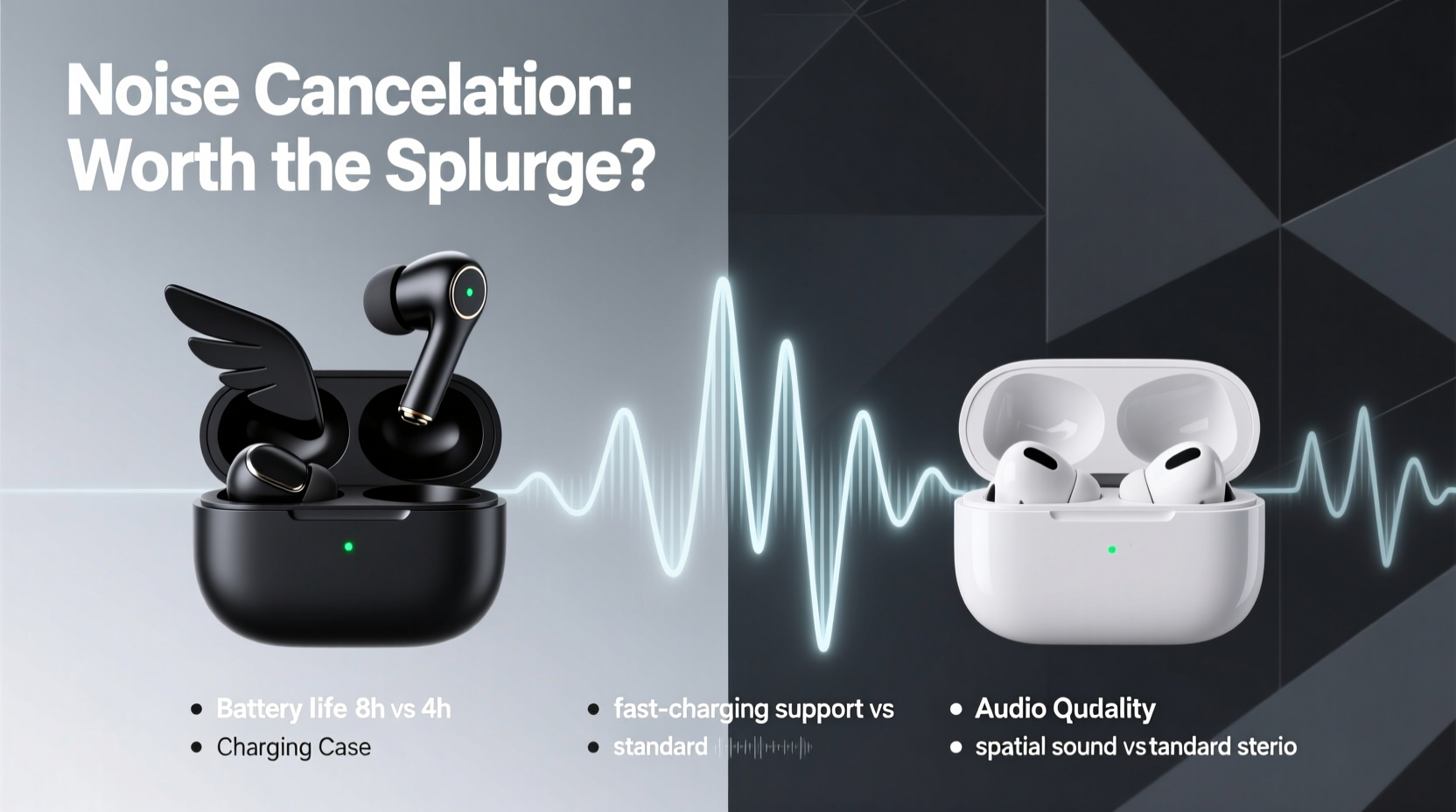
At first glance, basic and premium wireless earbuds may appear nearly identical: both fit in your ears, connect via Bluetooth, and play music. But under the surface, their engineering diverges significantly.
Basic models focus on core functionality: reliable connectivity, decent audio quality, and acceptable battery life. They typically lack advanced features like touch-sensitive controls, app integration, or environmental awareness modes. In contrast, premium earbuds incorporate multiple microphones, onboard digital signal processors (DSPs), and specialized drivers designed for dynamic range and clarity.
The most significant differentiator, however, remains active noise cancellation. Unlike passive isolation—which relies solely on physical seal—ANC uses microphones to detect ambient sound and generate inverse sound waves to cancel it out. This technology fundamentally changes how users interact with audio in noisy environments.
How Active Noise Cancellation Works
ANC operates through a three-step process: detection, processing, and counteraction. External microphones pick up low-frequency ambient noise (like engine hums or HVAC systems). A built-in processor analyzes the waveform and generates an anti-noise signal. This inverted wave is played through the earbud driver, effectively neutralizing the incoming sound before it reaches your eardrum.
This system excels at reducing constant, predictable noises but struggles with sudden, high-pitched sounds like conversations or alarms. That’s why hybrid ANC systems—combining feedforward and feedback microphones—are now standard in premium models. These dual-layer systems capture noise both outside and inside the ear canal, improving cancellation accuracy.
It’s important to note that ANC consumes additional power. Most high-end earbuds see a 20–30% reduction in total battery life when ANC is enabled. However, advancements in chip efficiency have minimized this trade-off in recent years.
Real-World Performance Comparison
To assess value, we must examine how each type performs in everyday scenarios. Below is a detailed comparison across five key usage environments.
| Environment | Basic Earbuds | Premium ANC Earbuds |
|---|---|---|
| Commuting (subway/bus) | Moderate sound isolation; user must increase volume to overcome noise | Effective low-frequency cancellation; clear audio even at 50% volume |
| Open-office workspace | Struggles with overlapping voices and keyboard clatter | Reduces background chatter; allows focus with minimal distraction |
| Home (quiet setting) | Adequate for casual listening; no advantage to ANC | No noticeable benefit; ANC often turned off |
| Air travel | Passive seal blocks some engine noise; still fatiguing over long flights | Dramatically reduces cabin pressure drone; enhances comfort and immersion |
| Exercise (gym/outdoor) | Sweat-resistant models available; limited situational awareness | Transparency mode allows hearing surroundings while maintaining audio control |
The data shows a clear trend: the greater the ambient noise, the more pronounced the advantage of ANC. For urban dwellers, frequent travelers, or remote workers in shared spaces, premium earbuds offer tangible improvements in comfort and usability.
“Active noise cancellation isn’t about luxury—it’s about auditory health. By reducing the need to crank volume in noisy settings, ANC helps prevent long-term hearing damage.” — Dr. Lena Patel, Audiologist & Hearing Wellness Advocate
Audio Quality and Call Clarity
Beyond noise suppression, premium models generally deliver superior sound profiles. High-end drivers support wider frequency ranges, better bass response, and more accurate mids and highs. Many also support high-resolution codecs like LDAC or aptX Adaptive, which preserve audio detail during wireless transmission—especially beneficial for listeners using high-bitrate streaming services.
Call quality follows a similar pattern. Basic earbuds often rely on a single microphone per earbud, making voice pickup inconsistent in wind or traffic. Premium models use beamforming microphones and AI-powered noise filtering to isolate speech. Some even employ machine learning to distinguish human voice from background interference, resulting in clearer calls for both parties.
Who Actually Benefits From ANC?
Not every user gains equal value from noise-canceling technology. Consider the following profiles:
- The Daily Commuter: Spends 1–2 hours daily on trains or buses. ANC drastically improves listening comfort and reduces auditory fatigue.
- The Remote Worker: Works from home or co-working spaces. ANC minimizes distractions from household noise, pets, or nearby conversations.
- The Frequent Flyer: Takes multiple flights per year. ANC transforms long-haul travel by muting engine roar and cabin announcements.
- The Casual Listener: Uses earbuds occasionally at home or during short walks. Likely won’t notice enough benefit to justify the cost.
- The Fitness Enthusiast: Prioritizes secure fit and sweat resistance. May prefer transparency mode over full ANC for outdoor safety.
A mini case study illustrates this well: Sarah, a project manager in Chicago, used $45 earbuds for her daily train commute and Zoom meetings. She often raised volume to unsafe levels and struggled to hear clients over subway noise. After switching to ANC earbuds, she reduced her average listening volume by 40%, reported fewer headaches, and received positive feedback on call clarity. For her, the $180 upgrade paid for itself in improved productivity and comfort within two months.
Cost-Benefit Analysis Over Time
Let’s break down the financial logic. Suppose you’re choosing between:
- Basic Model: $50, lasts 1.5 years on average
- Premium Model: $220, lasts 3+ years with proper care
On a per-year basis, the basic model costs ~$33/year, while the premium costs ~$73/year. The difference is $40 annually. Now consider ancillary benefits:
- Reduced risk of hearing damage (potentially saving future medical costs)
- Less mental fatigue from constant noise exposure
- Better focus during work or study sessions
- Improved sleep when used with white noise or meditation apps
In economic terms, the premium earbuds only need to provide $40/year in non-audio value to break even. For many professionals, students, or travelers, that threshold is easily surpassed.
When Basic Models Are the Smarter Choice
Despite the advantages of ANC, there are valid reasons to stick with basic earbuds:
- Limited Use Cases: If you primarily listen at home or in quiet parks, ANC adds little value.
- Battery Sensitivity: Users who rely on all-day playback may find ANC’s power drain prohibitive.
- Fit Issues: Some people experience pressure or discomfort when ANC is active due to the \"vacuum effect.\"
- Cost Constraints: Not everyone can justify a $200+ investment in audio gear.
Additionally, basic models are often smaller and lighter, making them preferable for workouts or children. Simplicity can be a feature, not a flaw.
Step-by-Step Guide to Choosing the Right Pair
Follow this decision framework to determine whether premium earbuds are right for you:
- Assess Your Environment: Track where you use earbuds over one week. Note how often you're in noisy settings (traffic, public transit, crowded spaces).
- Evaluate Listening Habits: Do you listen at high volumes to overcome background noise? If yes, ANC could protect your hearing.
- Test Battery Needs: Check if your current earbuds last through your longest usage day. Premium models with ANC may require midday charging.
- Try Before You Buy: Visit a retailer to test ANC firsthand. The subjective experience matters—some find the sensation disorienting.
- Calculate Long-Term Value: Divide the price by expected lifespan. Factor in durability, warranty, and software updates.
- Consider Resale Value: Premium brands like AirPods or Sony WH-series retain value better, reducing net ownership cost.
Frequently Asked Questions
Does noise cancellation work on voices?
ANC is most effective against low-frequency, continuous sounds like engines or fans. It reduces human voices but doesn’t eliminate them completely. Sudden speech or high-pitched tones remain audible, though softened. For complete voice blocking, physical isolation (over-ear design) combined with ANC works best.
Can I turn off ANC to save battery?
Yes—most premium earbuds allow you to disable ANC manually via touch controls or companion apps. Turning it off typically extends playback time by 25–35%. Some models even offer adaptive ANC that adjusts based on environment.
Are there health risks associated with ANC?
No direct health risks are linked to ANC. However, some users report mild ear pressure or dizziness initially, similar to airplane descent. This usually subsides with regular use. Avoid using ANC while cycling or walking in traffic, as it may impair awareness of sirens or horns.
Final Verdict: Who Should Upgrade?
For those immersed in noisy environments—commuters, city residents, frequent travelers, open-office workers—the upgrade to noise-canceling earbuds is not frivolous. It’s a functional enhancement that improves listening safety, concentration, and overall auditory well-being. The technology pays dividends in daily comfort and long-term hearing protection.
Conversely, occasional users, fitness-focused listeners, or budget-conscious buyers may find basic models sufficient. There’s no shame in prioritizing value over features you won’t use.
The decision ultimately hinges on lifestyle, not price tags. If your day includes relentless background noise, investing in ANC is less a splurge and more a strategic choice for better focus, safer listening habits, and enhanced enjoyment of your audio content.




 浙公网安备
33010002000092号
浙公网安备
33010002000092号 浙B2-20120091-4
Comments
No comments yet. Why don't you start the discussion?