
For millions of urban commuters, the daily journey is a mix of screeching train brakes, overlapping conversations, and engine hums that never quite fade. In this auditory chaos, wireless earbuds have become essential tools—not just for entertainment, but for mental respite. But not all sound-blocking technologies are created equal. Two dominant methods—passive noise isolation and active noise cancellation (ANC)—offer different solutions to the same problem: reclaiming peace in transit.
The choice between them isn’t about which is “better” in absolute terms, but which aligns more closely with your environment, priorities, and listening habits. Understanding how each works—and where they excel or fall short—can transform your commute from endurance test to quiet retreat.
How Noise Isolation Works: The Physics of Silence
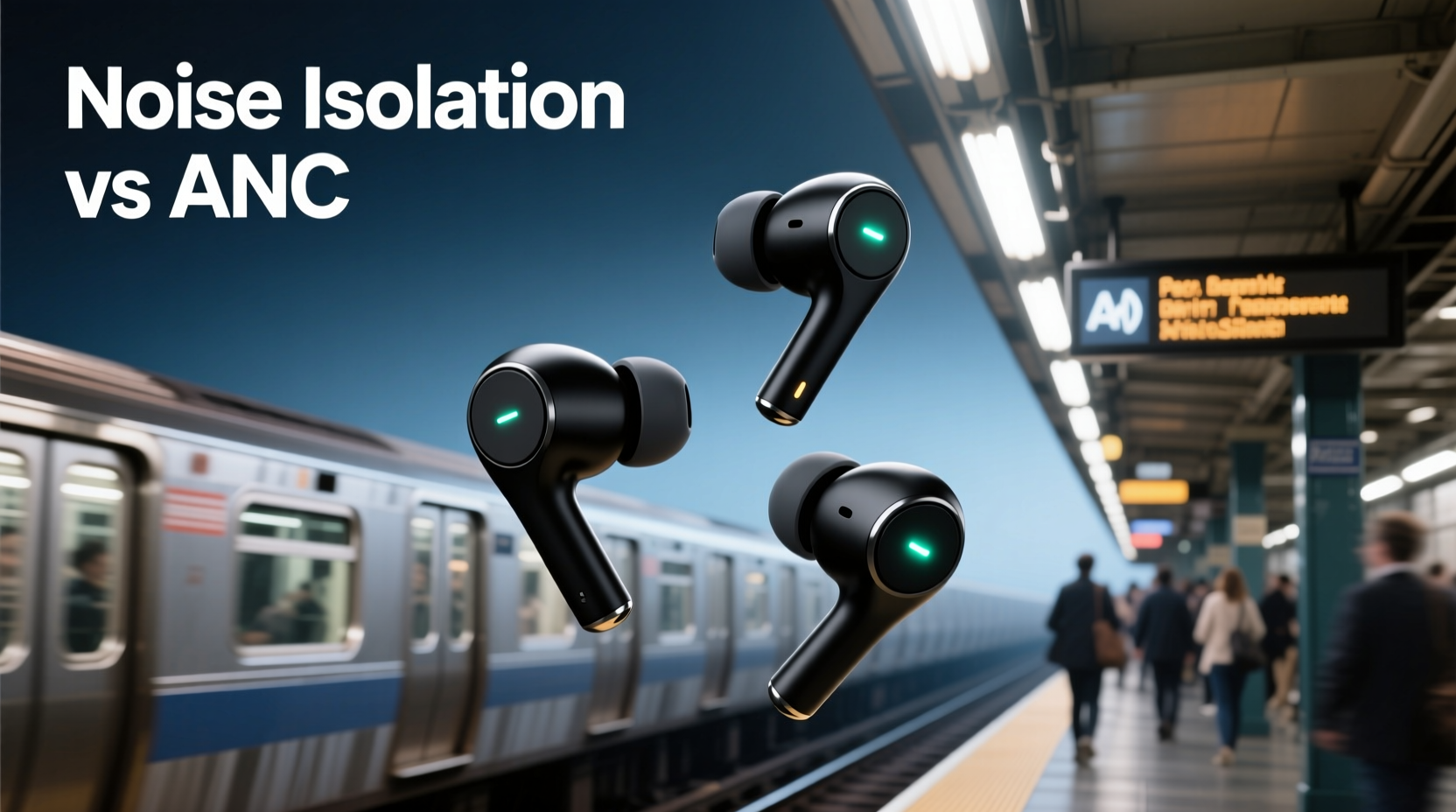
Noise isolation, also known as passive noise reduction, relies on physical barriers to block external sound. It’s an old principle made modern through precision-fit earbud design. When earbuds form a tight seal in your ear canal, they prevent outside noise from entering by reflecting or absorbing sound waves before they reach your eardrum.
This seal depends heavily on fit. Most high-isolation earbuds come with multiple silicone or foam tip sizes. Memory foam tips, like those used in some premium models, expand gently inside the ear canal for a custom mold. Silicone tips create a firmer barrier and are easier to clean, though they may not conform as closely to irregular ear shapes.
Because it’s purely mechanical, noise isolation excels at blocking higher-frequency sounds—chattering voices, clinking coffee cups, keyboard taps. These waves are easily disrupted by physical obstructions. However, low-frequency rumbles—like subway vibrations or bus engines—are longer and more persistent, slipping through even the best seals.
Active Noise Cancellation: Engineering Out the Hum
Active noise cancellation takes a technological approach. Instead of blocking sound physically, ANC uses microphones to capture ambient noise, then generates inverse sound waves—anti-noise—that cancel out incoming frequencies in real time. This process, called destructive interference, happens continuously and nearly instantaneously.
ANC shines where passive isolation struggles: low-frequency noise. The constant drone of airplane cabins, the rumble of diesel buses, or the vibration of trains on tracks—all are prime targets for ANC. High-end systems use adaptive algorithms that adjust based on your environment, maintaining effectiveness whether you're underground or above ground.
But ANC isn’t perfect. It requires power, which drains battery life faster—sometimes cutting total usage time by 30% when enabled. It also introduces subtle artifacts: a faint hiss or pressure-like sensation in the ears, often described as “eardrum suck.” Some users find this disorienting, especially during long commutes.
“ANC is most effective in predictable, steady-state environments—like subways or flights—where background noise is consistent. It struggles with sudden, sharp sounds like horns or announcements.” — Dr. Lena Torres, Audio Engineer at Acoustic Insights Lab
Comparing Commute Scenarios: Real-World Performance
Your ideal earbud depends on the nature of your commute. Consider these common scenarios:
Subway Riders: Low-Frequency Dominance
Underground transit produces deep, continuous bass frequencies from train motors and tunnel resonance. Passive isolation alone won’t suffice. ANC significantly reduces this rumble, making podcasts and music more enjoyable without cranking volume to unsafe levels.
Bus Travelers: Mixed Frequencies
Buses expose riders to both engine noise (low) and street chatter (high). Here, a hybrid approach wins: earbuds combining strong passive sealing with competent ANC offer balanced protection across the sound spectrum.
Walking or Cycling: Dynamic Environment
Commuters on foot or bike need situational awareness. Total silence can be dangerous. Some ANC earbuds include transparency modes that pipe in external sound, but these often introduce latency or artificial tone. For safety, moderate isolation without full ANC may be preferable.
Train Passengers: Long-Duration Comfort
On regional or intercity trains, journeys last hours. Battery life becomes critical. ANC can reduce playtime from 8 hours to 5–6. If your route has frequent stops and variable noise, consider toggling ANC only during quieter, rumbling stretches.
Key Differences at a Glance
| Feature | Noise Isolation | Active Noise Cancellation |
|---|---|---|
| Mechanism | Physical seal blocks sound | Microphones + anti-noise waves |
| Best At Blocking | High-frequency sounds (voices, clicks) | Low-frequency sounds (engines, drones) |
| Battery Impact | None | Reduces battery by 20–40% |
| Comfort Over Time | Generally neutral; depends on fit | Some report pressure or fatigue |
| Cost | Lower (no extra components) | Higher (requires processing, mics) |
| Awareness Mode | N/A (natural hearing when removed) | Available on most models |
Hybrid Systems: The Best of Both Worlds?
Many premium earbuds now combine both technologies. Models like the Sony WF-1000XM5 or Apple AirPods Pro 2 use ultra-dense foam tips for superior passive sealing while integrating advanced ANC chips. These hybrids achieve up to 35dB of total noise reduction—more than either method alone.
They also feature adaptive controls. Sensors detect if you’re moving, talking, or stationary, adjusting noise profiles accordingly. During conversation, ANC may automatically pause and switch to transparency mode, allowing natural interaction without removing the buds.
However, complexity comes at a price: higher cost, increased weight, and steeper learning curves. Not every commuter needs—or wants—this level of sophistication.
Mini Case Study: Maria’s Cross-Town Commute
Maria commutes 90 minutes each way through Chicago, using a combination of bus, 'L' train, and walking. Her old earbuds offered basic noise isolation but failed against the deep groan of the elevated rails. She often turned the volume so high she missed stop announcements.
She upgraded to a pair with hybrid ANC and memory foam tips. On her first trial, she noticed immediate improvement: the train’s rumble faded into a soft background hum. With ANC set to “Auto,” the earbuds reduced engine noise but amplified station PA announcements.
After two weeks, Maria reported lower stress levels and improved focus. She could listen to audiobooks at 50% volume instead of 75%. The trade-off? Battery life dropped from 7 to 5 hours—but since her case provides two full recharges, it wasn’t a dealbreaker.
For Maria, the investment paid off in daily well-being. “It’s not just about sound,” she said. “It’s about feeling less worn down by the city.”
Choosing Based on Your Priorities
Ask yourself these questions before deciding:
- Is my commute dominated by low-frequency noise (trains, planes, buses)? → Lean toward ANC.
- Do I walk or bike and need to hear traffic? → Prioritize moderate isolation with transparency features.
- Is battery life a concern? → Passive isolation preserves charge.
- Am I on a budget? → Well-fitting isolating earbuds often cost less than ANC models.
- Do I wear them for hours? → Test for pressure discomfort caused by ANC.
Checklist: Selecting the Right Earbuds for Commuting
- Measure your ear canal size or try multiple tip options in-store or via trial period.
- Determine your primary noise type: high (voices), low (engines), or mixed.
- Check battery specs with ANC on vs. off—don’t rely on marketing max numbers.
- Test transparency/awareness mode quality if safety is a concern.
- Read user reviews focusing on long-term comfort and real-world noise reduction.
- Consider IP rating for sweat and rain resistance, especially for walking/cycling.
- Verify device compatibility (Bluetooth codecs, app support).
Frequently Asked Questions
Can noise isolation be as effective as ANC?
In high-frequency environments—offices, cafes, busy sidewalks—yes. A perfect seal can block up to 25–30dB of sound, rivaling basic ANC. But for low-end noise like engines, ANC is fundamentally more effective due to physics.
Does ANC damage hearing over time?
No evidence suggests ANC causes hearing damage. However, the “pressure effect” some users feel may lead to ear fatigue. If uncomfortable, reduce ANC strength or alternate with passive-only use.
Are there health benefits to reducing commute noise?
Yes. Chronic exposure to urban noise above 65dB increases cortisol levels and cardiovascular risk. Reducing perceived noise during commutes contributes to lower stress and improved mental recovery, according to studies from the World Health Organization.
Final Recommendation: Match Tech to Transit
If your commute involves trains, subways, or long bus rides with constant engine noise, **active noise cancelling**—especially in hybrid models with strong passive sealing—is worth the investment. The reduction in low-frequency stress can make a measurable difference in daily energy and focus.
If you walk, cycle, or navigate unpredictable streets where awareness matters, **high-quality noise isolation** with a comfortable fit offers excellent protection without sacrificing safety. You’ll still block distracting chatter and sudden sounds while staying alert.
Ultimately, the best earbuds are the ones you’ll wear consistently—without discomfort, anxiety, or battery panic. Technology should serve your lifestyle, not complicate it. Try before you buy if possible, and don’t assume more features mean better results. Sometimes, a simple, snug fit is all you need to reclaim your commute.




 浙公网安备
33010002000092号
浙公网安备
33010002000092号 浙B2-20120091-4
Comments
No comments yet. Why don't you start the discussion?