
When it comes to wireless earbuds, one of the most pressing concerns isn’t sound quality or battery life—it’s whether they’ll actually stay in your ears. For runners, gym-goers, commuters, or anyone with an active lifestyle, a secure fit is non-negotiable. The debate between stemmed and stemless earbuds often centers on aesthetics and design trends, but from a functional standpoint, the structure of the earbud plays a critical role in how well it stays put. While both styles have their merits, understanding the biomechanics behind each can help users make a smarter, more personalized choice.
The Anatomy of Secure Fit: What Makes Earbuds Stay In Place?
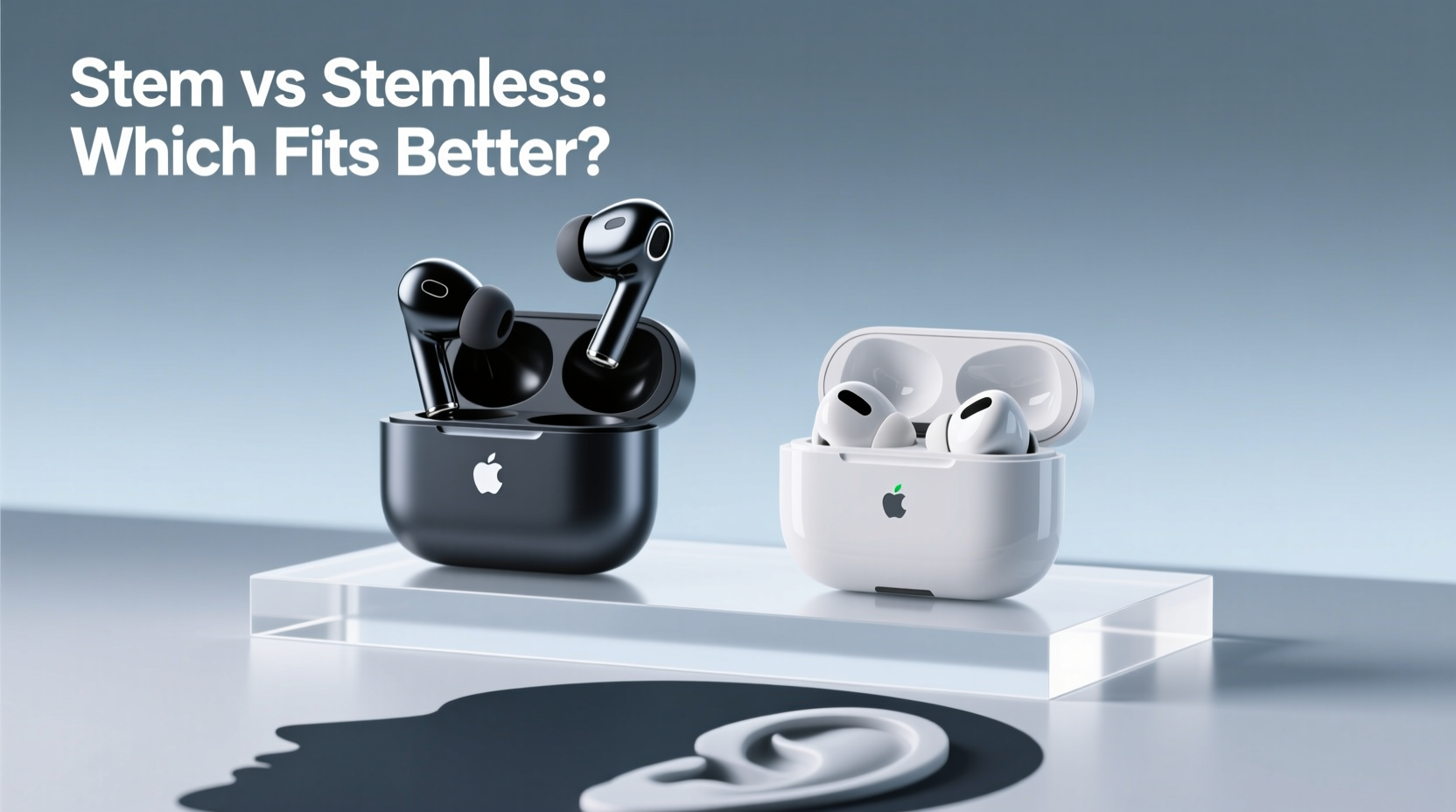
A secure earbud doesn’t just rely on being shoved deeper into the ear canal. True stability comes from how well the earbud interacts with the complex topography of the outer ear. The human ear has multiple ridges—the concha, anti-helix, tragus, and ear canal—each offering potential anchor points. A well-designed earbud uses these natural contours to lock in place without causing discomfort.
Stemmed earbuds, like Apple AirPods or Google Pixel Buds Pro, extend below the earpiece into the lower ear area. This stem acts as a counterbalance, helping distribute weight and adding mechanical resistance to movement. Stemless models, such as many Samsung Galaxy Buds variants or Jabra Elite series, are more compact and sit flush within the concha, relying primarily on ear tip grip and shape conformity.
Fit is not universal. Ear shapes vary significantly across individuals. Some people have shallow conchas, making deep insertion difficult; others have protruding anti-helices that naturally cradle certain designs. That’s why generalizations about “best” fit must be tempered with personal anatomy and usage patterns.
Stemmed Earbuds: Stability Through Structure
Earbuds with stems leverage physics to improve retention. The downward extension creates a pivot point that resists upward forces—like those generated during running or jumping. Because the stem rests slightly outside the ear canal, it adds a secondary contact point that reduces rotational slippage.
Many stemmed models also incorporate lightweight materials and angled nozzles designed to align with the ear canal’s natural slope. This alignment improves both comfort and seal, which in turn enhances bass response and noise isolation. Brands like Apple and Beats have refined this design over several generations, focusing on minimizing bulk while maximizing passive stability.
One underrated advantage of stems is compatibility with third-party accessories. Many users add silicone loops, wings, or hooks that attach to the stem for extra grip. These aftermarket solutions are widely available and inexpensive, offering a customizable upgrade path for athletes or workers in high-motion environments.
“Stems provide a mechanical advantage by lowering the center of gravity of the earbud. This makes them inherently less likely to rotate out during dynamic movement.” — Dr. Lena Park, Audio Ergonomics Researcher at MIT Media Lab
Stemless Earbuds: Sleek Design Meets Compact Fit
Stemless earbuds prioritize minimalism and discretion. Their compact form factor makes them ideal for users who want something nearly invisible or who find stems obtrusive under helmets, glasses, or hats. However, this sleekness comes with trade-offs in inherent stability.
Without a stem, these earbuds depend almost entirely on the friction between the ear tip and the ear canal, along with the shell’s contour matching the user’s concha. High-end models often include multiple ear tip sizes and memory foam options to improve grip and seal. Some, like the Sony WF-1000XM5, use advanced ergonomics and asymmetric shapes to wedge into the ear more securely.
For sedentary or low-motion use—commuting, working at a desk, casual listening—stemless designs often perform admirably. But during vigorous activity, especially lateral head movements or sudden turns, they’re more prone to shifting or falling out. Sweat exacerbates this issue by reducing surface tension between the earbud and skin.
That said, advancements in material science have narrowed the gap. Hydrophobic coatings reduce sweat buildup, and textured surfaces increase grip. Still, the lack of a structural anchor means stemless models require more precision in initial fit calibration.
Comparative Analysis: Key Differences in Fit Performance
| Feature | Stemmed Earbuds | Stemless Earbuds |
|---|---|---|
| Primary Stability Mechanism | Mechanical leverage via stem | Frication and ergonomic shaping |
| Better For | Running, gym workouts, outdoor sports | Office use, commuting, light walking |
| Sweat Resistance | Generally higher due to airflow and accessory support | Varies; some models struggle with moisture buildup |
| Accessory Compatibility | High (wings, loops, clips) | Limited (few third-party add-ons) |
| Discreetness | Lower (visible stem) | Higher (compact, flush fit) |
| Comfort Over Long Periods | Good, if stem pressure is minimized | Excellent for small-ear users |
Real-World Case: Runner’s Experience with Both Styles
Jamal, a recreational marathon runner from Portland, tested both stemmed and stemless earbuds over a six-week training cycle. He began with the Samsung Galaxy Buds2 Pro (stemless), drawn to their rich audio and compact size. During his first long run, two separate instances occurred where the left bud slipped out mid-stride—one during a sharp turn, another after wiping sweat from his temple.
He switched to Apple AirPods Pro (2nd gen), which feature a short stem and customizable silicone tips. Though initially skeptical about the visibility, he found they remained firmly in place throughout tempo runs, hill sprints, and even post-run cooldown stretches. “The difference was night and day,” he reported. “I didn’t have to keep checking if one had fallen out. I could just focus on my pace.”
His takeaway? For consistent, high-intensity movement, the structural support of a stem outweighed aesthetic preferences. However, for easy recovery days or podcast listening on the elliptical, he still preferred the lighter feel of stemless models.
How to Maximize Fit Security Regardless of Design
No matter which style you choose, fit optimization requires deliberate attention. Here’s a step-by-step guide to ensure your earbuds stay put:
- Determine your ear type. Take a photo of your ear from the front. Do you have deep conchas? Prominent anti-helices? Flat outer ridges? This helps predict which designs will anchor best.
- Test all included ear tips. Most brands bundle three to four sizes. Use the largest that feels comfortable—too small, and they’ll rattle; too large, and they’ll cause fatigue.
- Insert correctly. Pull the top of your ear upward to straighten the canal, then twist the bud slightly as you insert it. You should hear a seal form.
- Check for micro-adjustments. Some buds allow firmware-based EQ or spatial settings that subtly affect perceived fit by altering sound balance.
- Add stabilizers if needed. For stemmed models, consider Comply Sport Clips or Wingtips. For stemless, try double-flange tips or custom-molded sleeves.
Checklist: Choosing the Right Style for Your Lifestyle
- ✅ Will you use them during intense workouts? → Lean toward stemmed
- ✅ Do you wear glasses or helmets regularly? → Test stem interference
- ✅ Is discretion important? → Consider stemless or ultra-low-profile stems
- ✅ Do you have small or shallow ears? → Try stemless with soft memory foam tips
- ✅ Are you willing to use accessories? → Stems offer more customization
- ✅ Do you sweat heavily? → Look for hydrophobic coatings and ventilation
Expert Insight: Why Fit Trumps Features
Even the most advanced noise cancellation or highest-resolution audio is useless if the earbuds fall out every few minutes. According to audiologist Dr. Naomi Tran, “A poor fit compromises not only retention but also sound quality and hearing safety. If the seal breaks, listeners tend to raise volume to compensate, increasing risk of noise-induced hearing loss.”
“Fit is the foundation of function. No amount of software tuning can replace physical stability.” — Dr. Naomi Tran, Clinical Audiologist and Hearing Safety Advocate
This principle applies across price ranges. Budget earbuds may lack premium materials, but if their shape matches your ear anatomy, they can outperform expensive models that simply don’t sit right.
Frequently Asked Questions
Do stemmed earbuds hurt after long use?
Not necessarily. Modern stemmed designs are engineered with lightweight polymers and rounded edges to minimize pressure points. However, individuals with sensitive cartilage may experience discomfort over extended periods. Trying different ear tip combinations or using padded stem covers can help alleviate this.
Can stemless earbuds be made more secure?
Yes. Using memory foam tips, applying anti-slip sprays (like Gripz), or switching to dual-tip designs (e.g., spin-fit rings) can significantly improve grip. Some users also tape the charging case button to prevent accidental openings when stored in pockets during exercise.
Are there hybrid designs that combine the best of both?
Emerging models are blurring the line. The Bose Ultra Open Earbuds, for example, use a partial fin rather than a full stem, anchoring behind the ear ridge without extending downward. Similarly, some gaming earbuds integrate short stabilizers that mimic stems without the same visual profile. These hybrids aim to balance security and subtlety.
Conclusion: Match Your Ears, Not Just the Trend
The question isn’t whether stemmed or stemless earbuds are universally better—it’s which style works for your unique ears and lifestyle. For those prioritizing reliability during movement, stemmed models generally offer superior retention through mechanical design. But for everyday wear, travel, or fashion-conscious users, stemless options deliver comfort and discretion that many find preferable.
Ultimately, the most secure fit comes from informed experimentation. Try both types if possible. Pay attention to how they behave during real activities—not just quiet sitting. And don’t hesitate to customize with accessories or alternative tips. Your ears are as individual as your fingerprints; your earbuds should reflect that.




 浙公网安备
33010002000092号
浙公网安备
33010002000092号 浙B2-20120091-4
Comments
No comments yet. Why don't you start the discussion?