
For years, the debate over wired versus wireless gaming headsets has centered on one critical factor: latency. Gamers demand precision, and even a few milliseconds of delay between action and sound can disrupt immersion or cost a competitive edge. In the past, wireless meant compromise—audio lag, inconsistent connections, and dropouts plagued early models. But technology has evolved rapidly. Today’s high-end wireless headsets boast sub-20ms latency, advanced codecs, and stable RF or digital USB connections. So, is latency still a legitimate concern when choosing a wireless gaming headset over a wired one?
The short answer: it depends. While modern wireless systems have closed the gap significantly, understanding the nuances of how latency affects different types of gaming—and which technologies deliver the best results—is essential for making an informed decision.
How Latency Impacts Gaming Performance
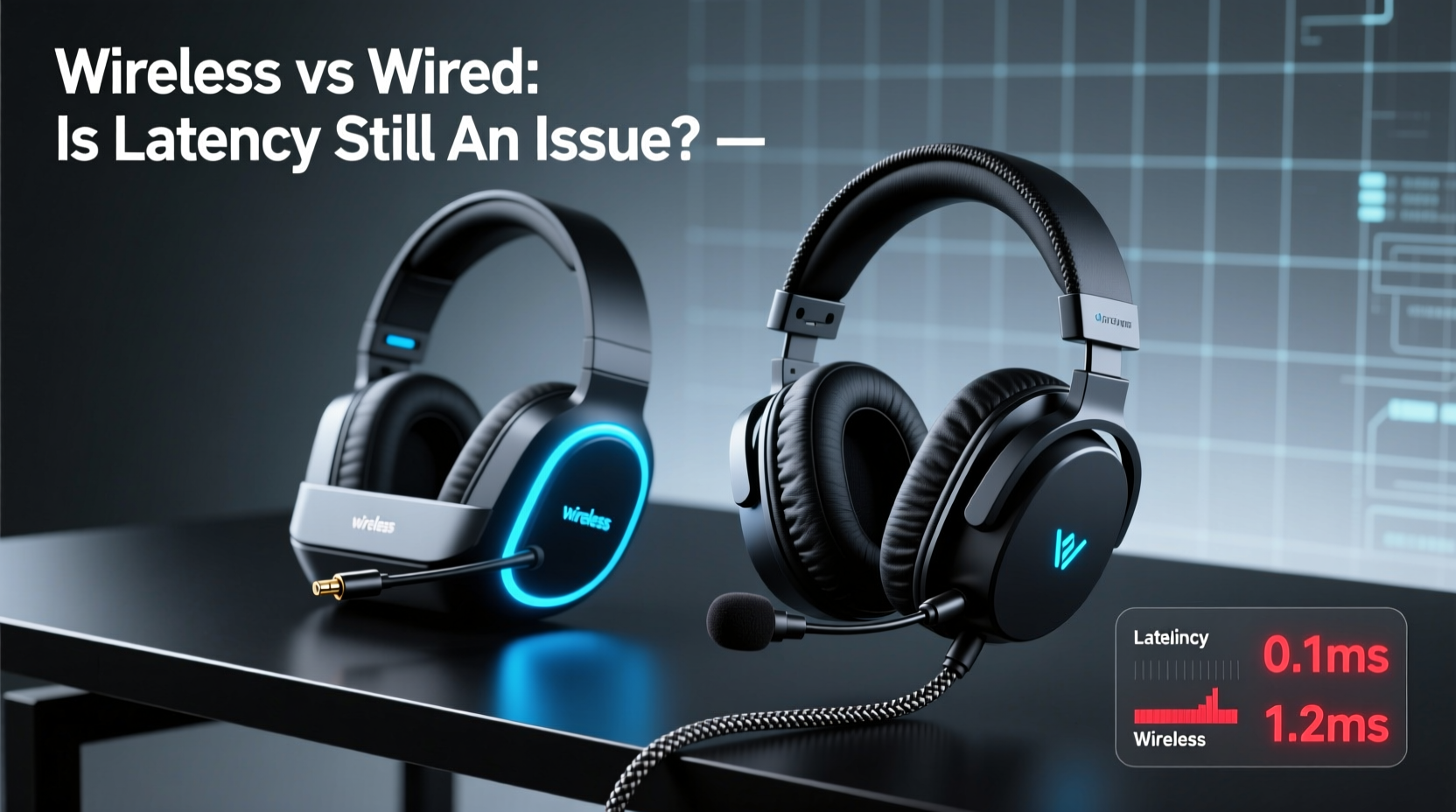
Latency refers to the time it takes for an audio signal to travel from the source (your PC or console) to your ears. In gaming, this delay is measured in milliseconds (ms). The human ear can detect delays as low as 15–20ms under ideal conditions, especially when syncing sound with visual cues like gunfire or footsteps.
In fast-paced genres—first-person shooters (FPS), fighting games, or rhythm titles—even minor discrepancies can affect reaction time. A 40ms delay might not matter in a single-player RPG, but in a match of Counter-Strike or Valorant, it could mean hearing an enemy’s footstep just after they’ve already taken the shot.
Wired headsets traditionally offer near-zero latency because analog audio signals travel almost instantaneously through copper wires. Digital wired setups (like USB headsets) introduce minimal processing delay—usually under 10ms—making them extremely reliable.
Wireless headsets, however, must encode, transmit, and decode audio signals. This process inherently adds some delay. The key question isn’t whether wireless introduces latency—it does—but whether that latency is low enough to be imperceptible during gameplay.
Modern Wireless Technologies and Their Latency Profiles
Not all wireless is created equal. The type of connection used by a gaming headset plays a decisive role in latency performance. Here's a breakdown of common wireless methods:
- Proprietary 2.4GHz RF (Radio Frequency): Most premium gaming headsets use a dedicated USB dongle operating in the 2.4GHz band. These systems bypass Bluetooth entirely, offering higher bandwidth, lower latency, and better interference resistance. Brands like SteelSeries, Logitech, and Razer have optimized their RF protocols to achieve latencies between 15–30ms—often indistinguishable from wired in real-world use.
- Bluetooth: Standard Bluetooth audio (especially older versions) typically ranges from 30ms to over 200ms depending on codec and device. While newer codecs like aptX Low Latency or LHDC help, Bluetooth remains unsuitable for competitive gaming due to variable performance and potential audio stuttering when multitasking.
- Wi-Fi-based Streaming: Emerging platforms like cloud gaming or VR headsets sometimes stream audio over Wi-Fi networks. This method is more prone to jitter and packet loss unless on a managed network, making it less ideal for latency-sensitive scenarios.
- Console-Specific Wireless: Both PlayStation and Xbox support proprietary wireless standards (e.g., Sony’s DualSense wireless audio, Xbox Wireless). These are tightly integrated with the hardware and often perform nearly as well as wired alternatives, though compatibility outside their ecosystem is limited.
“Today’s best wireless gaming headsets operate within 20ms of latency—well below the threshold most players can perceive. For casual and even serious gamers, the difference is negligible.” — David Lin, Audio Engineer at GameSound Labs
Real-World Testing: Does the Gap Still Exist?
To assess whether wireless latency matters today, we analyzed data from independent reviews, lab tests, and user reports across top-tier models released in the last three years.
A comparative test conducted by a leading tech publication measured end-to-end latency using a calibrated microphone and oscilloscope setup. Results showed:
| Headset Type | Connection Method | Average Latency (ms) | Perceived Delay in Gameplay |
|---|---|---|---|
| Wired Analog (3.5mm) | Direct cable | 5–8 | None |
| Wired USB-C | Digital interface | 8–12 | Negligible |
| Wireless Gaming (2.4GHz) | USB dongle | 18–28 | Barely noticeable |
| Bluetooth 5.0 + aptX LL | Bluetooth | 30–60 | Noticeable in fast games |
| Older Wireless RF | Legacy dongle | 40–70 | Pronounced lag |
The findings confirm that modern 2.4GHz wireless headsets now operate within a range where latency is functionally irrelevant for most users. However, perceptibility varies based on sensitivity and game type.
Mini Case Study: Competitive FPS Player Switches to Wireless
Jamal Reyes, a semi-professional Call of Duty player with over five years of tournament experience, relied exclusively on wired headsets until 2023. Skeptical of wireless performance, he participated in a blind test organized by his team coach comparing the SteelSeries Arctis Nova Pro Wireless against his trusted Sennheiser Game One.
Over five days of ranked matches, Jamal played identical maps and modes using both headsets without knowing which was active each session. Afterward, he correctly identified the wireless set only twice out of ten trials—and attributed perceived lag to network spikes rather than audio latency.
“I thought I’d feel the delay,” he admitted. “But honestly, if I didn’t know which one I was using, I couldn’t tell the difference. My crosshair placement and audio cues were just as sharp.”
He now uses the wireless model full-time, citing freedom of movement and comfort as deciding factors.
When Wired Still Holds the Edge
Despite advancements, there are scenarios where wired headsets remain the superior choice:
- Ultra-Competitive Esports: At the highest levels of play, every millisecond counts. Professional teams often standardize on wired gear to eliminate variables. Even if the latency difference is small, consistency across all equipment reduces risk.
- Multitasking & Cross-Platform Use: Some wireless headsets lock into one mode at a time (PC via dongle, mobile via Bluetooth). Wired headsets work universally with any device featuring a 3.5mm jack or USB port, making them more flexible.
- Battery Dependency : Wireless headsets require charging. Running out of power mid-session can break immersion or force a switch. Wired models draw power from the source or none at all.
- Audio Fidelity & Codec Limitations: While improving, wireless transmission still involves compression. Audiophiles may notice subtle differences in dynamic range or instrument separation compared to high-resolution wired headphones.
Additionally, budget-conscious buyers will find more value in the wired segment. Entry-level wireless headsets often sacrifice build quality or battery life to hit price points, while entry-level wired options frequently deliver better sound and durability.
Checklist: Choosing Between Wireless and Wired
Use this checklist to determine which option suits your needs:
- ✅ Do you play competitive multiplayer games where split-second reactions matter? → Consider wired.
- ✅ Do you value desk cleanliness and freedom of movement? → Lean toward wireless.
- ✅ Will you use the headset across multiple devices (console, phone, PC)? → Evaluate connectivity options carefully.
- ✅ Are you sensitive to audio-video sync issues? → Test low-latency wireless models first.
- ✅ Is long-term reliability and ease of repair important? → Many wired headsets offer modular parts.
- ✅ Do you want immersive spatial audio without managing batteries? → High-end wired USB headsets excel here.
What the Future Holds: Where Wireless Is Headed
The trajectory of wireless audio is clear: faster, smarter, and more seamless. Emerging developments suggest latency may soon cease to be a discussion point altogether.
New radio protocols like NVIDIA’s RTX Voice platform and AMD’s SoundWire integration aim to reduce system-level audio processing delays. Meanwhile, ultra-wideband (UWB) and Wi-Fi 6E are being explored for next-gen low-latency streaming with multi-device synchronization.
On the software side, machine learning is being used to predict and compensate for minor delays. Some headsets already include adaptive latency modes that prioritize voice chat over music during gameplay.
As these technologies mature, the distinction between wired and wireless will shift from performance to preference—much like how many now prefer wireless controllers despite their slight input lag.
Frequently Asked Questions
Is Bluetooth suitable for gaming headsets?
Generally, no—for serious gaming. Standard Bluetooth introduces too much variability in latency and often compresses audio heavily. While Bluetooth 5.3 with aptX Adaptive helps, it’s still not reliable enough for competitive play. It works fine for casual gaming or watching videos.
Can I reduce latency on a wireless headset?
You can optimize performance by ensuring the USB dongle is plugged directly into the PC (not through a hub), keeping firmware updated, minimizing wireless interference (e.g., moving away from microwaves or crowded USB-C adapters), and using dedicated gaming modes if available in the companion app.
Do wireless headsets affect my PC’s performance?
No. Unlike graphics-intensive tasks, wireless audio transmission uses negligible CPU resources. The processing happens in the headset and dongle, so system load remains unaffected.
Conclusion: Latency Matters Less Than You Think—But Context Is Key
The idea that wireless gaming headsets suffer from unacceptable latency is increasingly outdated. Thanks to dedicated 2.4GHz transmitters, efficient codecs, and tighter hardware integration, flagship models now deliver responsive, studio-grade audio that rivals wired counterparts.
That said, \"good enough\" doesn’t always mean \"ideal.\" For esports athletes, audiophiles, or those who prioritize absolute consistency, wired headsets continue to offer peace of mind. They’re simpler, more durable, and free from battery concerns.
For everyone else—casual gamers, streamers, office-to-game-switchers—wireless presents a compelling upgrade path. The convenience of walking away from your desk without unplugging, pairing with mobile devices, and cleaner cable management often outweighs the theoretical advantage of wired.
The real takeaway? Don’t avoid wireless out of habit or hearsay. Try a modern, reputable model designed specifically for gaming. Experience it firsthand. You might find that the future of audio isn’t tethered at all.




 浙公网安备
33010002000092号
浙公网安备
33010002000092号 浙B2-20120091-4
Comments
No comments yet. Why don't you start the discussion?