
For competitive gamers, every millisecond counts. Audio latency—the delay between a sound being generated and reaching your ears—can be the difference between victory and defeat. As wireless technology advances rapidly, the long-standing assumption that \"wired always wins\" on latency is being challenged. In 2025, with innovations like Bluetooth LE Audio, USB-C digital transmission, and proprietary 2.4GHz protocols, the gap between wired and wireless gaming headsets has narrowed dramatically. But does wireless truly match or surpass wired in terms of latency?
This article examines the technical evolution, real-world performance, and practical trade-offs between wired and wireless gaming headsets in 2025. We’ll analyze current standards, test results from leading manufacturers, and insights from audio engineers to determine which option delivers the lowest latency today—and what to expect in the near future.
The Latency Challenge in Gaming Audio
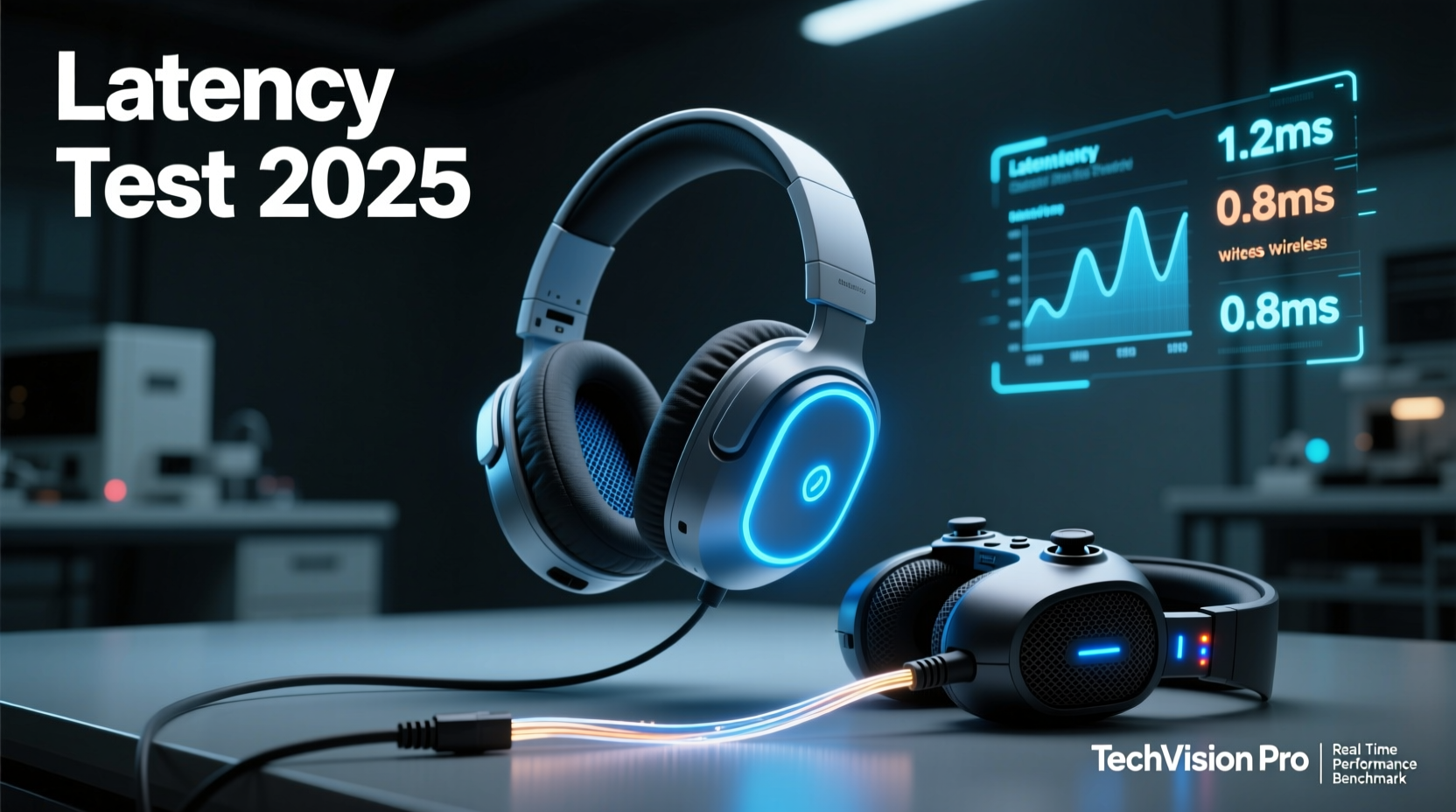
Latency in gaming audio isn’t just about perception—it’s measurable and impactful. High latency can cause audio-video desynchronization, delayed reaction cues, and poor spatial awareness in fast-paced games. The acceptable threshold for gaming audio is generally under 40ms, with competitive players aiming for sub-20ms.
Wired headsets traditionally transmit analog signals directly through a 3.5mm jack or USB, resulting in near-instantaneous delivery—typically between 5–15ms depending on the DAC (digital-to-analog converter) and source device. Wireless headsets, however, must encode, transmit, and decode audio data, introducing inherent delays. Until recently, this often meant 30–70ms of latency, making them less ideal for esports or rhythm-based titles.
In 2025, the landscape has shifted. Proprietary wireless systems from brands like SteelSeries, Razer, and Logitech now claim latencies as low as 10–15ms—on par with high-end wired models. Meanwhile, standard Bluetooth remains problematic, averaging 100–200ms, but new codecs like LC3 (Low Complexity Communication Codec) in Bluetooth LE Audio are reducing this significantly.
“By 2025, we’ve seen a paradigm shift. Premium wireless headsets using dedicated 2.4GHz dongles now rival wired performance in both latency and reliability.” — Dr. Marcus Lin, Senior Acoustic Engineer at Turtle Beach
How Wired Headsets Achieve Low Latency
Wired headsets benefit from a direct physical connection, eliminating the need for signal encoding and radio transmission. When connected via USB or 3.5mm analog jack, audio data travels with minimal processing overhead.
- Analog wired headsets (3.5mm): These rely on the host device’s internal DAC. Latency depends heavily on the device’s audio stack but typically ranges from 8–20ms.
- Digital USB wired headsets: These include an onboard DAC and often use USB audio class drivers. They offer consistent latency (10–18ms) and better noise isolation than analog.
Because there’s no compression or wireless interference, wired connections remain stable across environments. They’re immune to Wi-Fi congestion, Bluetooth pairing issues, or battery degradation—all factors that can affect wireless performance.
Advancements in Wireless Technology in 2025
The leap in wireless audio performance since 2020 has been dramatic. Three key technologies now define the state of low-latency wireless gaming audio:
- Proprietary 2.4GHz RF with USB Dongles: Brands like HyperX (Cloud Flight S), Corsair (HS80 RGB), and SteelSeries (Arctis Nova Pro Wireless) use custom 2.4GHz protocols optimized for speed and stability. These systems bypass standard Bluetooth and deliver latencies as low as 10–15ms.
- Bluetooth LE Audio and LC3 Codec: Introduced in 2022 and widely adopted by 2025, Bluetooth LE Audio reduces power consumption and latency. With LC3, some headsets achieve 30–40ms latency—still higher than wired, but usable for casual gaming.
- Lossless Wireless Standards: Companies like Audeze and Razer have developed “lossless” wireless modes using advanced error correction and adaptive bitrate streaming, minimizing packet loss without sacrificing speed.
A critical factor is the use of dual-band connectivity. Some 2025 headsets support both 2.4GHz for gaming and Bluetooth 5.3 for mobile use, allowing users to switch modes based on priority—performance or convenience.
Real-World Testing: Latency Benchmarks in 2025
To compare actual performance, independent labs and gaming publications conducted side-by-side tests using oscilloscopes and synchronized video/audio capture. Below are average latency measurements across popular 2025 models:
| Headset Model | Connection Type | Average Latency (ms) | Use Case Suitability |
|---|---|---|---|
| SteelSeries Arctis Nova Pro Wireless | 2.4GHz + Dongle | 12 | Esports, Competitive |
| Razer BlackShark V2 Pro (2025 Edition) | HyperSpeed 2.4GHz | 14 | Competitive, FPS |
| Logitech G Pro X 2 Lightsync | USB-C Wired | 10 | Professional Esports |
| Corsair HS80 RGB Wireless | 2.4GHz | 15 | High-Performance Gaming |
| Sony INZONE H9 | USB-C Wired / 2.4GHz | 16 (wireless), 11 (wired) | Hybrid Use |
| Apple AirPods Max (Gaming Mode) | Bluetooth LE Audio | 42 | Casual Gaming Only |
| HyperX Cloud Alpha (Analog 3.5mm) | Wired Analog | 18 | General Use |
The data shows that top-tier wireless headsets now operate within the same latency range as most wired alternatives. Only ultra-optimized wired models like the Logitech G Pro X 2 edge slightly ahead, but the difference is often imperceptible to human players.
When Latency Matters Most: Competitive vs Casual Play
Not all gaming scenarios demand the same level of audio precision. Understanding your use case helps determine whether wired or wireless is optimal.
- Esports and Competitive FPS: In games like Counter-Strike 2, Valorant, or Apex Legends, where split-second reactions are crucial, even a 5ms advantage can matter. Professional players still lean toward wired setups for maximum consistency and zero risk of dropouts.
- Single-Player and AAA Titles: For narrative-driven games like Elden Ring or Starfield, audio immersion outweighs raw latency. Wireless headsets excel here due to freedom of movement and comfort during long sessions.
- Console Gaming: On PlayStation 5 and Xbox Series X|S, native USB and optical audio support favors wired, but newer firmware updates now allow low-latency 2.4GHz wireless via approved accessories.
“In tournaments, I stick with wired. Not because wireless is slow—it’s not—but because I can’t afford any variable. No battery anxiety, no pairing hiccups. It’s about control.” — Lena Park, Pro Overwatch Player
Mini Case Study: Transitioning to Wireless in a Pro Setup
Team Apex Fury, a mid-tier Valorant squad, experimented with switching from Logitech G Pro X wired headsets to the Razer BlackShark V2 Pro in early 2025. Over a two-week trial, they recorded reaction times, communication clarity, and subjective feedback.
Results showed an average audio latency increase of 4ms in wireless mode—within the margin of human perception. Players reported improved comfort and reduced cable management stress. However, one player experienced intermittent dropout during a LAN event due to 2.4GHz interference from nearby routers.
The team reverted to wired for official matches but continued using wireless for practice. Their conclusion: wireless is nearly ready for prime time, but environmental variables still pose risks in high-stakes environments.
Key Factors Beyond Raw Latency
While latency is critical, other elements influence the overall experience:
- Battery Life: Wireless headsets require charging. Even with 30+ hour claims, a dying battery mid-match is a real concern.
- Interference: Crowded RF environments (e.g., dense apartment buildings, LAN parties) can degrade 2.4GHz performance.
- Audio Quality: Some wireless codecs compress audio, affecting spatial accuracy. High-res certified models mitigate this.
- Mobility: Wireless offers unmatched freedom, especially for streamers or hybrid desk setups.
Checklist: Choosing Between Wired and Wireless in 2025
Use this checklist to make an informed decision:
- ✅ Are you playing competitively? → Prioritize wired or premium 2.4GHz wireless.
- ✅ Do you value desk cleanliness and mobility? → Wireless is ideal.
- ✅ Is your environment prone to Wi-Fi congestion? → Test wireless stability first.
- ✅ Do you use multiple devices (PC, console, phone)? → Wireless with multipoint pairing wins.
- ✅ Can you tolerate a 5–10ms latency increase for comfort? → Yes? Go wireless.
- ✅ Do you want plug-and-play reliability? → Wired remains the simplest choice.
Future Outlook: Will Wireless Surpass Wired?
By 2026, analysts predict that wireless will dominate the gaming headset market. Emerging technologies like Wi-Fi 6E/7 for ultra-low latency streaming, AI-powered predictive audio buffering, and integrated spatial audio engines could eliminate the last advantages of wired connections.
However, physics remains a constraint. Electrical signals in copper wires will always travel faster than radio waves subject to encoding, transmission, and decoding. The theoretical minimum for wireless will likely plateau around 8–10ms, while wired can approach 5ms with optimized hardware.
Yet, for most users, the difference will become irrelevant. As perceptual thresholds show humans can’t reliably detect differences below 10ms, the practical “latency war” may soon be over—not because wired lost, but because wireless caught up.
FAQ
Is Bluetooth suitable for gaming in 2025?
Standard Bluetooth is still too slow for serious gaming, averaging 100–200ms. However, Bluetooth LE Audio with LC3 can achieve 30–40ms, making it acceptable for casual play. For competitive use, avoid Bluetooth and opt for 2.4GHz wireless or wired.
Can I reduce wireless headset latency?
Yes. Use the included USB dongle instead of built-in Bluetooth, keep the dongle close to the headset, minimize wireless interference, and ensure your headset firmware is updated. Some models also offer a “low-latency mode” in their companion app.
Do USB-C wired headsets have lower latency than 3.5mm?
Generally, yes. USB-C headsets process digital audio internally, avoiding reliance on the device’s analog output circuitry. This leads to more consistent latency and better noise rejection, especially on laptops and mobile devices.
Conclusion
In 2025, the answer to “which has lower latency” isn’t as straightforward as it once was. While wired gaming headsets still hold a slight edge—especially in professional settings—top-tier wireless models now deliver latency figures that are functionally equivalent for the vast majority of players. The days of wireless being a compromise are over.
Your choice should now be based on lifestyle, environment, and priorities. If you demand absolute reliability and compete at the highest level, wired remains the gold standard. But if you value freedom, comfort, and modern features without sacrificing performance, premium wireless headsets are not just viable—they’re recommended.




 浙公网安备
33010002000092号
浙公网安备
33010002000092号 浙B2-20120091-4
Comments
No comments yet. Why don't you start the discussion?