
Home security is no longer a luxury—it’s a necessity. As break-ins and property crimes persist in neighborhoods across the country, homeowners are turning to surveillance systems for peace of mind. But when it comes to choosing between wireless and wired security cameras, the decision isn’t just about convenience or cost. It’s about effectiveness—specifically, which type of system actually deters burglars more effectively.
The answer depends on multiple factors: reliability, visibility, tamper resistance, power stability, and ease of integration with other security measures. While both wireless and wired systems have their advantages, one emerges as a stronger deterrent when evaluated through the lens of criminal psychology and real-world performance.
Understanding How Burglars Choose Targets
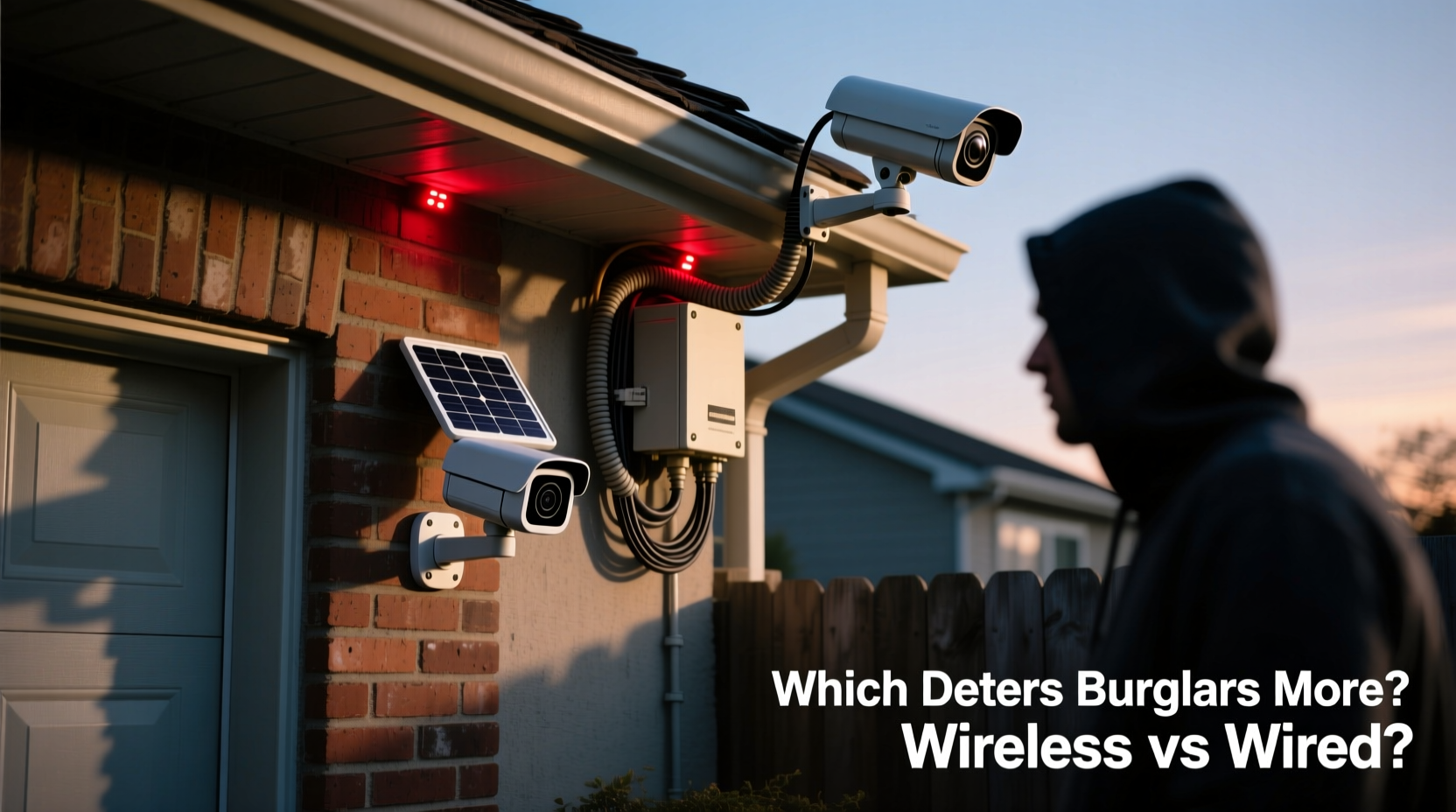
Before comparing technologies, it’s essential to understand what influences a burglar’s decision-making process. According to research from the Department of Justice and studies conducted by the University of North Carolina at Charlotte, most residential burglars conduct quick assessments before attempting a break-in. They look for signs of vulnerability—dark windows, lack of lighting, overgrown landscaping, and, crucially, the absence of visible security measures.
In a survey of 422 convicted burglars, 60% said they would avoid homes with obvious security systems, including cameras and alarm signs. Visibility matters. But beyond mere presence, the perceived reliability and resilience of a system also play a role. A flimsy-looking wireless camera mounted with weak brackets may not carry the same psychological weight as a rugged, hardwired unit with visible cabling.
“Burglars don’t want attention. A well-placed, professional-looking camera—especially one that appears difficult to disable—is enough to make them move on.” — Detective Mark Reynolds, Retired Crime Prevention Specialist
Wired Security Systems: Strengths and Weaknesses
Wired security systems have long been the standard for commercial and high-end residential installations. These systems use physical cables to transmit video data (typically coaxial or Ethernet) and receive power via centralized sources, often connected to a digital video recorder (DVR) or network video recorder (NVR).
Advantages of Wired Systems
- Uninterrupted Power Supply: Hardwired cameras draw power directly from the home’s electrical system, eliminating battery-related outages.
- Stable Video Transmission: Ethernet or coaxial cables provide consistent, high-bandwidth connections, reducing lag, buffering, or signal loss.
- Higher Resolution Feeds: Most wired systems support 4K and higher resolutions without compression issues common in wireless streaming.
- Less Susceptible to Interference: Unlike wireless signals, wired connections aren’t affected by Wi-Fi congestion, walls, or neighboring devices.
- Tamper Resistance: Visible wiring can signal to intruders that disabling the system requires effort and time—both of which increase risk of detection.
Disadvantages of Wired Systems
- Complex Installation: Requires drilling, running cables through walls, and professional setup in most cases.
- Higher Upfront Cost: Labor and materials increase initial investment.
- Less Flexibility: Cameras are fixed in place; repositioning involves rewiring.
- Vulnerable to Physical Cuts: Determined intruders can cut cables if accessible.
Wireless Security Systems: Pros and Cons
Wireless cameras have surged in popularity due to their ease of installation and smart home integration. These devices connect via Wi-Fi, store footage on cloud servers or microSD cards, and are powered by batteries or indoor outlets.
Advantages of Wireless Systems
- Easy DIY Installation: No drilling or electrician needed—just mount and sync via app.
- Scalability: Adding new cameras is simple and doesn’t require new cabling.
- Remote Access: Most offer real-time mobile alerts and live streaming from anywhere.
- Portability: Can be moved or repositioned easily as needs change.
- Aesthetic Appeal: Minimal visible hardware gives a cleaner, modern look.
Disadvantages of Wireless Systems
- Battery Dependency: Frequent charging or replacement required; dead batteries mean blind spots.
- Wi-Fi Vulnerabilities: Signal drops, interference, or router failures disrupt recording.
- Lower Reliability: Cloud storage delays or outages can result in lost footage.
- Easier to Disable: Intruders can jam Wi-Fi signals or remove batteries if cameras are within reach.
- Data Compression: To save bandwidth, many compress video, reducing clarity during playback.
Comparative Effectiveness in Deterring Burglars
Deterrence hinges on two key principles: perception and reliability. A system must appear capable of catching the intruder and must function consistently when tested.
Wired systems score higher on both counts. Their permanent, industrial appearance suggests professionalism and permanence. The presence of external cables—even if tucked—signals that the system is integrated into the home’s infrastructure, making sabotage more difficult. Additionally, because they don’t rely on batteries or Wi-Fi, they’re less likely to fail during critical moments.
Wireless systems, while convenient, can appear temporary or consumer-grade. Battery-powered models with small housings may not convey the same level of threat. Moreover, tech-savvy criminals know that Wi-Fi networks can be disrupted, and battery-powered devices eventually run out of juice.
“We’ve seen cases where burglars disabled entire wireless systems by simply placing a Wi-Fi jammer near the front door. Hardwired systems weren’t affected.” — Sarah Lin, Cybersecurity Consultant for Home Defense Solutions
Real-World Example: The Suburban Break-In Attempt
In a quiet neighborhood in Austin, Texas, two adjacent homes were targeted one evening. House A used a popular brand of wireless battery-powered cameras. House B had a professionally installed wired NVR system with visible outdoor units and signage.
The intruder approached both properties. At House A, he noticed the wireless camera but saw it was mounted loosely under the eave and had no external power cord. He covered it with spray paint, smashed it with a pipe, and entered through a side window. Inside, he found an alarm but managed to leave before police arrived.
At House B, he paused upon seeing four rugged cameras with thick cables running into the wall, illuminated by infrared LEDs. A sign read “24/7 Surveillance Monitored.” He checked the back yard—same setup. After 30 seconds, he walked away and never returned.
No footage was lost at House B. The system remained online throughout. At House A, the camera stopped recording mid-attack due to battery drain after motion activation.
Key Comparison Table: Wireless vs Wired for Burglar Deterrence
| Feature | Wireless System | Wired System |
|---|---|---|
| Installation Difficulty | Low – DIY-friendly | High – Often requires professional |
| Power Reliability | Medium – Battery-dependent | High – Continuous power supply |
| Signal Stability | Variable – Affected by Wi-Fi | Consistent – Direct cable transmission |
| Video Quality | Good – May compress for streaming | Excellent – Full bandwidth available |
| Tamper Resistance | Low – Easy to disable if accessible | High – Cables harder to cut discreetly |
| Deterrent Appearance | Moderate – Sleek but may look temporary | Strong – Industrial, permanent look |
| Maintenance Needs | High – Battery changes, updates | Low – Mostly set-and-forget |
| Overall Deterrence Score | ★★★☆☆ | ★★★★★ |
Actionable Checklist: Choosing the Right System for Maximum Deterrence
Use this checklist to evaluate your options based on actual crime prevention goals—not just features:
- ✅ Assess your home’s exterior: Are there dark zones or hidden entry points?
- ✅ Determine if you can conceal wiring or accept visible cables for greater credibility.
- ✅ Evaluate your Wi-Fi strength in outdoor areas—if weak, wireless may underperform.
- ✅ Consider hybrid options: Some systems use wired power with wireless transmission (PoE + Wi-Fi).
- ✅ Install visible signage regardless of system type—studies show it reduces targeting by 50%.
- ✅ Opt for motion-activated lighting paired with cameras to increase perceived surveillance.
- ✅ Test system redundancy: Do recordings continue during internet outages?
Step-by-Step Guide to Maximizing Deterrence
Follow these steps to ensure your chosen system delivers maximum impact:
- Conduct a Vulnerability Walkaround: Walk your property at night. Note blind spots, access points, and lighting conditions.
- Choose Camera Placement Strategically: Focus on entry points—doors, ground-floor windows, garages, and side alleys.
- Prioritize Perimeter Coverage: Exterior cameras are more effective deterrents than interior-only ones.
- Select for Durability: Look for weatherproof, vandal-resistant housings (IP66 or higher rating).
- Integrate with Alarms and Lights: Pair cameras with motion-triggered floodlights and audible alarms.
- Simulate Occupancy: Use scheduling features to turn lights or cameras on/off remotely.
- Display Your System Clearly: Use yard signs and window decals—even if you only have one camera.
Frequently Asked Questions
Can wireless cameras be hacked?
Yes. Any internet-connected device is vulnerable. However, using strong passwords, two-factor authentication, updated firmware, and a secure Wi-Fi network significantly reduces risk. Wired systems are not immune either—NVRs connected to networks can also be compromised if not properly secured.
Do fake security cameras work as deterrents?
Sometimes—but only temporarily. Experienced burglars can spot dummy cameras by their lack of wiring, poor mounting, or absence of indicator lights. Real systems with active IR LEDs at night send a stronger message. If using decoys, rotate their positions occasionally to maintain credibility.
Is a hybrid system a good compromise?
Absolutely. Many homeowners use wired cameras at primary entry points (for reliability) and supplement with wireless units in secondary zones (like backyards or sheds). This balances deterrence, coverage, and cost. Power-over-Ethernet (PoE) systems also allow single-cable power and data transmission, simplifying installation while retaining wired benefits.
Final Recommendation: Wired Wins for Deterrence
While wireless security cameras offer unmatched convenience and flexibility, they fall short in delivering the consistent, robust presence needed to effectively deter burglars. Wired systems, with their superior reliability, continuous operation, and professional appearance, create a stronger psychological barrier.
That said, the best approach may not be an either/or decision. A layered strategy—using wired cameras at critical access points and wireless units for extended coverage—combines the strengths of both. Add visible signage, motion lighting, and smart automation, and you create an environment where intrusion feels too risky to attempt.
Ultimately, the goal isn’t just to record crime—but to prevent it. And when it comes to sending a clear message: We are watching, and we are prepared—wired systems remain the gold standard.




 浙公网安备
33010002000092号
浙公网安备
33010002000092号 浙B2-20120091-4
Comments
No comments yet. Why don't you start the discussion?