
When installing outdoor security cameras, one of the most critical environmental challenges is enduring harsh weather—rain, snow, extreme heat, ice, and high winds. While both wireless and wired systems offer surveillance benefits, their reliability under adverse conditions varies significantly. Choosing between them isn't just about convenience or installation complexity; it's about long-term performance when conditions are at their worst. This article breaks down how each system handles severe weather, examining signal stability, power resilience, durability, and real-world effectiveness to help you make an informed decision for your property.
Weather Resistance: How Cameras Are Rated
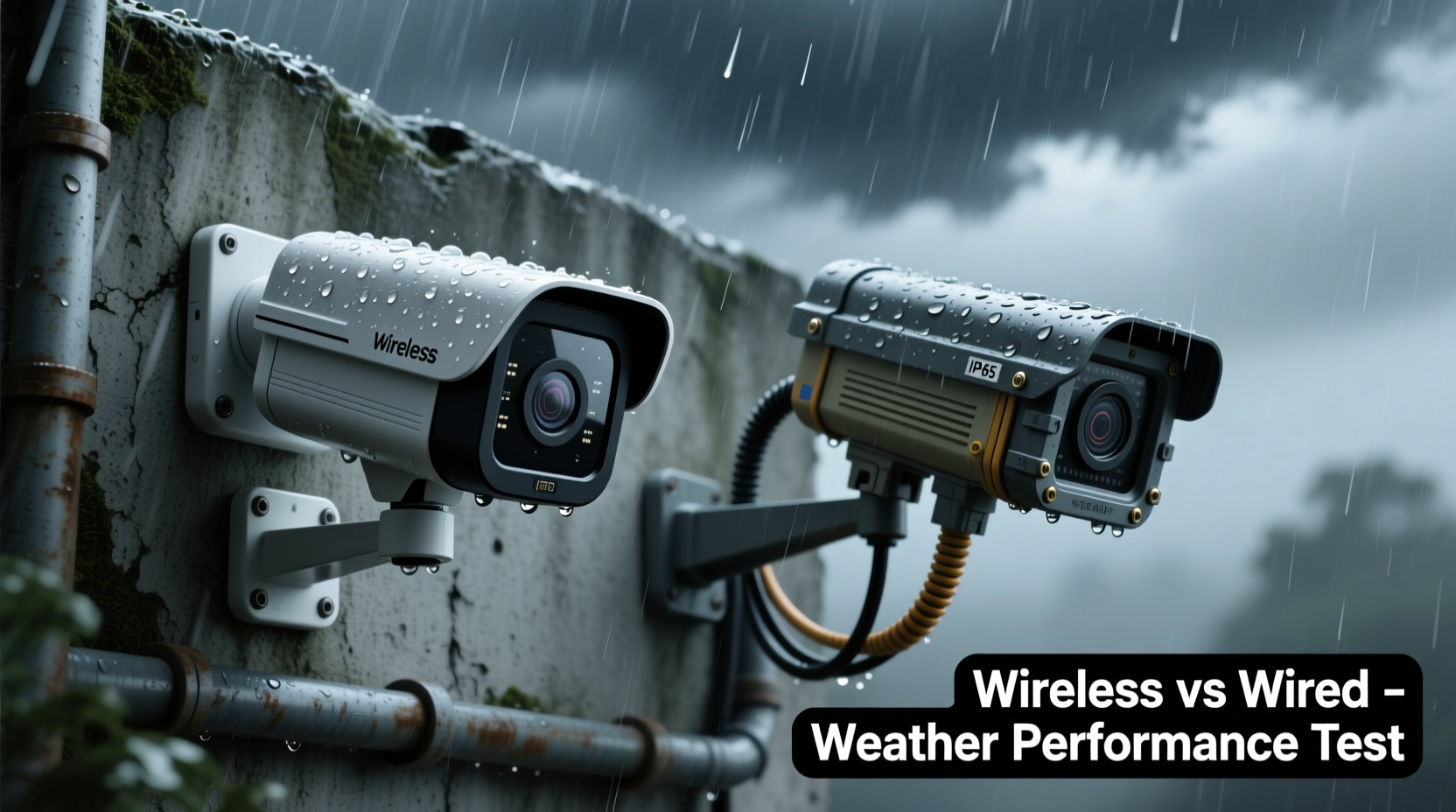
All outdoor security cameras must meet certain environmental protection standards to survive prolonged exposure. The IP (Ingress Protection) rating is the primary benchmark used to assess a camera’s resistance to dust and moisture. For example, an IP66 rating means the device is fully dust-tight and protected against powerful water jets, while IP67 indicates it can withstand temporary submersion. Most reputable wireless and wired outdoor models carry at least an IP65 or higher rating.
However, having a strong IP rating doesn’t guarantee consistent performance during storms or freezing temperatures. Internal components such as circuitry, batteries (in wireless models), and data transmission methods also play a crucial role in maintaining functionality during heavy rain, snow accumulation, or temperature extremes.
Wired Cameras: Stability Through Physical Connections
Wired security cameras transmit video through physical cables—typically coaxial, Ethernet (PoE), or fiber optic lines. This direct connection eliminates reliance on wireless signals, making them inherently more stable during electrical storms, high interference environments, or periods of network congestion.
In heavy rain or snowstorms, wireless signals can degrade due to atmospheric absorption and reflection, especially over longer distances. Wired systems bypass this issue entirely. Since data travels through insulated copper or fiber, weather-induced interference is minimal. Power-over-Ethernet (PoE) setups further enhance reliability by delivering both power and data over a single shielded cable, reducing vulnerability to power fluctuations.
Moreover, because wired cameras draw continuous power from a central source, they aren’t affected by battery depletion—a common failure point for wireless units during cold snaps. Lithium-ion batteries, commonly used in wireless models, lose efficiency rapidly below 32°F (0°C). In contrast, PoE-powered wired cameras operate consistently even in subzero conditions, provided the network switch remains powered.
“During our winter field tests, we observed that battery-powered wireless cameras required recharging up to 40% more frequently in temperatures below freezing. Wired systems showed no performance drop.” — Dr. Alan Reyes, Senior Engineer at Metro Surveillance Labs
Wireless Cameras: Convenience with Environmental Trade-offs
Wireless security cameras use Wi-Fi or cellular networks to transmit footage, offering easier installation and greater placement flexibility. However, this convenience comes at a cost when weather turns severe. Rain, fog, and wet snow absorb radio frequencies, weakening Wi-Fi signals between the camera and router. This can result in lag, dropped connections, or complete loss of live feed during storms.
Additionally, many wireless models rely on rechargeable batteries. Cold weather reduces battery capacity dramatically—sometimes cutting operational life in half. Even solar-charged models struggle during extended cloudy or snowy periods when panels are obscured. While some high-end wireless cameras now include low-temperature batteries or heating elements, these features increase cost and complexity.
Another concern is antenna exposure. Wireless cameras often have external antennas or require line-of-sight to the router. Snow buildup or ice on the lens housing can block signals or impair infrared night vision. Although modern enclosures are sealed, repeated freeze-thaw cycles may eventually compromise seals, leading to internal condensation and corrosion.
Real Example: Coastal Home Surveillance Failure
A homeowner in Maine installed four wireless cameras around their seaside property for year-round monitoring. During summer, the system performed well. But when winter arrived, two cameras mounted on north-facing eaves began failing intermittently. After investigation, it was found that ice accumulation blocked the Wi-Fi signal path, and internal battery voltage dropped below operational levels on days colder than 20°F (-6°C). Switching to a hybrid system—retaining one wireless unit indoors and replacing the others with PoE wired models—restored reliable coverage.
Comparative Performance Table: Wired vs Wireless in Bad Weather
| Factor | Wired Camera | Wireless Camera |
|---|---|---|
| Signal Stability in Rain/Snow | High – Unaffected by atmospheric interference | Moderate to Low – Signal attenuation in heavy precipitation |
| Power Source Reliability | High – Continuous via PoE or direct wiring | Variable – Battery-dependent; degrades in cold |
| Installation Complexity | Higher – Requires cabling and conduit | Lower – No wires needed beyond power outlet |
| Durability in Extreme Cold | Excellent – No battery dependency | Fair – Battery efficiency drops below freezing |
| Maintenance Needs | Low – Sealed connections, stable operation | Moderate – Battery checks, cleaning, recharging |
| Vulnerability to Storm Damage | Moderate – Cables can be damaged if exposed | High – Signal loss, power loss, overheating risks |
Key Installation Tips for Harsh Climates
Regardless of whether you choose wired or wireless, proper installation plays a major role in weather resilience. Here are actionable steps to maximize performance:
- Use conduit for all outdoor wiring: Protect Ethernet or power cables from UV degradation, rodents, and physical damage.
- Elevate mounting points: Install cameras above potential snow drift levels or flood zones.
- Install drip loops: Form a U-shaped loop in cables before entry points to prevent water from running into housings.
- Apply dielectric grease: On electrical connectors to prevent corrosion from moisture and salt air (especially near coasts).
- Choose shaded locations: Avoid direct afternoon sun to reduce thermal stress on electronics.
Step-by-Step Guide: Preparing Your System for Winter
- Inspect all camera housings: Check for cracks, loose seals, or signs of condensation inside the lens cover.
- Clean lenses and solar panels: Remove dirt, cobwebs, and debris that could trap moisture or reduce visibility.
- Test battery levels (wireless): Replace or recharge batteries before temperatures drop below 30°F (-1°C).
- Verify network signal strength: Use a Wi-Fi analyzer app to ensure minimum -70 dBm signal at camera locations.
- Seal entry points: Use silicone caulk or weatherproof grommets where cables enter buildings.
- Enable local storage backup: Ensure microSD cards or NVRs are functioning in case cloud connectivity fails.
- Schedule monthly checks: Monitor uptime logs and adjust positioning if obstructions develop.
Hybrid Solutions: Best of Both Worlds?
Some modern systems combine the strengths of both technologies. For instance, a wireless camera connected via PoE eliminates battery concerns while retaining flexible data transmission over Wi-Fi or cellular. Alternatively, using a wired backbone with wireless extensions allows core areas to remain highly reliable while covering distant zones like sheds or gates without trenching cables.
One growing trend is the use of mesh network extenders to boost Wi-Fi resilience. Placing a weather-rated access point midway between router and camera can maintain signal integrity during storms. However, this adds another potential failure point—each extender needs power and protection from the elements.
Frequently Asked Questions
Can wireless cameras work in heavy rain?
Yes, but performance may degrade. Heavy rain absorbs 2.4 GHz and 5 GHz signals, potentially causing buffering or disconnections. Cameras within 30 feet of the router usually remain functional, but longer distances increase risk. Using a 5 GHz band improves speed but has less penetration than 2.4 GHz in wet conditions.
Do wired cameras need surge protectors?
Absolutely. Lightning-induced surges can travel through Ethernet or power cables, destroying connected equipment. Always use UL-listed surge protectors or PoE injectors with built-in protection. For maximum safety, install grounded lightning arrestors on outdoor cable runs.
Are there wireless cameras that don’t use batteries?
Yes. Some “wireless” models still require a power cable but transmit data over Wi-Fi. These eliminate battery issues while simplifying data setup. They’re ideal for locations near outlets but far from network ports.
Final Recommendation: When to Choose Which System
If your priority is uninterrupted surveillance during blizzards, thunderstorms, or coastal humidity, **wired cameras—particularly PoE models—are the superior choice**. Their immunity to battery drain and signal interference ensures consistent recording and remote access when you need it most.
Wireless systems excel in temporary setups, rental properties, or retrofit installations where running cables is impractical. With careful planning—such as using AC-powered wireless units, adding signal boosters, and selecting cold-rated batteries—they can perform adequately in mild climates. But in regions with frequent extreme weather, they demand more maintenance and carry higher downtime risk.
Ultimately, reliability trumps convenience when security is at stake. A system that fails during a storm defeats its own purpose.




 浙公网安备
33010002000092号
浙公网安备
33010002000092号 浙B2-20120091-4
Comments
No comments yet. Why don't you start the discussion?