
Fall brings crisp air, golden leaves, and the annual wardrobe dilemma: what to wear when temperatures hover between cool and cold. Among the most debated choices is whether a women’s jacket or cardigan offers better warmth during this transitional season. While both are staples in autumn closets, their construction, materials, and functionality differ significantly. Understanding these differences helps you make informed decisions—not just about warmth, but also comfort, versatility, and style.
Understanding the Core Differences
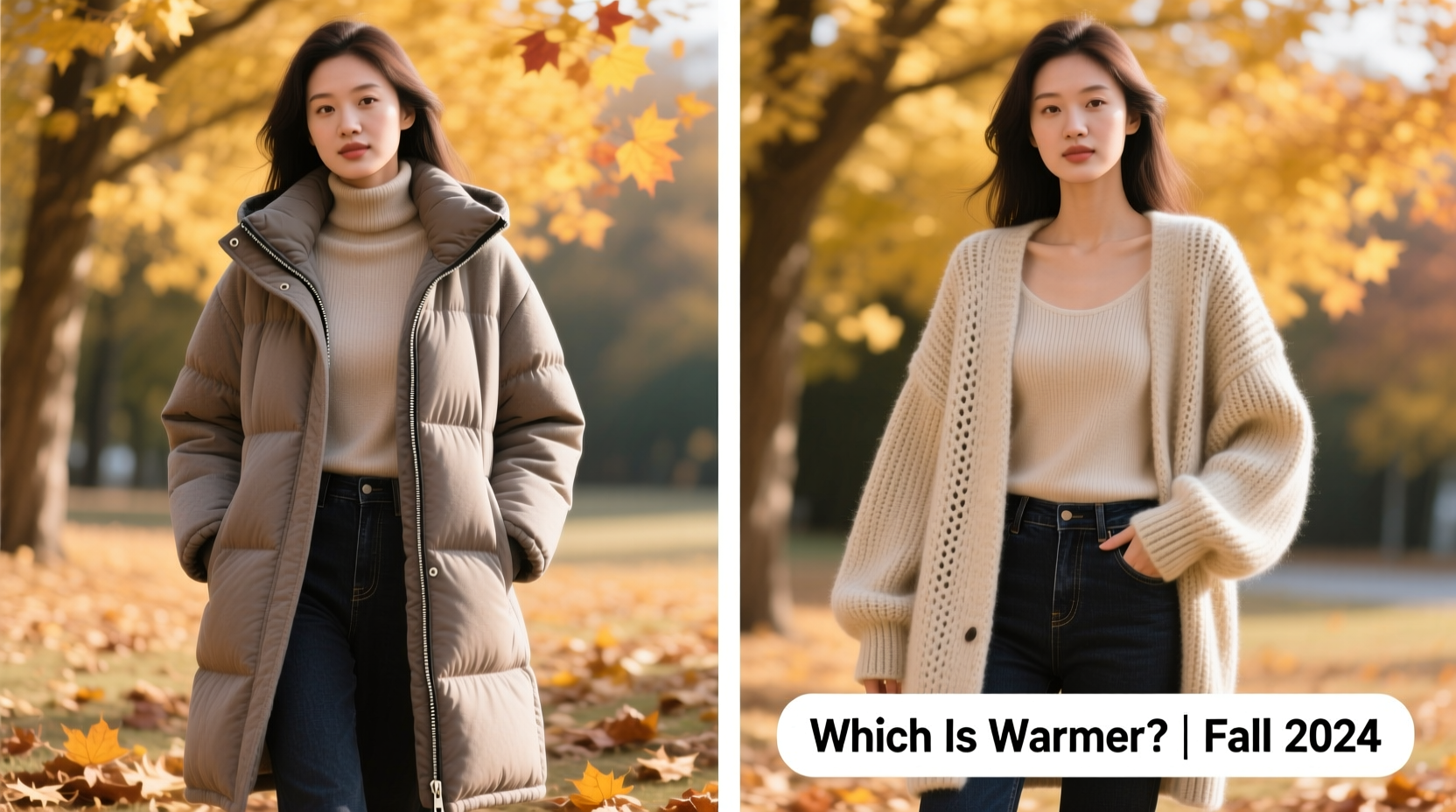
A jacket and a cardigan serve similar purposes—adding a layer of warmth—but they diverge in structure, closure, and typical use. Jackets are outerwear pieces designed to shield against wind, rain, and cold. They often feature zippers, snaps, or buttons down the front, insulated linings, and sturdier fabrics like wool blends, denim, or technical synthetics. Cardigans, on the other hand, are knits—typically made from wool, cotton, cashmere, or acrylic blends—and open at the front, making them more breathable and easier to remove indoors.
The fundamental distinction lies in purpose: jackets are built for protection; cardigans prioritize comfort and adaptability. This structural contrast directly impacts thermal performance, especially in variable fall weather where mornings are chilly and afternoons mild.
Material Matters: How Fabric Affects Warmth
Warmth isn’t determined solely by garment type—it hinges heavily on material composition. Here’s how common fabrics stack up:
- Wool: Naturally insulating, moisture-wicking, and temperature-regulating. Found in both tailored jackets and heavy cardigans, it excels in cool, damp conditions.
- Cashmere: Softer and warmer than wool by weight, but delicate. Often used in premium cardigans rather than outdoor jackets due to its susceptibility to abrasion.
- Fleece: Lightweight and highly effective at trapping heat. Common in casual jackets and some longline cardigans.
- Synthetic Blends (Polyester/Nylon): Wind-resistant and durable. Frequently used in performance jackets, especially those with thermal lining.
- Cotton: Breathable but less insulating when wet. Typical in unlined cardigans; not ideal for rainy fall days.
While a thick cashmere cardigan may feel cozier than a thin nylon windbreaker, comparing high-performance jackets to fashion-focused knits isn’t fair. The real question is: which category consistently delivers superior insulation across typical fall conditions?
“Insulation efficiency depends on trapped air. Well-constructed jackets with windproof shells outperform even dense knits in blustery conditions.” — Dr. Lena Torres, Textile Scientist, MIT Materials Lab
Comparative Analysis: Jacket vs Cardigan Warmth
To assess actual warmth, consider three key factors: insulation, wind resistance, and fit.
| Feature | Jacket | Cardigan |
|---|---|---|
| Insulation | Often includes padding, fleece lining, or quilted layers | Relies on knit density; no internal lining |
| Wind Resistance | High—tight weaves, collars, and closures block airflow | Low—open front and knit texture allow air penetration |
| Fit & Coverage | Snug cuffs, hem, and collar reduce heat loss | Loose edges let warm air escape easily |
| Mobility & Layering | Limited flexibility once zipped/belted | Easily adjustable; ideal for indoor-outdoor transitions |
| Durability in Wet Weather | Water-resistant options widely available | Most absorb moisture and lose insulation |
This comparison reveals that jackets generally offer superior thermal protection, particularly in windy or damp environments. However, cardigans shine in controlled climates or layered settings where overheating is a concern.
Real-World Example: Commuting Through Fall in Seattle
Sophia, a graphic designer in Seattle, faces drizzly mornings and office spaces kept at 72°F. Her go-to? A midweight merino wool cardigan over a turtleneck. It keeps her comfortable on the walk to the bus and allows quick adjustment upon entering heated buildings. On weekends hiking outside the city, she switches to a waterproof insulated jacket. “The cardigan is cozy, but only the jacket keeps me dry and warm when the wind picks up,” she says. Her experience underscores context as the deciding factor.
When a Cardigan Can Be Warmer (Yes, Really)
There are specific scenarios where a well-chosen cardigan rivals or even surpasses certain jackets in perceived warmth:
- Indoor-Outdoor Transitions: In offices, cafes, or events with fluctuating temperatures, a cardigan’s breathability prevents overheating.
- Layered Systems: A longline cashmere cardigan worn over a thermal top and under a coat adds significant insulation without restricting movement.
- Still Conditions: On calm, dry fall evenings, loose-knit wools trap body heat effectively—especially if made from high-loft yarns.
In essence, a cardigan isn’t inherently warmer than a jacket, but its integration into a smart layering strategy can enhance overall warmth retention while improving comfort.
Step-by-Step Guide: Choosing Your Fall Layer
- Assess your daily environment: Do you spend time outdoors, commute, or stay mostly indoors?
- Check the forecast: Wind and precipitation favor jackets; stable, dry conditions allow cardigan use.
- Consider your base layers: Thin thermals + cardigan may equal a light jacket in still air.
- Evaluate mobility needs: Jackets restrict arm movement slightly; cardigans offer freedom.
- Test combinations: Wear your top choice for an hour outside. Note comfort, sweating, and chill points.
- Adjust accordingly: Swap in a vest, scarf, or switch to a hybrid piece like a belted duster jacket.
Checklist: What to Look for in a Warm Fall Layer
- ✅ Insulated or lined construction (for jackets)
- ✅ High wool or cashmere content (for cardigans)
- ✅ Full front closure with secure fastening
- ✅ Snug cuffs and hem to prevent drafts
- ✅ Wind-resistant outer shell (jackets)
- ✅ Mid-to-long length for torso coverage
- ✅ Machine-washable or easy-care fabric (for frequent use)
Frequently Asked Questions
Can a cardigan be part of a winter layering system?
Absolutely. In colder months, a thick cardigan acts as an excellent mid-layer under a coat. Its open front allows ventilation when needed, reducing sweat buildup that leads to chill later.
Are denim or leather jackets warm enough for fall?
Denim and leather jackets provide minimal inherent insulation. They work best when lined or worn over sweaters. Unlined versions function more as wind barriers than true warmers.
What’s the warmest cardigan material?
Merino wool and cashmere offer the highest warmth-to-weight ratio. Alpaca is another excellent option—lighter than sheep’s wool but with superior heat retention.
Final Verdict: Which Is Actually Warmer?
For raw thermal performance in typical fall conditions—wind, fluctuating temps, occasional rain—a well-constructed jacket outperforms a cardigan. Its sealed design, protective shell, and added insulation create a microclimate around the body that knits simply can’t match. However, dismissing cardigans would be a mistake. Their strength lies in adaptability. When paired with smart layering, worn in low-wind settings, or used indoors, a quality cardigan provides sustained comfort without overheating.
The truth is, the warmest outfit isn’t defined by a single piece—it’s the result of strategic layering, material intelligence, and environmental awareness. Instead of choosing one over the other, build a rotation that uses both: a rugged jacket for blustery days, a luxurious cardigan for milder moments.




 浙公网安备
33010002000092号
浙公网安备
33010002000092号 浙B2-20120091-4
Comments
No comments yet. Why don't you start the discussion?