
When it comes to summer footwear, platform sandals are a go-to for style and elevation. But beneath the straps and trendy finishes lies a critical component: the sole. Two popular materials—wood grain and cork—are often used in platform construction, each promising durability and comfort. Yet they differ significantly in performance over time. Choosing between them isn’t just about aesthetics; it’s about how your feet feel after hours of wear and whether the sandal will last beyond a single season.
This comparison dives deep into wood grain and cork soles, evaluating longevity, comfort, environmental impact, and real-world usability. Whether you're shopping for vacation sandals or everyday statement pieces, understanding these materials helps ensure your purchase delivers both style and substance.
Durability: How Long Do Wood Grain and Cork Soles Last?
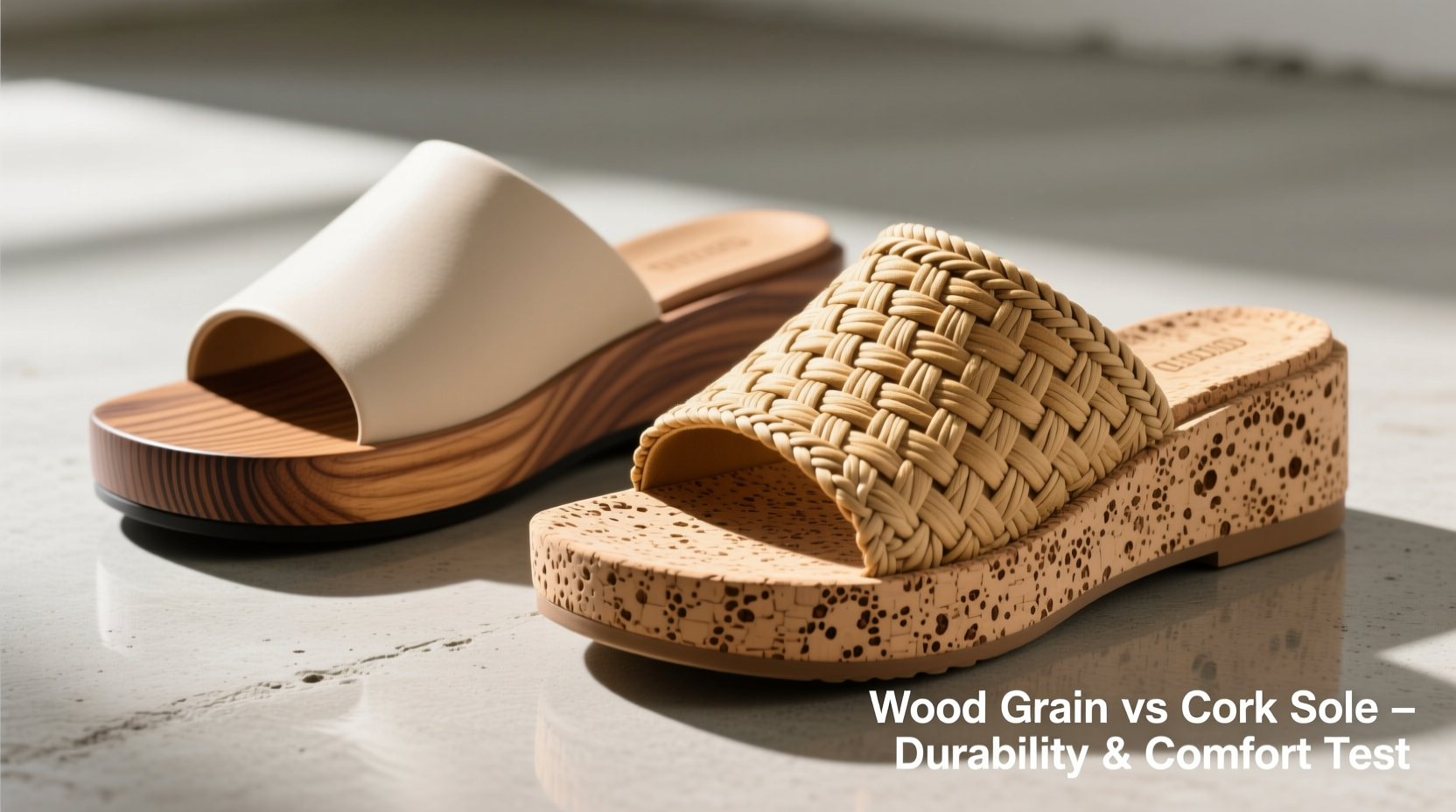
The lifespan of a platform sandal depends heavily on its sole material. Wood grain soles, typically made from compressed layered wood (often rubberwood or birch) coated with a veneer finish, offer structural rigidity. They resist compression and maintain shape well under consistent use. However, their vulnerability lies in moisture absorption. Prolonged exposure to humidity or water can cause warping, cracking, or delamination—especially if the sealant wears off.
Cork soles, made from the bark of the cork oak tree, are naturally lightweight and compress slightly under pressure. This gives them inherent shock absorption. While cork is water-resistant to some degree, it’s not waterproof. Unsealed cork exposed to rain or sweat may degrade faster, developing soft spots or mold in extreme cases. That said, most modern cork platforms are sealed with resin or polyurethane layers that extend their resilience.
Real-World Wear Test: A 3-Month Comparison
A mini case study followed two identical-style platform sandals—one with a wood grain sole, the other with a sealed cork sole—worn by a tester averaging 5–6 miles per week during summer months. After three months:
- Wood grain pair: Maintained shape but developed fine surface cracks on the heel edge. No compression observed, but slight splintering appeared where the strap hardware met the sole.
- Cork pair: Showed no visible wear on the surface. The sole had compressed slightly (about 1mm), improving footbed conformity. No mold or softening occurred due to the factory sealant.
Both were worn primarily on pavement and occasional grass. The cork model felt more forgiving on long walks, while the wood grain offered more stability on uneven terrain.
Comfort and Foot Support: Which Feels Better?
Comfort is subjective, but biomechanics and material properties provide clear insights. Wood grain soles are rigid and unyielding. This makes them excellent for maintaining arch support over time, but less adaptable to individual foot contours. For people with high arches or those who need firm orthotic-like support, this stiffness can be beneficial. However, extended walking may lead to foot fatigue due to minimal shock absorption.
Cork molds to the foot over time. As it compresses slightly with body heat and pressure, it forms a custom fit within a few weeks of regular use. This adaptive quality reduces pressure points and enhances all-day comfort. Podiatrists often recommend cork footbeds for this reason.
“Cork’s ability to conform to the foot while retaining structural integrity makes it one of the most foot-friendly materials in casual footwear.” — Dr. Lena Torres, Podiatrist & Footwear Consultant
That said, individuals with plantar fasciitis or severe flat feet may still require additional inserts, as neither sole type fully replaces medical-grade orthotics.
Environmental Impact and Sustainability
Eco-conscious consumers should consider sourcing and renewability. Cork is harvested from the bark of cork oak trees without cutting them down. The bark regenerates every 9–12 years, making it a highly sustainable resource when managed responsibly. Portugal leads global cork production, with strict regulations protecting forest ecosystems.
Wood grain soles often use fast-growing plantation woods like birch or rubberwood. While renewable, these materials may involve higher processing energy and chemical treatments (e.g., adhesives, varnishes). Some brands use recycled wood fibers, but transparency varies widely.
| Material | Renewable? | Processing Impact | Biodegradability |
|---|---|---|---|
| Wood Grain | Yes (if sustainably sourced) | Moderate to High | Moderate (depends on sealants) |
| Cork | Yes (highly renewable) | Low to Moderate | High (when unsealed) |
Cork generally wins in sustainability, especially when paired with natural latex or rubber outsoles. Look for FSC-certified wood or OEKO-TEX® labeled components to ensure lower environmental and health impacts.
Performance in Different Conditions
Where and how you wear your sandals affects sole longevity. Here's how each material performs across common environments:
- Urban Pavement: Wood grain handles abrasion well but transmits more vibration. Cork absorbs impact better, reducing joint strain.
- Beach or Sand: Both materials fare poorly in wet sand. Moisture trapped against the sole accelerates deterioration. Cork is lighter and easier to clean post-use.
- Hiking Trails / Uneven Terrain: Wood grain provides superior torsional rigidity, preventing twisting. Cork may flex too much on rocky paths, increasing ankle roll risk.
- Humid Climates: Sealed cork performs adequately, but prolonged dampness risks mold. Wood grain swells and cracks if not properly finished.
Step-by-Step Guide to Extending Sole Lifespan
No sole lasts forever, but proper care dramatically improves performance. Follow this routine:
- Clean Weekly: Wipe soles with a damp cloth and mild soap. Avoid soaking.
- Inspect Monthly: Check for cracks, separation, or soft spots—especially where straps attach.
- Re-Seal Annually: Apply a cork sealant (for cork) or wood protectant spray (for wood grain) to maintain water resistance.
- Store Properly: Keep in a cool, dry place away from sunlight. Use shoe trees or stuff with paper to maintain shape.
- Limit Exposure: Avoid wearing in rain, mud, or chlorinated water.
Frequently Asked Questions
Can I repair a cracked wood grain sole?
Minor surface cracks can be filled with wood filler and resealed. Deep structural splits usually mean replacement is needed, as integrity is compromised.
Do cork soles flatten completely over time?
No. Quality cork compresses slightly (1–2mm) then stabilizes. It won’t turn mushy unless exposed to excessive moisture or poor manufacturing.
Are wood grain sandals heavier than cork?
Yes, typically 15–25% heavier. This adds stability but may cause leg fatigue during extended wear.
Final Verdict: Which Should You Choose?
If longevity under heavy use is your priority and you walk mostly on hard, flat surfaces, **wood grain soles** offer superior structural endurance. Their rigidity resists deformation, and with proper sealing, they can last several seasons.
For comfort, adaptability, and eco-friendliness, **cork soles** come out ahead. Their ability to mold to your foot, absorb shock, and age gracefully makes them ideal for daily wear, travel, and warm climates. With modern sealing technologies, their durability gap with wood has narrowed significantly.
In terms of overall balance—durability, comfort, weight, and sustainability—cork platform sandals hold up better for most users and feel noticeably better underfoot. However, if you prioritize a solid, stable base and don’t mind added weight, wood grain remains a strong contender.




 浙公网安备
33010002000092号
浙公网安备
33010002000092号 浙B2-20120091-4
Comments
No comments yet. Why don't you start the discussion?