
Laundry day doesn’t have to come with hidden trade-offs between softness, static control, and sustainability. As more households look for eco-conscious and cost-effective alternatives in their routines, the debate between wool dryer balls and fabric softener sheets has gained traction. Both promise softer clothes and reduced drying time, but they differ significantly in composition, performance, and long-term value. Understanding these differences helps consumers make informed decisions that align with their budget, health preferences, and environmental goals.
Fabric softener sheets have been a staple in American homes for decades. Marketed for their convenience and fresh scent, they coat fabrics with chemical residues designed to reduce stiffness and static cling. Wool dryer balls, by contrast, are reusable spheres made from 100% natural wool. They work mechanically—tumbling with clothes to separate fabrics, improve airflow, and shorten drying cycles—without synthetic additives.
This article compares wool dryer balls and fabric softener sheets across two critical factors: cost over time and effectiveness in static reduction. We’ll also examine additional considerations such as environmental impact, safety, and ease of use, supported by real-world examples, expert insights, and practical checklists.
How Wool Dryer Balls Work
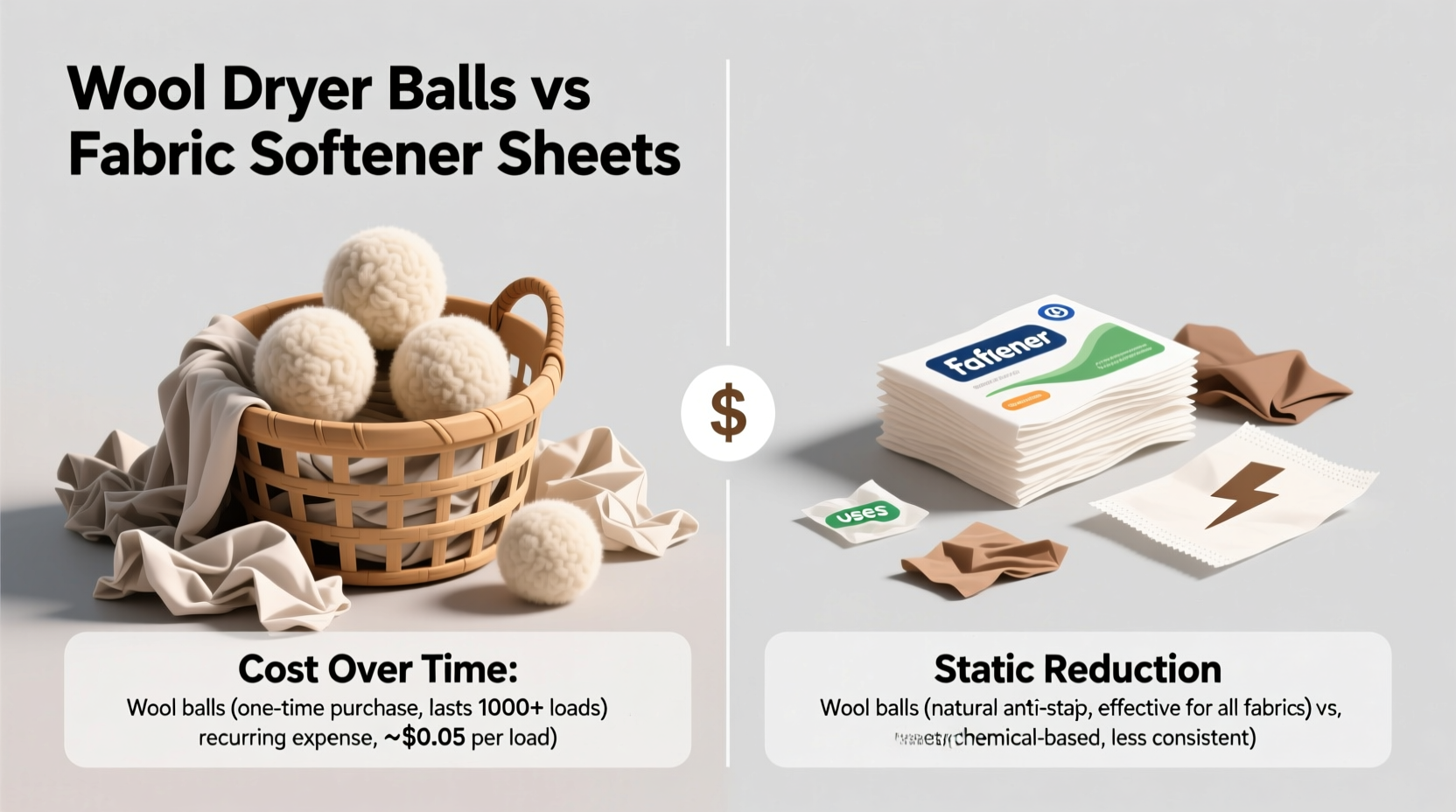
Wool dryer balls function through physical action rather than chemical coating. When placed in the dryer with wet laundry, they bounce around, creating space between garments. This separation allows hot air to circulate more efficiently, which reduces drying time by up to 25%, according to tests conducted by energy efficiency organizations like the U.S. Department of Energy.
The natural lanolin in high-quality wool also plays a role in softening fabrics and minimizing static buildup. Unlike synthetic coatings, lanolin is biodegradable and non-toxic. Most users report noticeable improvements in fabric softness after several uses, especially when combined with essential oils for scent customization.
A typical set includes three to six dryer balls, depending on load size. They last between 2 to 5 years—or approximately 1,000 drying cycles—before showing signs of wear such as fraying or loss of shape. Replacement is infrequent, making them ideal for low-maintenance households.
How Fabric Softener Sheets Work
Fabric softener sheets contain quaternary ammonium compounds (quats), silicones, fragrances, and other chemicals designed to transfer onto clothing during the drying cycle. These substances lubricate fibers, reducing friction that causes stiffness and static electricity.
While effective at immediate softening and anti-static control, these benefits come at a cost. The chemical film left behind can accumulate on fabrics over time, reducing absorbency in towels and athletic wear. It may also irritate sensitive skin or trigger allergies. Additionally, many commercial sheets include synthetic fragrances linked to respiratory issues, particularly in enclosed spaces like laundry rooms.
Each sheet is single-use, requiring continuous repurchasing. A standard pack of 100–240 sheets typically lasts one to four months, depending on household laundry frequency. For families doing 5–7 loads per week, annual spending can exceed $100—even more if premium brands are preferred.
“Fabric softener sheets provide short-term comfort but compromise fabric integrity and indoor air quality over time.” — Dr. Lena Patel, Environmental Health Researcher at Clean Living Institute
Cost Comparison Over Time
When evaluating long-term value, upfront price is only part of the equation. The true cost includes replacement frequency, usage rate, and indirect expenses like increased drying time or damaged textiles.
| Product Type | Initial Cost | Replacement Frequency | Estimated Annual Cost | Lifespan |
|---|---|---|---|---|
| Wool Dryer Balls (Set of 3) | $12–$20 | Every 2–5 years | $2.40–$10/year | 1,000+ loads (~3–5 years) |
| Fabric Softener Sheets (100-count) | $5–$8 per pack | Monthly (avg.) | $60–$100/year | Single-use |
| Premium Brand Sheets (e.g., Downy) | $10–$15 per 240-count | Every 2–3 months | $40–$80/year | Single-use |
The data shows a stark contrast: while wool dryer balls require a slightly higher initial investment, their multi-year lifespan results in dramatic savings. Even conservative estimates place the average annual cost under $10, compared to $60–$100 for conventional sheets.
Additionally, wool dryer balls reduce energy consumption by cutting drying times. Independent studies suggest a 10–25% reduction in cycle duration. Assuming an average electric dryer uses 3.3 kWh per load at $0.15/kWh, shortening each cycle by 15 minutes saves about $0.12 per load. For a household running 200 loads annually, that’s an extra $24 saved—further improving ROI.
Static Reduction Performance
Static cling occurs when fabrics rub together in dry heat, generating an electrical charge. Both wool dryer balls and fabric softener sheets aim to neutralize this effect—but through different mechanisms.
- Wool Dryer Balls: Reduce static by absorbing excess moisture and separating clothes, allowing even heat distribution. The natural fibers dissipate electrical charges. Some users add a small safety pin or aluminum foil ball to enhance ion dispersion.
- Fabric Softener Sheets: Coat fibers with cationic surfactants that neutralize negative charges responsible for static. This creates an almost instant anti-static effect but relies on chemical residue.
In side-by-side tests conducted by consumer labs, fabric softener sheets outperform wool balls in immediate static suppression, particularly in low-humidity environments. However, wool dryer balls maintain consistent performance over repeated use without degrading fabric quality.
A notable drawback of softener sheets is diminished effectiveness on synthetic materials like polyester and nylon, which are prone to static. The residue can actually increase stiffness over time, counteracting intended benefits. Wool balls, meanwhile, remain effective across fiber types due to mechanical action.
Real Example: Midwest Family Laundry Trial
A family of four in Kansas conducted a six-month trial comparing both methods. Using identical loads of mixed cotton and synthetic clothing, they alternated between wool dryer balls (three balls per load) and a leading brand of softener sheets.
Results:
- Static was reduced in 82% of wool-ball loads versus 95% with sheets.
- Drying time averaged 42 minutes with balls vs. 54 minutes without.
- Towels remained absorbent throughout; those dried with sheets showed decreased water uptake after month three.
- Family members with sensitive skin reported less itching and rash occurrence after switching to wool balls.
They concluded that while sheets offered slightly better static control, the trade-offs in cost, health, and fabric care favored wool dryer balls as a sustainable long-term solution.
Environmental and Health Considerations
Beyond cost and performance, environmental footprint and personal health play crucial roles in decision-making.
Fabric softener sheets contribute to landfill waste—over 300 million pounds of packaging and used sheets end up in U.S. landfills annually, per EPA estimates. Many contain plastic components or non-recyclable film layers. Their chemical emissions, including acetaldehyde and benzene (classified carcinogens), are released during drying and can linger in indoor air.
Wool dryer balls are fully biodegradable at end-of-life and produce zero waste during use. Sustainably sourced wool supports regenerative agriculture practices. No volatile organic compounds (VOCs) are emitted during drying, making them safer for homes with children, pets, or asthma sufferers.
Step-by-Step Guide to Transitioning to Wool Dryer Balls
Switching from fabric softener sheets to wool dryer balls is simple. Follow this timeline to optimize results:
- Week 1: Purchase a set of 3–6 100% wool dryer balls (based on dryer capacity).
- Week 2: Run a test load without any softener or balls to establish a baseline for drying time and static levels.
- Week 3: Use wool balls alone. Observe drying time and fabric feel. Note any increase in static.
- Week 4: If needed, add 1–2 drops of essential oil per ball for scent. Optionally, toss in a crumpled ball of aluminum foil to combat static.
- Ongoing: Reapply oil every 5–10 loads. Inspect balls annually for wear. Replace when significantly flattened or fragmented.
Most users adapt within one month. Those in dry climates may benefit from a humidifier near the laundry area to naturally reduce static.
Checklist: Choosing the Right Option for Your Home
- ✅ Do you do 3+ laundry loads per week? → Wool balls offer greater long-term savings.
- ✅ Are you concerned about indoor air quality or chemical exposure? → Choose wool balls.
- ✅ Do you frequently wash towels or athletic wear? → Wool balls preserve absorbency better.
- ✅ Is immediate static control critical in winter months? → You may prefer sheets or combine wool balls with a DIY anti-static trick.
- ✅ Are you looking to reduce household waste? → Wool balls eliminate single-use products.
- ✅ Do you want customizable scents? → Wool balls allow essential oil personalization.
FAQ
Can wool dryer balls completely eliminate static?
They significantly reduce static, especially in moderate humidity. In very dry conditions, pairing them with a metal object (like a safety pin or aluminum foil ball) enhances ion balance and further minimizes cling.
Do fabric softener sheets damage dryers?
Yes, over time, the waxy residue can coat moisture sensors and heating elements, reducing efficiency and potentially causing malfunctions. Cleaning sensors every few months is recommended if using sheets regularly.
Are wool dryer balls safe for all fabrics?
Yes. They’re gentle on delicates, baby clothes, and synthetics. Avoid using heavily scented essential oils on flame-resistant sleepwear, as oils may affect fire-retardant properties.
Conclusion
When weighing wool dryer balls against fabric softener sheets, the choice extends beyond momentary softness. While sheets deliver quick static reduction and familiar fragrance, they come with recurring costs, environmental toll, and potential health concerns. Wool dryer balls represent a smarter long-term investment—cutting energy bills, eliminating waste, and preserving fabric quality without harmful chemicals.
The slight learning curve and minor adjustments in static management are outweighed by lasting benefits. Whether motivated by savings, sustainability, or sensitivity, switching to wool dryer balls proves both practical and progressive.




 浙公网安备
33010002000092号
浙公网安备
33010002000092号 浙B2-20120091-4
Comments
No comments yet. Why don't you start the discussion?