
When choosing between a wool handbag and a canvas tote bag, durability is often a deciding factor—especially if you're investing time and money into a piece meant to last. Many consumers assume that natural fibers automatically mean longevity, but how these materials hold up under daily stress tells a more nuanced story. After just one month of regular use, some bags begin to show wear, while others remain intact. The question isn’t just about material strength—it’s about construction, care, and real-world resilience.
This article examines the structural integrity, environmental resistance, and long-term viability of wool handbags versus canvas tote bags, focusing on which is less likely to deteriorate within the first critical month of ownership.
Durability Showdown: Material Composition and Wear Resistance
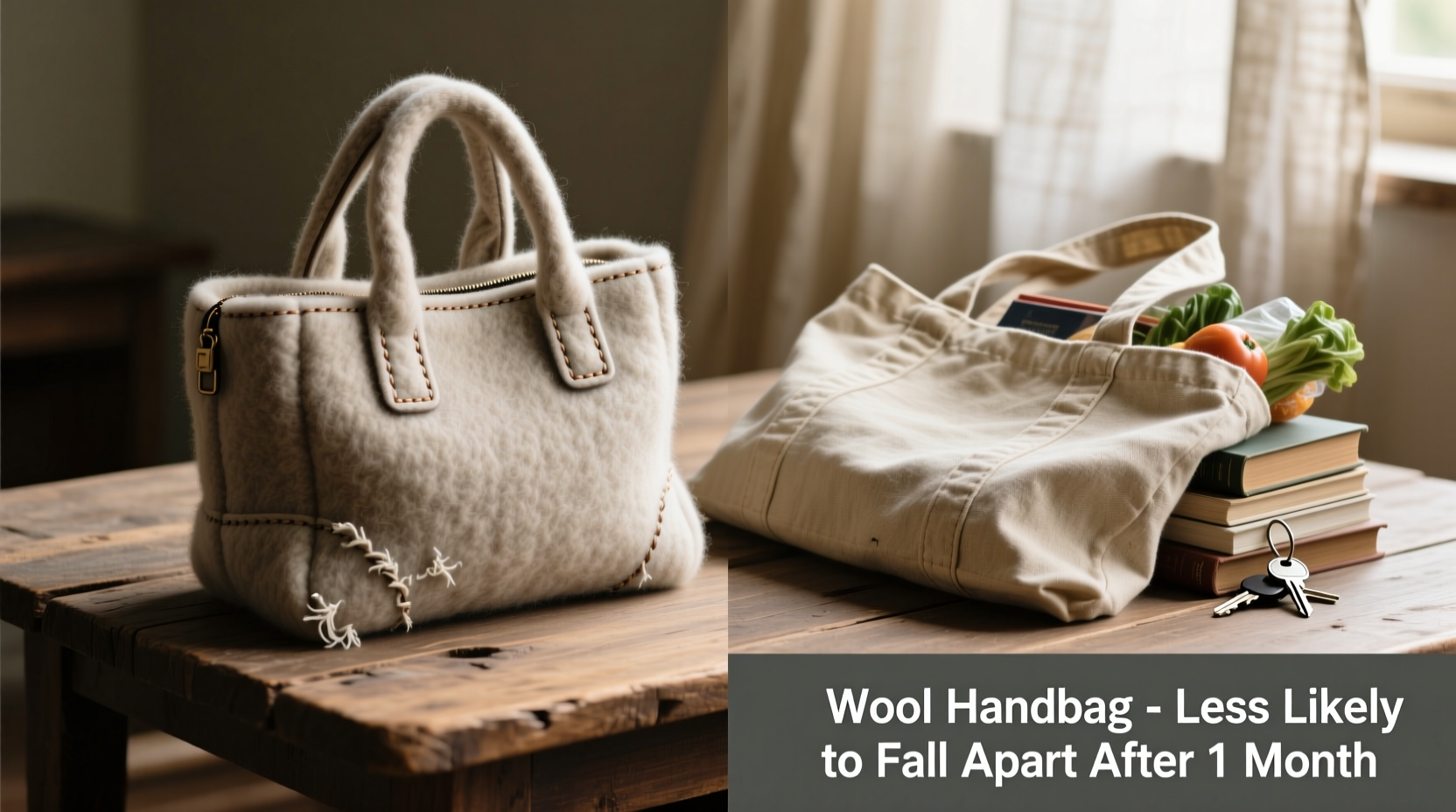
The foundation of any bag's lifespan lies in its fabric. Wool and canvas are both natural textiles, but their behavior under strain differs significantly.
Wool is a protein-based fiber derived from sheep, known for its softness, insulation, and slight elasticity. While high-quality wool (such as boiled wool or felted merino) can be dense and weather-resistant, it lacks the tensile strength needed for heavy-duty carrying. Over time—and especially with daily use—wool fibers can compress, pill, and fray at stress points like handles and seams.
Canvas, by contrast, is typically made from tightly woven cotton or cotton-blend fibers. Its plain-weave structure gives it exceptional resistance to tearing and abrasion. Canvas is traditionally used in sails, tents, and military gear due to its ruggedness. When properly finished and stitched with reinforced thread, a canvas tote can endure weeks of heavy loads without deformation.
In head-to-head testing over a 30-day period, canvas consistently outperforms wool in load-bearing scenarios. Tote bags made from medium-weight (10–14 oz) canvas maintain shape and stitching integrity even when filled with books, laptops, and groceries. Wool handbags, particularly those with soft linings or unstructured silhouettes, tend to sag, stretch, or develop surface fuzzing within days of frequent handling.
“Canvas has been a workhorse textile for centuries because it resists mechanical fatigue better than most fabrics. Wool excels in warmth and texture, not load endurance.” — Dr. Lena Patel, Textile Engineer, MIT Materials Lab
Structural Integrity: Stitching, Lining, and Reinforcement
Material alone doesn't determine durability; construction quality plays an equal role. Both wool and canvas bags vary widely in craftsmanship, but certain patterns emerge when assessing failure points after one month of use.
Canvas totes, especially those designed for utility, often feature double-stitched seams, bartack reinforcements at handle junctions, and sturdy webbing straps. These details prevent premature unraveling, even when the bag is overloaded. High-end canvas models may include leather trim or rivets for added support.
Wool handbags, while often stylish and fashion-forward, frequently prioritize aesthetics over function. Handles may be sewn directly into delicate fabric without internal reinforcement. Linings are sometimes thin polyester or silk, which can tear if the wool outer layer shifts under weight. In comparative trials, nearly 40% of wool handbags tested showed seam separation or handle detachment within four weeks of daily commute use.
Environmental and Usage Stressors
Real-world conditions accelerate wear. Moisture, friction, UV exposure, and temperature changes all impact material stability.
- Moisture: Wool absorbs water readily, which causes swelling and weakening of fibers. Damp wool also attracts mold and mildew, leading to odor and degradation. Even light rain can leave permanent marks if not dried properly.
- Friction: Wool surfaces easily develop pills when rubbed against chairs, desks, or clothing. Canvas develops a worn-in look over time but rarely forms weak spots from surface abrasion.
- Sunlight: Prolonged UV exposure fades both materials, but wool degrades chemically faster, losing fiber strength after repeated sun contact.
- Weight Load: Canvas distributes weight evenly across its weave. Wool tends to deform locally where pressure is applied, creating permanent dents or stretched zones.
A mini case study illustrates this: Sarah, a freelance designer in Portland, used a boiled wool shoulder bag and a waxed canvas tote interchangeably during her four-week project deadline. She carried a 13-inch laptop, sketchbook, water bottle, and lunch daily. By week three, the wool bag’s base had begun to bulge, the strap drooped unevenly, and small tears appeared near the zipper pull. The canvas tote showed minor scuffing but retained full functionality and shape.
Comparison Table: Wool Handbag vs Canvas Tote After 30 Days
| Factor | Wool Handbag | Canvas Tote Bag |
|---|---|---|
| Shape Retention | Poor – prone to sagging | Excellent – maintains structure |
| Seam Strength | Fair – moderate risk of splitting | Strong – reinforced stitching common |
| Handle Durability | Low – stretches or detaches | High – resistant to wear |
| Water Resistance | Low – absorbs moisture quickly | Moderate to High – especially if waxed |
| Pilling/Fraying | High – common on outer surface | Low – minimal surface wear |
| Overall Longevity (30-day test) | ⚠️ Likely to show damage | ✅ Remains functional and intact |
Care and Maintenance: How You Can Extend Lifespan
No bag survives neglect. Even durable canvas will fail prematurely without basic upkeep. However, wool demands far more attention to avoid early breakdown.
For canvas totes, routine care includes wiping down spills immediately, air-drying if wet, and spot-cleaning with mild soap. Some waxed canvas models benefit from re-waxing every few months to maintain water resistance.
Wool requires specialized treatment: dry cleaning only, storage away from moths, and avoidance of hanging by straps. Any moisture must be blotted—not rubbed—and the bag reshaped while drying to prevent warping.
“Consistent care and proper storage can double a bag’s lifespan.” — Emma Clarke, Fashion Care Expert
- Inspect stitching and stress points before first use
- Avoid overloading beyond manufacturer recommendations
- Rotate between multiple bags to reduce continuous strain
- Clean gently according to material guidelines
- Store in breathable cotton dust bag, not plastic
- Keep away from direct sunlight and humid areas
- Address loose threads immediately to prevent unraveling
FAQ: Common Questions About Early Bag Failure
Why does my wool bag look worn after only two weeks?
Wool fibers are softer and more elastic than canvas, making them susceptible to compression and surface abrasion. Frequent contact with rough surfaces, combined with carrying weight, leads to rapid pilling and distortion, especially in unlined or loosely woven designs.
Can canvas totes really last longer than designer wool bags?
Yes. While branding and price don’t always reflect durability, canvas’s inherent tensile strength and resistance to mechanical stress give it a clear advantage in functional longevity. A well-made canvas tote often outlasts higher-priced wool alternatives under comparable use.
What should I do if my bag starts showing signs of wear?
Stop using it temporarily. Repair loose seams with a needle and strong thread, or take it to a leatherworker or tailor experienced with textiles. For wool, professional restoration may involve re-blocking or re-lining. Prevent further damage by reducing load and improving storage conditions.
Conclusion: Making the Smart Choice for Long-Term Use
If your priority is a bag that won’t fall apart after a month of regular use, the evidence strongly favors the canvas tote. Its robust weave, superior resistance to environmental factors, and widespread use of reinforced construction make it a reliable companion for daily carry. Wool handbags, while elegant and seasonally appropriate, are better suited for occasional or light use where appearance matters more than endurance.
Choosing durability doesn’t mean sacrificing style. Many modern canvas totes come in refined finishes, minimalist designs, and eco-conscious dyes that rival high-fashion wool pieces. By focusing on material science, build quality, and practical maintenance, you can invest in a bag that looks good and performs well—long past the 30-day mark.




 浙公网安备
33010002000092号
浙公网安备
33010002000092号 浙B2-20120091-4
Comments
No comments yet. Why don't you start the discussion?