
When winter winds howl and temperatures plummet, pet owners face a critical decision: how to keep their dogs warm without sacrificing comfort or mobility. Among the most popular choices are wool and fleece dog coats—both praised for their softness and insulating properties. But which one truly offers superior warmth? And more importantly, which is better suited for your dog’s specific needs? The answer isn’t as straightforward as it seems, and depends on factors like breed, activity level, climate, and even coat sensitivity.
Understanding the science behind each material, along with practical performance in real-world conditions, helps pet parents make informed decisions. This guide breaks down the key differences between wool and fleece, evaluates warmth, moisture management, durability, and safety, and provides actionable insights so you can choose the right coat for your pup—without guesswork.
The Science of Warmth: How Insulation Works in Dog Coats
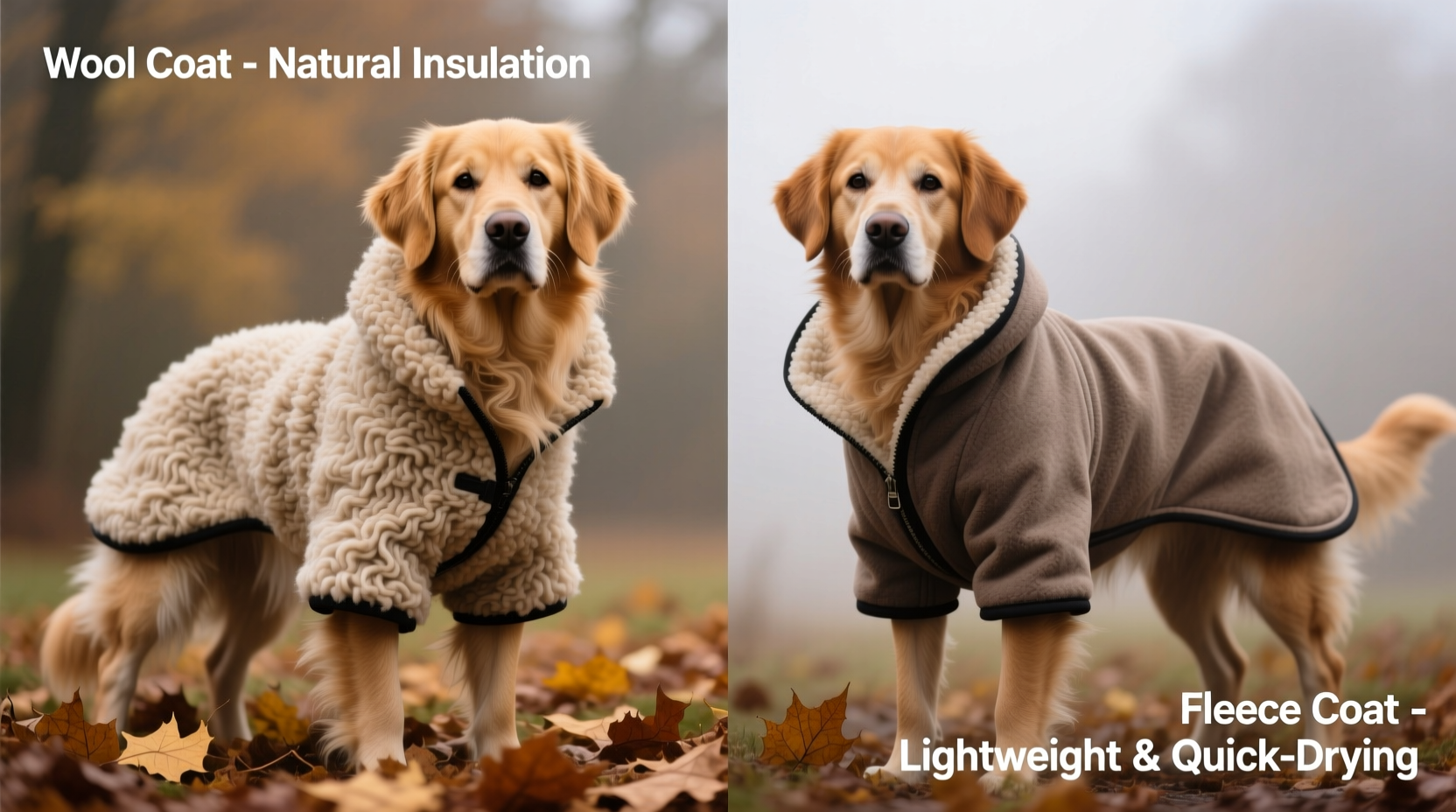
Warmth in dog coats comes from a material’s ability to trap body heat and resist cold air infiltration. Both wool and fleece excel at this, but through different mechanisms.
Fleece, typically made from polyester, creates tiny air pockets within its fibers. These pockets act as thermal barriers, holding warm air close to the body while blocking wind. It's lightweight and dries quickly, making it ideal for active dogs who generate heat during walks.
Wool, especially merino or other high-grade natural wool, uses a more complex process. Wool fibers naturally crimp, forming insulating layers that retain heat even when damp. Unlike synthetic materials, wool can absorb up to 30% of its weight in moisture without feeling wet—a crucial advantage in snowy or rainy climates where dogs get wet paws and bellies.
However, not all wool is created equal. Thick, coarse wool may irritate sensitive skin, while ultrafine merino is soft and non-itchy. Similarly, not all fleece performs the same; high-pile variants offer more warmth than thin, flat versions.
Head-to-Head Comparison: Wool vs Fleece
| Feature | Wool | Fleece |
|---|---|---|
| Warmth (Dry Conditions) | Excellent – traps heat efficiently due to natural crimping | Very Good – effective air-trapping, but less dense than wool |
| Warmth (Wet Conditions) | Superior – retains insulation even when damp | Poor – loses most insulating power when wet |
| Breathability | High – regulates temperature and reduces overheating | Moderate – can trap sweat, leading to clamminess |
| Durability | Good – resists abrasion, but can mat over time | Variable – prone to pilling, especially cheaper variants |
| Odor Resistance | Excellent – naturally antimicrobial | Poor – holds odors unless treated |
| Eco-Friendliness | Biodegradable, renewable resource | Synthetic, derived from petroleum; microplastic shedding |
| Allergy Risk | Low with merino; higher with coarse wool | Generally low, but static can attract dust |
Real-World Performance: When Each Material Shines
In dry, windy environments, fleece performs admirably. Its quick-drying nature suits short walks or urban outings where exposure to moisture is limited. However, once snow starts melting into slush or rain begins to fall, fleece quickly becomes saturated. Once wet, it collapses, losing its loft and insulating capability. A soaked fleece coat does little more than cling to your dog’s back, potentially drawing heat away rather than preserving it.
Wool, by contrast, maintains its structure and warmth even after absorbing moisture. This makes it an excellent choice for dogs living in regions with frequent snow, sleet, or damp winters. Working breeds like Border Collies, Huskies, or hunting dogs benefit significantly from wool-lined coats during extended outdoor exposure.
“Natural fibers like wool have a unique ability to regulate temperature dynamically. They warm when it’s cold and release heat when the dog starts moving—something synthetics struggle to replicate.” — Dr. Lena Torres, Veterinary Dermatologist & Canine Wellness Advisor
That said, wool isn’t perfect. It requires more care: hand washing or gentle machine cycles, air drying, and protection from moths. Fleece wins in convenience—most are machine washable, dry fast, and resist wrinkles.
A Mini Case Study: Two Dogs, Two Climates
Consider two scenarios:
Dog #1: Max, a 7-year-old French Bulldog in Portland, Oregon. Winters are mild but consistently wet. Max walks daily regardless of rain. His owner tried a standard fleece jacket last year—it worked fine until January, when constant dampness caused it to flatten and lose warmth. Max started shivering mid-walk. Switching to a merino wool blend coat with a water-resistant outer shell solved the issue. Even after getting splashed, the coat retained shape and warmth.
Dog #2: Luna, a Siberian Husky in Denver, Colorado. She runs with her owner in sub-zero temperatures. While she has a thick double coat, her belly and chest are exposed. A heavy-duty fleece vest with reflective strips allows her to stay warm during high-intensity runs without overheating. The quick-dry feature means any snow that melts off her fur doesn’t linger in the fabric.
These examples show that the “best” coat depends on lifestyle and environment—not just material alone.
Choosing the Right Coat: A Practical Checklist
Use this checklist to evaluate whether wool or fleece is right for your dog:
- ✅ Does your dog spend long periods outdoors in wet or snowy conditions? → Lean toward wool.
- ✅ Is your dog highly active during winter walks or runs? → Fleece may prevent overheating.
- ✅ Does your dog have sensitive skin or allergies? → Opt for merino wool or hypoallergenic microfleece.
- ✅ Do you prefer low-maintenance, machine-washable gear? → Fleece is easier to care for.
- ✅ Are you environmentally conscious? → Wool is biodegradable and renewable.
- ✅ Is wind resistance important? → Look for coats combining wool/fleece with windproof outer layers.
- ✅ Does your dog dislike bulky clothing? → Choose slim-fit designs with high-loft materials for maximum warmth-to-weight ratio.
Common Misconceptions Debunked
Myth: “Fleece is always warmer because it’s fluffy.”
Reality: Fluffiness doesn’t equal warmth retention, especially when wet. Wet fleece compresses and insulates poorly.
Myth: “All wool is scratchy and uncomfortable for dogs.”
Reality: Modern merino wool used in pet apparel is ultra-fine, soft, and non-irritating—even for dogs with delicate skin.
Myth: “If my dog has a thick coat, they don’t need a jacket.”
Reality: Breeds like Huskies are built for dry cold, not wet chill. Exposure to rain or icy wind can still lead to hypothermia, especially in puppies, seniors, or dogs with health issues.
FAQ: Your Top Questions Answered
Is wool really warmer than fleece?
Yes, especially in damp conditions. Wool retains up to 80% of its insulating power when wet, while fleece loses most of its effectiveness once saturated.
Can I put a wool coat over a fleece layer?
Layering is possible, but caution is needed. Most dogs don’t require multiple insulating layers. Over-layering can cause overheating, excessive sweating, and discomfort. If layering, use a thin fleece base with a breathable wool outer—and monitor your dog closely.
How do I clean a wool dog coat?
Hand wash in cool water with a wool-safe detergent. Avoid wringing or twisting. Lay flat to dry away from direct heat. Never tumble dry, as this can shrink or felt the fibers.
Final Recommendation: Match Material to Lifestyle
There’s no universal winner in the wool vs fleece debate. For dogs in wet, variable climates or those with sensitive skin, **wool—particularly merino—is the superior insulator** and more sustainable option. For active dogs in dry, cold regions, **high-quality fleece offers unmatched breathability and ease of care**.
The smartest approach? Consider hybrid designs. Many premium dog coats now combine a wool or fleece inner layer with a waterproof, wind-resistant shell. This gives you the best of both worlds: moisture-wicking warmth inside and weather protection outside.
Ultimately, the best coat is one that fits well, suits your dog’s routine, and keeps them comfortable without restricting movement. Whether you choose wool, fleece, or a blend, pay attention to how your dog responds—shivering, scratching, or reluctance to walk can signal a poor match.




 浙公网安备
33010002000092号
浙公网安备
33010002000092号 浙B2-20120091-4
Comments
No comments yet. Why don't you start the discussion?