
When choosing a suit, the conversation often turns to fabric. Wool and tweed are two of the most commonly discussed materials in men’s tailoring, yet they’re frequently misunderstood. Are they interchangeable? Is one inherently superior? Or is the distinction mostly marketing noise? The truth lies somewhere between tradition, climate, and personal use. Understanding the real differences—and where they actually matter—can transform how you build and wear your wardrobe.
The Core Differences: Wool vs Tweed
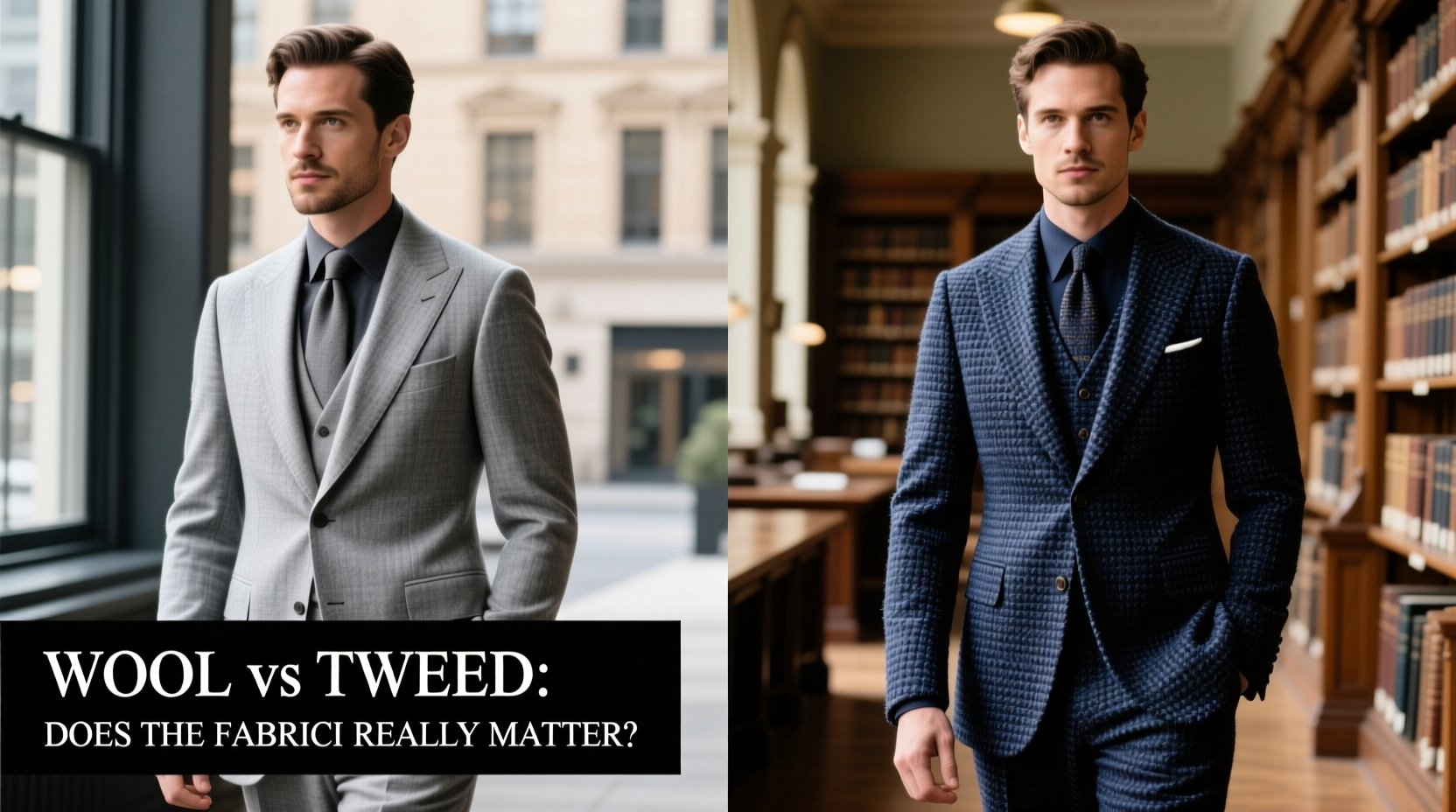
At first glance, wool and tweed may seem like competing fabrics, but that’s not quite accurate. Wool is a natural fiber sourced from sheep; tweed is a type of weave—often made from wool—that originated in rural Scotland and Ireland. So technically, most tweed suits are wool suits, but not all wool suits are tweed.
Wool is prized for its softness, drape, breathability, and resilience. It comes in various forms—merino, worsted, cashmere blends—each offering different textures and performance levels. In contrast, tweed is typically woven using a plain or twill weave with a rougher, more textured finish. It's usually heavier, nubbier, and designed for durability rather than sleek elegance.
The confusion arises because both are associated with classic menswear. But their applications diverge significantly. A fine worsted wool suit belongs in a boardroom; a herringbone tweed jacket fits better on a country walk or at a casual autumn gathering.
Performance Across Seasons and Settings
Fabric choice isn’t just about aesthetics—it directly affects comfort and suitability. Wool, especially in lighter weaves (like tropical wool), performs well in warmer climates due to its moisture-wicking and temperature-regulating properties. These suits are ideal for spring and summer events or indoor environments with air conditioning.
Tweed, by nature, is thicker and less breathable. Its density provides insulation, making it excellent for fall and winter. However, wearing a full tweed suit in July under direct sun would be uncomfortable, if not impractical. That said, the same weight that limits its seasonal versatility also makes it durable. Tweed resists abrasion and holds up well over time, especially when worn occasionally or in rugged settings.
A Closer Look at Texture and Formality
The visual language of fabric plays a major role in perception. A smooth, tightly woven wool suit signals formality, precision, and polish. It’s the default choice for interviews, weddings, and business meetings. The finer the wool—measured by the “super” number (e.g., Super 120s)—the softer and more luxurious it feels, though higher numbers can sacrifice durability.
Tweed, on the other hand, announces character. With its visible slubs, flecks of color, and coarse texture, it leans toward the informal or rustic end of the spectrum. While a tweed suit can be tailored impeccably, it rarely reads as \"corporate.\" Instead, it conveys individuality, heritage, and a relaxed confidence. Think professors, writers, or creative directors—not investment bankers on Wall Street.
“Tweed is cloth with a story. It doesn’t hide its origins. Wool can be anonymous; tweed always has a voice.” — Julian Hartwell, Bespoke Tailor, Savile Row
Practical Considerations: Care, Longevity, and Cost
Both fabrics require care, but in different ways. Fine wool suits are more vulnerable to moths, pilling, and shine from friction. They should be brushed regularly, stored on padded hangers, and dry cleaned sparingly. Over-cleaning degrades the fibers, so spot cleaning and airing out are preferred.
Tweed is more forgiving. Its texture hides minor stains and wear, and the coarser yarns resist pilling. However, it still needs protection from dampness and pests. Cedar blocks or lavender sachets in storage help deter moths without harsh chemicals.
In terms of cost, high-quality wool suits range widely—from $500 for off-the-rack to several thousand for custom work. Tweed suits are often priced similarly, but rare weaves (like Harris Tweed, handwoven in the Outer Hebrides) command premiums due to craftsmanship and limited production.
| Feature | Wool Suit | Tweed Suit |
|---|---|---|
| Weight | Light to medium | Medium to heavy |
| Best Season | Spring, Summer, Climate-Controlled Environments | Fall, Winter |
| Formality Level | High | Low to Moderate |
| Durability | Good (varies by weave) | Excellent |
| Texture | Smooth, refined | Rough, nubby, textured |
| Styling Flexibility | Full suit or separates | Better as separates (e.g., blazer with chinos) |
Real-World Use: When Fabric Choice Matters
Consider James, a marketing executive based in London. His job requires client meetings, presentations, and occasional travel. His wardrobe includes three core suits: a navy worsted wool for daily office wear, a charcoal flannel wool for winter formal events, and a brown herringbone tweed blazer he pairs with dark jeans for Friday casual or weekend outings.
He initially bought a full tweed suit thinking it would be versatile. After wearing it to a midday conference in May, he found himself overheating and noticed colleagues glancing curiously—his outfit stood out for the wrong reasons. He learned quickly: tweed commands attention, but not always in professional settings. Now, he uses the jacket strategically and keeps the trousers for countryside visits.
This example illustrates that fabric isn’t just about personal taste—it’s about context. Wearing the right material at the right time enhances confidence and credibility.
Step-by-Step Guide: Choosing the Right Suit Fabric
- Assess your environment: Do you work indoors with climate control, or spend time outdoors in variable weather?
- Determine frequency of wear: Will this suit be used weekly or occasionally?
- Evaluate formality needs: Is it for corporate settings, weddings, or creative/casual events?
- Consider climate: Choose lightweight wool (e.g., 7–9 oz) for warm areas; tweed or flannel (10+ oz) for cold regions.
- Think long-term: Invest in a versatile worsted wool suit first. Add tweed later for personality and seasonal depth.
Debunking the Hype: Is Fabric Overrated?
There’s no denying that fabric influences quality—but it’s not the only factor. Cut, fit, and construction often matter more than raw material. A poorly tailored wool suit will never look good, no matter how fine the fabric. Conversely, a well-cut tweed jacket from a mid-tier mill can outshine a cheap, ill-fitting “luxury” wool suit.
Marketing pushes narratives: “Super 150s wool!” sounds impressive, but such ultra-fine fibers are delicate and prone to wrinkling. For everyday wear, a Super 110s or 120s wool offers the best balance of softness and resilience.
Likewise, tweed has been romanticized as timeless and rugged—but not all tweed is created equal. Machine-made versions lack the depth and character of handwoven cloth. If authenticity matters, look for labels like “Harris Tweed,” which is legally protected and certified by an orb mark.
FAQ
Can I wear a tweed suit to a wedding?
It depends on the setting. A daytime outdoor wedding in autumn? Yes. A black-tie evening event in a ballroom? No. Stick to worsted wool or tuxedos for formal occasions.
Is wool itchy?
Not necessarily. Finer wools like merino are soft and non-irritating. If you have sensitive skin, avoid coarse weaves and always wear an undershirt.
Can tweed be modern?
Absolutely. Designers like Ozwald Boateng and Christopher Kane have reimagined tweed with bold colors, slim cuts, and unexpected pairings. It’s traditional—but not stuck in the past.
Final Thoughts: Beyond the Hype
The debate between wool and tweed isn’t about superiority—it’s about intention. Wool excels in refinement and adaptability; tweed stands for character and resilience. Neither is inherently better. What matters is how each serves your lifestyle, climate, and aesthetic goals.
Fabric isn’t just hype, but it’s not magic either. It’s one piece of a larger puzzle that includes fit, function, and frequency of use. Build your foundation with versatile wool suits, then layer in tweed for texture and storytelling. Over time, your wardrobe becomes not just a collection of clothes, but a reflection of thoughtful choices.




 浙公网安备
33010002000092号
浙公网安备
33010002000092号 浙B2-20120091-4
Comments
No comments yet. Why don't you start the discussion?