
Many Xbox users assume that plugging in an external hard drive means they can instantly install and play games from it. However, a common frustration arises when attempting to launch a game directly from a USB drive—only to find it won’t run. This issue isn’t due to faulty hardware or user error alone; it stems from specific technical limitations and formatting requirements built into the Xbox operating system. Understanding these constraints is essential to making the most of your external storage while avoiding confusion and wasted time.
How Xbox Handles External Storage: The Basics
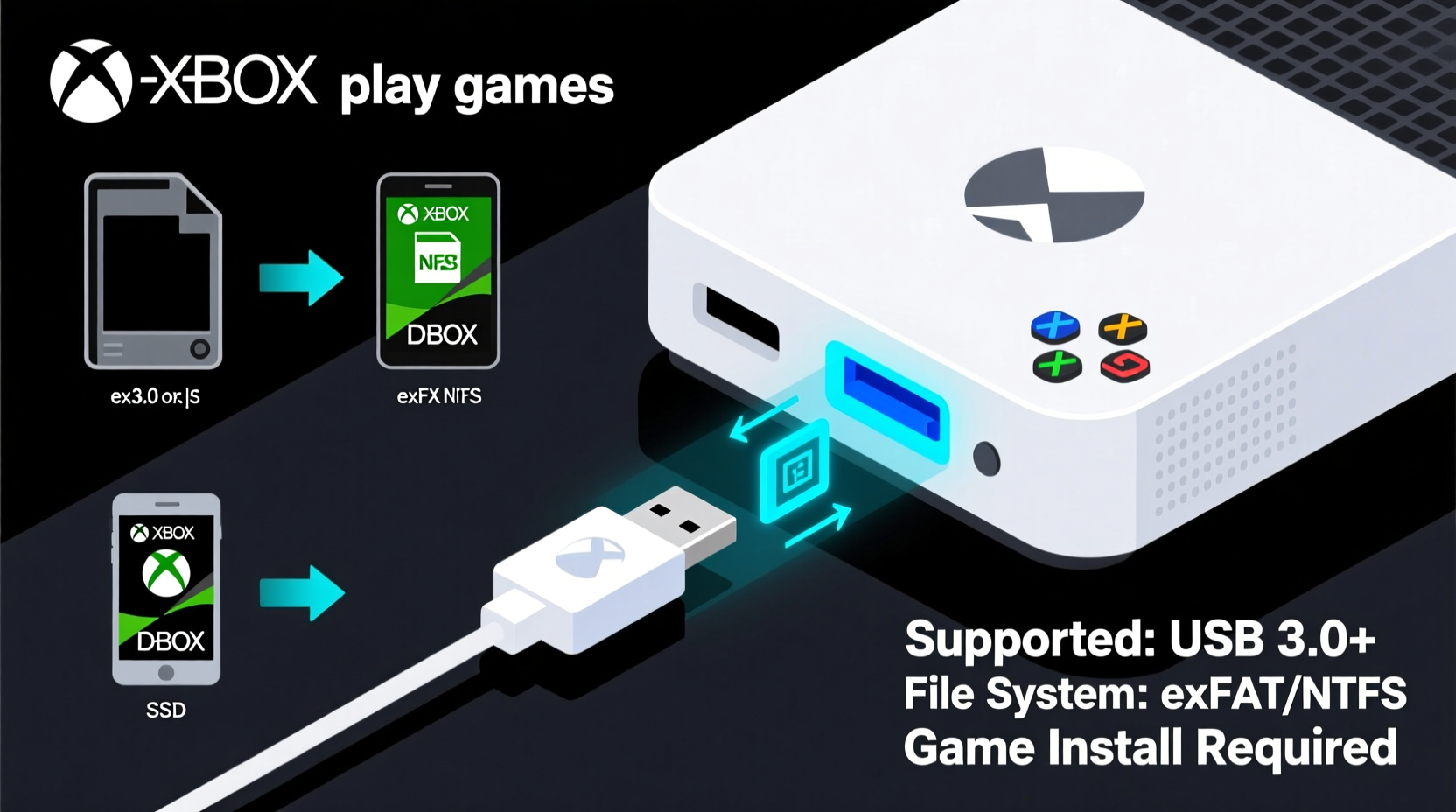
Xbox consoles support external USB drives for expanding storage capacity, but not all drives are created equal in the eyes of the system. While you can store games on a USB drive, whether you can play them directly depends on several factors: the type of console you own, the file system format of the drive, and Microsoft’s performance standards for gameplay.
The Xbox Series X|S and Xbox One both allow external storage, but only certain configurations permit actual gameplay. For example, older external drives formatted as exFAT may be recognized for storage but not for running games due to speed and latency issues. Microsoft requires sustained data transfer speeds to ensure smooth loading and in-game performance, which many standard USB 3.0 mechanical hard drives fail to meet consistently.
Supported vs. Unsupported External Drives
Not every USB drive can function as active game storage. Microsoft has clear guidelines about what works and what doesn’t:
- USB 3.0 or later: Required for sufficient data throughput.
- Minimum 256 GB capacity: Smaller drives are not officially supported.
- Direct connection: Must be plugged directly into the console, not through a hub.
- Portable SSDs recommended: Especially for Xbox Series X|S to leverage Quick Resume and fast load times.
If your drive meets these criteria but still won’t let you play games, the issue likely lies in how the console classifies the device. Xbox differentiates between “playable” and “archive-only” storage based on benchmarked read speeds during setup.
“Xbox prioritizes performance consistency. Even if a drive stores game data, it must pass internal speed checks before being approved for direct gameplay.” — Alex Turner, Senior Console Engineer at Microsoft (via Xbox Insider Blog)
Why Some Games Won’t Launch from External Storage
The root cause often comes down to one key factor: drive classification by the Xbox system. When you connect a new external drive, the console runs diagnostics to assess its sustained read speed. Based on this test, it assigns one of two roles:
- Play and Store: Drive is fast enough to install and run games directly.
- Store Only: Drive is used solely for archiving games; titles must be moved back to internal SSD to play.
This distinction is crucial. A \"Store Only\" designation means the drive lacks the consistent input/output operations per second (IOPS) needed for modern game assets, especially on Xbox Series X|S where games are designed around NVMe-level SSD speeds. You might be able to install a game like Forza Horizon 5 on such a drive, but attempting to launch it triggers an error or automatic move request to internal storage.
Common Causes of “Store Only” Status
- Using a slow HDD with high latency
- Connecting via a low-power USB port or extension cable
- Damaged sectors or fragmented drive affecting performance
- Firmware issues preventing optimal data retrieval
Step-by-Step Guide to Fix External Storage Playback Issues
If you're unable to play games from your external drive, follow this sequence to diagnose and resolve the problem:
- Check Connection: Unplug and reconnect the drive directly to a USB 3.0+ port on the front or back of the console. Avoid hubs or powered docks.
- Reformat via Xbox: Go to Settings > System > Storage. Select the external drive and choose “Format.” This ensures proper file system alignment.
- Test Speed: After formatting, copy a large game (e.g., 80GB+) to the drive and attempt to launch it. Monitor loading behavior.
- Update Firmware: Check the manufacturer’s website for firmware updates, especially for SSDs.
- Evaluate Performance: If the game loads extremely slowly or crashes, the drive may be classified as “Store Only” despite passing initial detection.
- Upgrade Hardware: Consider switching to a portable NVMe SSD (like Samsung T7 or WD Black P50) for full compatibility with Xbox Series X|S features.
Comparison: Internal SSD vs. External Drive Capabilities
| Feature | Xbox Internal SSD | External HDD | External SSD |
|---|---|---|---|
| Game Installation | Yes | Yes (Store Only or Play) | Yes (Often Play & Store) |
| Direct Game Playback | Yes | Limited (Depends on speed) | Yes (if USB 3.2+/NVMe) |
| Quick Resume Support | Yes | No | Yes (on compatible SSDs) |
| Avg. Load Time (Example: Halo Infinite) | 8–12 seconds | 25–40 seconds | 10–15 seconds |
| Recommended for New Games? | Optimal | No (for frequent play) | Highly Recommended |
Real Example: Sarah’s Gaming Setup Struggle
Sarah owns an Xbox Series S and purchased a 2TB USB 3.0 external hard drive to expand her limited internal storage. She successfully installed Starfield and Red Dead Redemption 2 on the drive, but when she tried to launch either title, the console prompted: “This game must be on internal storage to play.” Confused and frustrated, she spent hours troubleshooting settings before discovering that her drive, though functional for storage, was too slow for direct execution.
After researching, she upgraded to a Samsung T7 Shield portable SSD. Upon reformatting and reinstalling her games, both launched without issue. Her load times improved dramatically, and Quick Resume worked seamlessly. The investment paid off in both performance and convenience.
Do’s and Don’ts of Using External Storage on Xbox
| Action | Do | Don’t |
|---|---|---|
| Drive Type | Use USB 3.2 Gen 2 or NVMe enclosures | Use old USB 2.0 or spinning HDDs for primary gameplay |
| Formatting | Format through Xbox Settings menu | Pre-format on PC unless necessary |
| Game Management | Move inactive games to external archive | Keep 10+ large games on a slow external drive |
| Maintenance | Safely eject before unplugging | Pull the drive out during transfers |
FAQ: Common Questions About Xbox External Storage
Can I play Xbox One games from any external hard drive?
Most Xbox One games can be played directly from a USB 3.0 external drive, provided it’s been properly formatted and passes the console’s speed check. However, some larger or more demanding titles may still perform poorly on slower drives.
Why does my Xbox say “This game cannot be played from this drive”?
This message appears when the console determines the connected drive doesn’t meet minimum performance thresholds for real-time data streaming required by the game. It’s common with older mechanical drives or those with connection issues.
Does using an external SSD improve load times compared to internal storage?
No—internal SSDs on Xbox Series X|S are faster than most external USB drives. However, a high-end portable NVMe SSD can come close, especially when compared to a slow external HDD. The biggest improvement is over poor-performing externals, not the internal drive.
Final Thoughts: Optimizing Your Xbox Storage Strategy
The inability to play games from an external drive isn’t a flaw—it’s a safeguard. Xbox prioritizes seamless gameplay experiences, and allowing subpar storage to run intensive games would compromise frame rates, load times, and system stability. By understanding the difference between storage tiers and investing in compatible hardware, you gain control over your gaming library without sacrificing performance.
Start by auditing your current setup. Is your external drive truly capable of handling modern games? If not, consider upgrading to a portable SSD. Use slower drives for archiving completed games or backward-compatible classics that aren’t as demanding. With the right approach, external storage becomes a powerful tool—not a limitation.




 浙公网安备
33010002000092号
浙公网安备
33010002000092号 浙B2-20120091-4
Comments
No comments yet. Why don't you start the discussion?