
When choosing between the Xbox Series S and the PS5 Digital Edition, technical specs and price often dominate the conversation. But for many gamers, the deciding factor is something far more personal: the games. A console’s power means little without compelling titles to play. While both systems offer access to a vast array of third-party blockbusters, it’s their exclusive libraries—past, present, and future—that create emotional loyalty and drive purchasing decisions.
This comparison zeroes in on one critical question: which console offers a stronger game library? We’re not focusing on resolution, load times, or storage space. Instead, we’ll examine exclusives, backward compatibility, subscription services, indie support, and upcoming releases to determine which platform delivers more meaningful experiences through its catalog alone.
Exclusive Titles: The Heart of the Debate
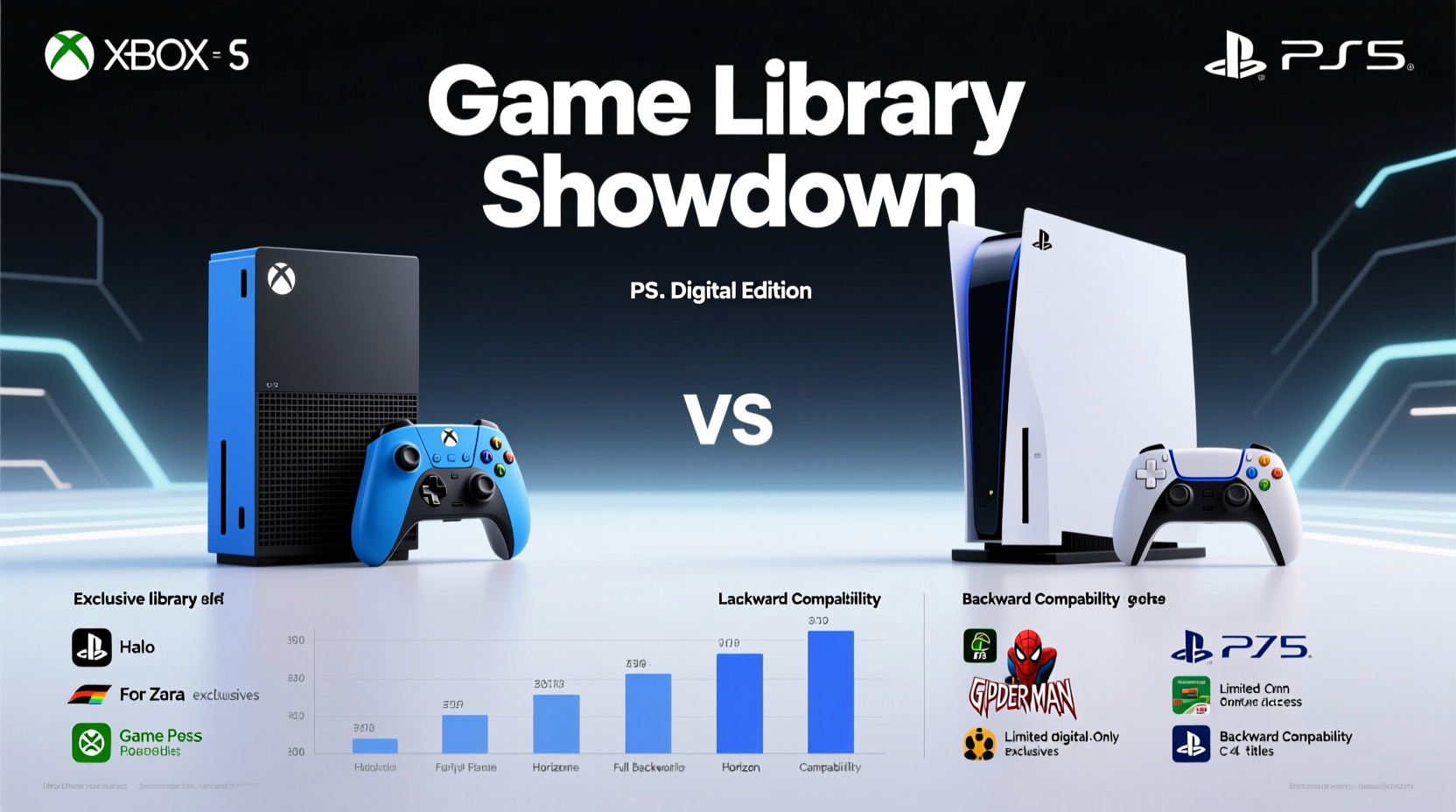
The most obvious differentiator in any console war is first-party exclusives—games you can only play on one system. These titles often define a generation, becoming cultural touchstones and driving hardware sales.
Sony has historically dominated this arena with polished, narrative-driven experiences developed by studios like Naughty Dog, Insomniac Games, and Santa Monica Studio. On the other hand, Microsoft has shifted toward a service-based model, acquiring major developers such as Bethesda, Activision Blizzard, and Obsidian—but traditionally releasing their biggest exclusives day-one on Game Pass rather than using them as system sellers.
- PS5 Digital Edition Exclusives: *Spider-Man: Miles Morales*, *God of War Ragnarök*, *Horizon Forbidden West*, *Demon’s Souls* remake, *Returnal*, *Ghost of Tsushima Director’s Cut*, and *Ratchet & Clank: Rift Apart*.
- Xbox Series S (and Xbox ecosystem) Exclusives: *Forza Horizon 5*, *Halo Infinite*, *Starfield*, *Microsoft Flight Simulator*, *Gears 5*, and *Fable* (upcoming).
While Xbox boasts impressive franchises, few of its recent exclusives have achieved the same level of critical acclaim or mainstream recognition as Sony’s cinematic masterpieces. Games like *The Last of Us Part I* (remake) and *Ghost of Tsushima* are not just commercial successes—they’ve crossed over into television adaptations, demonstrating their cultural reach.
“Exclusives are the soul of a console brand. They give players a reason to choose one ecosystem over another.” — Jason Schreier, Bloomberg News, video game industry reporter
Backward Compatibility: Playing the Past
A strong library isn’t just about new releases—it also includes how well a console honors its legacy. Both the Xbox Series S and PS5 Digital Edition support previous-generation titles, but they approach backward compatibility very differently.
The Xbox Series S stands out with unparalleled backward compatibility across four generations: Xbox, Xbox 360, and Xbox One titles are playable via physical disc (on other Xbox models) or digital download. Over 600 older games have been optimized for Series X|S with improved frame rates, resolutions, and load times. This means players can revisit classics like *Red Dead Redemption*, *Mass Effect Legendary Edition*, or *The Elder Scrolls V: Skyrim* with modern enhancements.
In contrast, the PS5 Digital Edition supports only PS4 games. While that still amounts to thousands of titles—including enhanced versions of *Bloodborne*, *Uncharted 4*, and *The Last of Us Remastered*—it lacks the generational depth of Xbox’s offering. There is no official support for PS3, PS2, or PS1 games outside of curated remasters or the PlayStation Plus Premium streaming service (which requires stable internet and isn’t available in all regions).
Game Subscription Services Compared
Modern consoles increasingly rely on subscription services to expand their effective libraries. Here, the difference between Xbox and PlayStation becomes stark.
Xbox Game Pass is widely regarded as one of the best values in entertainment. For a monthly fee, subscribers gain access to over 400 games, including every first-party title from Xbox Game Studios released on day one—such as *Starfield*, *Forza Motorsport*, and *Pentiment*. It also includes select third-party titles and EA Play. With cloud gaming support, even the less powerful Series S can stream high-end games like *Halo Infinite* or *Hi-Fi Rush* without local installation.
PlayStation Plus offers three tiers: Essential, Extra, and Premium. The Extra and Premium tiers include a growing catalog of PS4 and PS5 games, such as *Marvel’s Spider-Man*, *Godfall*, and *NBA 2K23*. However, Sony does not release its marquee exclusives—like *Horizon*, *The Last of Us*, or *Gran Turismo*—on PS+ at launch. These arrive months or years later, diminishing the service’s immediate appeal compared to Game Pass.
| Feature | Xbox Game Pass (Ultimate) | PlayStation Plus (Extra/Premium) |
|---|---|---|
| Day-One First-Party Releases | Yes | No |
| Back Catalog Size | 400+ | ~400 (PS4/PS5) |
| Cloud Gaming | Yes (full integration) | Limited to Premium tier; spotty availability |
| Classic Console Games | Selected Xbox-era titles (enhanced) | Streaming only (PS3, PS1, PSP on Premium) |
| Third-Party Day-One Titles | Sometimes (e.g., *Hi-Fi Rush*) | Rare |
For players who prioritize variety and cost-efficiency, Xbox Game Pass significantly amplifies the Series S’s effective game library. Even though the console itself has less raw power than the PS5, Game Pass levels the playing field by giving access to high-quality experiences regardless of hardware limitations.
Indie and Third-Parket Support
Beyond big-budget exclusives, both platforms support vibrant indie scenes. However, their approaches differ in accessibility and discoverability.
The Xbox Series S benefits from the ID@Xbox program, which has enabled thousands of independent developers to publish directly on the platform without exclusivity requirements. Combined with Game Pass, this has made Xbox a haven for indie gems like *Ori and the Will of the Wisps*, *Tunic*, *Sea of Stars*, and *Cocoon*. Many of these titles debut on Game Pass, gaining wider exposure and player bases.
Sony also supports indie developers through its PlayStation Partners program and actively promotes indie titles via seasonal sales and dedicated showcases. Notable successes include *Hades*, *Disco Elysium*, and *Cuphead*, all of which launched on PS5 with strong marketing support. However, unlike Xbox, Sony rarely features indies on its top-tier subscription service at launch, meaning players must purchase them separately unless they appear later in the PS+ rotation.
Additionally, the PS5 offers unique controller features—like adaptive triggers and haptic feedback—that some indie developers leverage creatively. Titles like *Astro’s Playroom* and *Returnal* use these capabilities to enhance immersion, giving PS5 a slight edge in experiential innovation.
Future Roadmap: What’s Coming?
To judge a game library, we must look ahead as much as behind. Upcoming releases can shift the balance dramatically.
Sony continues investing heavily in narrative-rich single-player experiences. Confirmed upcoming titles include:
- Marvel’s Wolverine (by Insomniac)
- Ghost of Yōtei (sequel to *Ghost of Tsushima*)
- The Last of Us Part II Remastered
- Horizon Zero Dawn Remake (in development)
- Pragmata (new IP from Capcom-style studio)
Microsoft’s roadmap is broader but less focused on exclusivity per device. With ownership of Bethesda and Activision Blizzard, future titles like *The Elder Scrolls VI*, *Fable*, and a new *Diablo* installment will eventually join Game Pass. However, none are expected before 2026, and there’s no guarantee they’ll be timed exclusives—the FTC recently challenged Microsoft’s ability to keep Activision titles off PlayStation entirely.
Moreover, Microsoft has signaled a willingness to release major games on multiple platforms. *Call of Duty* will remain on PlayStation, and rumors suggest future Xbox exclusives may follow suit. This cross-platform strategy strengthens overall content availability but weakens the argument that Xbox offers a uniquely superior library.
Mini Case Study: Alex Chooses Based on Library
Alex, a 28-year-old graphic designer, wanted a next-gen console primarily for immersive single-player adventures. He valued rich storytelling, emotional depth, and visual fidelity. After researching both systems, he chose the PS5 Digital Edition—not because it was more powerful, but because *The Last of Us Part I* remake and *God of War Ragnarök* were unavailable on Xbox.
He subscribed to PS+ Extra and downloaded *Ghost of Tsushima* and *Spider-Man: Miles Morales*, enjoying them over several weekends. Though he occasionally used cloud gaming to try Xbox titles via Game Pass Ultimate, nothing pulled him away from the PS5’s exclusive narrative experiences.
“I play games to feel something,” Alex said. “Sony’s games make me cry, cheer, and stay up late just to see what happens next. That’s worth the extra $100.”
Final Verdict: Which Console Wins on Game Library Alone?
The answer depends on what kind of gamer you are.
If you value **cinematic storytelling**, **critically acclaimed exclusives**, and **polished single-player epics**, the **PS5 Digital Edition** clearly wins. Its library includes some of the most celebrated games of the past decade, with a steady pipeline of ambitious sequels and reboots. For fans of *Uncharted*, *The Last of Us*, or *Horizon*, there is no substitute.
If you prioritize **value**, **variety**, and **accessibility**, the **Xbox Series S** emerges stronger—especially when paired with Game Pass. Despite lacking blockbuster exclusives on par with Sony’s, its combination of backward compatibility, day-one first-party releases, and a massive rotating catalog gives it unmatched breadth. For budget-conscious players or those who enjoy sampling diverse genres, the Series S offers more flexibility.
Ultimately, neither console dominates across all categories. But when judged purely on the strength, depth, and quality of its exclusive and accessible game library, **the PS5 Digital Edition holds a clear edge**. Its consistent delivery of genre-defining titles creates a library that feels essential, not just expansive.
Frequently Asked Questions
Can I play Xbox exclusives on PS5?
No, Xbox Game Studios exclusives like *Halo Infinite* or *Forza Horizon 5* are not available on PS5. However, some older titles may appear on mobile or PC via cloud streaming, but not natively on PlayStation.
Are PS5 exclusives ever released on Xbox?
Rarely. Sony has begun porting older exclusives like *Horizon Zero Dawn* and *God of War* to PC, but they remain absent from Xbox. There are no current plans to bring PS5-only titles to competing consoles.
Is Game Pass worth it if I own a PS5?
Possibly. Xbox Game Pass Ultimate includes cloud gaming, allowing PS5 owners to stream Xbox exclusives to phones, tablets, or PCs. If you want to play *Starfield* or *Pentiment* without buying an Xbox, this is a viable option—though performance depends on internet speed.
Action Plan: How to Decide Which Console Fits Your Playstyle
- Make a list of 3–5 must-play games. Check which console(s) they’re available on. If most are PS5-exclusive, lean toward Sony.
- Evaluate your budget. The Series S is $100 cheaper. Factor in savings over time, especially if you plan to subscribe to Game Pass.
- Consider your internet reliability. Cloud gaming enhances the Series S experience but requires stable, fast connections.
- Think long-term. Research upcoming titles from each platform. Are you excited by *Wolverine* or *Elder Scrolls VI*? Let future releases guide your choice.
- Try before you buy. Use free trials of Game Pass or PS+ to sample each ecosystem before committing.




 浙公网安备
33010002000092号
浙公网安备
33010002000092号 浙B2-20120091-4
Comments
No comments yet. Why don't you start the discussion?