
Choosing between the Xbox Series S and the PS5 Digital Edition isn’t just about price or performance—it’s about what games you can play and how easily you can access them. Both consoles offer compelling entry points into next-gen gaming, but when it comes to the depth, breadth, and flexibility of their game libraries, the differences are significant. For players who prioritize variety, legacy support, and long-term value, one platform may clearly pull ahead depending on personal preferences.
The Xbox Series S is Microsoft’s compact, all-digital console designed for affordability without sacrificing core next-gen features. The PS5 Digital Edition, meanwhile, strips out the disc drive from Sony’s flagship console, offering the same internal specs at a slightly lower price. But since neither supports physical media, the entire experience hinges on digital purchases and streaming—making game library access a critical factor in the decision-making process.
Exclusive Titles: Who Owns the Must-Play Games?
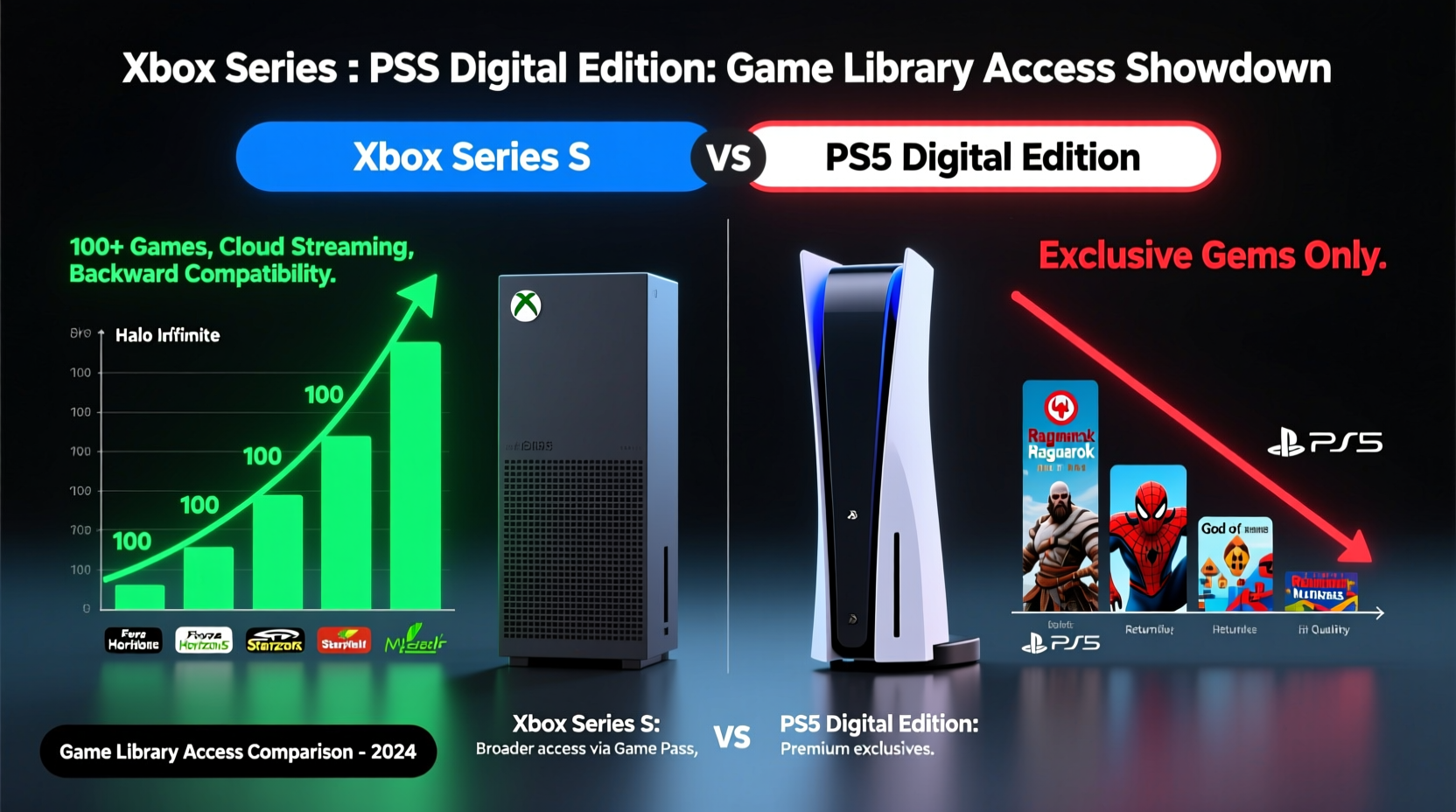
First-party exclusives often define a console’s identity. These are games you can only play on one system, and they frequently become cultural touchstones in the gaming world.
Sony has invested heavily in its first-party studios over the past two decades. Titles like God of War Ragnarök, Spider-Man: Miles Morales, Horizon Forbidden West, and Ghost of Tsushima have not only sold millions but also earned critical acclaim. These narrative-driven, visually stunning experiences are deeply tied to the PlayStation brand. While some have eventually come to PC, they remain exclusive to PlayStation for at least a year—or longer—and are unavailable on Xbox entirely.
Microsoft, on the other hand, has been expanding its own portfolio through acquisitions. With studios like Bethesda (creators of Doom, Fallout, and The Elder Scrolls) and Activision Blizzard (Call of Duty, Diablo, Overwatch) now under its umbrella, Microsoft owns more intellectual property than any other publisher. However, most of these titles are still released across multiple platforms. As of 2024, few new games from these studios are true Xbox exclusives, with many arriving on PlayStation as well, especially major franchises like Call of Duty.
Xbox’s genuine exclusives—such as Forza Motorsport, Starfield, and entries in the Halo and Gears of War series—are strong but narrower in appeal compared to Sony’s diverse lineup. If your gaming taste leans toward action-adventure epics, cinematic storytelling, or open-world exploration, PlayStation’s exclusives likely hold more immediate value.
Backward Compatibility: Access to Past Generations
One of Xbox’s standout advantages is its robust backward compatibility. The Xbox Series S supports thousands of games from the Xbox One, Xbox 360, and even the original Xbox—many of which run with improved load times, frame rates, and resolution thanks to FPS Boost and Auto HDR.
This means that purchasing an Xbox Series S gives you potential access to over a decade of Xbox gaming history. Classics like The Witcher 3: Wild Hunt, Red Dead Redemption 2, Mass Effect: Legendary Edition, and Bloodborne (via backward-compatible re-releases) can be played with modern enhancements. Even older gems like Psychonauts and Star Wars: Knights of the Old Republic benefit from being playable on current hardware.
In contrast, the PS5 Digital Edition only supports PS4 games. While that’s still a massive library—including hits like The Last of Us Part II, Ghost of Tsushima, and Marvel’s Spider-Man—you lose access to PS3, PS2, and PS1 titles unless you subscribe to PlayStation Plus Premium, which offers cloud streaming for select retro games.
Even then, the PS5’s backward compatibility is limited by availability and performance. You cannot install PS3 games locally; they must be streamed, requiring a stable internet connection and introducing input lag. Meanwhile, Xbox lets you download and play backward-compatible titles directly, often with visual upgrades.
“Backward compatibility isn’t just nostalgia—it’s value. Being able to replay classics with modern enhancements extends a console’s lifespan significantly.” — David Luehr, Senior Editor at GameOn Magazine
Subscription Services: Game Pass vs. PlayStation Plus
When evaluating game library access, subscription services are arguably more important than ever. They offer vast catalogs of games for a flat monthly fee—effectively turning ownership into access.
Xbox Game Pass is widely regarded as the gold standard. For $9.99/month (Console), subscribers gain access to hundreds of titles, including every first-party Xbox release on day one. That includes major exclusives like Starfield, Fable, and future Halo games—all available the moment they launch. Third-party heavyweights like Elden Ring, Resident Evil Village, and Hi-Fi Rush are also regularly added.
Game Pass also integrates with PC and Cloud Gaming, meaning your subscription extends beyond the console. This cross-platform flexibility allows you to play the same games on different devices, increasing convenience and accessibility.
PlayStation Plus offers three tiers: Essential ($9.99), Extra ($15.99), and Premium ($17.99). Only the Extra and Premium tiers include a game catalog comparable to Game Pass. The PS Plus Collection—a perk for early adopters—is no longer offered to new subscribers, weakening the long-term value proposition.
The PlayStation Plus catalog is substantial, featuring titles like God of War, Death Stranding, and Control. However, Sony does not release its new first-party games on day one to subscribers. You must wait months—or sometimes over a year—before games like Returnal or Marvel’s Wolverine appear in the catalog. This delay reduces the service’s appeal for players eager to try new releases immediately.
| Feature | Xbox Game Pass (Console) | PlayStation Plus Extra |
|---|---|---|
| New First-Party Games on Day One | Yes | No |
| Backward-Compatible Titles Included | Thousands (Xbox One, 360, OG Xbox) | PS4 Titles Only |
| Cloud Streaming | Yes (Included) | Yes (Premium Tier Only) |
| PC & Mobile Access | Yes (Separate Tier) | No |
| Price (Monthly) | $9.99 | $15.99 |
Third-Party and Cross-Platform Game Availability
Many popular games—especially in genres like shooters, RPGs, and sports—launch on both platforms simultaneously. Titles such as FIFA 24, Call of Duty: Modern Warfare III, Fortnite, and Destiny 2 are functionally identical across Xbox Series S and PS5 Digital Edition.
However, there are subtle differences in how third-party publishers treat each ecosystem. Some developers offer timed exclusives or bonus content based on platform partnerships. For example, Ubisoft has occasionally offered early access to DLC on Xbox due to promotional deals. Similarly, EA Play is integrated directly into Game Pass, giving subscribers free access to games like Apex Legends, Battlefield, and Madden NFL without extra cost.
Meanwhile, Sony tends to secure marketing partnerships that result in console bundles and themed content—like the Spider-Man PS5 bundle—but these don’t expand the actual game library. In terms of raw access, Xbox holds an edge due to deeper integration with third-party services and broader inclusion in subscription offerings.
Real-World Example: The Budget Gamer’s Dilemma
Consider Alex, a college student looking to buy their first next-gen console. They love story-driven games but also enjoy retro RPGs and multiplayer shooters. Their budget is tight—they want maximum game access without overspending.
Alex considers both the Xbox Series S and PS5 Digital Edition. The PS5 tempts them with God of War and Horizon, but they already own a PS4 and worry about rebuying games they’ve played. The Xbox Series S, while less powerful graphically, offers Game Pass and backward compatibility. For $10/month, Alex gains access to hundreds of games—including Starfield, Halo Infinite, and The Outer Worlds—plus the ability to revisit Xbox 360 classics like Mass Effect 2 with enhanced visuals.
In the end, Alex chooses the Xbox Series S. Not because it has better graphics, but because it provides far greater library access relative to cost. Over a year, they play over 30 games via Game Pass—equivalent to more than $600 in retail value—for less than $120.
Actionable Tips for Maximizing Game Library Access
- Track backward compatibility lists—Microsoft maintains a full list of supported legacy titles on Xbox.com.
- Use free trials—Both Game Pass and PlayStation Plus offer 7-day trials. Test the libraries before committing.
- Monitor delisting schedules—Games rotate out of subscription services monthly. Download or play them before they leave.
- Compare bundle deals—Sometimes a console + Game Pass bundle offers better value than buying separately.
- Leverage cloud saves—Ensure your progress carries across devices by enabling sync in your account settings.
Frequently Asked Questions
Can I play PS3 games on the PS5 Digital Edition?
Only through cloud streaming via PlayStation Plus Premium. You cannot install PS3 games locally on the PS5. This requires a fast, stable internet connection and is not available in all regions.
Does Xbox Series S support all Xbox One games?
Virtually all Xbox One games are playable on the Series S, with performance improvements in many cases. Microsoft maintains an official list of backward-compatible titles, which includes over 600 optimized games with enhanced frame rates and resolution.
Are Game Pass games available after cancellation?
No. Once you cancel Game Pass, you lose access to all subscription-based games unless you purchase them individually. Save data is retained, so progress is not lost if you resubscribe later.
Final Verdict: Which Console Offers Better Game Library Access?
The answer depends on what kind of access matters most to you.
If you value **exclusive, high-quality single-player experiences** and are willing to pay full price for new releases, the **PS5 Digital Edition** wins on the strength of its first-party lineup. Games like Ghost of Tsushima: Director’s Cut and upcoming titles such as Marvel’s Wolverine are compelling reasons to choose PlayStation.
But if you prioritize **volume, variety, and cost-efficiency**, the **Xbox Series S** is the superior choice. Its unmatched backward compatibility, day-one access to first-party releases via Game Pass, and integration with PC and cloud gaming create a more expansive and flexible library ecosystem. For players who want to explore decades of gaming history or sample dozens of titles without breaking the bank, Xbox delivers exceptional long-term value.
Ultimately, the Xbox Series S offers broader game library access—not necessarily in prestige, but in scope, affordability, and continuity across generations.




 浙公网安备
33010002000092号
浙公网安备
33010002000092号 浙B2-20120091-4
Comments
No comments yet. Why don't you start the discussion?