
In 2018, two smartphones from Xiaomi stood out in the mid-range market: the Xiaomi Mi A2 and the Redmi Note 5. Both targeted budget-conscious users seeking premium features without the flagship price tag. The Mi A2 was part of Google’s Android One program, promising clean software and timely updates. The Redmi Note 5, known as the Redmi Note 5 Pro in some regions, leaned into raw performance and battery life. But nearly six years later, with the benefit of hindsight, which device truly offered better long-term value? And did consumers make the right call when choosing between them?
The Context: Mid-Range Market in 2018
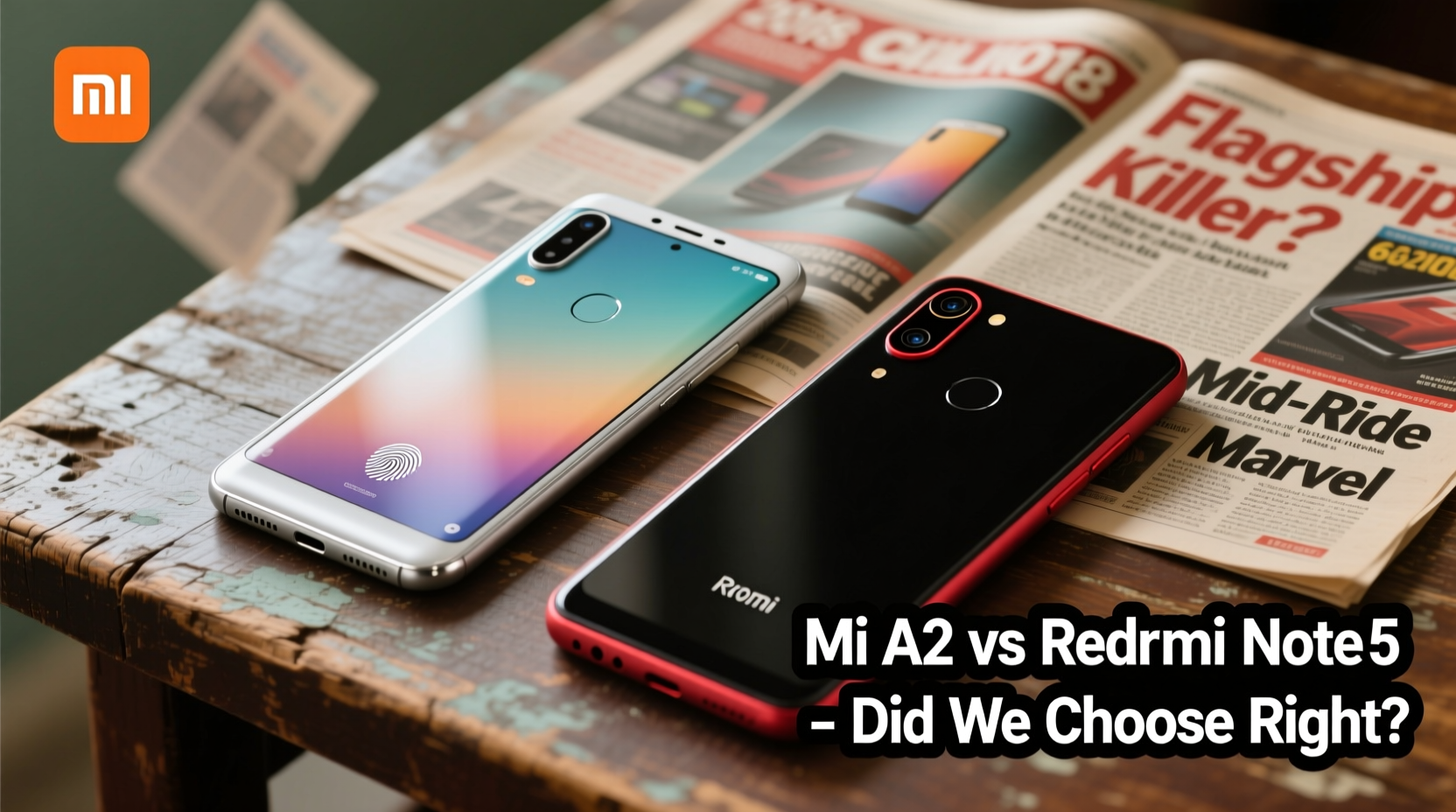
2018 was a pivotal year for affordable smartphones. Consumers were no longer satisfied with just decent specs—they wanted near-flagship experiences at half the cost. Xiaomi dominated this space, especially in India, Europe, and Southeast Asia. The Redmi Note series had already built a reputation for delivering powerful hardware, while the Mi A series promised a pure Android experience.
The Mi A2 launched as a global successor to the popular Mi A1, featuring a sleek metal-and-glass design, dual cameras, and Android One. Meanwhile, the Redmi Note 5 (Pro) focused on endurance and gaming performance, powered by the Snapdragon 636 or 660, depending on the variant. At launch, both phones retailed between $200–$300, making their competition fierce.
Hardware & Performance: A Tale of Two Philosophies
The Mi A2 and Redmi Note 5 took different approaches to hardware. The Mi A2 featured a Qualcomm Snapdragon 660 processor, 4GB/6GB RAM options, and up to 128GB storage. It had a 5.99-inch Full HD+ IPS display, a 20MP front camera, and a dual rear setup (12MP + 20MP). Its design was more refined, with a vertical camera layout and glass back—unusual for budget phones at the time.
The Redmi Note 5, particularly the Pro version, also used the Snapdragon 636 (or 660), but paired it with a massive 4,000mAh battery. It had a larger 5.99-inch screen, but slightly lower brightness and contrast than the Mi A2. Its 12MP + 5MP rear camera combo was serviceable, but the 20MP front shooter lacked the tuning of the Mi A2’s selfie cam. Build quality was solid plastic, though well-assembled.
“Performance isn’t just about CPU benchmarks—it’s about how smoothly the phone handles daily tasks over time. The Mi A2’s optimization gave it an edge in responsiveness.” — Arjun Mehta, Mobile Analyst at TechPulse Asia
Software Experience: Pure Android vs MIUI Customization
This is where the biggest difference lay. The Mi A2 ran stock Android under the Android One initiative. That meant no bloatware, faster security patches, and guaranteed Android Oreo with a promise of upgrading to Android Pie. For users who valued simplicity, speed, and privacy, this was a major selling point.
In contrast, the Redmi Note 5 shipped with MIUI 9 based on Android Nougat. While feature-rich—with themes, app lock, split-screen, and gesture controls—MIUI was often criticized for being bloated and slower to receive core Android updates. Many users reported ads in system apps and background processes consuming memory.
Over time, the Mi A2 received Android 9 Pie and regular security updates until late 2020. The Redmi Note 5 eventually got updated to Android 9, but only after significant delays and through MIUI skins, which didn’t offer the same level of optimization.
Longevity and Real-World Use: A Mini Case Study
Consider Rajiv, a college student in Bangalore who bought the Redmi Note 5 Pro in early 2018. He used it heavily for YouTube, WhatsApp, and mobile gaming. By 2020, he noticed slowdowns, app crashes, and inconsistent battery performance. Despite factory resets, MIUI’s background services continued to degrade his experience. He upgraded in late 2020.
Meanwhile, Elena in Madrid chose the Mi A2 for its clean interface and camera quality. She avoided third-party bloat and appreciated timely updates. Even in 2021, her phone booted quickly, apps opened instantly, and she could still use Google Photos, Gmail, and Chrome without lag. She finally replaced it in 2022—not because it failed, but because app compatibility with newer APIs began to wane.
This contrast highlights a key insight: software maintenance and ecosystem alignment can extend usable lifespan by 1–2 years, even on similar hardware.
Detailed Comparison Table
| Feature | Xiaomi Mi A2 | Redmi Note 5 (Pro) |
|---|---|---|
| Processor | Qualcomm Snapdragon 660 | Snapdragon 636 / 660 (Pro) |
| RAM / Storage | 4GB/6GB + 64GB/128GB | 4GB/6GB + 64GB |
| Display | 5.99\" FHD+ IPS LCD | 5.99\" FHD+ IPS LCD |
| Battery | 3,010 mAh | 4,000 mAh |
| OS at Launch | Android 8.1 Oreo (Android One) | Android 7.1 Nougat (MIUI 9) |
| Final OS Update | Android 9 Pie | Android 9 Pie (via MIUI 11) |
| Front Camera | 20MP f/1.8 | 13MP (Note 5) / 20MP (Pro) |
| Rear Cameras | 12MP + 20MP | 12MP + 5MP |
| Build Quality | Metal frame + glass back | Plastic body |
| Headphone Jack | Yes | Yes |
| USB Port | USB-C | Micro USB |
What Buyers Prioritized—and What They Overlooked
At the time, many buyers chose the Redmi Note 5 due to its larger battery, aggressive marketing, and strong presence in offline retail. Xiaomi positioned it as a “gaming-ready” device, appealing to younger audiences. However, they often overlooked long-term software support and the benefits of a cleaner OS.
The Mi A2, while praised by tech reviewers, had less visibility in rural markets and regions where online sales weren’t dominant. Its smaller battery (3,010mAh vs 4,000mAh) was a concern for heavy users, but its efficient software offset some of that disadvantage.
Ultimately, those who valued smooth multitasking, faster app launches, and fewer crashes tended to be more satisfied with the Mi A2 over time—even if the Redmi Note 5 won on paper in certain areas.
Frequently Asked Questions
Which phone had better camera quality?
The Mi A2 generally delivered better photos, especially in daylight and low light, thanks to its larger sensor and Google-style HDR processing. The Redmi Note 5 Pro’s camera was acceptable but struggled with dynamic range and noise reduction.
Did the Mi A2 really last longer than the Redmi Note 5?
Not necessarily in battery life, but in overall usability. Users reported smoother performance over 2+ years on the Mi A2 due to lighter software and consistent updates. The Redmi Note 5 became sluggish earlier, especially with MIUI’s increasing bloat over updates.
Was the Mi A2 worth the higher price?
For users who valued software cleanliness, update reliability, and resale value, yes. The Mi A2 retained its functionality and appeal longer, making it a smarter investment despite a slightly higher initial cost.
Conclusion: Looking Back with Clarity
With the distance of several years, it’s clear that the Xiaomi Mi A2 offered better long-term value than the Redmi Note 5. While the Redmi device excelled in battery capacity and raw marketing power, the Mi A2’s combination of clean Android, superior build, and reliable updates made it a more sustainable choice.
Back in 2018, many consumers prioritized immediate specs over future-proofing. But today, we know that software support, update frequency, and system optimization play a critical role in a phone’s lifespan. The Mi A2 may not have sold in the same volumes, but for those who bought it, the decision aged well.
If you're reflecting on past purchases or advising others on smartphone choices, remember: longevity isn't just about hardware. It's about how well a device ages—and the Mi A2 proved that sometimes, less really is more.




 浙公网安备
33010002000092号
浙公网安备
33010002000092号 浙B2-20120091-4
Comments
No comments yet. Why don't you start the discussion?