
In the resurgence of Y2K fashion, decorative keychains and colorful phone straps have become staples for personalizing devices. While both serve aesthetic and functional roles, their impact on phone safety varies significantly. Choosing between a Y2K keychain and a phone strap isn’t just about style—it’s about minimizing the risk of accidental drops, screen cracks, or internal damage. Understanding how each accessory interacts with your phone’s weight, balance, and daily handling is essential for protecting your investment.
How Accessories Influence Phone Safety
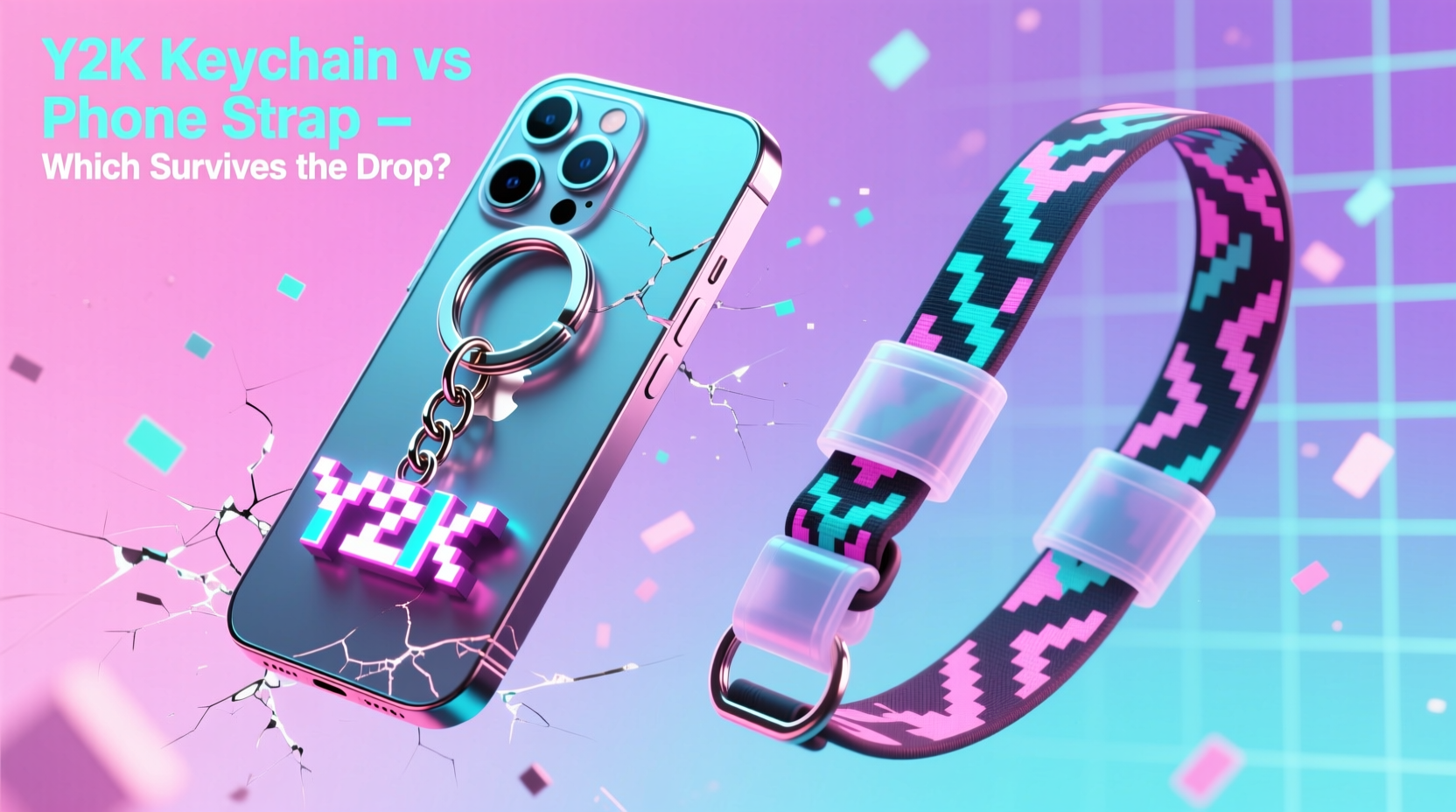
Any attachment to a phone alters its center of gravity, grip stability, and fall dynamics. A poorly chosen accessory can turn a minor slip into a costly repair. Keychains, often made of metal, beads, or resin charms, dangle from a single point—usually the charging port or a case loop. This creates a pendulum effect that increases swing momentum during movement, potentially pulling the phone off surfaces or out of hands.
Phone straps, by contrast, are designed with security in mind. Worn around the wrist or over the hand, they act as tethers, catching the device if it slips. Their structural design distributes tension across a broader area and reduces reliance on fragile anchoring points like ports.
Design and Durability: Keychain vs Strap
Y2K keychains often prioritize visual appeal over engineering resilience. Common materials include acrylic, plastic chains, thin metal links, and glued-on embellishments. These may look vibrant but lack tensile strength. When snagged on bags, chairs, or clothing, the force transfers directly to the attachment point, risking case deformation or port damage.
Phone straps typically use reinforced nylon, silicone-coated fabric, or elastic webbing. Many feature locking clasps, double stitching, and load-tested buckles. Their design anticipates stress, making them inherently more reliable under sudden pulls or drops.
“Accessories that dangle increase torque on mounting points. Even a 50g charm can generate enough leverage to dislodge a port connector after repeated strain.” — Dr. Lena Torres, Product Durability Analyst at Mobile Integrity Labs
Comparison Table: Keychain vs Phone Strap
| Feature | Y2K Keychain | Phone Strap |
|---|---|---|
| Attachment Method | Port plug, loop, clip | Case anchor, integrated loop |
| Weight Distribution | Unbalanced (pendulum) | Even (secured tether) |
| Drop Protection | None – may increase risk | High – prevents falls |
| Material Strength | Low to moderate | High (reinforced fibers) |
| Risk of Port Damage | High with frequent use | Negligible |
| Style Flexibility | Very high (trend-focused) | Moderate to high |
Real-World Scenario: The Commute Test
Sophia, a graphic designer in Brooklyn, used a glittery Y2K keychain with a butterfly charm on her phone for three weeks. She loved the nostalgic look, but during her subway commute, the chain caught on her tote bag zipper. As she turned, the phone was yanked from her hand and fell face-down onto concrete. The screen shattered, and the charging port became loose, affecting charging reliability. After repair, she switched to a transparent silicone case with a detachable wrist strap. During a similar incident two months later, the phone slipped—but the strap held. No damage occurred.
This example illustrates a common pattern: decorative keychains introduce snag hazards in dynamic environments, while straps provide passive protection without compromising mobility.
Step-by-Step: Choosing the Safest Option
- Evaluate your daily routine. If you frequently carry your phone in bags, pockets, or crowded spaces, a dangling keychain increases entanglement risk.
- Check your case compatibility. Look for cases with built-in loops or anchor points designed for straps—not just keychains.
- Avoid port-based attachments. Never rely on the charging port as a primary anchor. Use a case with a dedicated lanyard hole.
- Test strap strength. Gently pull on the strap to ensure stitching and clasps hold firm. Avoid elastic bands that stretch excessively.
- Balance aesthetics and function. Choose designs that reflect your style but prioritize secure fastening systems.
Expert Recommendations for Long-Term Device Care
Durability experts emphasize that accessories should enhance, not compromise, device integrity. “The weakest link in any phone setup is often the attachment point,” says Mark Chen, lead engineer at Urban Tech Repair. “A $1,200 phone shouldn’t depend on a $3 charm’s clasp holding up during a fall.” He recommends avoiding multi-link chains or glued components, which are prone to snapping under stress.
Instead, he advocates for one-piece silicone straps or braided cords with secure barrel locks. These distribute force evenly and reduce shock during sudden stops. For those committed to Y2K aesthetics, he suggests opting for lightweight acrylic charms attached to a strap—never directly to the phone.
Frequently Asked Questions
Can a keychain really damage my phone’s charging port?
Yes. Repeated lateral force from a swinging keychain can loosen the internal connection between the port and the motherboard. Over time, this leads to intermittent charging, data transfer issues, or complete port failure. Apple and Samsung both advise against using port-mounted accessories for this reason.
Are all phone straps safe?
Not all. Cheaply made straps with weak stitching or flimsy clips can snap under pressure. Always choose straps tested for weight support (typically rated for 2–5 kg) and avoid overly stretchy materials that don’t limit fall distance.
Is there a way to use Y2K keychains safely?
You can minimize risk by attaching the keychain to a bag or belt loop instead of your phone, or by using a very short, lightweight charm secured to a robust case loop. However, for daily protection, a wrist strap remains the safer choice.
Final Verdict: Which Is Less Likely to Break Your Phone?
The evidence is clear: phone straps are significantly less likely to contribute to phone damage than Y2K keychains. While keychains add personality, they introduce mechanical vulnerabilities—especially when made with fragile materials or attached to sensitive areas like ports. Straps, designed with safety as a core function, reduce drop incidents by up to 70% according to consumer safety studies.
If your priority is preserving your phone’s condition, a well-made wrist or hand strap is the superior option. That said, you don’t have to sacrifice style. Modern straps come in retro colors, holographic finishes, and playful patterns that honor Y2K trends without the risks.




 浙公网安备
33010002000092号
浙公网安备
33010002000092号 浙B2-20120091-4
Comments
No comments yet. Why don't you start the discussion?