
For Yamaha VStar owners, understanding the motorcycle’s charging system is essential to maintaining performance and avoiding electrical failures. Two terms often come up in discussions about this system: \"rectifier\" and \"voltage regulator.\" While they’re frequently mentioned together—and sometimes even combined into a single unit—many riders wonder whether they serve the same purpose. The short answer is no. Though closely related and often housed together, a rectifier and a voltage regulator perform distinct functions within the charging system. Understanding their roles, differences, and interdependence can help you diagnose issues more accurately and keep your VStar running smoothly.
How the Charging System Works on a Yamaha VStar
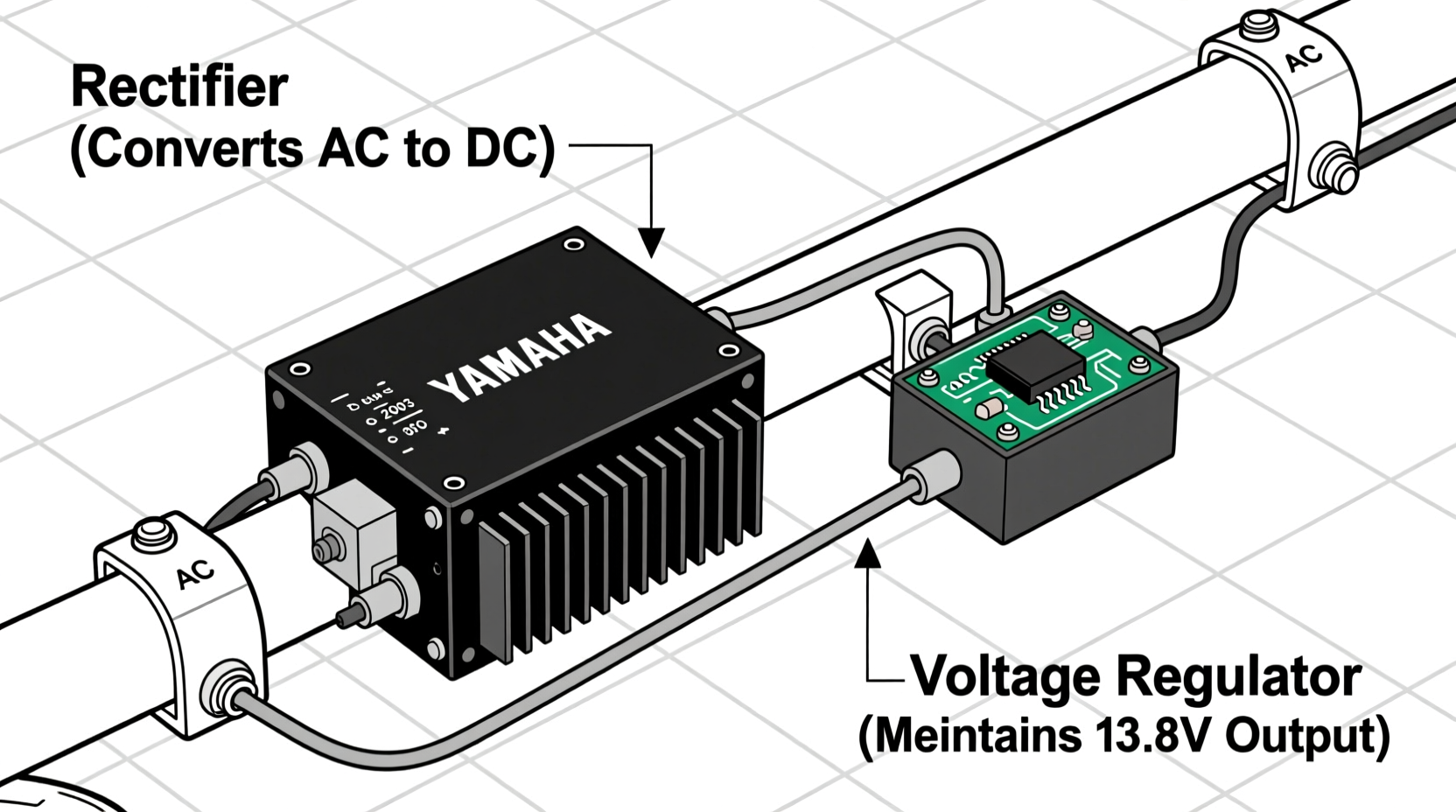
The Yamaha VStar relies on an alternator (also called a stator) to generate electrical power while the engine runs. As the engine turns, magnets spin around a coil of wire in the stator, producing alternating current (AC). However, the bike’s battery and electrical components operate on direct current (DC). This is where the rectifier comes in—it converts AC into DC so the battery can be charged and the lights, ignition, and other systems can function.
But conversion alone isn’t enough. The amount of voltage produced by the stator varies with engine speed. At idle, output may be low; at high RPMs, it can spike dangerously high. Unregulated voltage can overcharge and damage the battery or fry sensitive electronics. That’s where the voltage regulator steps in—to maintain a steady, safe voltage level (typically between 13.5V and 14.5V) regardless of engine speed.
In modern Yamaha VStars, especially models from the early 2000s onward, the rectifier and voltage regulator are typically integrated into a single component known as a \"regulator/rectifier\" unit. This consolidation saves space and simplifies wiring but can also lead to confusion about what each part does.
Rectifier vs Voltage Regulator: Key Differences
Despite being packaged together, the rectifier and voltage regulator are functionally separate. Think of them as two specialists working in tandem—one handles current type, the other manages voltage levels.
| Feature | Rectifier | Voltage Regulator |
|---|---|---|
| Primary Function | Converts AC (alternating current) to DC (direct current) | Controls and stabilizes output voltage to prevent overcharging |
| Input Current | Alternating Current (AC) from stator | Unstable DC from rectifier |
| Output Current | Raw DC (unregulated) | Stable DC (~13.5–14.5V) |
| Failure Symptom | Battery won’t charge; bike dies after starting | Overcharging, boiling battery, blown bulbs |
| Component Type | Diode bridge (solid-state) | Electronic control circuit |
“On air-cooled cruisers like the VStar, heat is the enemy of the regulator/rectifier. Many failures stem not from electrical faults but from thermal stress due to poor airflow.” — Mark Tran, Motorcycle Electrical Systems Technician
Why Confusion Exists: The Combined Unit
The integration of the rectifier and regulator into one housing has blurred the distinction between the two. On most Yamaha VStar models—such as the 650, 950, and 1100—the regulator/rectifier is mounted near the rear wheel or under the seat, where heat buildup is common. Because both components share the same heatsink and enclosure, a failure in either section can cause the entire unit to malfunction.
This design choice makes replacement easier for manufacturers and mechanics, but it complicates diagnostics. For example, if your battery is consistently undercharged, the issue could be a failed rectifier (no AC-to-DC conversion), a failing regulator (inability to sustain voltage), or even a damaged stator. Without proper testing, it's easy to misdiagnose the root cause.
Step-by-Step: Testing Your VStar’s Charging System
To determine whether your rectifier, regulator, or stator is failing, follow this diagnostic process using a digital multimeter:
- Check battery voltage at rest: With the engine off, measure across the battery terminals. A healthy battery should read 12.4–12.8V.
- Start the engine and recheck: At idle, voltage should rise to at least 13.0V. If not, charging system issues are likely.
- Rev to 3,000 RPM: Voltage should stabilize between 13.5V and 14.8V. Anything above 15V suggests regulator failure; below 13.0V indicates poor rectification or stator problems.
- Test stator output (AC): Disconnect the stator wires from the regulator/rectifier. Run the engine and measure AC voltage across the stator leads. Most VStars should produce 30–70V AC at 3,000 RPM. Low or zero reading means stator failure.
- Inspect regulator/rectifier: Look for melted connectors, corrosion, or physical damage. Even if output seems normal, internal diode failure can cause intermittent issues.
If all tests point to the regulator/rectifier, replacement is usually recommended—even if only one half is faulty—since disassembling and repairing the unit is rarely cost-effective.
Real-World Example: Diagnosing a Dead Battery on a 2005 VStar 1100
A rider brought in a 2005 Yamaha VStar 1100 that would start fine with a jump but die within minutes of riding. Initial suspicion was a bad battery. After replacing it, the same issue recurred. A technician performed a charging system test:
- Resting battery voltage: 12.6V ✅
- At idle: 12.3V ❌ (should be rising)
- At 3,000 RPM: 12.5V ❌
- Stator AC output: 65V AC ✅
The stator was functioning, but the DC output wasn’t increasing with RPM. This pointed to a failed rectifier section. Further inspection revealed cracked solder joints inside the regulator/rectifier unit—likely from years of heat cycling. Replacing the unit restored proper charging, and the bike ran reliably afterward.
This case highlights how symptoms can mimic battery failure when the real culprit is a compromised rectifier.
Common Myths and Misconceptions
Several myths persist among VStar owners about these components:
- Myth: “If the lights are bright, the charging system is fine.”
Reality: Lights may appear normal even with marginal charging. Voltage must be measured under load. - Myth: “A new regulator/rectifier will fix any charging issue.”
Reality: A failing stator or corroded wiring can overload and destroy a new unit quickly. - Myth: “The rectifier and regulator are interchangeable terms.”
Reality: They refer to different functions, even if combined in one box.
Frequently Asked Questions
Can a bad rectifier drain the battery?
No, a failed rectifier typically prevents charging but doesn’t drain the battery. However, a shorted diode inside the rectifier can allow DC current to flow backward into the stator, causing battery drain and overheating—this is rare but possible.
Is it safe to ride with a faulty voltage regulator?
No. An overcharging regulator can push voltage beyond 15V, leading to boiled electrolyte, warped plates, and permanent battery damage. It may also blow fuses or damage lighting and ECUs. Stop riding and inspect immediately.
Why do regulator/rectifiers fail so often on VStars?
Heat is the primary cause. The units are often mounted in low-airflow areas. Continuous high RPMs, accessory loads, and hot weather accelerate thermal stress. Poor grounding or stator imbalances can also contribute.
Maintenance Checklist for Longevity
- ✅ Inspect regulator/rectifier mounting and heatsink contact annually
- ✅ Ensure cooling fins are free of dirt and debris
- ✅ Check stator resistance and output every 10,000 miles
- ✅ Verify clean, tight connections at stator, regulator, and battery
- ✅ Avoid adding high-draw accessories without upgrading the charging system
Final Thoughts
The rectifier and voltage regulator play complementary but distinct roles in your Yamaha VStar’s electrical system. One converts current type, the other controls voltage stability. While modern designs combine them into a single unit, understanding their individual functions empowers you to troubleshoot more effectively and avoid unnecessary replacements.
Regular testing, attention to heat management, and proactive maintenance can extend the life of your charging system significantly. Don’t wait for a breakdown on the road—monitor your voltage, know the signs of failure, and address issues early.




 浙公网安备
33010002000092号
浙公网安备
33010002000092号 浙B2-20120091-4
Comments
No comments yet. Why don't you start the discussion?