
Knitters know the frustration all too well: you're deep into a project, rhythm steady, needles flying—then suddenly, your yarn snags. A loop catches on the edge of your coffee table, or the ball jumps off your lap and rolls under the couch. Tangles form in seconds, unraveling minutes—or hours—of progress. Enter the yarn bowl: a small, often handmade ceramic or wooden dish designed specifically to hold your working yarn. But is it just another knitter’s gimmick, or does it genuinely make a difference compared to using a regular household bowl? Let’s explore the function, design, and real-world performance of both options.
What Is a Yarn Bowl—and Why Was It Invented?
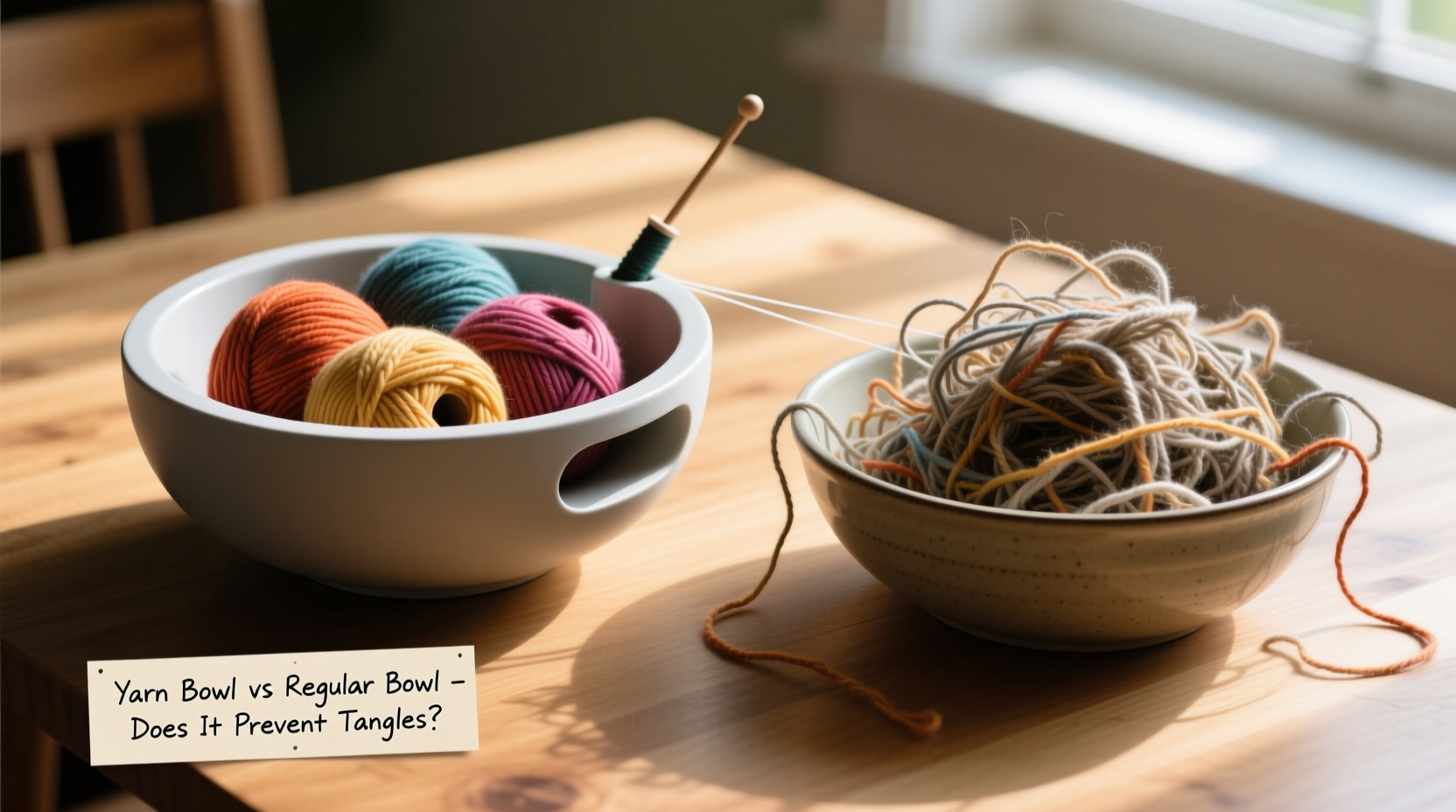
A yarn bowl is not merely a decorative object; it’s a functional tool born from practical necessity. Typically crafted from wood, ceramic, or even 3D-printed materials, a true yarn bowl features one or more notches or cutouts along its rim. These notches allow the working end of the yarn to feed smoothly out of the bowl while the rest of the ball remains securely contained inside.
The idea is simple: by keeping the yarn under gentle tension and preventing it from rolling away or snagging on furniture, the bowl reduces the likelihood of knots, twists, and tangles. The concept dates back decades, originally popularized among hand-spinners and weavers before gaining traction in modern knitting communities.
“A good yarn bowl acts like a silent assistant—keeping things tidy without demanding attention.” — Lila Monroe, Textile Historian and Knitting Instructor
Unlike a regular bowl, which may lack structural features for yarn management, a purpose-built yarn bowl is engineered with the knitter’s workflow in mind. But does that engineering translate into measurable benefits?
How Tangles Form During Knitting
To assess whether a yarn bowl helps, it's essential to understand how tangles occur in the first place. Most yarn-related snarls stem from three primary causes:
- Uncontrolled movement: When a yarn ball rolls freely across surfaces, loops can catch on edges, fingers, or pet paws.
- Excess slack: Too much loose yarn between the ball and the needles creates opportunities for loops to twist around themselves.
- Poor tension regulation: Without consistent pull, yarn can jump out of place, especially during fast stitching or complex patterns.
In environments with pets, children, or cluttered spaces, these risks multiply. Even experienced knitters aren’t immune. A study conducted by the Craft Yarn Council found that over 60% of hobbyist knitters reported spending at least 10 minutes per session untangling yarn—time that adds up significantly over weeks and months.
Yarn Bowl vs Regular Bowl: A Functional Comparison
At first glance, any concave container might seem sufficient for holding yarn. After all, a cereal bowl keeps fruit in place—why not yarn? The answer lies in design specificity.
| Feature | Yarn Bowl | Regular Bowl |
|---|---|---|
| Rim Notch/Cutout | Yes – allows controlled yarn feed | No – yarn drags over smooth edge |
| Weight & Stability | Often heavier, less likely to tip | Varies – lightweight models may slide |
| Interior Shape | Curved to prevent snagging | May have sharp transitions or seams |
| Mobility Control | Contains ball effectively | Ball can bounce out when pulled |
| Tangle Prevention | High – reduces slack and roll-away | Low to moderate – depends on use case |
| Portability | Sometimes bulky; niche design | Common household item, easy to replace |
The key differentiator is the notch. This small feature maintains tension on the yarn as it exits the bowl, reducing slack and preventing sudden jerks that lead to twisting. In contrast, a regular bowl forces the yarn to drag over its full rim, creating friction and increasing the chance of catching or looping.
Additionally, many yarn bowls are designed with deeper interiors and smoother finishes to minimize fiber abrasion—important for delicate yarns like silk or mohair. Regular bowls, especially glazed ceramics or metal ones, may have ridges or textures that snag fibers.
Real-World Performance: Does the Yarn Bowl Deliver?
Anecdotal evidence from thousands of knitters suggests yes—but with caveats. For those knitting in stable environments (e.g., seated at a table), a regular bowl can work acceptably well if the yarn ball is small and the pulling motion is slow and steady. However, once mobility or environmental variables come into play, the advantages of a dedicated yarn bowl become apparent.
Mini Case Study: Two Knitters, Two Bowls, One Project
Sarah and Jenna, both intermediate knitters, began the same lace shawl pattern using identical fingering-weight merino yarn. Sarah used a hand-thrown ceramic yarn bowl with a single exit notch. Jenna used a standard glass salad bowl she had at home.
Over five weekly sessions, Sarah averaged 90 minutes of uninterrupted knitting per session. She reported only one minor twist, quickly resolved. Her yarn remained centered, and feeding was smooth throughout.
Jenna, however, encountered issues early. In her second session, her cat knocked the bowl off the coffee table. After retrieving the yarn, she noticed multiple loops had tangled beneath the sofa. Later, while knitting on the go, the yarn caught on the edge of the bowl repeatedly, causing micro-snags in the delicate fiber. By week four, she’d spent nearly 45 minutes cumulatively untangling knots.
The final result? Both completed the shawl, but Sarah finished two days earlier and reported greater enjoyment. Jenna admitted she now uses a travel-sized yarn bowl when knitting outside her usual chair.
This scenario reflects a common pattern: in static, controlled settings, a regular bowl may suffice. But for dynamic use—on public transit, in busy homes, or with high-sensitivity yarns—the specialized design of a yarn bowl proves its worth.
When a Regular Bowl Might Suffice (And When It Won’t)
There are situations where substituting a regular bowl works fine:
- You’re using a large, tightly wound skein that doesn’t roll easily.
- You knit slowly and maintain constant hand control over the yarn.
- Your workspace is confined and free of distractions (no pets, kids, or drafts).
- You’re working with stiff or grippy yarn (like cotton or tweed) that resists tangling.
But consider avoiding regular bowls when:
- You use slippery yarns (silk, bamboo, alpaca blends).
- You knit while moving (commuting, walking, multitasking).
- The bowl sits on a low-friction surface (glass table, hardwood floor).
- You frequently pause and resume, allowing slack to accumulate.
Step-by-Step Guide: Optimizing Your Yarn Setup
Whether you choose a yarn bowl or adapt a regular one, follow these steps to reduce tangles:
- Prepare your yarn: Wind it into a center-pull ball or cake using a swift and ball winder. This ensures even tension and minimizes internal twists.
- Position the bowl: Place it slightly below your hands so gravity assists smooth feeding.
- Thread through the notch: If using a yarn bowl, guide the working end through the cutout. Pull gently to establish light resistance.
- Secure the setup: On slippery surfaces, use a non-slip pad or clamp the bowl edge to the table.
- Monitor slack: Pause every few rows to check for excess loops inside the bowl. Gently reposition if needed.
- Switch bowls mid-project? Only if necessary. Transferring yarn increases tangling risk—stick with one system once started.
Expert Tips for Maximizing Tangle-Free Knitting
Beyond the bowl itself, several habits amplify its effectiveness:
- Use smaller balls: Split large skeins into 100g portions. Smaller balls roll less and fit better in most bowls.
- Choose the right size: A bowl too large lets the ball shift excessively; too small crushes the yarn. Ideal depth is 3–5 inches with a diameter matching a softball.
- Rotate your bowl: Some artisans design bowls with multiple notches. Rotate the bowl periodically to alternate exit points and balance wear.
- Travel smart: Compact silicone or foldable fabric yarn bowls are excellent for on-the-go knitters who still want control.
“I’ve taught hundreds of beginners. Those who start with a proper yarn bowl develop better tension habits and report fewer frustrations.” — Marcus Tran, Founder of Urban Knit Collective
Checklist: Choosing the Right Yarn Container
Before buying or repurposing a bowl, ask yourself:
- ✅ Does it have a smooth interior with no sharp edges?
- ✅ Is there a notch or groove to guide the yarn out cleanly?
- ✅ Is it heavy enough not to tip when pulled?
- ✅ Will it fit comfortably on my lap or table?
- ✅ Can I clean it easily if stained by dye or oils?
- ✅ Am I using it with high-slip yarn that needs extra control?
If you answered “no” to two or more of the first five, reconsider your choice. If you’re using silk, laceweight, or hand-dyed yarns, the last question alone should push you toward a dedicated yarn bowl.
FAQ: Common Questions About Yarn Bowls
Can I make my own yarn bowl?
Absolutely. Woodworkers often turn simple bowls with routed notches. Potters can carve grooves during shaping. Even crafters using air-dry clay or papier-mâché can create functional versions. Just ensure the notch is wide enough for your yarn thickness but narrow enough to prevent jumping out.
Do I need a separate bowl for each yarn weight?
Not necessarily. Most well-designed yarn bowls accommodate a range from fingering to worsted weight. Very bulky yarns (Roving or super-chunky) may require larger notches or shallow dishes. Keep one medium bowl for everyday use and a wider one for specialty projects.
Are yarn bowls worth the price?
Handmade ceramic or artisan wooden bowls can cost $25–$60. Consider this: if it saves you 15 minutes per week in detangling over a year, that’s nearly 13 hours regained. At minimum wage, that exceeds the cost. For enjoyment and flow, the value is even higher.
Conclusion: Small Tool, Meaningful Impact
The debate between yarn bowl and regular bowl isn’t about luxury—it’s about intentionality. A regular bowl serves an incidental role, while a yarn bowl fulfills a precise function: preserving the rhythm of your craft. For casual knitters in controlled settings, substitution may work. But for anyone serious about efficiency, fiber care, or stress-free creativity, the specialized design pays dividends.
Tangles aren’t just time-wasters; they disrupt focus, damage delicate fibers, and erode the meditative joy knitting can provide. A good yarn bowl doesn’t eliminate all risks, but it significantly reduces preventable ones. Whether you opt for a handcrafted piece or a clever DIY solution, choosing the right container is a small act of respect for your materials and your time.




 浙公网安备
33010002000092号
浙公网安备
33010002000092号 浙B2-20120091-4
Comments
No comments yet. Why don't you start the discussion?