
Keychains are more than just accessories—they’re everyday tools. Whether clipped to a belt loop, stuffed in a pocket, or dangling from a bag, they endure constant friction, drops, and stress. Yet many people still choose based on aesthetics alone, only to find their favorite yarn tassel frayed or their delicate metal charm cracked within weeks. The real question isn’t just about looks—it’s about resilience. When it comes to yarn versus metal keychains, which one can actually survive the relentless abuse of daily life?
The answer depends on material integrity, usage patterns, and environmental exposure. While yarn keychains offer softness and personality, metal brings strength and longevity. But how do they stack up in real-world conditions? Let’s break down both options with practical insight, user experiences, and engineering logic.
Durability Showdown: Material Science Meets Daily Wear
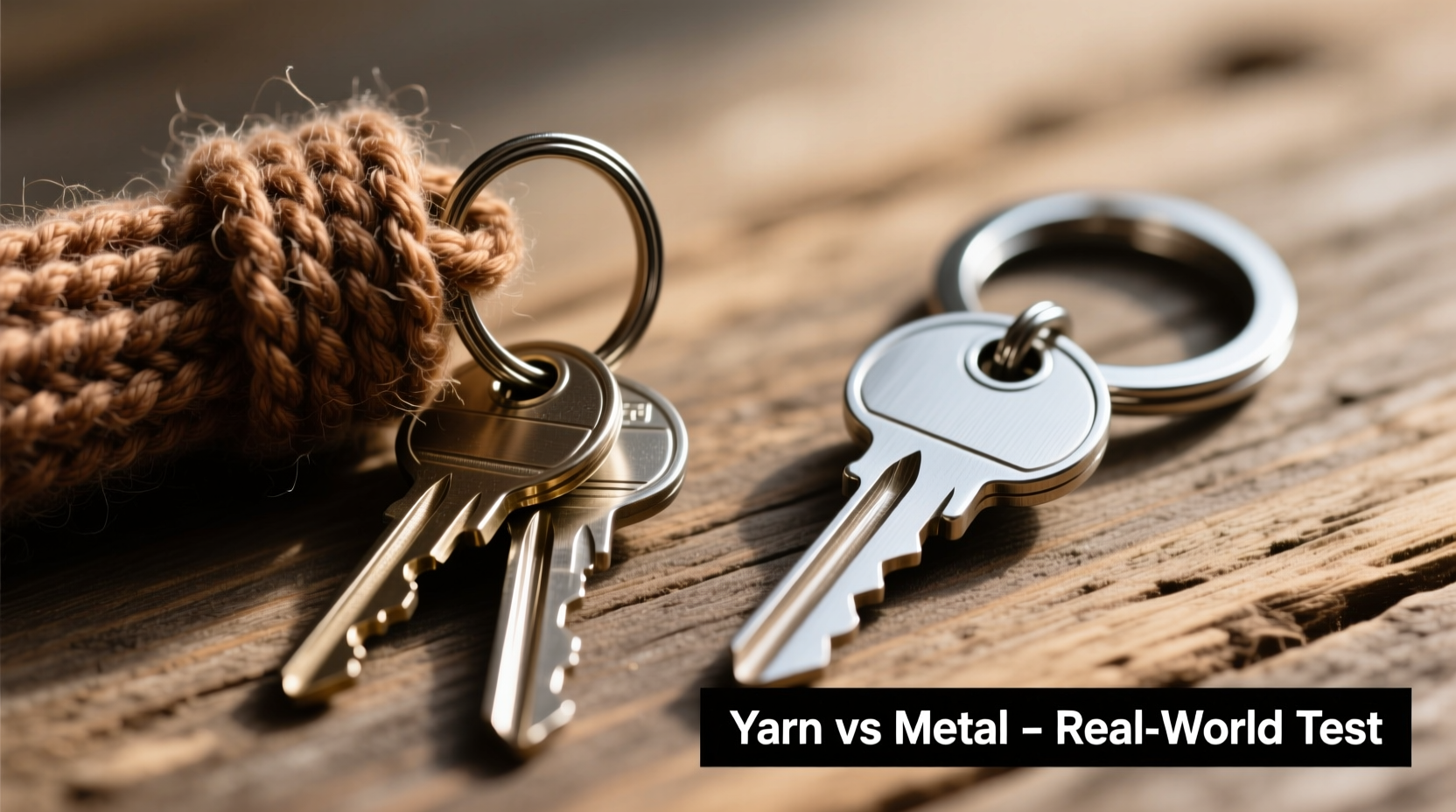
At first glance, the difference between yarn and metal seems obvious—soft fiber versus solid alloy. But durability isn’t just about hardness; it involves tensile strength, resistance to abrasion, corrosion, and structural fatigue.
Yarn keychains, typically made from acrylic, cotton, or wool blends, rely on tight knotting and braiding for strength. Their appeal lies in color variety and handmade charm. However, these fibers degrade when exposed to moisture, UV light, and repeated rubbing against rough surfaces like denim or concrete edges. Over time, individual strands snap, leading to unraveling—a common failure point after just a few months of regular use.
Metal keychains, usually crafted from stainless steel, aluminum, or zinc alloys, resist physical deformation far better. They don’t fray, melt under sunlight, or absorb water. Even if scratched, their core structure remains intact. High-quality metal links maintain integrity even after years of being tossed into pockets, bags, or glove compartments.
Real-World Performance: A Side-by-Side Comparison
| Feature | Yarn Keychain | Metal Keychain |
|---|---|---|
| Tensile Strength | Low – fibers stretch and break under load | High – resists pulling force without deformation |
| Abrasion Resistance | Poor – rubs against fabric cause pilling and thinning | Excellent – withstands constant contact with surfaces |
| Water & Moisture Tolerance | Fair at best – absorbs liquid, promotes mildew | Superior – non-porous, rust-resistant (if stainless) |
| UV Light Exposure | Colors fade quickly; fibers weaken | Minimal impact; finishes may dull but won't crack |
| Lifespan (Average Use) | 3–8 months | 3+ years |
| Weight Capacity | Light loads only (~200g max) | Handles up to 10kg depending on design |
Mini Case Study: Office Worker vs. Outdoor Enthusiast
Consider two users: Sarah, an office worker who carries three keys and uses her keychain mostly indoors, and Jordan, a hiker who attaches carabiners, multitools, and spare locks to theirs.
Sarah chose a vibrant hand-knotted yarn keychain as a gift. It looked great on her leather key fob and matched her tote bag. After four months of gentle use—mostly clipped inside her purse—the yarn showed minor fraying but remained functional. She replaced it not because it failed, but because she wanted a seasonal change.
Jordan opted for a minimalist brass ring with a woven paracord loop. Within six weeks, the cord began unraveling during hikes where the keys bounced against rock faces and backpack zippers. Switching to a forged steel split-ring system eliminated the issue entirely. “I didn’t realize how much punishment my keys took until something broke,” Jordan said. “Now I only trust metal.”
This contrast highlights a crucial truth: environment dictates performance. Yarn can last if treated gently, but metal excels under unpredictability.
“Most keychain failures happen not from sudden breaks, but cumulative micro-damage—abrasion, twisting, and moisture. Metal resists all three far better than textiles.” — Dr. Lena Torres, Materials Engineer at Urban Gear Labs
When Yarn Makes Sense (And When It Doesn’t)
Yarn isn’t inherently flawed—it serves specific purposes well. Its flexibility makes it ideal for decorative accents, gift tags, or lightweight lanyards used indoors. Craft markets thrive on colorful yarn designs because they appeal emotionally. But functionally, limitations emerge quickly.
Common failure modes include:
- Loose knots that slip under strain
- Frayed ends from rubbing against sharp key edges
- Mold growth in humid climates
- Inability to support weight beyond basic house keys
That said, some reinforced yarn variants perform better. Paracord, for example, is nylon-based and engineered for survival gear. Woven tightly, it offers moderate durability and shock absorption. Still, even paracord degrades faster than metal when subjected to grit, sand, or saltwater exposure.
Choosing the Right Metal: Not All Are Created Equal
Not every metal keychain is bulletproof. Cheap zinc alloys corrode easily and may snap under pressure. Thin stamped rings bend open, releasing keys unexpectedly. To ensure long-term reliability, consider these factors:
- Material Grade: Opt for 304 or 316 stainless steel for maximum corrosion resistance.
- Construction Type: Solid forged links outperform hollow or welded ones.
- Finish Quality: Smooth edges prevent snagging and reduce wear on other items.
- Locking Mechanism: Spring-loaded clasps or screw gates add security over simple split rings.
Brands like Nite Ize, Porter Yoshida, and Tiinko have built reputations on robust hardware tested under extreme conditions. These aren’t flashy, but they disappear into your routine—which is exactly what good gear should do.
Checklist: Picking a Keychain That Won’t Fail You
- ✅ Assess your typical key load – heavier sets demand stronger materials
- ✅ Prioritize metal for outdoor, rugged, or high-movement activities
- ✅ Choose stainless steel or titanium over plated or alloy alternatives
- ✅ Avoid yarn unless usage is strictly indoor and low-stress
- ✅ Look for secure attachment points (double loops, locking clips)
- ✅ Inspect regularly for signs of wear, especially on moving parts
FAQ
Can I combine yarn and metal safely?
Yes—if done correctly. Attach the yarn as a decorative tag to a primary metal ring, not as the main load-bearing component. This way, style doesn’t compromise function.
Do metal keychains damage other items in my pocket?
Potentially. Uncoated metals can scratch phones or glasses. Consider powder-coated, silicone-wrapped, or anodized finishes to reduce friction and protect adjacent objects.
Are there eco-friendly durable options?
Recycled stainless steel and aluminum are sustainable choices. Some brands now offer biodegradable polymer-reinforced keyrings, though they still lag behind metal in lifespan.
Conclusion: Build a Keychain That Lasts, Not Just Looks Good
Style matters, but so does substance. A keychain shouldn’t need replacing every few months. While yarn brings warmth and creativity, it simply cannot match the endurance of well-made metal. For anyone who values reliability—whether commuting through rain, hiking remote trails, or juggling a bulky keyring—metal is the rational choice.
That doesn’t mean abandoning personal expression. Combine durability with identity: use metal as the foundation, then add removable textile accents that don’t bear the load. This hybrid approach gives you the best of both worlds—longevity and flair.




 浙公网安备
33010002000092号
浙公网安备
33010002000092号 浙B2-20120091-4
Comments
No comments yet. Why don't you start the discussion?