
As more people bring fitness into their homes, choosing the right mat has become a critical decision—especially when it comes to protecting joints during workouts. Whether you're practicing yoga, doing high-intensity interval training (HIIT), or strength exercises, the surface beneath you plays a major role in comfort, stability, and long-term joint health. While \"yoga mat\" and \"exercise mat\" are often used interchangeably, they serve different purposes and offer varying levels of cushioning and support. Understanding these distinctions can help prevent discomfort, reduce injury risk, and enhance performance.
Understanding the Core Differences
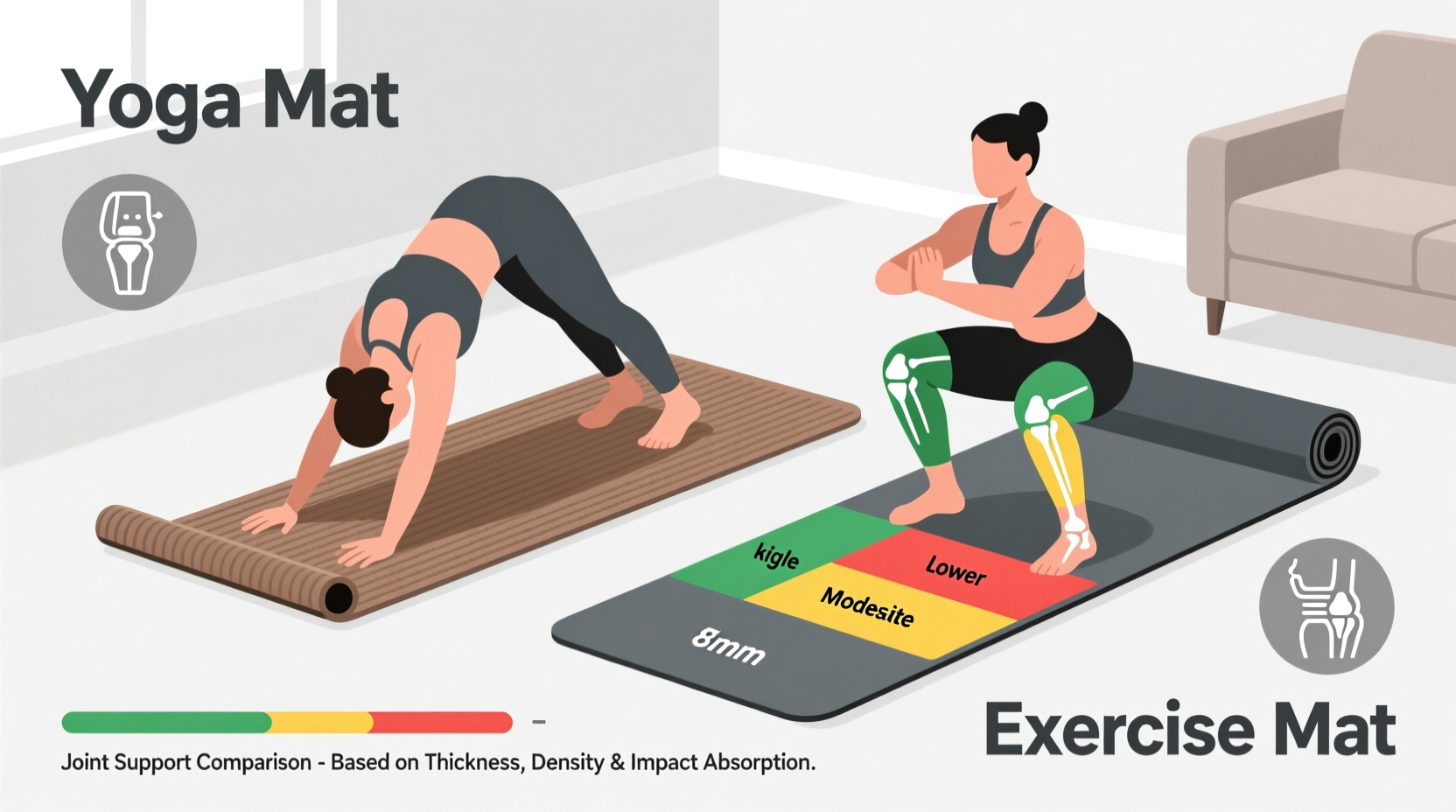
The first step in determining which mat offers better joint support is recognizing that yoga mats and exercise mats are designed with different activities—and therefore different physical demands—in mind.
Yoga mats are typically thinner, ranging from 3mm to 6mm in thickness. They prioritize grip, texture, and portability over cushioning. Their primary function is to provide traction during poses that require balance and minimal movement across the floor. Most yoga styles—such as Hatha, Vinyasa, or Ashtanga—involve low-impact transitions and static holds, placing less stress on knees, wrists, and hips.
In contrast, exercise mats—also known as gym, workout, or fitness mats—are generally thicker, often measuring between 8mm and 15mm. These mats are built to absorb impact from dynamic movements like jumping, lunging, or floor-based core work. Their construction focuses on shock absorption and durability, making them ideal for routines involving repeated contact with hard surfaces such as hardwood or tile.
This fundamental difference in design directly affects joint support. A thin yoga mat may not provide enough cushioning for exercises that place pressure on sensitive areas, while an overly thick exercise mat might compromise balance during precise yoga postures.
Joint Support: What Matters Most?
Joint support isn’t just about thickness—it’s a combination of material density, surface texture, rebound resilience, and how well the mat conforms to body contours under load. Key joints at risk during home workouts include:
- Knees – especially during plank-to-knee tucks, mountain climbers, or kneeling stretches.
- Elbows and wrists – stressed in push-ups, planks, and downward dog variations.
- Hips and tailbone – vulnerable during sit-ups, glute bridges, or seated exercises.
- Ankles and spine – affected by jumping impacts or improper spinal alignment on hard floors.
For individuals with arthritis, past injuries, or joint sensitivity, inadequate flooring can exacerbate pain and delay recovery. Research published in the *Journal of Sports Science & Medicine* indicates that insufficient shock absorption increases ground reaction forces transmitted through joints by up to 30%, raising the risk of overuse injuries.
“Even moderate-impact exercises on hard surfaces without proper cushioning can accelerate cartilage wear over time,” says Dr. Lena Torres, a sports physiotherapist at the National Institute of Movement Health. “A supportive mat acts like a mini suspension system for your body.”
Material and Thickness: How They Impact Joint Protection
The materials used in mats significantly influence both comfort and longevity. Common options include PVC, TPE (thermoplastic elastomer), rubber, EVA foam, and cotton blends. Each has unique properties affecting firmness, elasticity, and environmental footprint.
| Matt Type | Avg. Thickness | Common Materials | Best For | Limits |
|---|---|---|---|---|
| Standard Yoga Mat | 3–6 mm | PVC, TPE, Natural Rubber | Yoga, Pilates, stretching | Minimal cushioning; poor shock absorption |
| Thick Yoga Mat | 6–8 mm | TPE, Rubber | Sensitive knees/wrists, restorative yoga | Bulkier; less portable |
| Exercise/Fitness Mat | 8–15 mm | EVA Foam, High-Density Foam | HIIT, calisthenics, floor workouts | Less grip; harder to roll/store |
| Foldable Gym Mat | 10–20 mm (when unfolded) | Dual-layer foam | Home gyms, boot camps, rehab exercises | Not suitable for yoga due to slipperiness |
EVA foam, commonly found in exercise mats, excels at dampening impact but tends to compress permanently over time. In contrast, natural rubber and high-density TPE used in premium yoga mats offer balanced firmness and eco-friendliness but lack deep cushioning.
Real-World Use Case: Sarah’s Home Workout Journey
Sarah, a 38-year-old remote worker from Portland, started doing daily 20-minute workouts at home after her doctor advised increasing physical activity due to early signs of lower back stiffness. She began using a standard 4mm PVC yoga mat for everything—from sun salutations to burpees.
Within three weeks, she noticed persistent wrist soreness and knee discomfort after jump squats. “I thought any mat would be fine,” she recalls. “But my hands felt like they were hitting concrete.” After consulting a local trainer, she switched to a dual-purpose 10mm fitness mat with non-slip top layer and closed-cell foam base.
The change was immediate. Her joint pain decreased within days, and she reported feeling more confident during high-impact moves. “It’s like night and day,” she said. “Now I don’t dread the floor part of my routine.”
Sarah’s experience highlights a common mistake: assuming one mat fits all workout types. While multi-functional mats exist, understanding your primary activity helps avoid compromising safety.
Choosing Based on Your Routine: A Step-by-Step Guide
Selecting the right mat shouldn't be guesswork. Follow this five-step process to ensure optimal joint support based on your actual workout habits.
- Assess your primary workout type: Are you mostly doing yoga, strength training, cardio bursts, or a mix? Write down your weekly routine.
- Identify high-pressure movements: Note exercises where joints touch the floor (e.g., planks, push-ups, seated twists). The more frequent, the greater the need for cushioning.
- Test thickness needs: For pure yoga or Pilates, 4–6mm suffices. For mixed routines including jumps or weight-bearing floor moves, aim for 8–12mm.
- Check surface texture: Look for textured or grippy tops to prevent slipping, especially if you sweat heavily. Smooth foam mats can become hazardous.
- Consider durability and storage: Thicker mats last longer under heavy use but take up space. Rollable TPE mats suit small apartments; foldable EVA mats work best in dedicated workout zones.
If your routine includes both yoga and intense training, consider investing in two specialized mats—or choose a hybrid model designed for versatility without sacrificing support.
Hybrid Options and Emerging Trends
Recognizing the growing demand for multifunctional gear, several brands now offer “all-in-one” mats that blend features of both yoga and exercise mats. These hybrids typically range from 7–10mm thick, combine rubber or TPE top layers with dense foam cores, and feature dual-texture surfaces—one side grippy for yoga, the other slightly softer for impact absorption.
Models like the Manduka Align or BalanceFrom All-Purpose Mat attempt to bridge the gap, though compromises remain. Some users report reduced stability during handstands or inversions due to slight compression, while others appreciate the added comfort during circuit training.
Newer innovations include memory foam inserts, modular interlocking tiles for full-room coverage, and antimicrobial coatings to manage hygiene during prolonged use. However, these advancements often come at higher price points and may not be necessary for casual exercisers.
Frequently Asked Questions
Can I use a yoga mat for HIIT or strength training?
You can, but only if it's a thick (6mm+) mat made from durable, shock-absorbing material like high-density TPE or rubber. Standard 3–4mm mats offer minimal protection against repetitive impact and may lead to joint strain over time.
Do thicker mats always mean better joint support?
Not necessarily. Excessive thickness without proper density can cause instability, increasing the risk of rolling an ankle or straining a wrist. Optimal joint support balances thickness with firmness—ideally between 8–12mm for mixed workouts.
How often should I replace my workout mat?
Most quality mats last 1–3 years with regular use. Signs it’s time to replace include permanent indentations, loss of grip, strong odors, or visible tears. Worn mats lose shock-absorbing capacity and become slipping hazards.
Action Checklist: Picking the Right Mat for Joint Health
- ✅ Determine your main workout style (yoga, HIIT, strength, etc.)
- ✅ List exercises involving floor contact (planks, lunges, sit-ups)
- ✅ Measure available storage space and portability needs
- ✅ Choose thickness: 4–6mm for yoga, 8–12mm for mixed/high-impact
- ✅ Prioritize non-slip surface and durable, easy-to-clean material
- ✅ Test the mat in person if possible—or check return policies before buying
- ✅ Consider owning two mats if your routine varies widely
Final Recommendation: Match the Mat to the Movement
When it comes to joint support, the choice between a yoga mat and an exercise mat ultimately depends on what you’re doing—not just what you call it. For pure yoga or flexibility training, a well-made yoga mat with moderate cushioning provides adequate protection. But for any routine involving dynamic movement, jumps, or extended time on hands and knees, an exercise mat delivers superior shock absorption and long-term joint preservation.
If your home workouts blend styles, don’t default to convenience. Invest in equipment that matches your biomechanical needs. Your knees, wrists, and spine will thank you in the months and years ahead.




 浙公网安备
33010002000092号
浙公网安备
33010002000092号 浙B2-20120091-4
Comments
No comments yet. Why don't you start the discussion?