
For many yogis, the mat is more than just a surface to stand on—it’s a personal sanctuary, a space for grounding, movement, and mindfulness. In recent years, yoga mats featuring printed alignment lines have gained popularity, promising improved posture, better symmetry, and enhanced learning. But as these geometric guides spread across studio floors and social media feeds, a growing question emerges: Are alignment lines genuinely beneficial, or are they simply visual clutter that distracts from the essence of practice?
This article examines the functionality, psychology, and practicality behind lined yoga mats. Drawing from expert insights, user experiences, and biomechanical principles, we’ll explore whether these lines support or sabotage your journey toward mindful movement.
The Rise of Alignment-Focused Yoga Mats
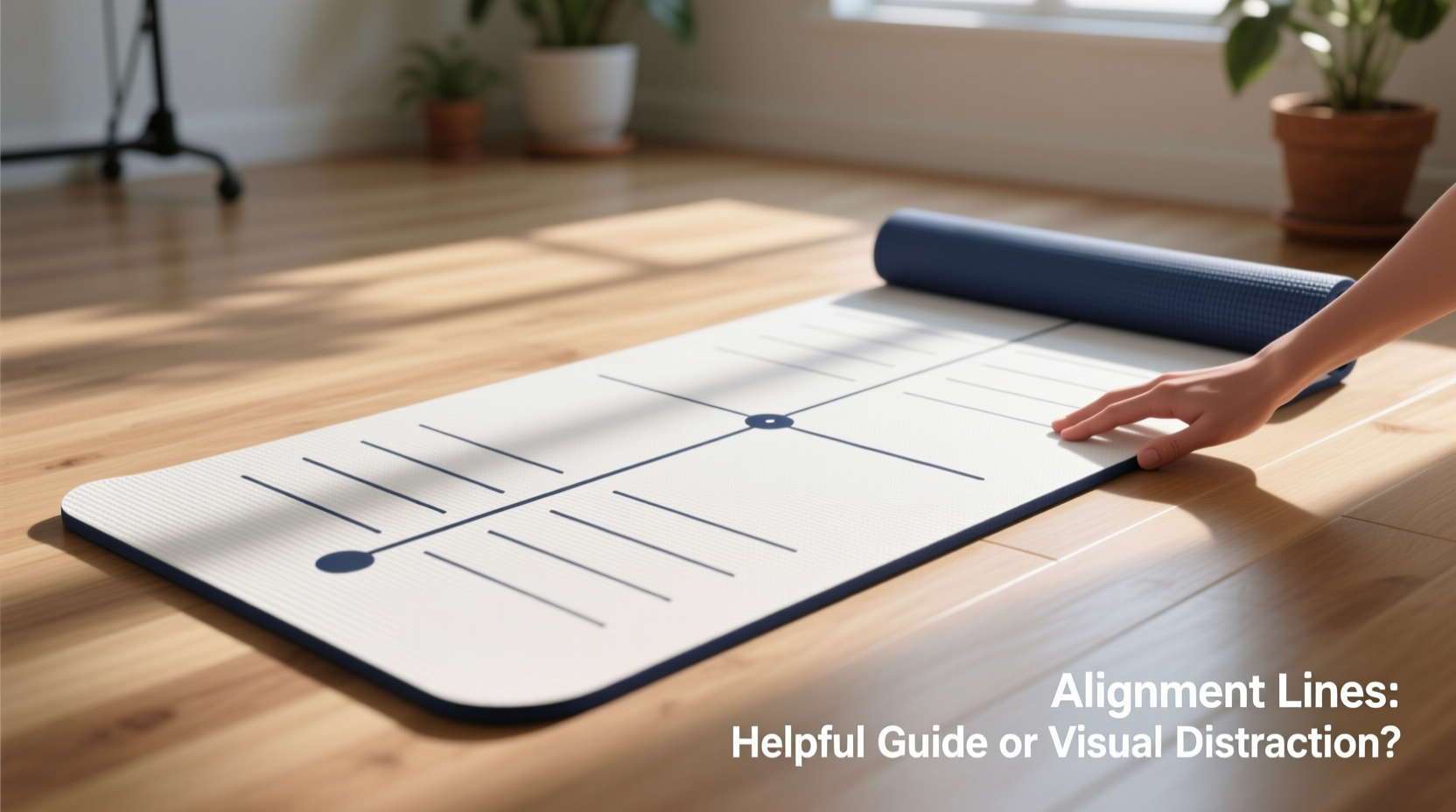
Traditional yoga mats have long been simple—textured surfaces in neutral or colorful designs, meant to provide grip and cushioning. However, with the rise of online classes, self-guided home practice, and increased focus on form, manufacturers began integrating visual cues into mat designs. Brands like Lululemon, Manduka, and Gaiam now offer mats with center lines, foot markers, hand placements, and even angle indicators for poses like Warrior II or Triangle.
The idea is straightforward: if you can see where your hands and feet should go, you’re more likely to achieve proper alignment. This is especially appealing to beginners who may not have access to consistent in-person instruction. Yet, as with any tool that introduces external reference points, the benefits depend heavily on how—and why—they’re used.
How Alignment Lines Work: The Theory Behind the Design
Alignment lines are typically based on anatomical landmarks and common pose mechanics. A standard layout includes:
- A central longitudinal line running from the top to the bottom of the mat, symbolizing the body’s midline.
- Circular or rectangular markers indicating ideal hand and foot placement in foundational poses like Downward Dog or Warrior I.
- Angle guides showing the direction toes or heels should face in lateral poses.
The logic follows principles taught in alignment-based styles such as Iyengar or Anusara yoga, where precision in positioning is emphasized to prevent injury and maximize energetic flow. When used correctly, these lines can serve as silent teachers, helping practitioners develop spatial awareness without constant verbal correction.
Dr. Sarah Thompson, a physical therapist and certified yoga instructor, explains:
“Visual feedback can accelerate motor learning. For someone unfamiliar with hip squareness in Warrior II, seeing that their back foot is misaligned relative to a marked angle can be more immediate than trying to interpret verbal cues alone.” — Dr. Sarah Thompson, DPT, RYT-500
Benefits of Using a Mat with Alignment Lines
When thoughtfully integrated into practice, alignment lines offer several tangible advantages:
Improved Body Awareness
Especially for beginners, understanding spatial relationships between limbs and torso can be challenging. Lines act as external references that help bridge the gap between intention and execution. Over time, this builds proprioception—the body’s ability to sense its position in space—without constant mirror use.
Consistency Across Practice Sessions
Home practitioners benefit from consistency. Without a teacher present, it's easy to drift into habitual misalignments. A lined mat provides a repeatable framework, allowing users to compare one session to the next and notice subtle improvements or recurring errors.
Support for Self-Correction
In group classes or recorded videos, instructors can't offer individual feedback. A mat with clear markers enables students to self-correct in real time. For example, noticing that the front heel doesn’t align with the mat’s width marker in Extended Side Angle Pose can prompt immediate adjustment.
Useful Tool for Teachers and Studios
Yoga instructors often recommend lined mats to students working on specific challenges, such as balancing asymmetries or mastering transitions. Some studios even use large floor decals with similar markings during workshops focused on alignment.
“I’ve seen students make breakthroughs just by standing on a mat with a center line. It gives them something concrete to relate to when I say ‘square your hips.’” — Jamal Reyes, Senior Yoga Instructor, Asheville Mindful Movement
Potential Drawbacks and Distractions
Despite their promise, alignment lines aren’t universally effective. For some practitioners, they introduce more confusion than clarity.
Overreliance on Visual Cues
The greatest risk lies in dependency. When yogis begin to trust the mat more than their own sensation, they may override internal signals—like joint strain or muscular imbalance—in favor of matching an external template. Yoga is ultimately an inward practice; excessive focus on external perfection can undermine mindfulness.
One Size Doesn’t Fit All
Most lined mats are designed based on average body proportions. However, limb length, torso height, and flexibility vary significantly between individuals. A person with longer arms might find hand markers too close together in Plank Pose, forcing unnecessary compression. Similarly, someone with shorter legs may struggle to reach foot indicators in Forward Fold without compromising spine integrity.
Visual Clutter and Mental Distraction
For meditative or flowing practices like Vinyasa or Yin yoga, a busy mat design can disrupt concentration. Instead of feeling grounded, the mind may fixate on whether the left pinky is perfectly aligned with a dotted line. This hyper-focus contradicts the principle of *drishti* (focused gaze) and can fragment attention rather than deepen presence.
Misleading Sense of Accuracy
Lines suggest objectivity, but alignment isn’t purely geometric. Functional alignment considers joint health, muscle engagement, and individual anatomy. A pose that looks “correct” on a lined mat may still place undue stress on knees or shoulders if the deeper biomechanics are off.
Real-World Example: From Frustration to Functionality
Take the case of Maria, a 34-year-old software engineer and yoga beginner. After six months of inconsistent home practice using YouTube tutorials, she purchased a premium mat with full alignment guides. Initially excited, she soon became frustrated—her feet never seemed to land in the right spots, and she constantly adjusted her hands during Sun Salutations.
During a weekend workshop, her instructor observed her rigid adherence to the lines and suggested stepping onto a plain mat. “Try feeling your foundation instead of watching it,” she advised. Over the next few weeks, Maria alternated between lined and unlined mats. She discovered that while the lines helped her understand general positioning, true improvement came when she tuned into her breath and bodily sensations.
Today, Maria keeps the lined mat for review sessions—using it once a week to check tendencies—but primarily practices on a simple black mat. “The lines were a useful training wheel,” she says, “but I didn’t want to stay dependent on them forever.”
Do’s and Don’ts of Using Alignment Lines
| Do | Don’t |
|---|---|
| Use lines as educational tools when learning new poses | Rely solely on lines without checking in with your body |
| Choose subtle line designs to reduce visual noise | Assume the mat’s markings fit your unique proportions |
| Alternate between lined and unlined mats to build independence | Force yourself into alignment that causes discomfort |
| Teach using lines to illustrate concepts like hip squareness | Prioritize appearance over functional stability |
Who Benefits Most from Lined Mats?
Not all practitioners will gain equal value from alignment lines. The following groups tend to benefit most:
- Beginners: Those new to yoga often lack kinesthetic awareness. Lines provide clear reference points during foundational learning.
- Home Practitioners: Without live feedback, visual guides help maintain consistency and reduce injury risk.
- Rehabilitation Patients: Under guidance, lined mats can assist in retraining movement patterns post-injury.
- Teachers: As demonstration tools, they clarify instructions during group instruction.
Conversely, advanced practitioners, those focused on meditation or restorative work, and individuals with highly individualized body mechanics may find them more obstructive than helpful.
Step-by-Step Guide: How to Use Alignment Lines Effectively
- Start with observation: Stand barefoot on the mat in Mountain Pose. Notice how your body relates to the center line and foot markers. Are your feet naturally aligned? Is your weight evenly distributed?
- Test common poses: Move into Warrior I, aligning your front heel with the mat’s width marker. Does this feel stable? Adjust slightly if needed, noting the difference in hip or knee sensation.
- Close your eyes: Hold the pose briefly with eyes closed. Can you maintain the same alignment without visual input? This builds internal awareness.
- Compare surfaces: Repeat the same sequence on an unlined mat. Identify whether you’ve internalized the positioning or still need external cues.
- Reflect weekly: After seven sessions, ask: Do I rely less on the lines? Am I noticing better balance or fewer aches? Adjust usage accordingly.
Frequently Asked Questions
Can alignment lines prevent injury?
Indirectly, yes—if they help correct chronic misalignment that leads to strain. However, lines alone cannot prevent injury if the user ignores pain or forces the body into rigid positions. Proper technique and listening to your body remain paramount.
Are there yoga styles where lined mats are less useful?
Yes. Styles emphasizing fluidity, breath synchronization, or deep release—such as Vinyasa Flow, Kundalini, or Yin Yoga—often prioritize sensation over symmetry. In these practices, visual markers may interrupt the meditative rhythm.
Should I buy a lined mat as a beginner?
It can be helpful, but it’s not essential. Many beginners thrive with verbal cues, mirrors, or video feedback. If you choose a lined mat, opt for one with minimal, low-contrast lines to avoid sensory overload.
Final Thoughts: Tools, Not Truths
Alignment lines on yoga mats are neither inherently good nor bad—they are tools, and their value depends on context and application. Like any prop, from blocks to straps, their effectiveness lies in how they’re used. When employed mindfully, they can accelerate learning, enhance precision, and support safer practice. But when treated as absolute standards, they risk promoting rigidity over resilience, appearance over authenticity.
The ultimate goal of yoga is not perfect symmetry on a grid, but greater awareness, balance, and harmony within. A mat with lines can guide you toward that end—but only if you remember to look inward as much as you look down.




 浙公网安备
33010002000092号
浙公网安备
33010002000092号 浙B2-20120091-4
Comments
No comments yet. Why don't you start the discussion?