
The Samsung Galaxy Z Flip 5’s compact foldable design brings undeniable style and portability. But with its smooth, curved back and vertical orientation, holding it securely has become a challenge many users didn’t anticipate. Enter the grip debate: should you stick with the classic PopSocket or switch to a sleek ring case? This isn't just about aesthetics—it's about function, safety, and long-term usability. As ring cases gain traction in the foldable phone market, they’re not just accessories; they’re becoming essential. Let’s break down why this shift is happening and whether ring cases are truly outperforming PopSockets for the Z Flip 5.
The Problem With Grip on Foldable Phones
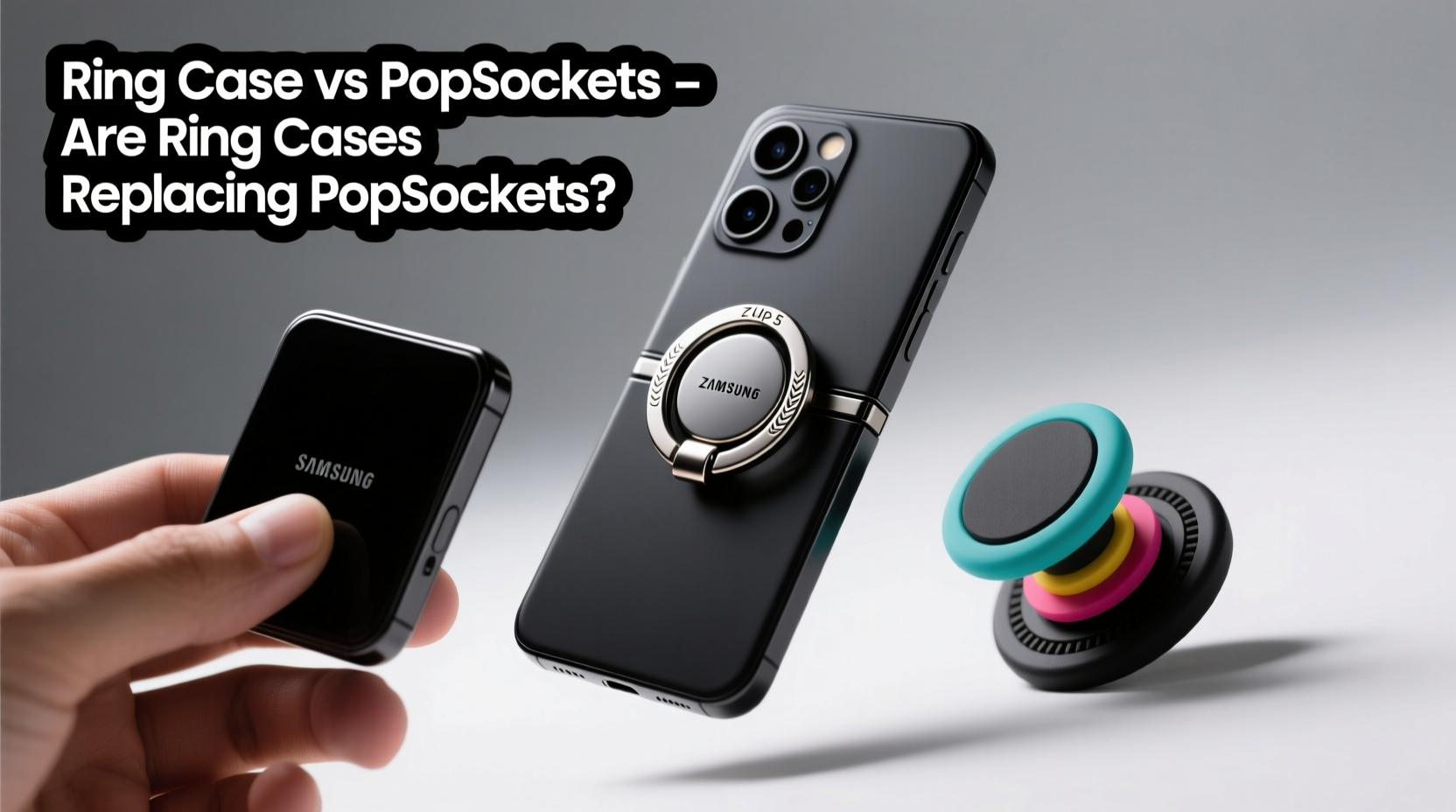
Foldable phones like the Z Flip 5 are engineered for slimness and elegance. When folded, they fit easily in pockets. When open, they offer a near-full smartphone experience. However, their narrow profile when unfolded makes them prone to slipping—especially with one hand. The glossy back panel offers little friction, and the device’s weight distribution shifts depending on whether it’s open or closed.
Traditional grip solutions like PopSockets were designed for flat, rigid smartphones. They work by expanding into a circular base that gives fingers something to hook onto. But on a foldable? The dynamic hinge and folding mechanism introduce complications. A PopSocket attached directly to the back can interfere with closing the phone or create uneven pressure on the hinge over time.
Ring Cases: Designed for the Foldable Era
Ring cases have surged in popularity alongside foldables. Unlike add-on grips, these are integrated into the case itself—usually as a retractable metal or plastic ring mounted on the back. For the Z Flip 5, several third-party manufacturers now offer cases with built-in rings specifically contoured to the device’s shape.
The primary advantage? Stability. The ring provides a secure finger loop, reducing the chance of drops. It also doubles as a stand—flip the ring out, prop the phone at an angle, and enjoy hands-free viewing. This is especially useful for watching videos, taking selfies, or video calls using the cover screen.
Moreover, because the ring is part of the case, there’s no adhesive residue, no risk of peeling, and no interference with wireless charging—common issues with PopSockets. Most ring cases for the Z Flip 5 are designed to maintain access to all ports, buttons, and the ultrasonic fingerprint sensor.
“Integrated grip solutions like ring cases represent a natural evolution for mobile accessories. They align with how people actually use their devices—on the go, one-handed, and increasingly folded.” — Jordan Lee, Mobile Accessory Designer at TechGrip Labs
PopSockets: Still Relevant or Falling Behind?
PopSockets remain popular for traditional smartphones. Their expandable design offers customization, strong grip, and compatibility with magnetic mounts. On paper, they seem versatile. But on the Z Flip 5, their limitations become apparent.
First, placement is tricky. Stick it too high, and it prevents the phone from closing flush. Too low, and it interferes with pocket storage or charging alignment. Second, repeated folding and unfolding can weaken the adhesive over time. Third, the protrusion makes the phone wobble on flat surfaces and increases bulk in already tight pockets.
Some users adapt by using PopSockets only when needed—peeling them off after use. But this introduces dust and reduces adhesive longevity. Others opt for PopSocket-compatible cases, but these often negate the Z Flip 5’s slim appeal.
Real-World Example: Sarah’s Commute Dilemma
Sarah, a digital marketer in Chicago, uses her Z Flip 5 daily during her train commute. She initially loved her floral PopSocket for gripping and propping. But within three weeks, the adhesive failed during a rush-hour fold, leaving residue and a bent socket. Frustrated, she switched to a minimalist ring case. “The ring doesn’t get in the way when I’m folding the phone,” she said. “And I can finally watch TikToks without worrying it’ll slide off my lap.”
Head-to-Head Comparison: Ring Case vs. PopSocket
| Feature | Ring Case | PopSocket |
|---|---|---|
| Hinge Compatibility | Designed to avoid interference | Risk of blocking closure |
| Drop Protection | Moderate (depends on case) | None (just grip) |
| Stand Function | Yes, built-in | Yes, but limited angles |
| Adhesive Issues | None (integrated) | Potential peeling/residue |
| Wireless Charging | Unaffected | May misalign or wobble |
| Portability | Slim, consistent profile | Bulky when expanded |
| Customization | Limited to case designs | High (swappable tops) |
How to Choose the Right Grip Solution
Selecting between a ring case and a PopSocket depends on your usage patterns, priorities, and attachment to the Z Flip 5’s form factor. Follow this step-by-step guide to make the right decision:
- Evaluate Your Daily Use: Do you frequently use your phone one-handed? If yes, a ring case offers more consistent support.
- Consider Drop Risk: If you’ve dropped your phone before, a ring case’s secure loop may prevent future accidents.
- Check Charging Habits: Regular wireless charging users benefit from a flat back—ring cases don’t disrupt alignment.
- Assess Aesthetic Preferences: PopSockets allow fun, changeable designs. Ring cases prioritize minimalism and integration.
- Test for Hinge Clearance: If using a PopSocket, ensure it doesn’t press against the hinge when folded. Even slight pressure can wear down seals over time.
FAQ
Can I use a PopSocket on a Z Flip 5 without damaging the hinge?
You can, but with caution. Place it low on the back, away from the hinge area. Even then, repeated folding may stress the adhesive or housing. Over months, this could lead to misalignment or reduced seal integrity. A safer alternative is a PopSocket-compatible case designed for foldables.
Do ring cases affect the Z Flip 5’s durability?
No—if chosen wisely. High-quality ring cases are engineered to absorb shock and protect the phone. The ring itself is usually recessed or foldable to avoid snagging. Just ensure the case doesn’t press against the screen when closed.
Are ring cases compatible with MagSafe or magnetic car mounts?
Most aren’t inherently magnetic, but some include built-in magnets or support magnetic plates. Check product specs if you rely on magnetic mounting. PopSockets offer a wider range of magnetic accessories, giving them an edge in this category.
Final Verdict: Are Ring Cases Replacing PopSockets?
For the Z Flip 5, ring cases aren’t just competing with PopSockets—they’re redefining what a grip solution should be. While PopSockets still have loyal fans and niche advantages (like swappable designs and magnetic mounts), they’re increasingly seen as relics of the flat-phone era. The rise of foldables demands accessories that evolve with the hardware.
Ring cases offer seamless integration, consistent usability, and practical benefits like built-in stands—all without compromising the Z Flip 5’s sleek profile. They address the core issue: secure handling in both folded and unfolded states. As more users prioritize functionality over flashiness, ring cases are becoming the default choice.
This doesn’t mean PopSockets are obsolete. They still serve well on non-foldable devices and for users who value customization. But for the Z Flip 5 specifically, the data—and user experience—points toward ring cases as the superior, future-proof option.




 浙公网安备
33010002000092号
浙公网安备
33010002000092号 浙B2-20120091-4
Comments
No comments yet. Why don't you start the discussion?