
The Samsung Galaxy Z Flip series redefined smartphone design with its sleek folding mechanism and compact form factor. But with innovation comes vulnerability—especially around the hinge and foldable screen. As more users adopt the Z Flip, a common question surfaces: Do you really need a full body case, or is a simple back cover sufficient? The answer isn’t one-size-fits-all. It depends on your lifestyle, how you use your phone, and what kind of risks you’re willing to accept.
While a back cover offers basic scratch resistance and minimal bulk, a full body case wraps the device in comprehensive protection, shielding the sides, corners, and often the screen from direct impact. For a device as delicate as the Z Flip, that distinction can mean the difference between a minor bump and a costly repair.
Understanding the Z Flip’s Design Vulnerabilities
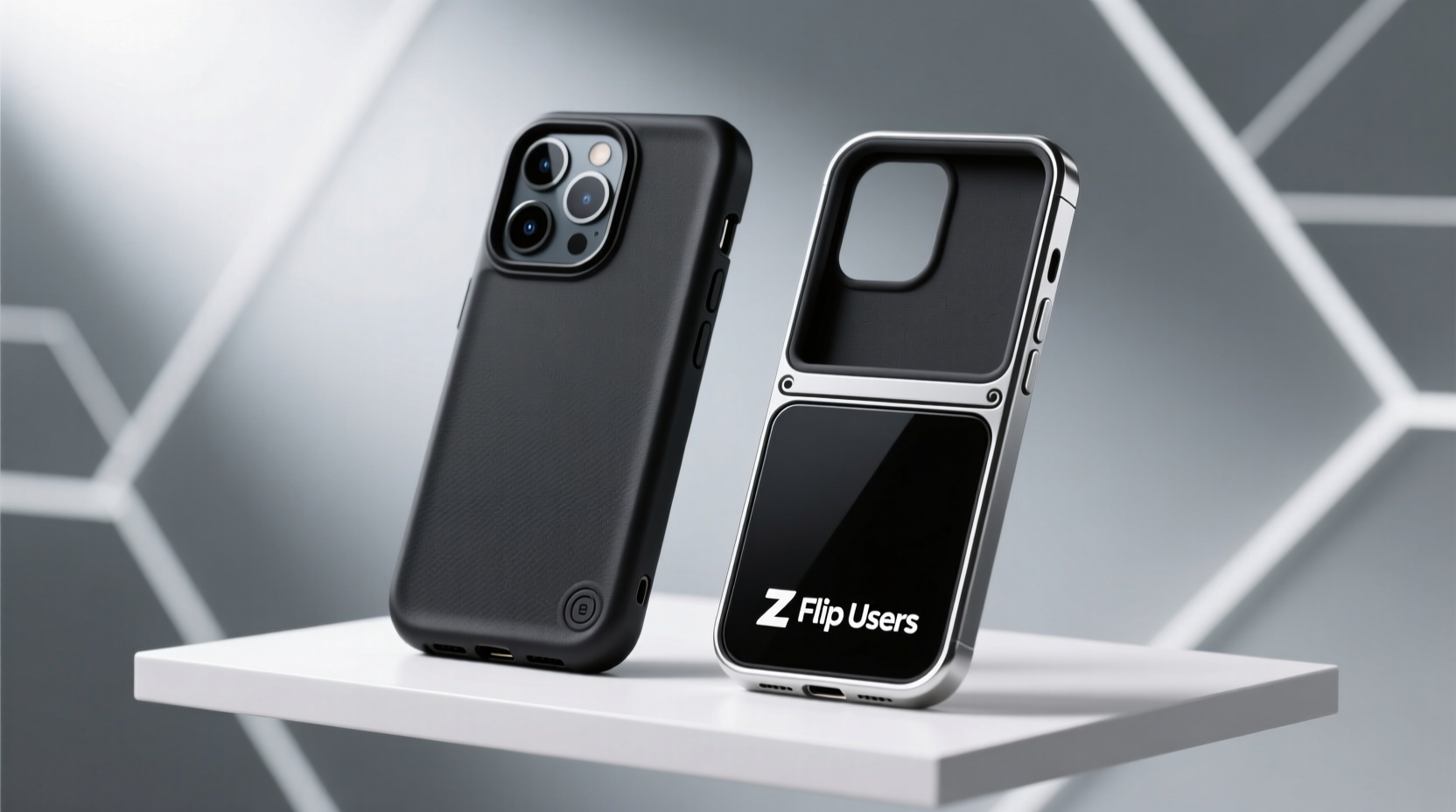
The Z Flip’s flexible AMOLED display and precision hinge are engineering marvels—but they come with inherent fragility. Unlike traditional smartphones with rigid glass, the foldable screen uses ultra-thin glass (UTG) layered over plastic, making it more susceptible to scratches, dust intrusion, and creasing over time. The gap around the hinge also exposes internal components to debris, which can interfere with smooth folding.
When closed, the two halves of the phone meet edge-to-edge. Without proper casing, this seam is exposed to lateral pressure, drops, and pocket lint—all potential threats. A back-only cover leaves the edges and frame completely unprotected, increasing the risk of damage if the phone lands on its side or corner.
“Foldable phones require a new mindset when it comes to protection. You're not just guarding glass—you're safeguarding moving parts and layered materials.” — David Kim, Mobile Device Engineer at TechShield Labs
Back Cover vs. Full Body Case: A Practical Breakdown
To make an informed decision, let’s compare the two primary options based on real-world performance.
| Feature | Back Cover Only | Full Body Case |
|---|---|---|
| Edge & Corner Protection | None – metal/plastic frame fully exposed | Fully protected with raised bezels and reinforced corners |
| Dust & Debris Resistance | Limited – no seal around hinge area | Improved – many designs include micro-flaps or tighter fit |
| Drop Protection | Poor – high risk of screen or frame damage on impact | High – absorbs shock from all angles, especially corners |
| Bulk & Portability | Minimal – maintains slim profile | Slightly thicker, but still pocket-friendly |
| Screen Protection When Closed | No protection – screen halves can press against debris | Raised edges prevent contact with flat surfaces |
| Price Range | $15–$30 | $25–$60 |
The data shows a clear trade-off: back covers prioritize aesthetics and thinness, while full body cases emphasize durability and long-term safety.
Real-World Scenario: One User’s Experience
Take Sarah, a marketing professional in Chicago who commutes daily via public transit. She opted for a minimalist back cover on her Z Flip 5, valuing the phone’s sleek look. Within six weeks, she dropped it twice—once onto concrete and once into her work tote alongside keys and pens. While the back glass remained intact, the second drop caused a small crack near the lower hinge. Dust began accumulating in the crevice, causing occasional stutter during unfolding.
After replacing the screen at a cost of $220, she switched to a Spigen Slim Armor case with full-body coverage and a built-in stand. Nine months later, despite another fall from waist height onto tile, the phone emerged unscathed. “I underestimated how much abuse my phone endures just from daily life,” she said. “Now I see the case as insurance, not just an accessory.”
This example illustrates a broader truth: convenience today can lead to expense tomorrow.
When a Back Cover Might Be Enough
Not every user needs maximum protection. For those with low-risk usage patterns, a back cover can be sufficient—if paired with disciplined habits.
- You keep your phone in a dedicated pouch or front pocket
- You rarely set it down on rough surfaces
- You live in a low-dust environment
- You’re meticulous about cleaning the hinge weekly
- You have accidental damage coverage through Samsung Care+
In such cases, a well-designed back cover made from polycarbonate or vegan leather can provide adequate defense against light scuffs and incidental contact. However, even these users should consider adding a screen protector specifically designed for foldables to guard against fine particles that may slip past the seal.
Step-by-Step: Choosing the Right Protection for Your Lifestyle
Follow this decision-making timeline to select the best option for your needs:
- Assess your daily routine: Do you walk, bike, take transit, or drive? High-movement lifestyles increase drop risk.
- Evaluate your carrying method: Loose in a bag? In a jacket pocket? With keys or sharp objects? Mixed storage demands better protection.
- Check your environment: Urban settings, dusty workplaces, or humid climates increase exposure to damaging elements.
- Review your history with devices: Have past phones survived years without cases? Or do you regularly replace cracked screens?
- Decide on priorities: Is preserving resale value important? Are you using this phone for business?
- Test options: Try both styles in-store or order refundable versions online. Pay attention to button access, wireless charging compatibility, and ease of opening/closing.
Essential Features in a Quality Full Body Case
Not all full body cases are created equal. To get real value, prioritize models with these characteristics:
- Raised bezels – Prevents screen-to-surface contact when placed face down
- Hinge coverage – Some premium cases include soft flaps or shields to reduce dust entry
- Shock-absorbing materials – TPU liners or air-cushion corners enhance drop resistance
- Precise cutouts – Ensures easy access to ports, buttons, and speakers without looseness
- Stand function – Built-in kickstand supports hands-free viewing, useful for media and video calls
Brands like Spigen, Ringke, and ESR consistently deliver reliable options tailored to the Z Flip’s unique dimensions. Avoid generic third-party cases that don’t specify model compatibility—poor fit can stress the hinge over time.
FAQ: Common Questions About Z Flip Case Protection
Can a back cover cause hinge strain?
Yes. Poorly fitted back covers can apply uneven pressure when closing the phone, especially if they extend beyond the glass panel. Over time, this may affect hinge calibration or create gaps where dust enters.
Do full body cases interfere with folding?
Well-designed ones do not. Premium cases account for the folding radius and use flexible materials around the spine. Always verify hinge clearance before purchase.
Is screen replacement cheaper than investing in a good case?
No. A single inner screen replacement costs between $180 and $280, depending on region and service provider. A high-quality full body case ranges from $30 to $60—one-time investment with lasting benefits.
Final Recommendation: Prioritize Long-Term Safety
For most Z Flip users, a full body case isn’t just advisable—it’s a practical necessity. The phone’s innovative design brings unprecedented portability and style, but it also demands greater responsibility in maintenance and protection. Given the high cost of repairs and the sensitivity of foldable displays, opting for less coverage is essentially gambling with a premium device.
A back cover might suit someone with a controlled environment and cautious habits, but life is unpredictable. Drops happen. Pockets contain coins. Desks collect grit. A full body case acts as a silent guardian, absorbing shocks and blocking contaminants before they reach critical components.
“The best phone case is the one you don’t notice—until you need it. With foldables, that moment comes sooner than you think.” — Lena Park, Senior Editor at MobileGuard Review
Take Action Today
Your Z Flip represents cutting-edge technology and personal expression. Don’t let a single accident compromise its performance or lifespan. Evaluate your daily habits honestly, then choose protection that matches your reality—not just your aesthetic preference. Whether you go with a rugged full-body shield or a carefully selected back cover, make the decision intentional. Your future self will thank you when your phone still looks and functions like new after a year of real-world use.




 浙公网安备
33010002000092号
浙公网安备
33010002000092号 浙B2-20120091-4
Comments
No comments yet. Why don't you start the discussion?