
When choosing a wallet, most people focus on size, material, or brand—but the closure mechanism is just as critical, especially when it comes to security. The two most common designs today are zip-around and snap (or magnetic-flap) wallets. While both have loyal followings, they differ significantly in how well they protect your belongings. Understanding these differences can help you make a smarter, more secure choice based on your lifestyle, habits, and priorities.
How Closure Types Impact Wallet Security
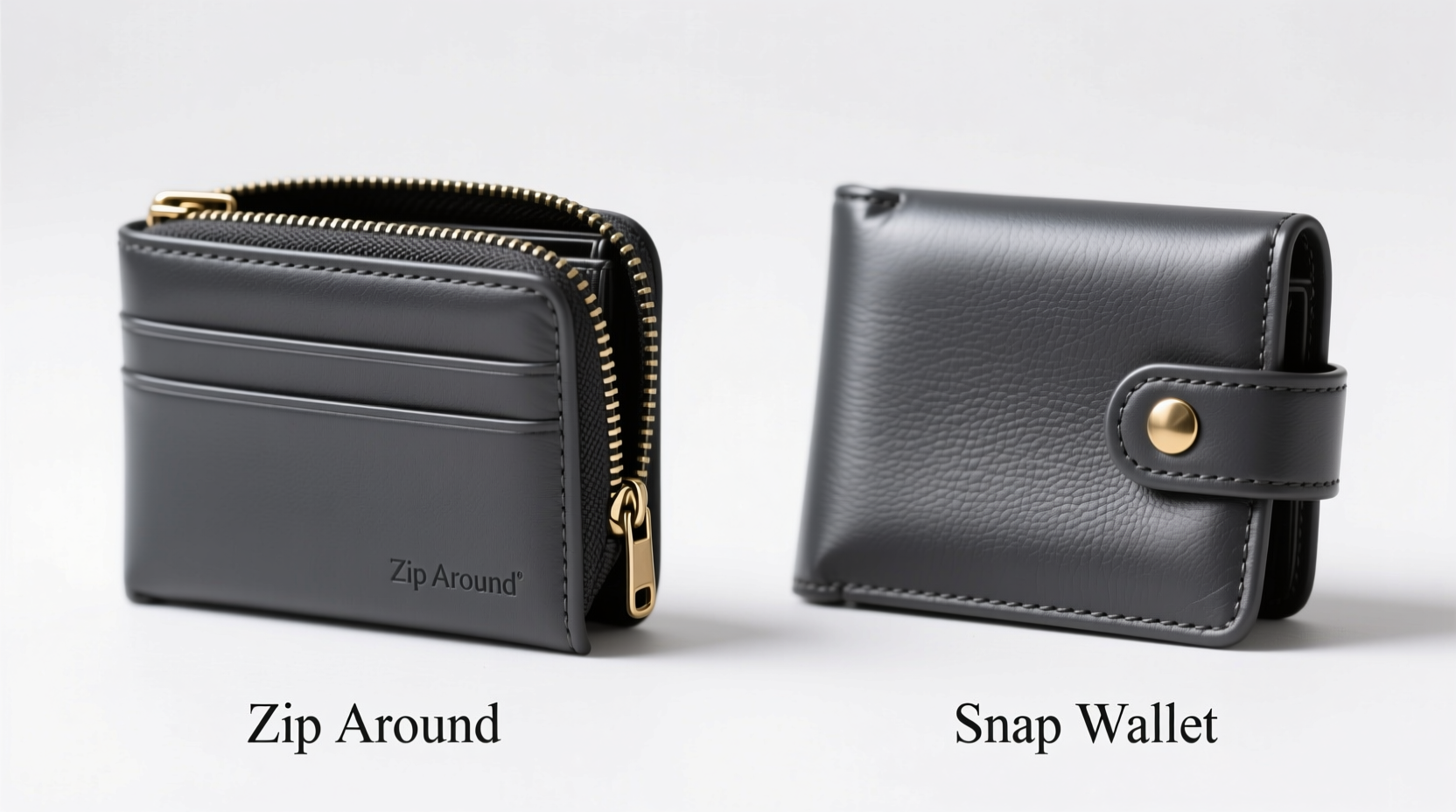
The way a wallet closes determines not only how quickly you can access your cards and cash but also how resistant it is to accidental spills, pickpocketing, and environmental exposure. A secure closure should prevent contents from falling out during movement, resist tampering, and remain reliable over time.
Zip-around wallets use a continuous zipper that wraps around three or four edges of the wallet, fully enclosing its interior. Snap wallets, on the other hand, rely on a single clasp—either a physical snap button or a magnetic closure—that secures the front flap. This fundamental design difference leads to distinct advantages and drawbacks in real-world use.
Security Comparison: Zip-Around vs Snap Closure
In high-traffic environments—subway platforms, festivals, or busy streets—wallets with openable flaps are more vulnerable. A snap closure, even if magnetized, can be pried open with minimal effort. In contrast, a zip-around wallet requires deliberate action to open, making it far less accessible to opportunistic thieves.
According to urban security experts, “Pickpockets look for quick access,” says Marcus Lin, a personal safety consultant with over a decade of experience in public space risk assessment.
“A wallet that zips shut forces them to spend more time and draw attention—something they actively avoid.”
Beyond theft, everyday risks matter too. Sitting down with a snap wallet in your back pocket increases the chance of it opening and spilling contents. One sudden movement—a bump, a bend, or a quick stand-up—can dislodge cards or cash. Zip-around wallets eliminate this risk by sealing all sides, keeping everything contained regardless of position or pressure.
Durability and Long-Term Reliability
While security is paramount, longevity plays a major role in your decision. Closures undergo repeated stress every time you open and close your wallet. How each type holds up over months or years varies significantly.
Snap closures, particularly magnetic ones, can weaken over time. Dust, lint, and moisture accumulate around the contact points, reducing holding strength. Physical snaps may loosen or break off entirely after prolonged use. Once compromised, there’s no easy fix—replacement often means retiring the wallet altogether.
Zip-around closures are generally more durable, provided the zipper is high-quality. Metal zippers last longer than plastic ones and resist jamming better. However, zippers can snag fabric or become difficult to operate if misaligned. Regular cleaning and lubrication (with zipper wax or graphite) can extend their lifespan dramatically.
| Closure Type | Lifespan (Avg.) | Failure Risk | Maintenance Needs |
|---|---|---|---|
| Zip-Around (Metal) | 3–5 years | Low (if maintained) | Moderate (cleaning, occasional lubrication) |
| Zip-Around (Plastic) | 2–3 years | Moderate (teeth wear) | Low |
| Magnetic Snap | 1.5–3 years | High (dust buildup, demagnetization) | High (cleaning contacts) |
| Physical Snap Button | 2–4 years | Moderate (button detachment) | Low |
Convenience and Daily Usability
Security means little if the wallet becomes a hassle to use. Here, snap wallets often win on speed and ease. A simple flick of the finger opens a magnetic flap, allowing instant access to cards—ideal for commuters or those who pay frequently.
Zip-around wallets require two hands more often than not: one to hold the wallet, the other to pull the zipper tab. In cold weather or while wearing gloves, this can be frustrating. Some users report accidentally leaving the zipper partially closed, creating a false sense of security.
Still, many modern zip-around wallets now feature dual-slider zippers or extended pulls for easier operation. These improvements bridge the gap between security and usability, offering fast access without sacrificing protection.
“Design shouldn’t force a trade-off between safety and convenience. The best wallets integrate both.” — Lena Park, Product Designer at Urban Gear Labs
Real-World Scenario: Commuter vs Traveler
Consider two users: Alex, a daily city commuter, and Jordan, a frequent international traveler.
Alex values speed. They tap transit cards dozens of times a week and prefer a slim magnetic snap wallet that opens instantly. However, twice in six months, they’ve dropped a card while rushing—once losing it permanently in a train station.
Jordan travels with passports, multiple currencies, and boarding passes. They chose a zip-around bi-fold after a pickpocketing incident in Barcelona. Despite slower access, they’ve had zero losses in over two years of travel across 15 countries. The peace of mind outweighs the minor inconvenience.
This contrast shows that the “better” closure depends on context. For static, low-risk environments, snap wallets offer unmatched convenience. For dynamic, unpredictable settings, zip-around designs provide superior protection.
Action Checklist: Choosing the Right Closure for You
Use this checklist to determine which wallet type aligns with your needs:
- ✅ Do you often carry cash, tickets, or loose items that could fall out? → Choose zip-around
- ✅ Are you frequently in crowded places (public transit, concerts, airports)? → Choose zip-around
- ✅ Do you prioritize one-handed, fast access? → Choose snap
- ✅ Do you travel internationally or visit high-theft areas? → Choose zip-around
- ✅ Is long-term durability a priority? → Choose metal zip-around
- ✅ Do you prefer minimalist, ultra-slim profiles? → Choose snap
Step-by-Step Guide to Maintaining Your Wallet’s Closure
No matter which type you choose, proper maintenance extends performance and security.
- Weekly wipe-down: Use a dry microfiber cloth to remove dust and oils from closure points—especially magnets and zipper teeth.
- Monthly inspection: Check for fraying, misalignment, or resistance. For zippers, ensure the slider moves smoothly along the entire track.
- Every 3 months: Clean magnetic contacts with a cotton swab dipped in isopropyl alcohol. Let dry completely before use.
- Twice a year: Apply zipper lubricant (wax-based preferred) to metal zippers. Avoid oil-based products that attract dirt.
- As needed: Replace worn-out wallets proactively. Don’t wait until a snapped closure causes loss.
Frequently Asked Questions
Can a magnetic snap wallet be considered secure?
Only moderately. While convenient, magnetic closures can be opened with light pressure or by sliding a thin object underneath. They’re not recommended for high-risk environments or if you carry sensitive documents.
Are zip-around wallets harder to pickpocket?
Yes. The physical barrier of a zipper makes surreptitious access nearly impossible without drawing attention. Combined with RFID-blocking layers, they are among the most theft-resistant wallet styles available.
Do zip-around wallets wear out faster because of the zipper?
Not necessarily. High-quality zippers (especially YKK metal) are engineered for tens of thousands of cycles. With basic care, they outlast most snap mechanisms, which degrade due to friction and debris accumulation.
Final Thoughts: Security Shouldn’t Be Optional
Your wallet holds more than money—it contains IDs, credit cards, and personal data. Treating its security as an afterthought invites risk. While snap wallets offer elegance and speed, they compromise on containment and tamper resistance. Zip-around wallets, despite minor usability trade-offs, provide comprehensive protection that pays off in reliability and peace of mind.
If you value convenience but still want added security, consider hybrid models: some brands now offer snap wallets with secondary zipper compartments for cash or passports. But for maximum protection, especially in unpredictable environments, the zip-around design remains the superior choice.




 浙公网安备
33010002000092号
浙公网安备
33010002000092号 浙B2-20120091-4
Comments
No comments yet. Why don't you start the discussion?