
Choosing a ring isn’t just about aesthetics—it’s a decision that balances personal style, lifestyle practicality, and long-term value. Among the most common choices are zircon inlay rings, prized for their brilliance, and plain bands, celebrated for their timeless minimalism. But which holds up better over time? Does the sparkle of zircon endure daily wear, or does the simplicity of a plain band offer lasting elegance without compromise? This guide breaks down both options with real-world insights to help you make an informed decision.
The Allure of Zircon Inlay Rings
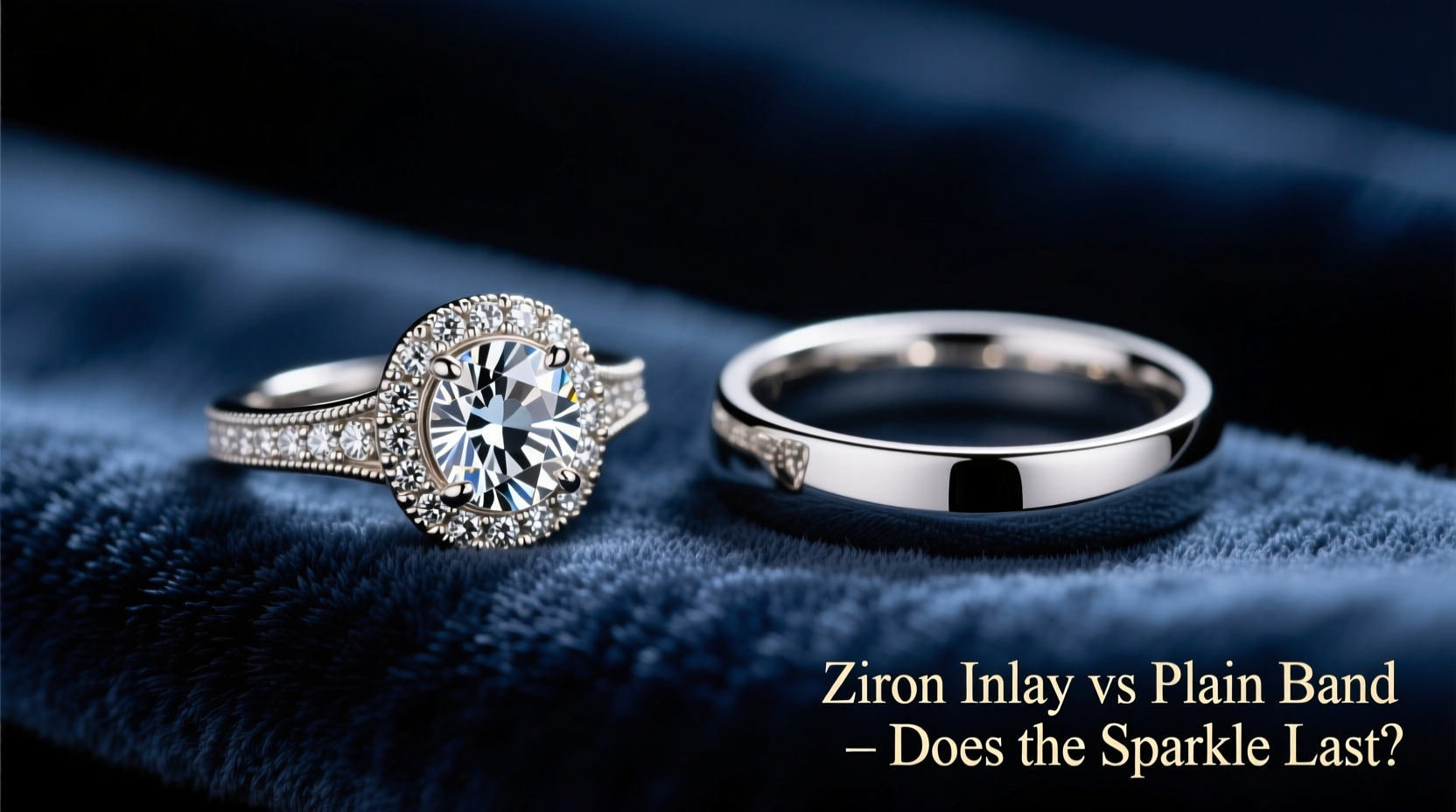
Zircon inlay rings feature precisely set cubic zirconia stones embedded into metal grooves, creating a continuous line of sparkle around the band. These rings mimic the look of diamond eternity bands at a fraction of the cost, making them popular for engagement rings, wedding bands, and fashion jewelry.
The visual impact is undeniable. A well-crafted zircon inlay catches light from every angle, offering a dazzling effect that appeals to those who love statement pieces. The precision of the inlay work also speaks to craftsmanship—each stone must be individually secured and aligned, often requiring skilled labor.
However, beauty comes with trade-offs. The longevity of sparkle depends heavily on how the zircon is set and how the wearer treats the ring. Over time, repeated knocks, exposure to chemicals, or improper cleaning can loosen stones or dull their luster.
The Enduring Appeal of Plain Bands
Plain bands—whether made from gold, platinum, titanium, or ceramic—are defined by their lack of ornamentation. Their strength lies in simplicity. Without stones or intricate details, there’s nothing to snag, crack, or fall out. This makes them ideal for people with active lifestyles, manual jobs, or those who prefer understated elegance.
A high-polish finish gives plain bands a sleek, reflective shine, while brushed or matte finishes offer a more subdued, modern look. Unlike gemstone rings, these surfaces age gracefully. Minor scratches can even add character, and many can be professionally re-polished or re-finished for a like-new appearance.
“Simplicity in design often translates to longevity in wear. A plain band avoids the vulnerabilities of inlays and remains resilient across decades.” — Daniel Reyes, Master Goldsmith & Jewelry Restorer
Comparing Longevity: Sparkle vs. Strength
The central question isn’t just about initial appeal—it’s about how each ring performs over five, ten, or twenty years of regular use. Let’s break it down by key factors.
| Feature | Zircon Inlay Ring | Plain Band |
|---|---|---|
| Durability | Moderate – Stones can loosen or chip; setting may wear down | High – No stones to lose; metal withstands daily wear |
| Scratch Resistance | Depends on metal and setting; stones may cloud over time | Good to excellent; easily polished if scratched |
| Water & Chemical Resistance | Risk of damage from chlorine, lotions, and cleaners | Generally resistant; avoid harsh abrasives |
| Maintenance Needs | Regular inspections, professional tightening recommended | Occasional polishing; low maintenance |
| Lifespan (with care) | 5–15 years depending on wear and quality | Decades; often passed down as heirlooms |
While zircon inlays can last many years, they require vigilance. One dropped ring on a hard surface can dislodge multiple stones. Plain bands, in contrast, tolerate rough handling far better. For example, a firefighter or nurse might choose a plain tungsten or platinum band because it won’t snag on equipment or degrade during frequent handwashing.
Real-Life Scenario: Two Wearers, Two Choices
Consider Sarah and James, both married within the same year. Sarah chose a white gold band with a full zircon inlay for its radiant look. She loved how it sparkled in photos and under restaurant lighting. After three years, however, two stones had fallen out during routine housework, and the remaining ones appeared slightly cloudy despite regular cleaning. She eventually took it to a jeweler for re-tipping and stone replacement—a $120 repair.
James opted for a brushed platinum plain band. It lacked immediate dazzle but felt substantial and comfortable. Ten years later, his ring shows a soft patina of fine scratches, which he appreciates as signs of a life well-lived. He had it professionally polished once, restoring its original sheen at minimal cost.
Their experiences highlight a broader truth: aesthetic intensity often trades off against resilience. If your daily routine involves physical activity, frequent hand use, or exposure to chemicals, a plain band is likely the wiser investment.
When Zircon Inlays Make Sense
This isn’t to say zircon inlays are impractical. They shine best in specific contexts:
- Occasion wear: Ideal for events, proposals, or photo shoots where maximum sparkle is desired.
- Secondary rings: Worn alongside a durable everyday band, allowing rotation and reduced wear.
- Symbolic designs: Inlays with meaningful patterns (e.g., Celtic knots, birthstones) add emotional value worth the upkeep.
For those committed to keeping a zircon inlay looking pristine, a proactive care routine is essential.
Care Checklist for Zircon Inlay Rings
- Remove before swimming, cleaning, or exercising.
- Clean weekly with mild soap, warm water, and a soft brush.
- Have the setting inspected by a jeweler every 6–12 months.
- Store separately in a padded jewelry box to prevent scratching.
- Avoid ultrasonic cleaners unless confirmed safe by the manufacturer.
Is Simplicity Better?
In many cases, yes. Simplicity doesn’t mean sacrifice—it means focus. A plain band emphasizes the significance of the ring itself rather than its adornments. It’s less about drawing attention and more about enduring presence.
Designers like Jil Sander and Dieter Rams have long championed minimalism not as austerity, but as clarity. Applied to jewelry, this philosophy suggests that fewer elements lead to greater longevity and versatility. A plain band pairs effortlessly with any outfit, complements other jewelry, and never goes out of style.
Moreover, minimalist rings are increasingly favored in modern engagements and weddings. Couples are shifting toward symbolism over spectacle, choosing bands that represent commitment through consistency rather than constant shine.
Frequently Asked Questions
Do zircon inlay rings lose their sparkle over time?
Yes, especially if exposed to abrasive materials, chemicals, or impacts. While cubic zirconia is hard, it’s not as durable as diamond and can develop micro-scratches or cloudiness. Regular cleaning and proper storage help maintain luster, but some degradation is inevitable with daily wear.
Can a plain band still feel special without stones?
Absolutely. Many find deep meaning in the unbroken circle of a plain band—a symbol of endless unity. Engraving the interior with names, dates, or messages adds personal significance without compromising durability.
Are zircon inlays worth repairing when stones fall out?
It depends on sentimental value and cost. Re-setting multiple stones can approach half the price of a new ring. For lower-cost bands, replacement may be more economical. Higher-end pieces with artisan inlays are usually worth restoring.
Conclusion: Choose Based on Life, Not Just Looks
The choice between a zircon inlay ring and a plain band ultimately reflects how you live. If your days involve keyboard typing, gardening, or gym sessions, a plain band will serve you reliably for decades. If you value brilliance for ceremonies, portraits, or occasional wear, a zircon inlay can deliver unmatched radiance—so long as you commit to its care.
There’s no universal “better” option. But for most people seeking a ring that endures without constant maintenance, simplicity wins. It’s not about rejecting sparkle—it’s about choosing a ring that stays true, day after day, without needing rescue.




 浙公网安备
33010002000092号
浙公网安备
33010002000092号 浙B2-20120091-4
Comments
No comments yet. Why don't you start the discussion?