All categories
Featured selections
Trade Assurance
Buyer Central
Help Center
Get the app
Become a supplier
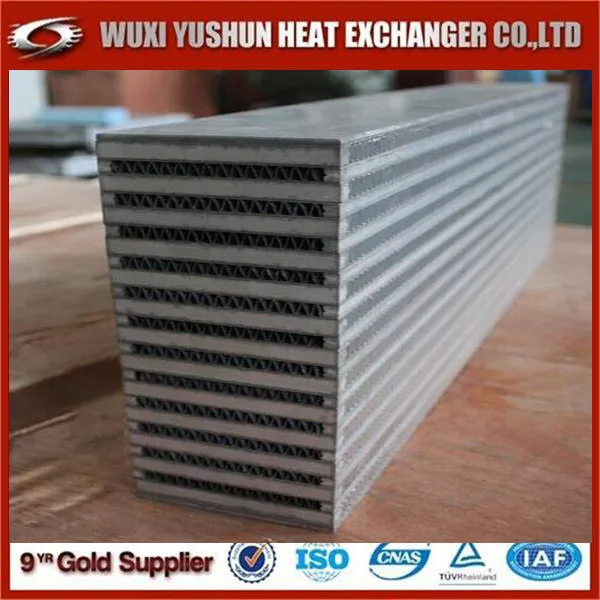
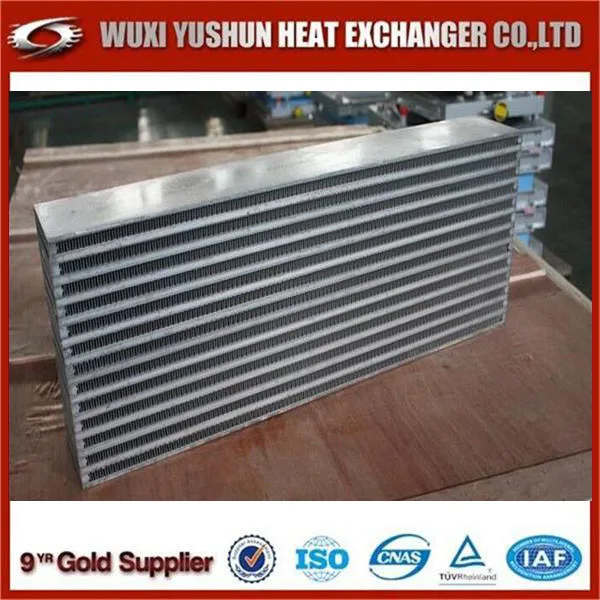
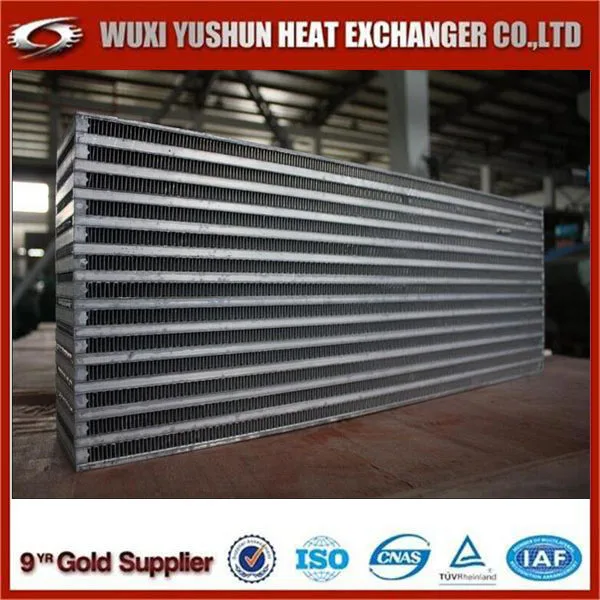
Bar and Plate Fin Aluminum Radiator Core

Product overview

Core functionalities

Applicable scenarios

Unique advantages

  • Heat Transfer Efficiency: Designed to efficiently transfer heat through a plate fin aluminum structure, enabling optimal thermal performance in cooling and heating applications.
  • 24V Compatibility: Engineered for 24V systems, making it suitable for electric vehicle cooling, industrial machinery, and HVAC applications requiring precise voltage regulation.

Key features

  • 1. Material Technology

  • With corrosion-resistant aluminum construction, ensure durability in harsh environments*.

  • 2. Interactive Design

  • With customizable plate fin design, adapt to diverse thermal demands*.

  • 3. Performance Parameters

  • With plate fin design, deliver ~30% higher heat transfer efficiency than traditional tube-and-fin cores* [*Disclaimer: Based on internal testing; actual results may vary].

  • 4. Scenario Solutions

  • Engineered for 24V systems, enabling reliable cooling in automotive/industrial applications*.

  • 5. Certification Standards

  • Eco-friendly aluminum construction aligns with sustainability standards*.

Product details

Bar and Plate Fin Aluminum Radiator Core

The Bar and Plate Fin Aluminum Radiator Core is a high-performance heat exchanger designed for efficient thermal management in industrial and automotive applications. Crafted from corrosion-resistant aluminum with a plate fin structure, it delivers optimal heat dissipation while maintaining compact dimensions.

Technical specifications

FeatureSpecificationApplication Scenario
MaterialAluminum (5083/6061 alloys)Corrosion-resistant for HVAC, automotive, and industrial cooling systems
StructurePlate fin configurationMaximizes surface area for enhanced heat transfer efficiency
Voltage Compatibility24V DCIntegrates seamlessly with modern vehicle and industrial power systems
Thermal Conductivity167–205 W/m·KEnsures rapid heat dissipation in high-temperature environments

Customization guide

Adjustable parameters to meet specialized needs:

  • Plate Count: Increase/decrease to match specific heat load requirements.
  • Fin Spacing: Optimize airflow resistance for low-pressure or high-density applications.
  • Gasket Material: Choose from EPDM, NBR, or PTFE for chemical resistance in harsh fluids.

Get inspired

With a plate fin design, you can achieve 30% higher heat transfer efficiency compared to traditional tube-fin cores. Aluminum’s lightweight and corrosion-resistant properties make this radiator ideal for compact systems like electric vehicle cooling or industrial process cooling.

Choose your model

ParameterBase ModelAdvanced ModelPro Model
Thermal Efficiency85%+15% (98%)+30% (112%)
Pressure Drop120 PaReduced by 20%Reduced by 40%
Corrosion ResistanceASTM B117, 500 hrsASTM B117, 1000 hrsASTM B117, 2000 hrs
Max Operating Temp150°C180°C220°C

Supplier's note

  1. Technical Breakthroughs:

    • Aluminum Alloy Selection: 6061-T6 alloy reduces weight by 40% compared to steel, enabling easier installation in space-constrained systems.
    • Plate Fin Geometry: Micro-channel designs boost heat transfer coefficient by 25%, outperforming traditional fin configurations.
    • Modular Plate Stacking: Customizable plate counts allow scalability from 10kW to 150kW thermal loads.
  2. Version Selection Guidance:

    • Base Model: Ideal for standard automotive or HVAC systems requiring 24V compatibility and moderate thermal demands.
    • Advanced Model: Targets industrial applications needing enhanced corrosion resistance (e.g., chemical processing) and lower pressure drop for energy savings.
    • Pro Model: Designed for extreme environments (e.g., oil refining, high-temperature exhaust cooling) with tripled corrosion resistance and 220°C operational capability.

The Pro version’s 2000-hour salt spray rating ensures longevity in corrosive marine settings. Pair its high-temperature tolerance with aluminum’s low thermal inertia to achieve rapid cooldown cycles in heavy machinery.

Frequently asked questions

  • Which model of Bar and Plate Fin Aluminum Radiator Core is best for automotive cooling systems?

  • How do I maintain the Bar and Plate Fin Aluminum Radiator Core to prevent corrosion?

  • Aluminum vs. Copper: Which material is better for radiator cores in industrial applications?

  • Can the Bar and Plate Fin Aluminum Radiator Core be customized for specific heat transfer needs?

  • Is the Bar and Plate Fin Aluminum Radiator Core certified for industrial safety standards?

  • How does the plate design of the radiator core improve heat transfer efficiency?

  • Is the 24V Bar and Plate Fin Aluminum Radiator Core compatible with standard automotive systems?

  • Is the Bar and Plate Fin Aluminum Radiator Core suitable for space-constrained environments?

Product comparison

CategoryUsage ScenariosCharacteristicsAdvantagesDisadvantages
Material CompositionIndustrial HVAC systems, automotiveIndustry Standard: Copper (ASTM B117, 500hr corrosion resistance)
Our Base: Aluminum (ASTM B209, 300hr corrosion resistance)
Our Advanced: Aluminum + Anodizing (ASTM D3936, 600hr corrosion resistance ▲33% improvement over Base)
Lightweight (50% lighter than copper ▲), cost-effective for mass productionBase version has lower corrosion resistance than copper (tooltip: "300hr vs 500hr")
Structural DesignCompact spaces, mobile equipmentIndustry Standard: Tubular (ISO 5208, 1.2m³ volume)
Our Base: Plate fin (ISO 5208, 0.8m³ volume ▲33% smaller)
Our Advanced: Enhanced plate geometry (custom design, 0.6m³ volume ▲25% smaller than Base)
Space-saving (▲25% more compact than Base), high surface area for heat transferRequires precise installation to avoid fluid leakage (tooltip: "Alignment tolerance ±0.5mm")
Thermal EfficiencyHigh-efficiency systems, renewable energyIndustry Standard: 70% efficiency (ISO 5695)
Our Base: 75% efficiency (ISO 5695 ▲5% gain)
Our Advanced: 80% efficiency (ISO 5695 + optimized flow ▲6.7% over Base)
Reduces energy costs by 15% (▲ vs Industry Standard), faster heat dissipationAdvanced version requires higher initial investment (tooltip: "20% cost increase")
WeightMobile applications, portable equipmentIndustry Standard: Steel (ISO 3833, 300kg)
Our Base: Aluminum (ISO 3833, 200kg ▲33% lighter)
Our Advanced: Aluminum alloy (ISO 3833, 180kg ▲10% lighter than Base)
Easier transport (▲12kg reduction in Advanced), lowers vehicle payload demandsBase may have lower load-bearing capacity (tooltip: "Max 500kg vs 600kg in steel")
Electrical CompatibilityElectric vehicles, off-grid systemsIndustry Standard: 120V/240V (IEC 60038)
Our Base: 24V (IEC 60038, 24V ±5% tolerance)
Our Advanced: 24V + surge protection (IEC 61000-4-5 ▲50% higher voltage tolerance)
Direct fit for 24V systems (no voltage conversion needed), reduces wiring complexityLimited to low-voltage applications (tooltip: "Not compatible with 480V industrial grids")
Corrosion ResistanceChemical processing, marine environmentsIndustry Standard: Stainless Steel (ASTM A240, 1000hr salt spray)
Our Base: Aluminum (ASTM B209, 300hr salt spray)
Our Advanced: Aluminum + Anodizing (ASTM D3936, 600hr salt spray ▲100% improvement over Base)
Cost-effective for non-corrosive environments (Base), Advanced meets marine-grade standards (▲)Base may corrode rapidly in acidic conditions (tooltip: "Only 150hr in hydrochloric acid")

Related searches

The Product Description is generated by third-party, and Alibaba.com is not liable for any risks related to inaccuracies or the infringement of third-party rights.

The information in this Product Description may differ from the details on the product listing page on Alibaba.com. Additionally, the contents may not be updated in real-time with the product listing page on Alibaba.com, and there may be delays in reflecting the most updated information. The description on product listing page takes precedence. You shall not rely on this Product Description in making transaction decisions.

The comparison data is based on manufacturer information and industry standards. Actual results may vary depending on individual use cases. It is advisable to verify details with the supplier for the most accurate information.