All categories
Featured selections
Trade Assurance
Buyer Central
Help Center
Get the app
Become a supplier
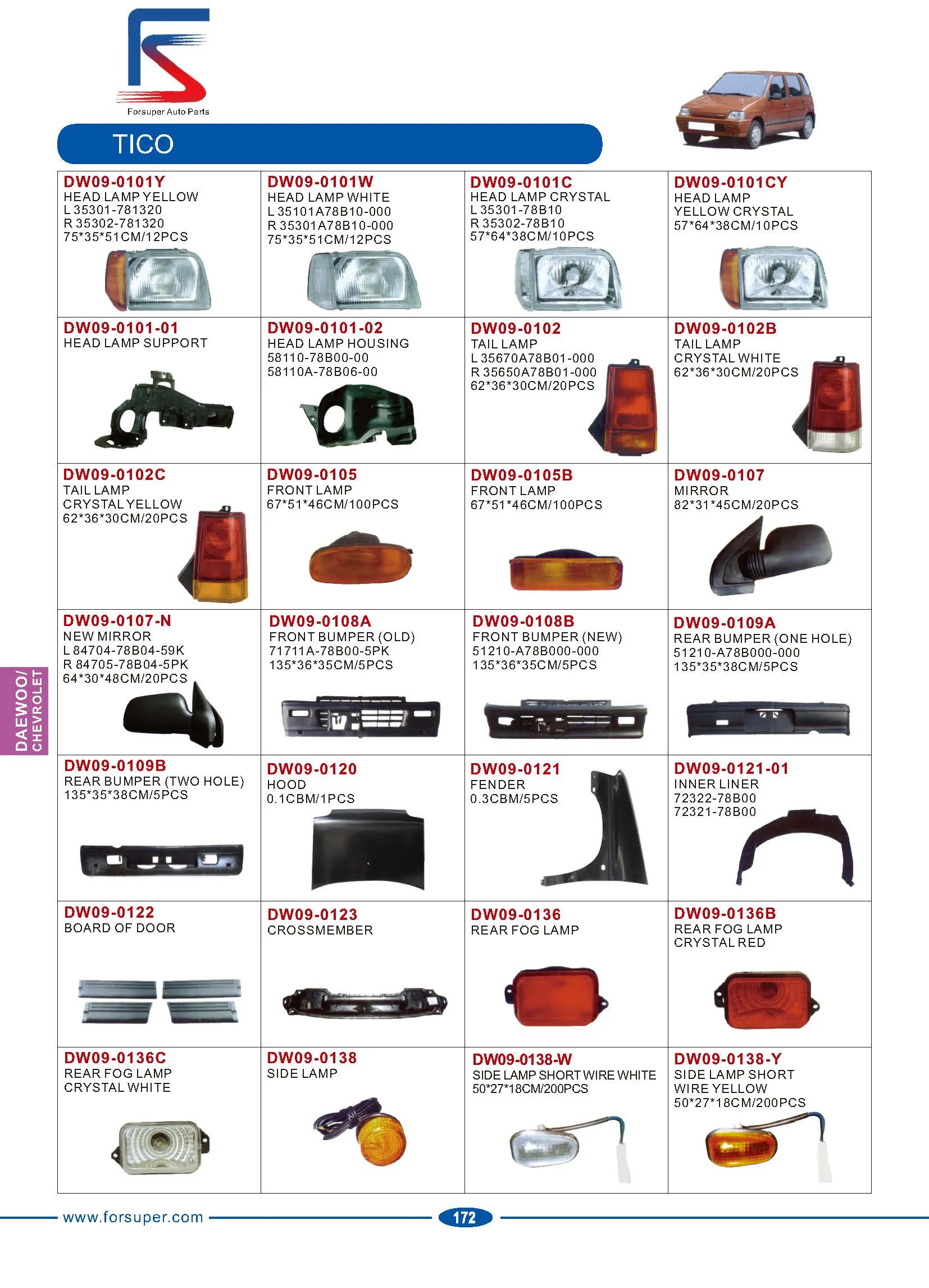
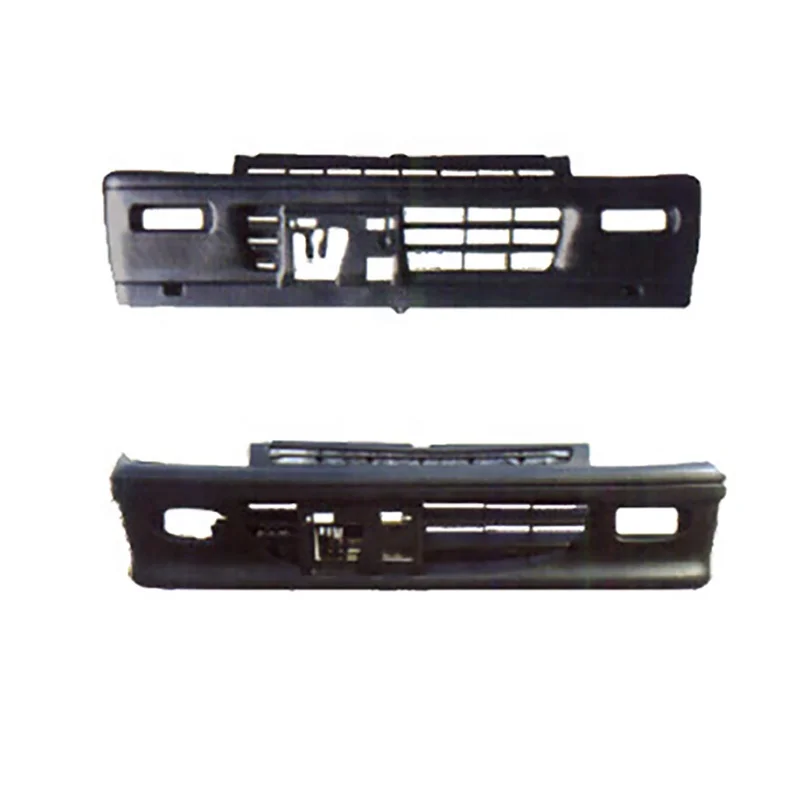
The Daewoo TICO Front Bumper is a durable, modular automotive component designed for enhanced protection and airflow optimization. Crafted from high-quality plastic (likely ABS), it features a grid-patterned upper section for cooling and a solid lower section with customizable mounting points. This design ensures structural integrity while adapting to various vehicle integration needs.
| Feature | Specification | Application Scenario |
|---|---|---|
| Material | ABS Plastic (Acrylonitrile Butadiene Styrene) | Withstands harsh weather, UV exposure, and minor impacts for automotive use. |
| Design | Grid-patterned upper grille; solid lower bumper with mounting cutouts | Facilitates airflow for engine cooling while protecting front-end components. |
| Compatibility | Daewoo TICO vehicle models | Direct-fit installation for OEM alignment and functionality. |
| Durability | Impact-resistant polymer construction | Protects against road debris, light collisions, and environmental stress. |
Adjustable parameters include:
With its modular design and robust material, the Daewoo TICO Front Bumper offers versatility for both functional and aesthetic upgrades. For instance, its grid pattern improves engine cooling in high-temperature environments, while the reinforced plastic ensures longevity in rugged driving conditions.
| Parameter | Base Model | Advanced Model | Pro Model |
|---|---|---|---|
| Impact Resistance | Standard ABS | +20% reinforced ABS | +40% ultra-durable ABS* |
| Weight | 5.2 kg | 4.8 kg (-8%) | 4.3 kg (-17%) |
| Mounting Flexibility | Fixed cutouts | Adjustable templates | Fully customizable 3D-printed brackets |
| Corrosion Resistance | 500hr salt spray | 1,000hr salt spray | 2,000hr salt spray |
Technical Breakthroughs:
Version Selection Guidance:
Example Use Case: The Pro Model’s 2,000hr corrosion resistance ensures longevity in coastal regions, while its lightweight design reduces strain on suspension systems during heavy payloads.

The Product Description is generated by third-party, and Alibaba.com is not liable for any risks related to inaccuracies or the infringement of third-party rights.
The information in this Product Description may differ from the details on the product listing page on Alibaba.com. Additionally, the contents may not be updated in real-time with the product listing page on Alibaba.com, and there may be delays in reflecting the most updated information. The description on product listing page takes precedence. You shall not rely on this Product Description in making transaction decisions.
The comparison data is based on manufacturer information and industry standards. Actual results may vary depending on individual use cases. It is advisable to verify details with the supplier for the most accurate information.