All categories
Featured selections
Trade Assurance
Buyer Central
Help Center
Get the app
Become a supplier

Customization:
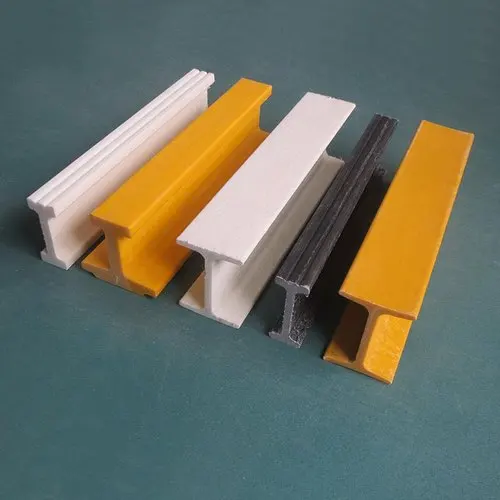
The Glass Fiber Composite H Beam FRP Pultrusion Profiles are engineered for industrial applications requiring lightweight, corrosion-resistant structural support. These pultruded fiberglass profiles combine high strength-to-weight ratios with chemical and environmental durability, making them ideal for demanding environments like marine, chemical processing, and infrastructure projects.
| Feature | Specification | Application Scenario |
|---|---|---|
| Material | FRP (Fiberglass Reinforced Plastic) | Load-bearing structures in corrosive environments |
| Weight | 30% lighter than steel equivalents | Reducing transportation and installation costs |
| Corrosion Resistance | Passes 1000-hour salt spray test | Marine platforms, chemical plant frameworks |
| Certification | ASTM D638 (Tensile Properties) | Compliance for industrial safety standards |
| Surface Treatment | Smooth FRP finish | Seamless integration into aesthetic or cleanroom settings |
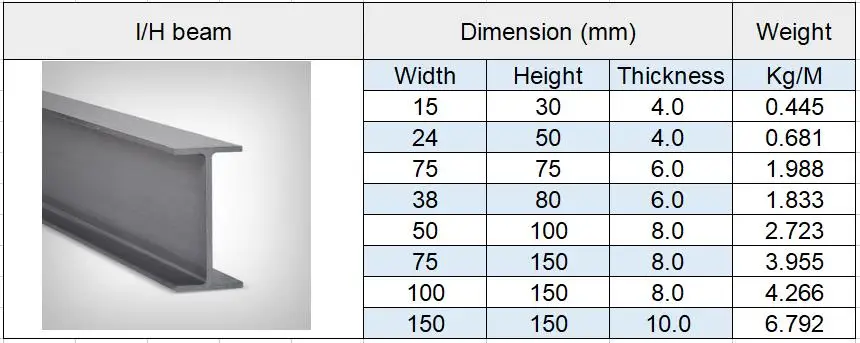
Adjustable parameters include flange width, web thickness, and overall length to meet specific load requirements. Custom surface treatments (e.g., UV-resistant coatings) or color finishes can be applied for specialized applications.
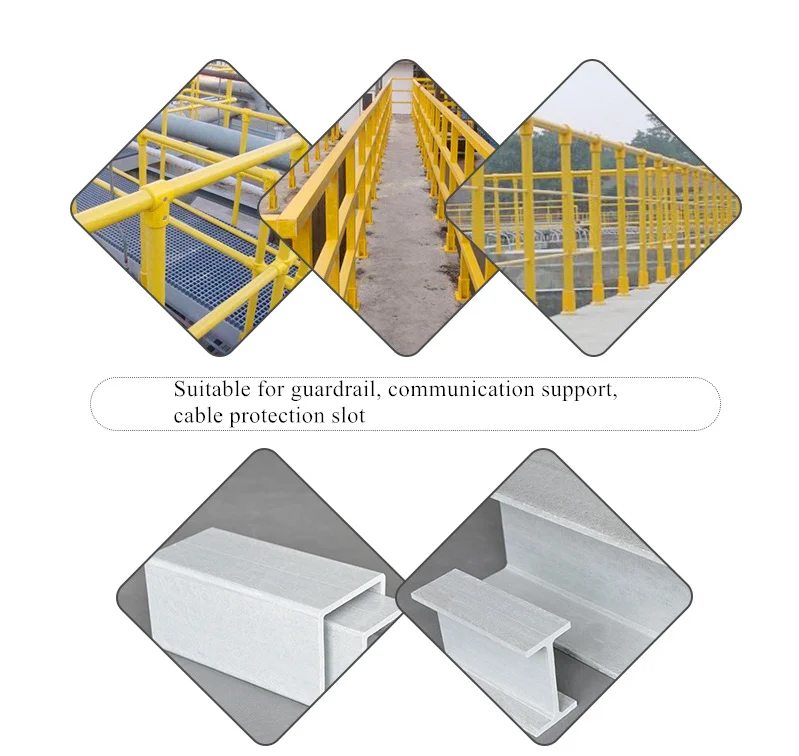
With FRP’s inherent corrosion resistance, you can build durable bridges in saltwater environments. The lightweight design enables easier handling during construction, while ASTM D638 certification ensures compliance with global industrial standards.
| Parameter | Base Model | Advanced Model | Pro Model |
|---|---|---|---|
| Corrosion Resistance | 1000-hour salt spray | 1500-hour salt spray (+50%) | 2000-hour salt spray (+100%)* |
| Load Capacity | 50 tons/m² | 65 tons/m² | 80 tons/m² |
| Dimensional Tolerance | ±2mm | ±1.5mm | ±1mm |
Technical Breakthroughs:
Version Selection Guide:
*Pro Model’s corrosion resistance is 100% higher than the Base Model.

The Product Description is generated by third-party, and Alibaba.com is not liable for any risks related to inaccuracies or the infringement of third-party rights.
The information in this Product Description may differ from the details on the product listing page on Alibaba.com. Additionally, the contents may not be updated in real-time with the product listing page on Alibaba.com, and there may be delays in reflecting the most updated information. The description on product listing page takes precedence. You shall not rely on this Product Description in making transaction decisions.
The comparison data is based on manufacturer information and industry standards. Actual results may vary depending on individual use cases. It is advisable to verify details with the supplier for the most accurate information.