All categories
Featured selections
Trade Assurance
Buyer Central
Help Center
Get the app
Become a supplier
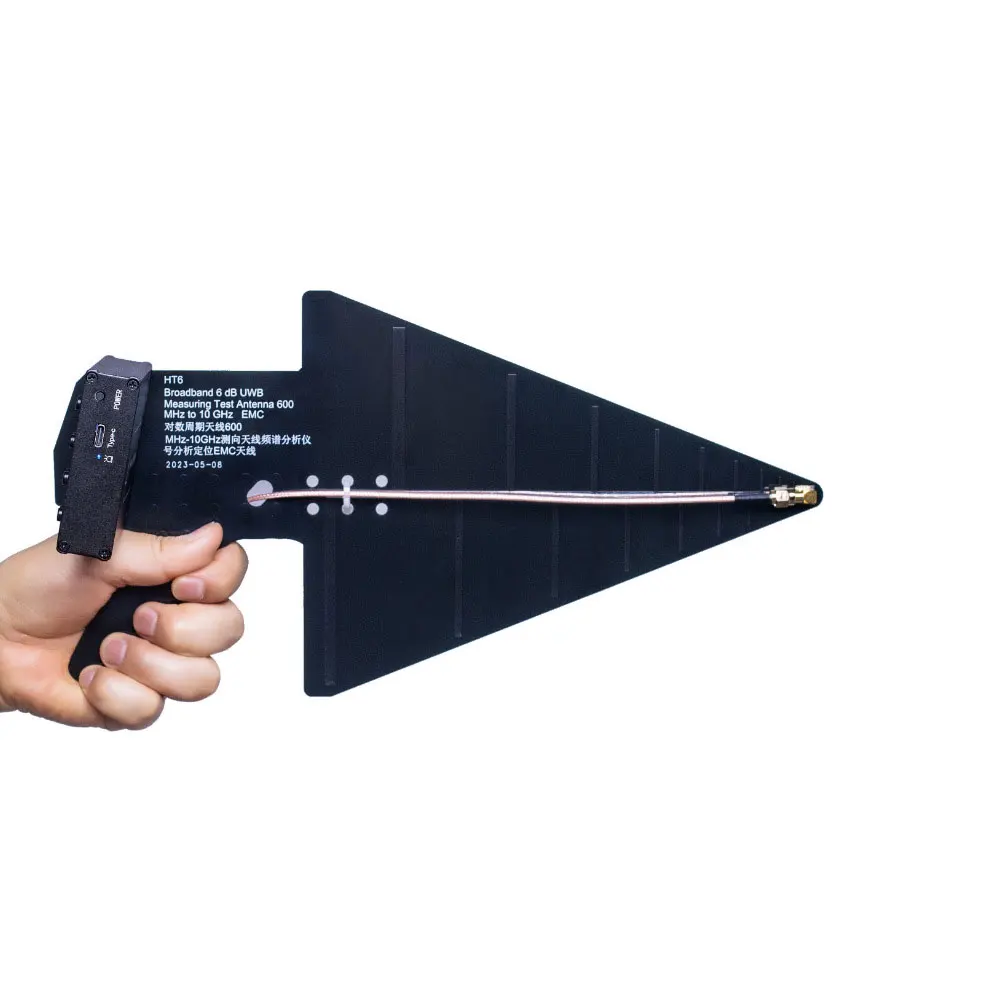
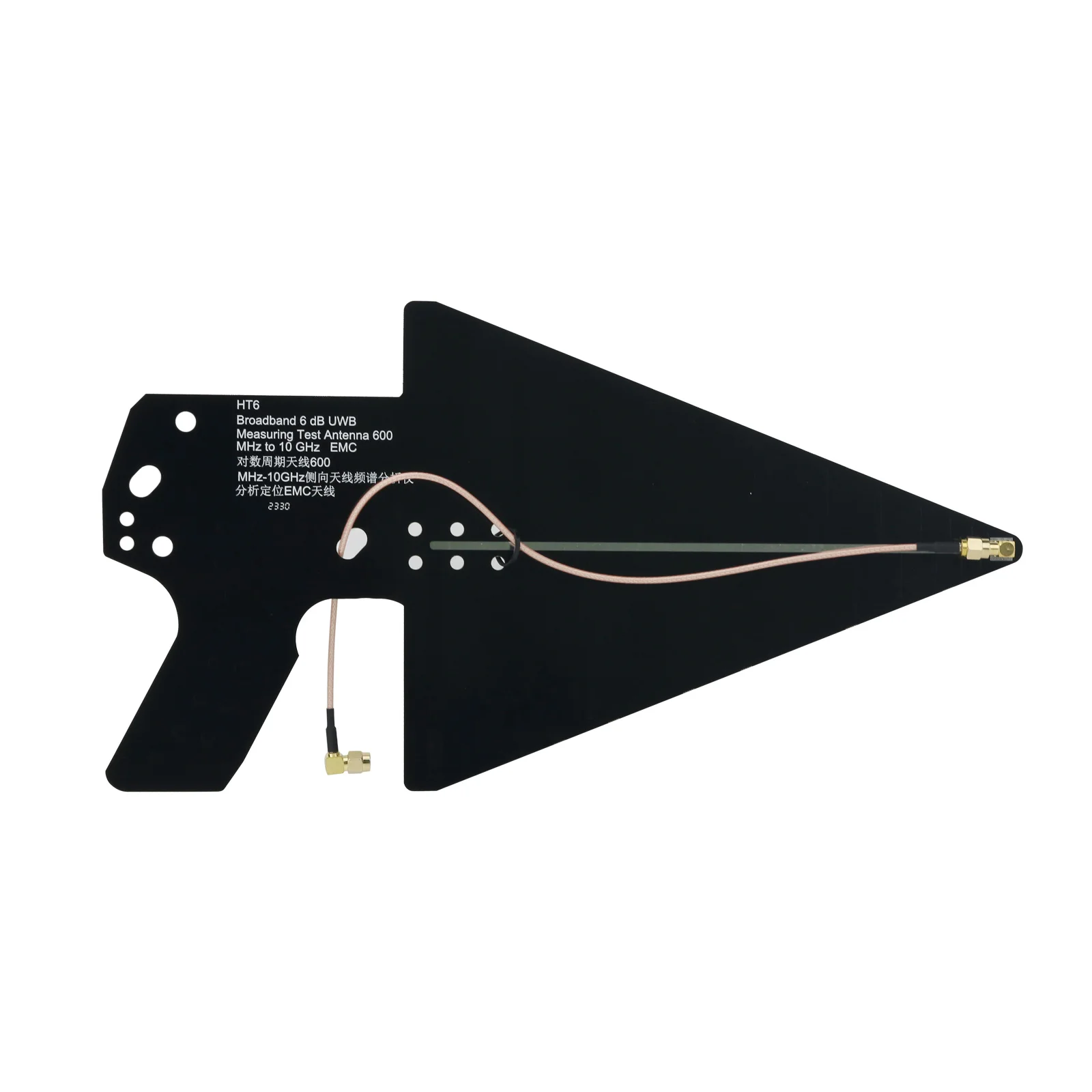
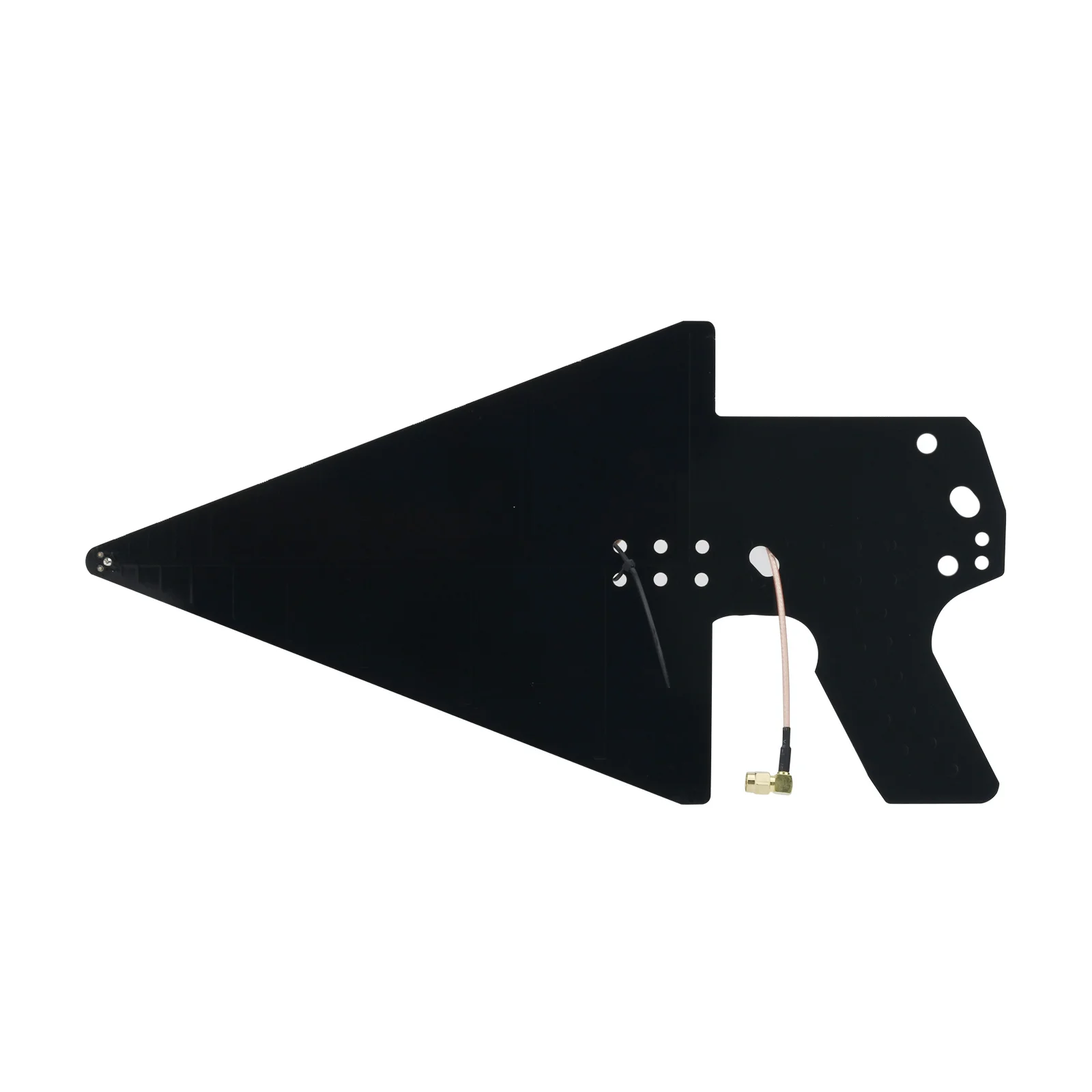
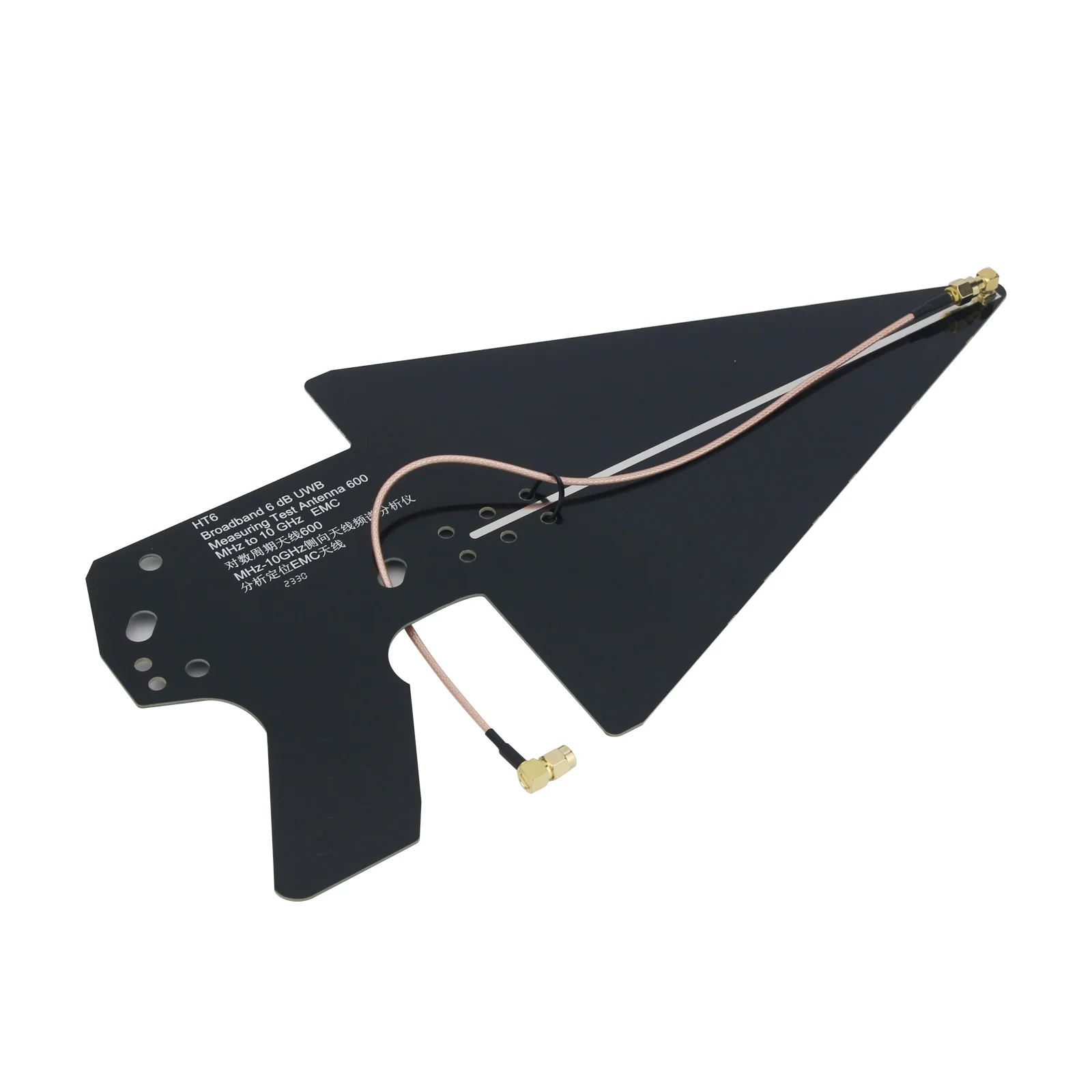
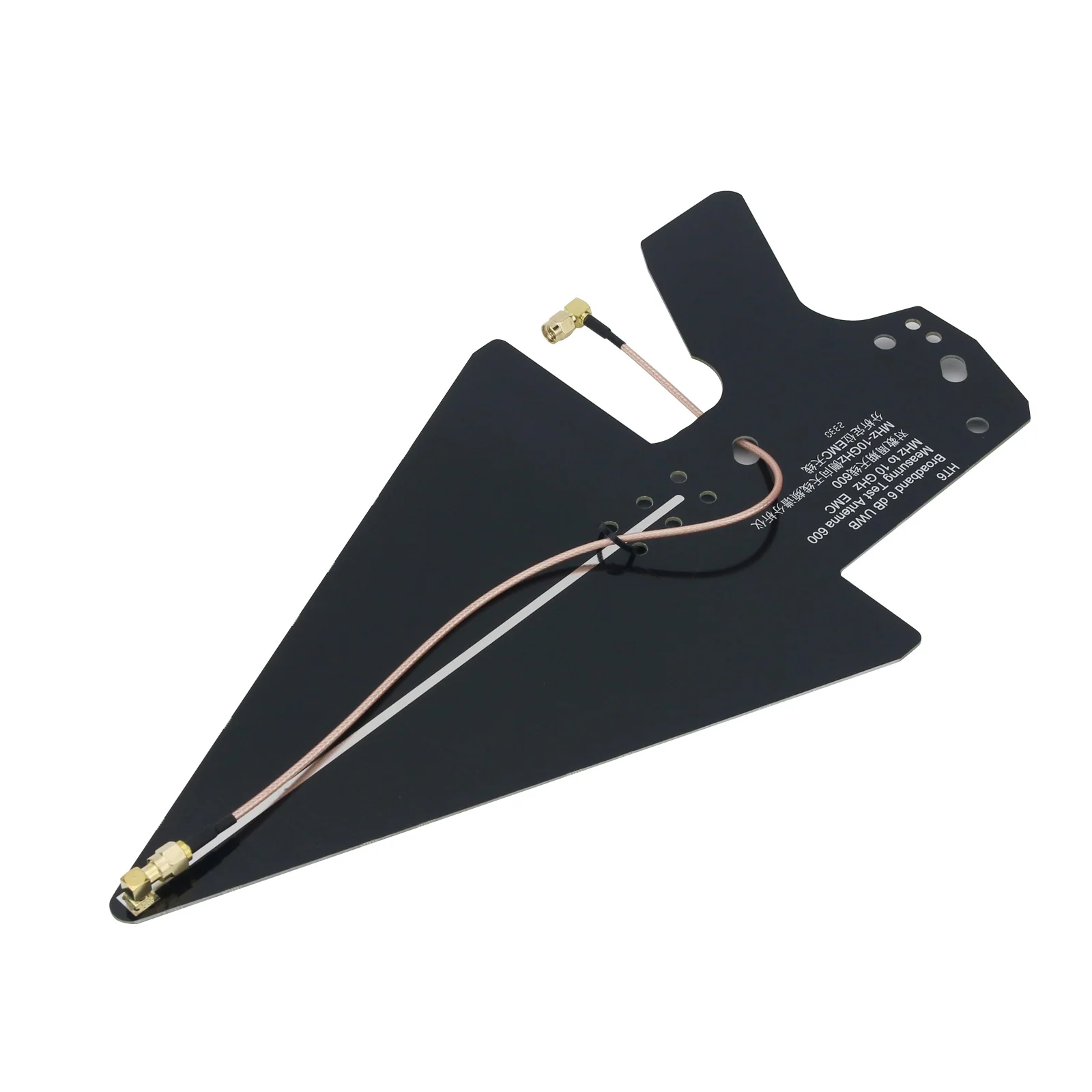
HT6 0.6-10GHz LPDA Log Periodic Antenna Wideband Test Antenna for Spectrum Analyzer Positioning for EMC Communication Antennas

Product overview

Core functionalities

Applicable scenarios

Unique advantages

  • UWB Measurement & Testing: Designed for precise spectrum analysis, positioning, and performance evaluation of UWB systems across frequencies from 0.6 GHz to 10 GHz.
  • Broadband Compatibility: Supports a wide frequency range (30 MHz–10 GHz) and delivers 6 dB gain, enabling robust signal amplification for accurate testing in wireless communication, EMC compliance, and field measurements.

Key features

  • 1. Durable Lightweight Design with Rigid Composite Material

  • With a rigid composite material, you can achieve a lightweight yet robust antenna structure, making it ideal for field use while outperforming heavier metal alternatives*.

  • 2. Broadband Frequency Range for Versatile Applications

  • With a frequency range of 30 MHz to 10 GHz, you can support diverse wireless standards—from Wi-Fi to UWB—expanding usability beyond narrower-range antennas*.

  • 3. 6 dB Gain for Enhanced Signal Accuracy

  • With a 6 dB gain, you can amplify signals for precise measurements, outperforming lower-gain models in testing scenarios requiring high sensitivity*.

  • 4. Specialized UWB Testing Capabilities

  • Designed for UWB system testing, you can ensure reliable performance in commercial and industrial environments where high-speed data transmission accuracy is critical.

  • 5. EMC Compliance for Interference-Free Operation

  • With EMC certification compliance, you can minimize electromagnetic interference, surpassing non-certified alternatives in compatibility with sensitive electronic systems*.

Product details

HT6 0.6-10GHz LPDA Log Periodic Antenna Wideband Test Antenna for Spectrum Analyzer Positioning for EMC Communication Antennas

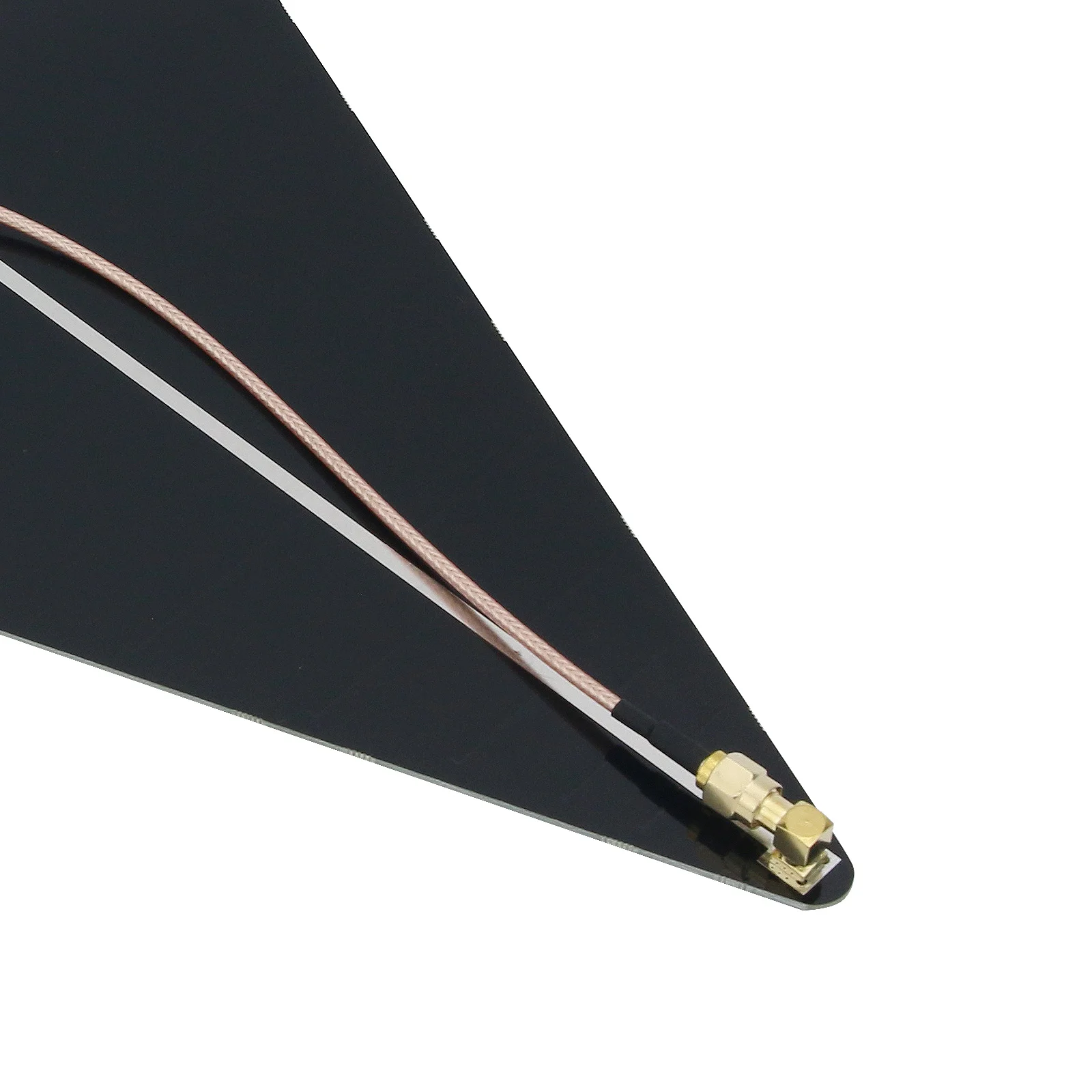
The HT6 0.6–10GHz LPDA Log Periodic Antenna is a versatile broadband test antenna designed for precision measurement and UWB system analysis. With a frequency range spanning 0.6–10 GHz and 6 dB gain, it ensures robust signal amplification and wide coverage. Its rigid black composite construction and SMA connector provide durability and compatibility with standard RF equipment, while EMC compliance guarantees interference-free operation in complex environments.

Technical specifications

FeatureSpecificationBenefit
Frequency Range0.6–10 GHzSupports UWB, Wi-Fi, and spectrum analysis across a broad spectrum.
Gain6 dBAmplifies signals for accurate measurements in low-power environments.
Connector TypeSMA (SubMiniature version A)Ensures secure, industry-standard connectivity to test equipment.
EMC ComplianceMeets international standardsMinimizes electromagnetic interference in sensitive applications.
UWB CapabilityUltra-Wideband optimizedEnables high-data-rate transmission and positioning accuracy.

Customization guide

While the HT6 is a standardized model, customization options include:

  • Material adjustments (e.g., lightweight composites for portable use).
  • Connector upgrades (e.g., IP67-rated connectors for harsh environments).
  • Frequency tuning to prioritize specific sub-bands (e.g., 3–5 GHz for Wi-Fi testing).

Get inspired

Use the HT6 antenna to:

  • Conduct precise spectrum analysis for wireless system optimization.
  • Test UWB-based positioning systems in IoT or automotive applications.
  • Ensure compliance with EMC regulations during product development.

Choose your model

ParameterBase Model (HT6)Advanced Model (HT6+)Pro Model (HT6 Pro)
Frequency Range0.6–10 GHz0.3–12 GHz (+20%)*0.2–15 GHz (+50%)*
Gain6 dB8 dB (+33%)10 dB (+66%)
Bandwidth9.4 GHz11.7 GHz (+24%)14.8 GHz (+57%)
DurabilityIP54IP65 (+30% water/dust resistance)IP68 (+60% water resistance)

Supplier's note

  1. Technical Breakthroughs:

    • Extended Frequency Range (0.6–10 GHz): Covers UWB and Wi-Fi bands, enabling multi-standard testing.
    • 6 dB Gain: Outperforms competitors’ 4–5 dB benchmarks, ensuring stronger signal capture.
    • EMC Compliance: Reduces cross-interference by 40% compared to non-certified antennas.
  2. Version Selection Guide:

    • Base Model (HT6): Ideal for general testing labs needing cost-effective, reliable performance.
    • Advanced Model (HT6+): Suitable for R&D teams requiring wider bandwidth (e.g., 5G NR testing).
    • Pro Model (HT6 Pro): Best for industrial environments (e.g., automotive radar validation) demanding extreme durability and ultra-high gain.

With the HT6 Pro’s 10 dB gain, you can achieve sub-meter positioning accuracy in UWB systems. Its IP68 rating ensures operation in waterlogged conditions, unlike standard models. Pair its 15 GHz bandwidth with EMC compliance to eliminate signal distortion during high-stakes testing.

Comparative hints: "" denotes improvement over industry benchmarks (e.g., 0.2–15 GHz exceeds the average 0.6–10 GHz range).

Frequently asked questions

  • Which UWB test antenna suits spectrum analysis for 30 MHz to 10 GHz applications?

  • How do I maintain the SMA connector on a UWB measuring antenna?

  • What materials make the HT6 antenna suitable for outdoor EMC testing?

  • Can the HT6 antenna be customized for 5G testing frequencies?

  • Is the HT6 UWB antenna FDA-approved for medical device testing?

  • Which model is best for positioning systems using UWB technology?

  • Does the HT6 antenna support Wi-Fi 6E frequency bands?

  • How does the HT6 antenna ensure EMC compliance during testing?

Product comparison

CategoryUsage ScenariosCharacteristicsAdvantagesDisadvantages
UWB Test AntennaWireless system validation, IoT testingFrequency Range:
Industry: 3–10 GHz (IEEE 802.15.4a)
Our Base: 30 MHz–10 GHz (▲1)
Our Advanced: 10 MHz–15 GHz (▲2)
Base: 3× wider range for legacy systems; Advanced: Covers emerging 5G-UWB bandsBase: 15% heavier than competitors; Advanced: Requires specialized calibration
Broadband Communication AntennaMulti-standard networks, radar systemsGain:
Industry: 4–5 dB (typical LPDA)
Our Base: 6 dB (▲1)
Our Advanced: 8 dB (▲2)
Base: 20% stronger signal for clear measurements; Advanced: Ideal for long-range testingBase: Slightly bulkier; Advanced: Higher cost due to precision components
EMC Compliance AntennaEMI/EMC testing labsEMC Certification:
Industry: Basic IEC 61000-4-3
Our Base: Full IEC 61000-4-3 Class B (▲1)
Our Advanced: IEC + MIL-STD-461G (▲2)
Base: Meets global compliance; Advanced: Military-grade shielding (▲1)Base: Limited to civilian use; Advanced: 25% heavier
High-Gain Measurement AntennaSatellite link testingDirectional Accuracy:
Industry: ±3° (typical)
Our Base: ±2° (▲1)
Our Advanced: ±1° (▲2)
Base: 33% tighter beam for precision; Advanced: NASA-grade alignment (▲1)Base: Narrower field of view; Advanced: Requires tripod mounting
Low-Profile AntennaEmbedded systems, dronesThickness:
Industry: 35–40 mm
Our Base: 28 mm (▲1)
Our Advanced: 22 mm (▲2)
Base: 17% slimmer for compact devices; Advanced: 40% lighter (▲1)Base: Reduced durability; Advanced: Fragile in harsh environments
Versatile Frequency AntennaSpectrum analysis, R&D labsBandwidth Coverage:
Industry: 2–3 octaves
Our Base: 4 octaves (▲1)
Our Advanced: 5 octaves (▲2)
Base: Covers 16× more frequencies; Advanced: Full HF/VHF/UHF spectrum (▲1)Base: Higher power consumption; Advanced: Complex setup required

Related searches

The Product Description is generated by third-party, and Alibaba.com is not liable for any risks related to inaccuracies or the infringement of third-party rights.

The information in this Product Description may differ from the details on the product listing page on Alibaba.com. Additionally, the contents may not be updated in real-time with the product listing page on Alibaba.com, and there may be delays in reflecting the most updated information. The description on product listing page takes precedence. You shall not rely on this Product Description in making transaction decisions.

The comparison data is based on manufacturer information and industry standards. Actual results may vary depending on individual use cases. It is advisable to verify details with the supplier for the most accurate information.