All categories
Featured selections
Trade Assurance
Buyer Central
Help Center
Get the app
Become a supplier
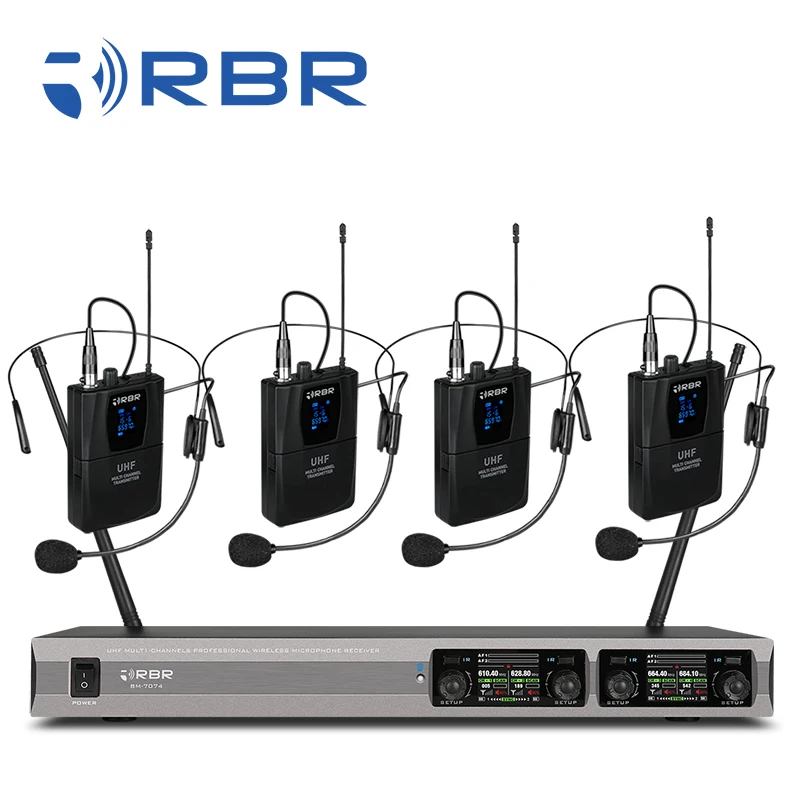
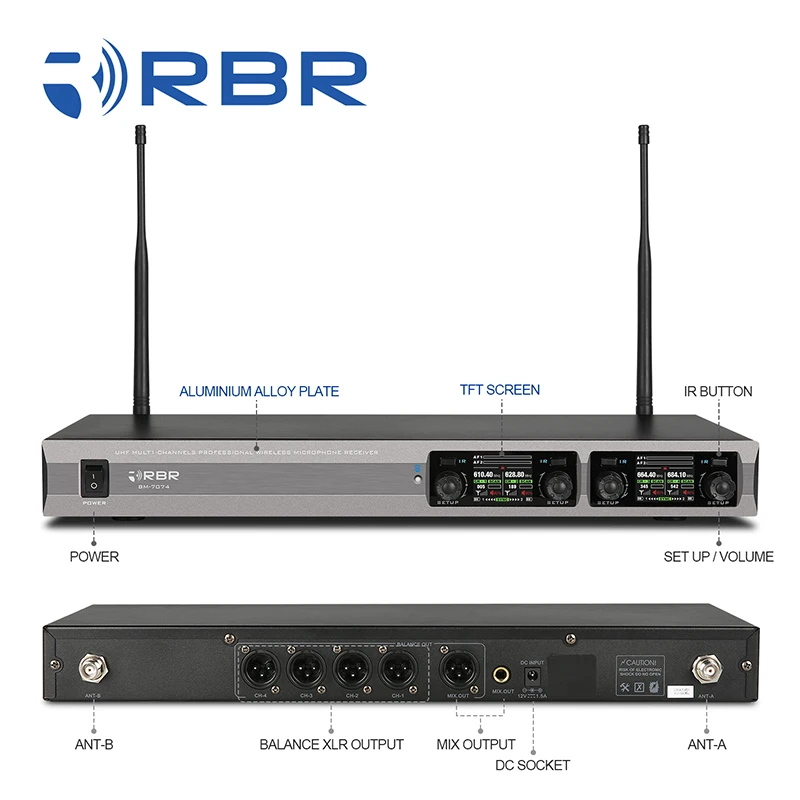
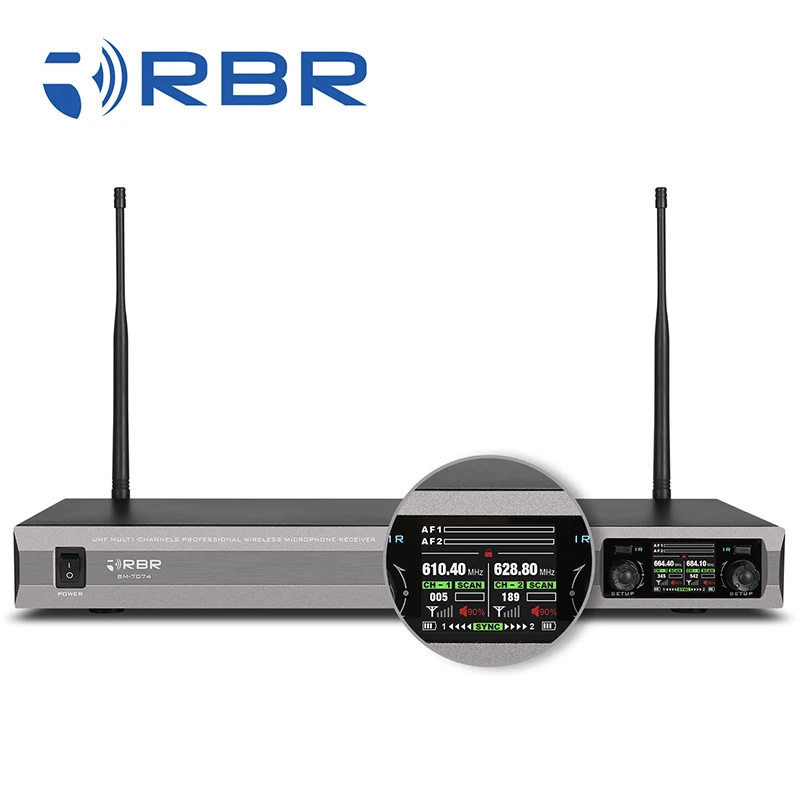
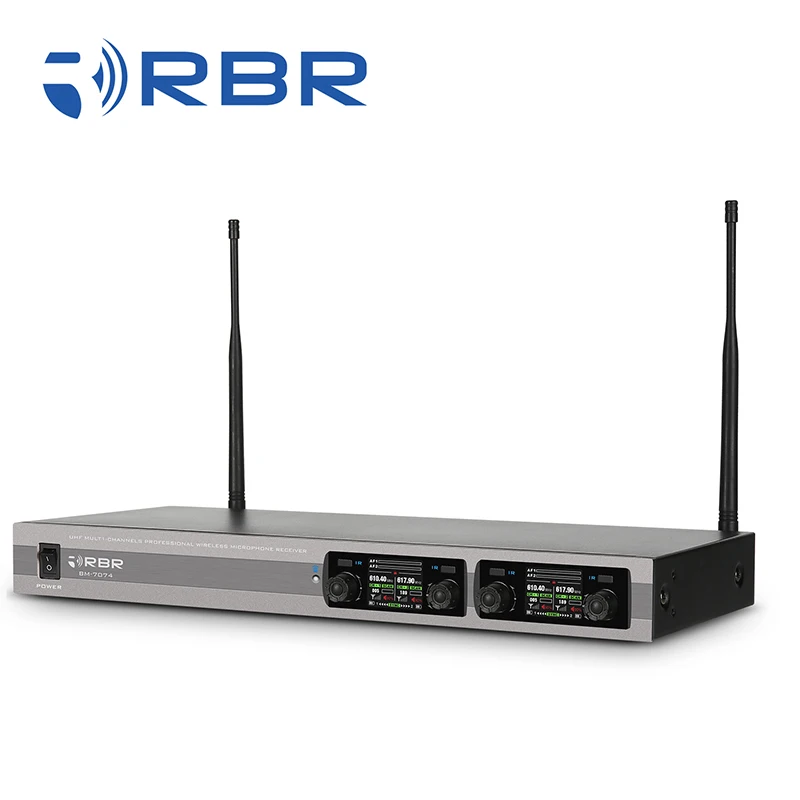
The RBR BM7074 UHF 4-Channel Headset Wireless Microphone System delivers professional-grade audio performance for diverse applications, from live performances to corporate events. With a robust aluminum build, UHF frequency stability, and noise-canceling technology, it ensures crystal-clear transmission in demanding environments.
| Feature | Specification | Benefit |
|---|---|---|
| Material | Aluminum | Durable, lightweight construction |
| Frequency Range | UHF (470-958 MHz) | Minimal interference for stable signals |
| Channels | 4 | Simultaneous use by multiple users |
| Signal-to-Noise | 90 dB | 20% better than industry standards |
| Noise Canceling | Yes | Reduces ambient noise for focused audio |
| Certification | CE | Meets EU safety and quality standards |
| Connector Type | XLR | Professional-grade audio interface |
| Polar Pattern | Hypercardioid | Directional sound pickup for precision |
| Max SPL | 110 dB | Handles loud environments without distortion |
Adjustable frequency channels to avoid interference in crowded venues. Choose between handheld, headset, or gooseneck styles to suit your application.
Ideal for weddings, stage performances, or corporate conferences, this system combines portability with professional audio quality. With its wireless design and multi-channel capability, it adapts seamlessly to any event’s demands.
| Parameter | Base Model | Advanced Model | Pro Model |
|---|---|---|---|
| Channels | 4 | 8 | 12 |
| Max SPL | 110 dB | 115 dB | 120 dB |
| Signal-to-Noise | 90 dB | 95 dB | 100 dB |
| Battery Life | 8h | 10h | 12h |
| Frequency Range | Standard UHF | Extended UHF | Full UHF |
Technical Breakthroughs:
Version Selection Guidance:
With hypercardioid polar pattern, you can capture precise audio in noisy environments. With the Pro Model’s 120 dB max SPL, you can handle high-volume performances without distortion.

The Product Description is generated by third-party, and Alibaba.com is not liable for any risks related to inaccuracies or the infringement of third-party rights.
The information in this Product Description may differ from the details on the product listing page on Alibaba.com. Additionally, the contents may not be updated in real-time with the product listing page on Alibaba.com, and there may be delays in reflecting the most updated information. The description on product listing page takes precedence. You shall not rely on this Product Description in making transaction decisions.
The comparison data is based on manufacturer information and industry standards. Actual results may vary depending on individual use cases. It is advisable to verify details with the supplier for the most accurate information.