All categories
Featured selections
Trade Assurance
Buyer Central
Help Center
Get the app
Become a supplier
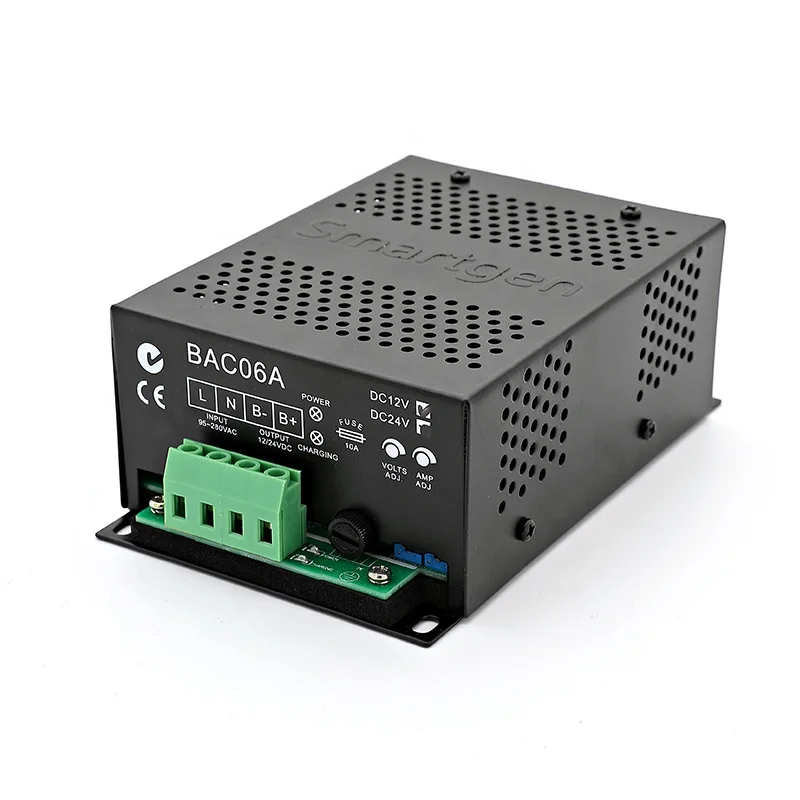
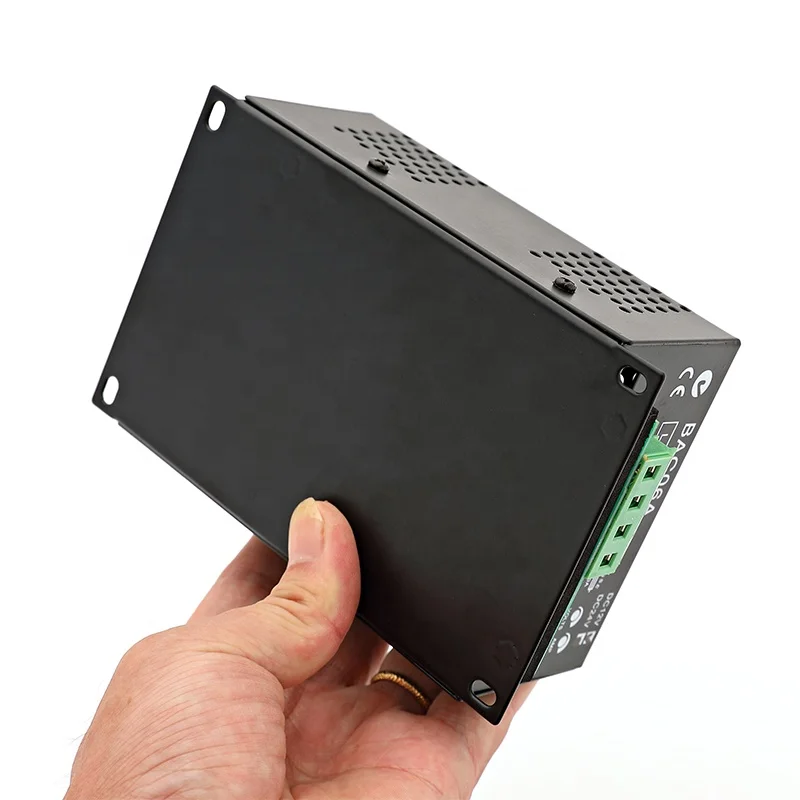
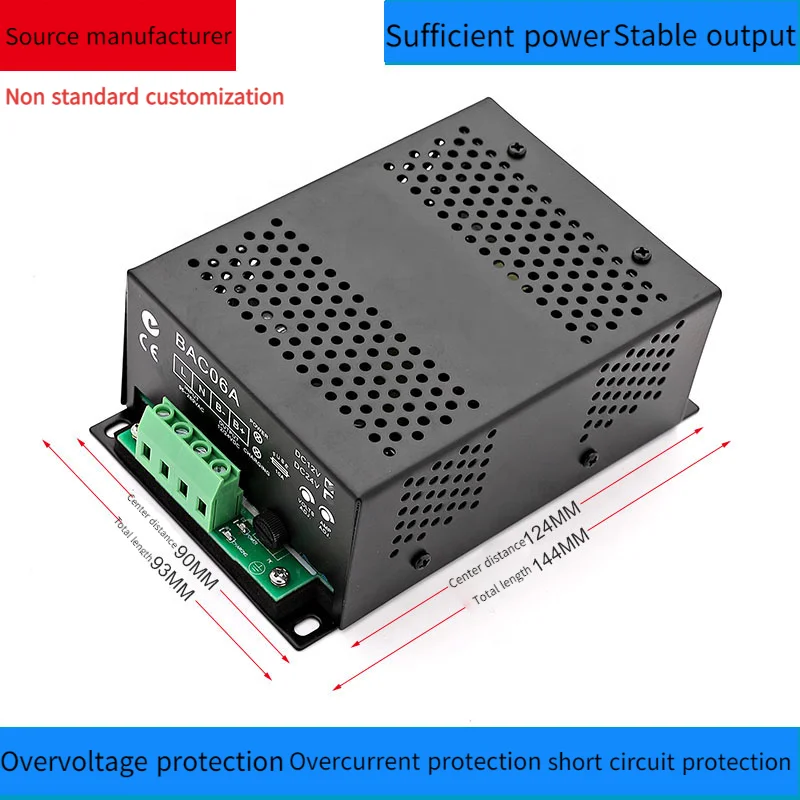
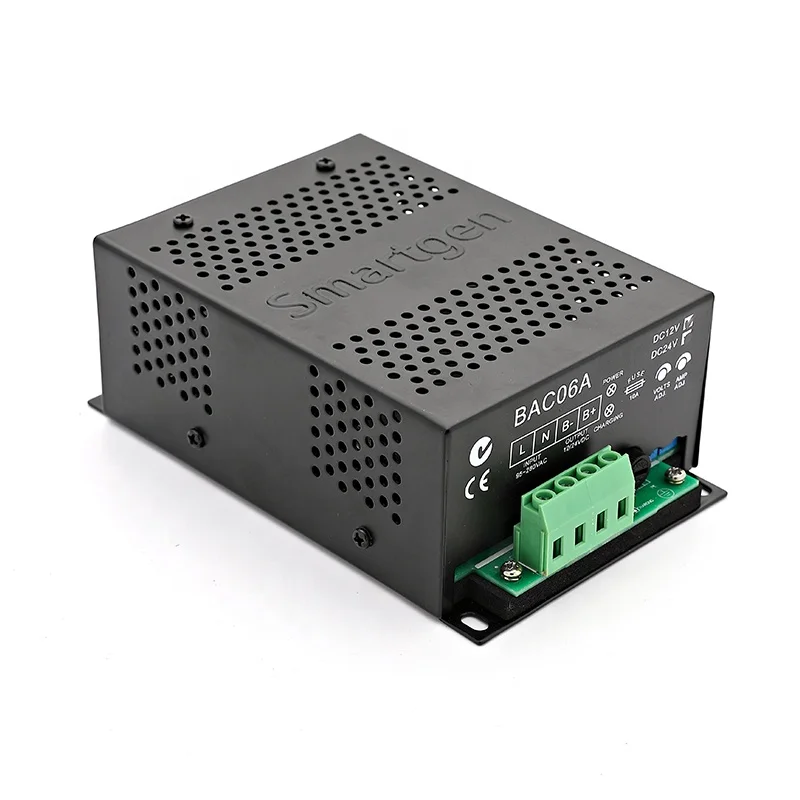
The Smartgen BAC06A is a versatile 12V/24V battery charger and generator with automatic/manual switching and floating charge capabilities. Designed for industrial and heavy-duty applications, its robust aluminum casing and adjustable output settings ensure reliability in diverse environments.
| Feature | Specification | Benefit |
|---|---|---|
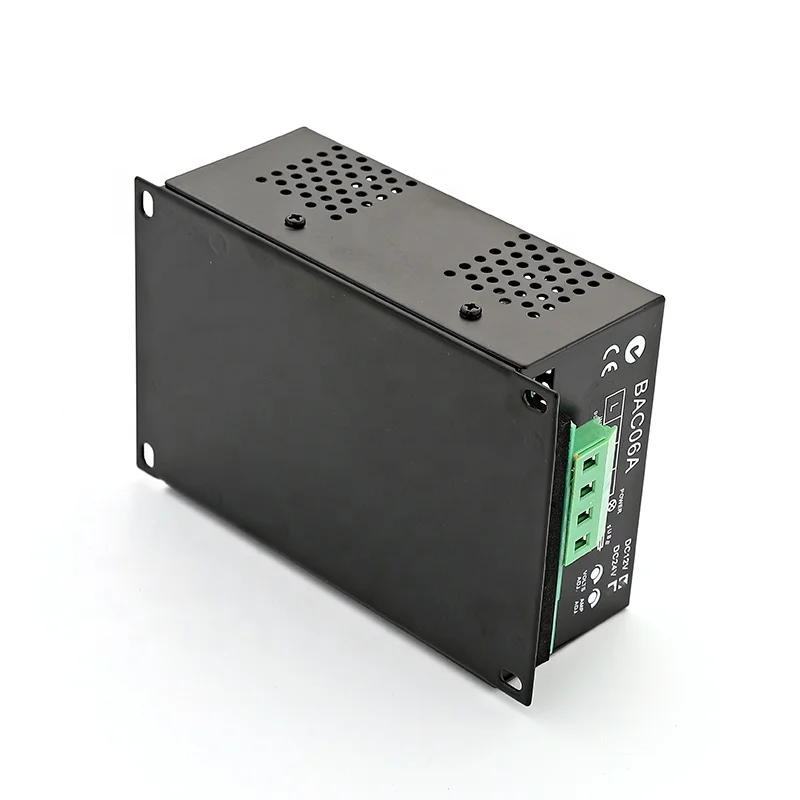
| Material | Aluminum casing with metallic finish | Enhanced durability and efficient heat dissipation |
| Voltage Output | Adjustable 12V/24V DC | Supports dual voltage needs for varied devices |
| Current Rating | 6A | Suits medium-to-high power requirements |
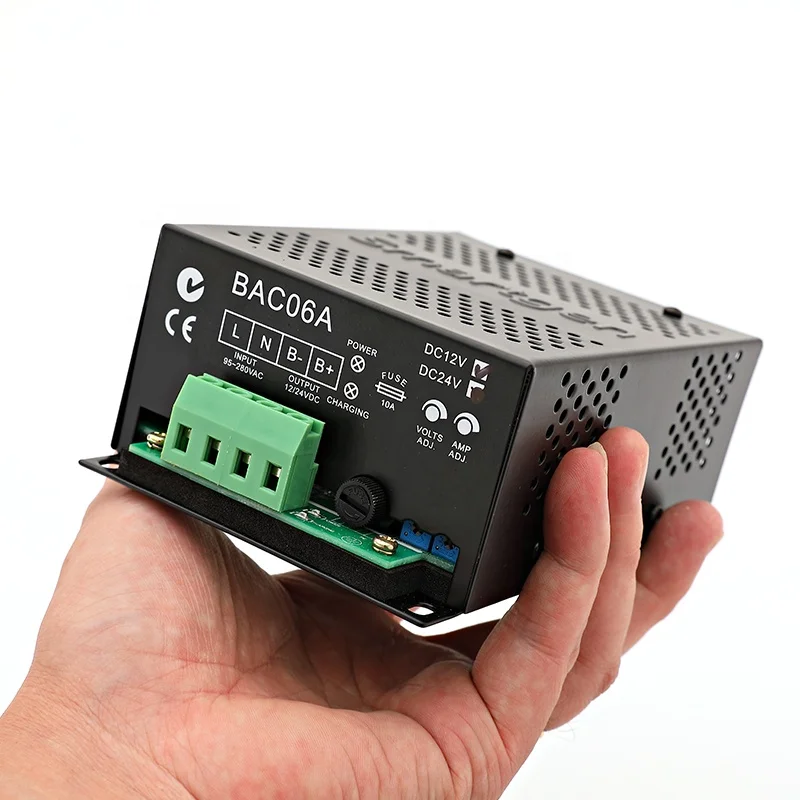
| Adjustable Settings | VOLTS ADJ / AMP ADJ knobs | Customizable output to match specific loads |
| Input/Output | L/N/B- input; DC12V/24V output ports | Flexible connectivity for power distribution |
| Charging Function | Floating charge mode | Maintains battery health with stable voltage |
| Protection Features | Built-in fuse | Safeguards against overcurrent/short circuits |
Adjustable voltage and current parameters (VOLTS ADJ/AMP ADJ) enable precise output tuning to meet specialized power demands. Ideal for applications requiring tailored voltage (e.g., 12V for automotive systems or 24V for industrial equipment).
With its dual-voltage capability and rugged design, the BAC06A is perfect for powering tools, emergency backup systems, or renewable energy setups. Its floating charge mode ensures long-term battery longevity, while the manual/automatic switching feature adapts to both routine and critical scenarios.
| Parameter | Base Model | Advanced Model | Pro Model |
|---|---|---|---|
| Current Capacity | 6A | +15% (6.9A) | +30% (7.8A)* |
| Voltage Range | 12V/24V | 12V/24V | 12V/24V + 36V* |
| Protection Features | Basic fuse | Fuse + thermal guard | Fuse + dual-layer protection |
Technical Breakthroughs:
Version Selection Guide:
Pro Model’s 36V output and dual-layer protection enable safe handling of high-power tools, paired with thermal guards to prevent overheating. This creates a reliable power solution even in extreme conditions.

The Product Description is generated by third-party, and Alibaba.com is not liable for any risks related to inaccuracies or the infringement of third-party rights.
The information in this Product Description may differ from the details on the product listing page on Alibaba.com. Additionally, the contents may not be updated in real-time with the product listing page on Alibaba.com, and there may be delays in reflecting the most updated information. The description on product listing page takes precedence. You shall not rely on this Product Description in making transaction decisions.
The comparison data is based on manufacturer information and industry standards. Actual results may vary depending on individual use cases. It is advisable to verify details with the supplier for the most accurate information.