All categories
Featured selections
Trade Assurance
Buyer Central
Help Center
Get the app
Become a supplier
Customization:
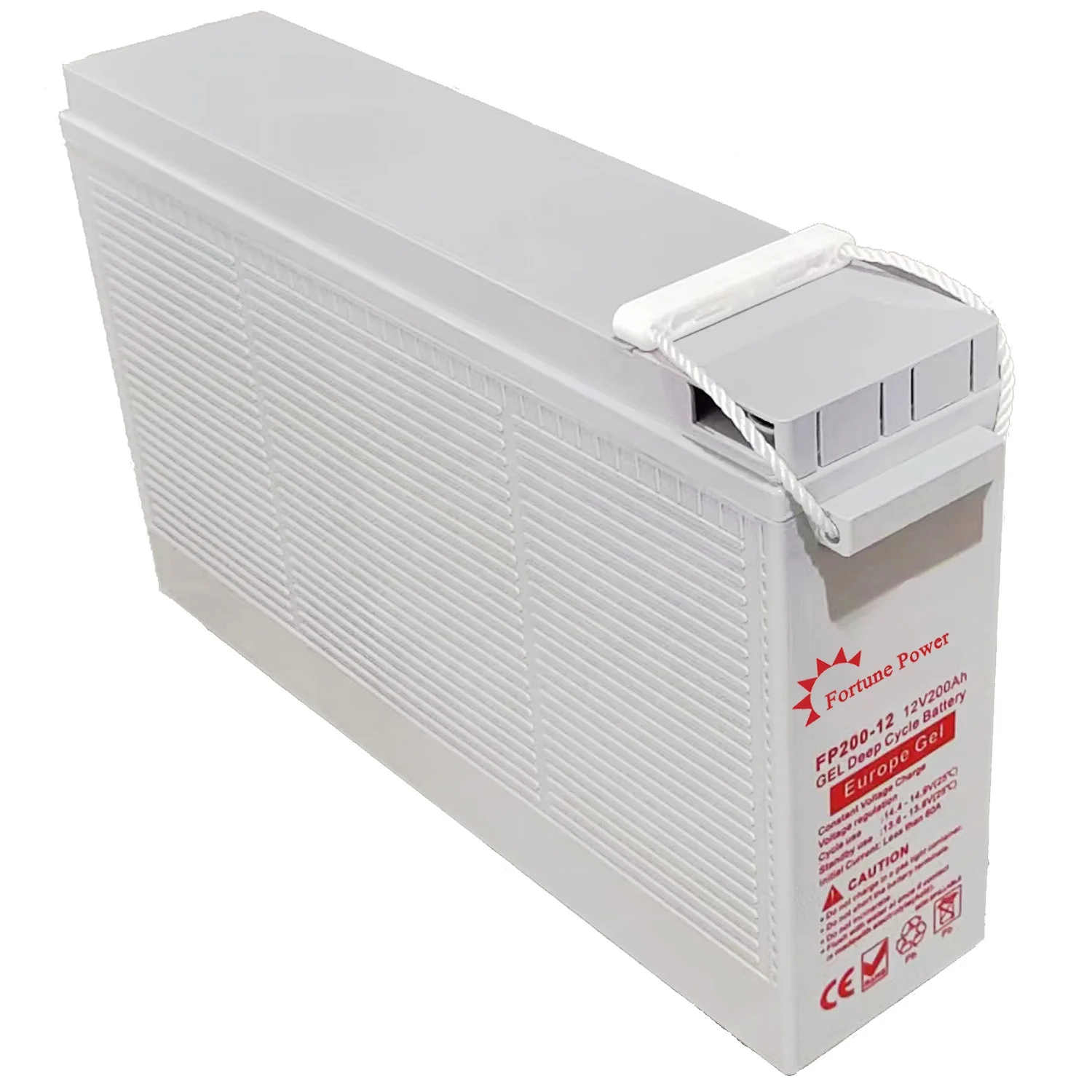
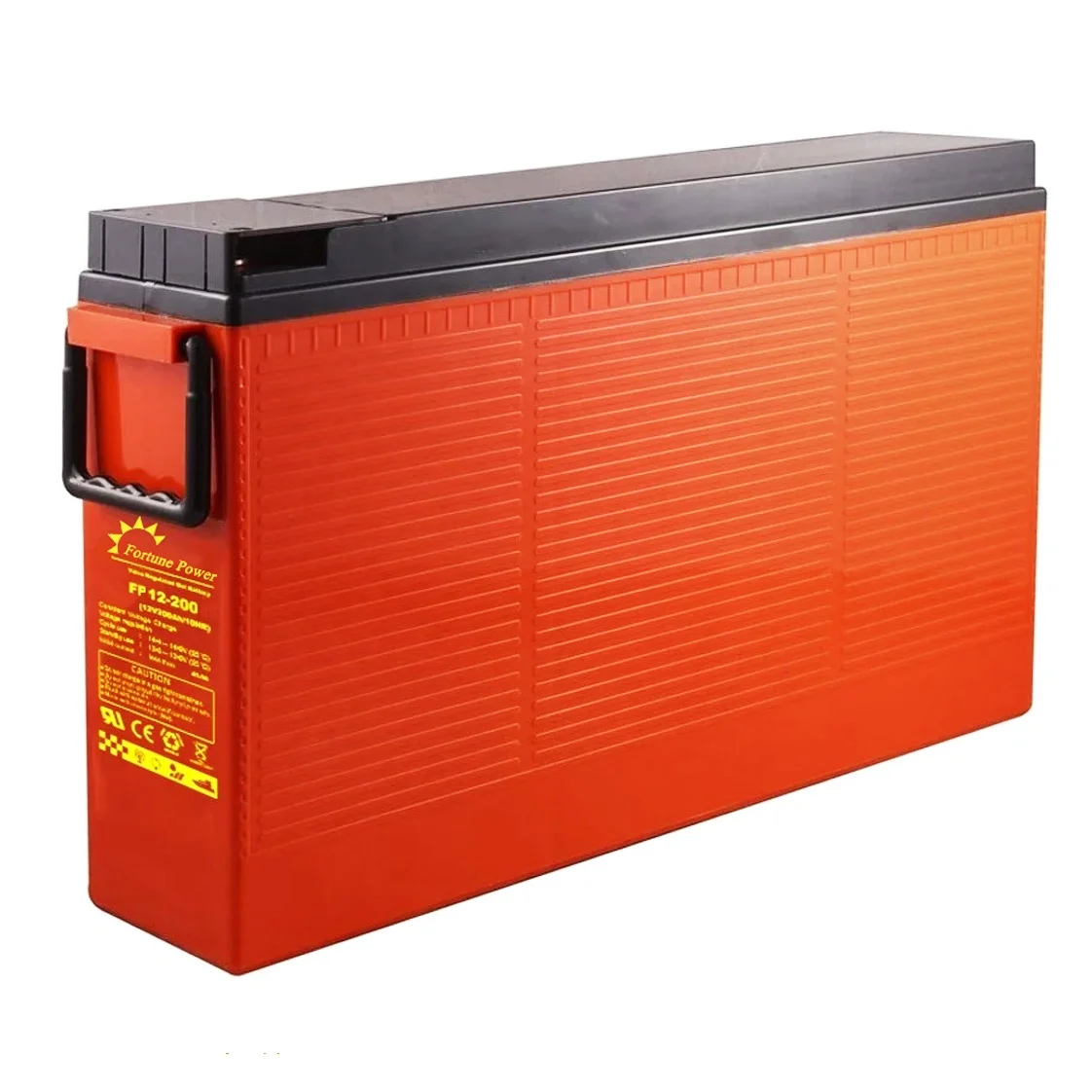
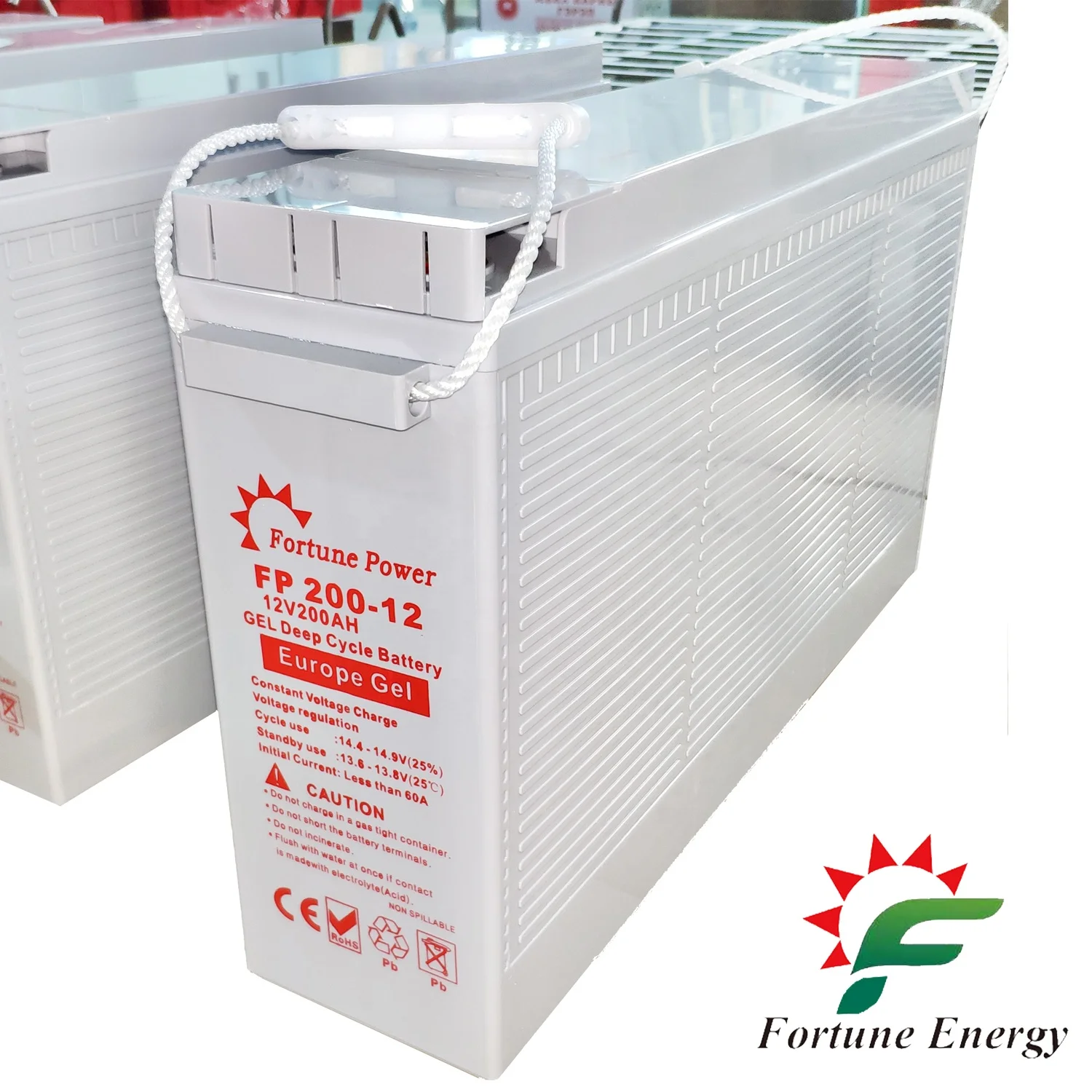
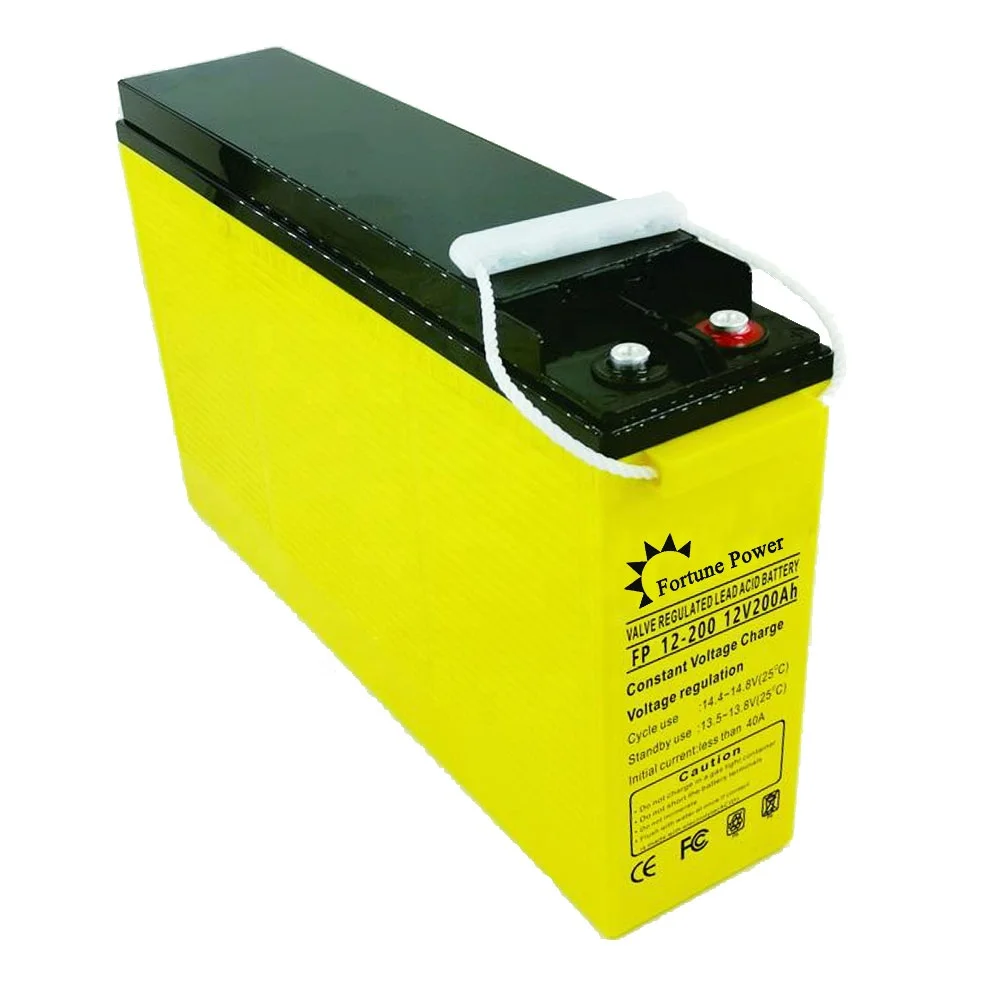
The Fortune Power FP 12-200 is a 12V 200Ah Valve Regulated Lead Acid (VRLA) gel battery designed for deep cycle applications. Its maintenance-free sealed design, CE certification, and 5-year warranty make it ideal for solar energy storage, electric vehicles, medical equipment, and industrial systems.
| Feature | Specification | Application Scenario |
|---|---|---|
| Battery Type | Gel (VRLA) | Safe operation in sealed environments |
| Capacity | 200Ah | Powering solar systems or electric forklifts |
| Nominal Voltage | 12V | Compatibility with standard inverters |
| Material | Polypropylene case, brass terminals | Withstands chemical reactions and corrosion |
| Certification | CE | Meets EU safety and quality standards |
| Cycle Life | 500+ cycles | Long-term use in UPS or energy storage systems |
| Safety Features | Overcharge/Reverse Polarity Protection | Prevents damage in automotive or marine setups |
Adjustable parameters:
With a 200Ah gel battery, you can store renewable energy for off-grid homes or power electric vehicles with reliable, maintenance-free performance. Its deep cycle capability ensures longevity in demanding applications like medical equipment or security systems.
| Parameter | Base Model | Advanced Model | Pro Model |
|---|---|---|---|
| Capacity | 200Ah | 250Ah (+25%) | 300Ah (+50%) |
| Cycle Life | 500 cycles | 650 cycles (+30%) | 750 cycles (+50%) |
| Charging Efficiency | 80% | 85% (+6.25%) | 90% (+12.5%) |
| Operating Temp Range | -20°C to 60°C | -30°C to 65°C | -40°C to 70°C |
Technical Breakthroughs:
Version Selection Guide:
Example use case: The Pro Model’s 300Ah capacity (25% higher than competitors) paired with -40°C resilience ensures uninterrupted power for winter construction equipment.

The Product Description is generated by third-party, and Alibaba.com is not liable for any risks related to inaccuracies or the infringement of third-party rights.
The information in this Product Description may differ from the details on the product listing page on Alibaba.com. Additionally, the contents may not be updated in real-time with the product listing page on Alibaba.com, and there may be delays in reflecting the most updated information. The description on product listing page takes precedence. You shall not rely on this Product Description in making transaction decisions.
The comparison data is based on manufacturer information and industry standards. Actual results may vary depending on individual use cases. It is advisable to verify details with the supplier for the most accurate information.