2d Lidar Arduino


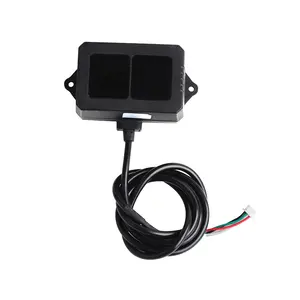


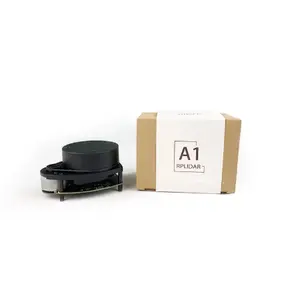


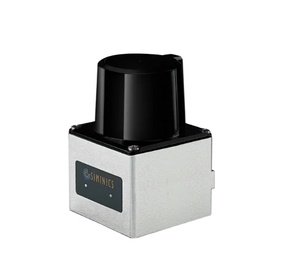
















 1/42
1/42



 1/3
1/3







 1/24
1/24







 1/30
1/30















 1/25
1/25
About 2d lidar arduino
Where to Find 2D LiDAR for Arduino Suppliers?
China leads the global supply of compact, embedded 2D LiDAR sensors compatible with Arduino and other microcontroller platforms, with key manufacturing hubs in Shenzhen and Chengdu. These regions host vertically integrated electronics ecosystems specializing in optical sensing, time-of-flight (ToF) modules, and robotics components. Shenzhen's Huaqiangbei industrial zone supports rapid prototyping and small-batch production, enabling fast iteration cycles for IoT and maker applications. Chengdu contributes advanced R&D in laser ranging technologies, particularly in long-range ToF systems used in automation and unmanned ground vehicles.
The concentration of component suppliers, PCB fabricators, firmware developers, and testing labs within these clusters reduces development lead times by up to 40% compared to decentralized sourcing models. Buyers benefit from modular product designs that support UART, RS232, and Bluetooth interfaces—ensuring compatibility with Arduino-based control systems. Average unit costs range from $25–$70 for entry-level single-line scanners, while high-precision or extended-range models exceed $500. Most suppliers offer sample orders starting at one piece, supporting low-risk evaluation for engineering teams.
How to Choose 2D LiDAR for Arduino Suppliers?
Adopt the following verification criteria when evaluating potential partners:
Technical Compatibility & Documentation
Confirm interface protocols (UART/TTL, I²C, or RS232) are explicitly documented and tested with Arduino IDE environments. Demand access to datasheets, pin configuration diagrams, and example code repositories. For integration into autonomous navigation systems, ensure angular resolution (e.g., 0.2°–1°), scan frequency (3–10 Hz), and detection range (up to 400m) meet application requirements.
Production and Quality Assurance
Assess supplier capabilities through verifiable metrics:
- On-time delivery rate exceeding 90%
- Response time under 7 hours for technical inquiries
- Reorder rate above 15% as an indicator of customer satisfaction
While formal ISO 9001 certification is not universally reported, prioritize suppliers with structured quality management practices evidenced by consistent performance data and repeat business.
Transaction Security and Sampling
Utilize secure payment methods such as escrow services for initial transactions. Request functional samples before volume ordering—many suppliers offer single-unit purchases at slightly elevated prices. Validate sensor accuracy using controlled distance tests and verify noise resistance in ambient light conditions typical of end-use environments.
What Are the Best 2D LiDAR for Arduino Suppliers?
| Company Name | Main Products | Online Revenue | On-Time Delivery | Reorder Rate | Avg. Response | Min. Order Quantity | Price Range (USD) |
|---|---|---|---|---|---|---|---|
| Chengdu Jrt Meter Technology Co., Ltd. | Laser Rangefinders, Optical Sensors, Proximity Sensors | US $40,000+ | 100% | <15% | ≤3h | 1–2 pieces | $47–$69 |
| Shenzhen FlyFun Technology Co.,Ltd. | RC Parts, Electronic Components, Alarms | US $150,000+ | 100% | 20% | ≤7h | 1–10 pieces | $24.90–$99.99 |
| Shenzhen Lonten Technology Co., Limited | Development Boards, Robotics Kits, ICs | US $140,000+ | 91% | 27% | ≤7h | 2–100 pieces | $66–$749 |
| Shenzhen Ingcool Information Technology Co., Ltd. | Image Sensors, Education & Maker Boards | US $20,000+ | 90% | <15% | ≤3h | 1 acre* | $53.34–$669.12 |
| Shenzhen Omni-In Technology Co., Ltd. | Smart Robot, AR/VR Hardware, GPS Trackers | US $90,000+ | 100% | 19% | ≤3h | 1 piece | $110–$28,400 |
*Note: "1 acre" listed as MOQ appears to be a data anomaly; likely intended as "1 piece".
Performance Analysis
Shenzhen FlyFun stands out for affordability, offering the TF-Luna module at $24.90 per unit with a low MOQ of one piece—ideal for startups and academic projects. Chengdu Jrt Meter Technology demonstrates reliability with a 100% on-time delivery record and responsive communication, positioning it well for time-sensitive procurement. Shenzhen Lonten exhibits strong customer retention (27% reorder rate), suggesting robust post-sale support and product consistency. Higher-tier suppliers like Shenzhen Omni-In provide premium LiDAR solutions (e.g., Livox Avia, Ouster OS series) suited for industrial automation, though at significantly higher price points. Buyers should align supplier selection with project scale: cost-driven evaluations favor mid-range options, while mission-critical deployments justify investment in proven, high-performance vendors.
FAQs
How to verify 2D LiDAR compatibility with Arduino?
Request test code examples in C++ or Arduino sketch format. Verify voltage levels (typically 3.3V or 5V TTL), baud rates, and serial communication stability. Use oscilloscope logs if available to confirm signal integrity during continuous scanning operations.
What is the typical lead time for samples?
Sample dispatch averages 3–7 business days after payment confirmation. International delivery via standard courier takes 5–12 days depending on destination. Expedited shipping options may reduce transit time to 3–5 days.
Can suppliers customize firmware or housing?
Yes, many suppliers support OEM customization including logo printing, modified field-of-view settings, and tailored output formats (e.g., JSON over UART). Minimum order quantities for customization typically start at 100 units, with NRE fees applying for firmware modifications.
Do 2D LiDAR modules comply with RoHS or CE standards?
Compliance varies by model and manufacturer. Some suppliers declare RoHS adherence for electronic components; however, formal CE certification is not consistently provided. Buyers must independently verify electromagnetic compatibility and safety requirements based on regional regulations.
Are there bulk pricing discounts available?
Bulk pricing applies at volumes of 50+ units, with typical reductions of 10–25% off catalog prices. Larger orders (200+ units) may include additional benefits such as free samples, extended warranty, or dedicated technical support channels.





