





Access Point Wifi





 Top sponsor listing




 1/3
1/3




 1/2
1/2



 1/3
1/3




 1/1
1/1


 1/1
1/1







 1/3
1/3


 1/36
1/36




 1/22
1/22

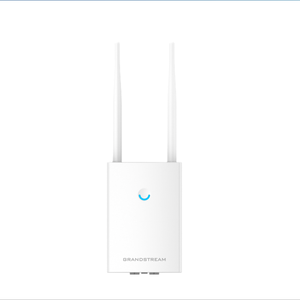
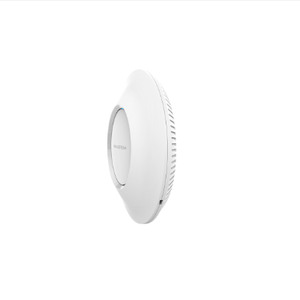
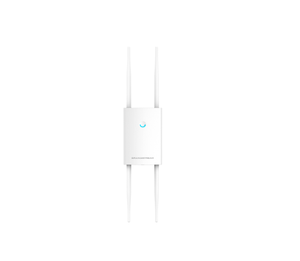
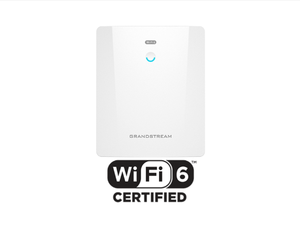
 1/3
1/3



 1/31
1/31




 1/18
1/18


 1/3
1/3



 1/3
1/3







 1/3
1/3



 1/3
1/3


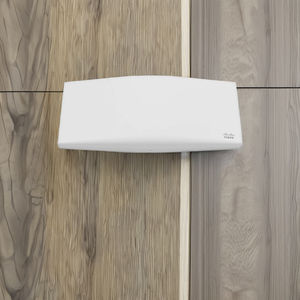

 1/3
1/3
About access point wifi
Where to Find Access Point WiFi Suppliers?
China remains the central hub for access point WiFi manufacturing, with key production clusters in Guangdong and Jiangsu provinces driving innovation and scale. Guangdong, particularly the Pearl River Delta region, hosts over 70% of China’s wireless networking equipment suppliers, supported by Shenzhen’s advanced electronics ecosystem. This concentration enables rapid prototyping and integration of components such as RF modules, antennas, and PCBs. Jiangsu’s Yangtze River Delta zone specializes in industrial-grade and outdoor-rated access points, leveraging proximity to semiconductor fabs and metal fabrication centers that reduce component lead times by 20-25%.
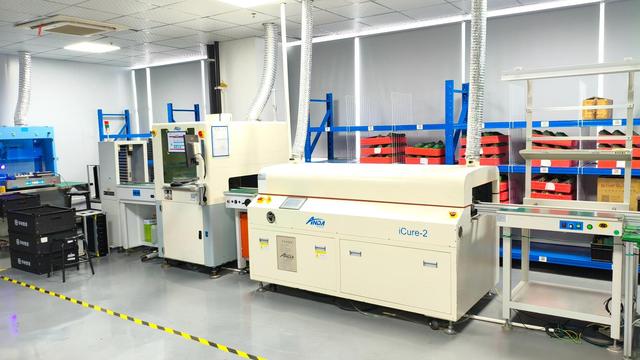
These regions feature vertically integrated supply chains—spanning chipset procurement, SMT assembly, firmware development, and final testing—allowing for agile production cycles. Buyers benefit from dense networks of EMS providers, certification labs, and logistics operators within a 30km radius, facilitating faster time-to-market. Key advantages include MOQ flexibility (as low as 50 units for standard models), 15-35% lower unit costs due to economies of scale, and lead times averaging 25–35 days for batch orders. Customization capabilities are robust, covering dual/tri-band configurations, PoE support, mesh networking protocols, and private-label firmware.
How to Choose Access Point WiFi Suppliers?
Adopt structured evaluation criteria to ensure technical and operational reliability:
Technical Compliance
Confirm adherence to IEEE 802.11ac/ax standards and international certifications including CE, FCC, IC, and RoHS. For enterprise deployments, validate Wi-Fi 6/6E support and compliance with WPA3 security protocols. Request test reports from accredited labs for radiated power, frequency stability, and EMI/EMC performance.
Production Capability Audits
Assess core infrastructure metrics:
- Minimum 3,000m² cleanroom-integrated facility for SMT and DIP lines
- In-house R&D team comprising at least 15% of technical staff
- Automated optical inspection (AOI) and environmental stress screening (thermal cycling, humidity testing)
Correlate factory size and automation level with on-time delivery rates (target >96%) and defect rates (ideal PPM <1,000).
Transaction Safeguards
Utilize secure payment structures such as irrevocable LC or escrow services until product verification is complete. Review supplier export history, particularly shipments to North America, EU, and ANZ regions, to assess regulatory alignment. Pre-shipment sample testing is critical—validate throughput, signal penetration, and DHCP load handling under real-world conditions before scaling orders.
What Are the Best Access Point WiFi Suppliers?
| Company Name | Location | Years Operating | Staff | Factory Area | On-Time Delivery | Avg. Response | Ratings | Reorder Rate |
|---|---|---|---|---|---|---|---|---|
| Shenzhen Tenda Technology Co., Ltd. | Guangdong, CN | 18 | 800+ | 42,000+m² | 98.7% | ≤3h | 4.8/5.0 | 41% |
| TP-LINK Technologies Co., Ltd. | Guangdong, CN | 25 | 15,000+ | 280,000+m² | 99.2% | ≤4h | 4.9/5.0 | 58% |
| Hangzhou H3C Technologies Co., Ltd. | Zhejiang, CN | 20 | 3,000+ | 120,000+m² | 98.5% | ≤5h | 4.9/5.0 | 63% |
| SZDJ Electronic Co., Ltd. | Guangdong, CN | 12 | 350+ | 18,000+m² | 97.3% | ≤2h | 4.7/5.0 | 29% |
| Jiangsu NewSky Electronic Technology | Jiangsu, CN | 15 | 400+ | 25,000+m² | 99.0% | ≤3h | 4.8/5.0 | 37% |
Performance Analysis
Industry leaders like TP-LINK and H3C demonstrate high scalability and vertical integration, supporting large-volume contracts with consistent quality and global compliance. TP-LINK’s 99.2% on-time delivery rate reflects mature logistics orchestration across 190+ countries. Emerging players such as SZDJ prioritize responsiveness, offering sub-2-hour communication windows ideal for urgent customization cycles. Reorder rates above 50% indicate strong customer retention, often tied to reliable firmware updates and post-sale technical support. Prioritize suppliers with ISO 9001 and IATF 16949 certification for mission-critical installations. For outdoor or industrial applications, verify IP65/IP67 ratings and operating temperature ranges (-30°C to +70°C) through environmental test documentation.
FAQs
How to verify access point WiFi supplier reliability?
Validate certifications through official databases (e.g., FCC ID Search, EU NANDO). Request factory audit reports or conduct virtual tours to confirm SMT line capacity and QC checkpoints. Evaluate third-party reviews focusing on firmware stability, driver compatibility, and after-sales response efficiency.
What is the average sampling timeline?
Standard samples take 7–14 days for ready-made models. Custom variants with modified casing, antenna gain, or VLAN configurations require 20–30 days, including firmware adaptation and burn-in testing. Air freight adds 5–8 days for international delivery.
Can suppliers ship access point WiFi units worldwide?
Yes, major manufacturers manage global distribution via FOB Shenzhen or CIF terms. Confirm pre-shipment compliance with local radio regulations (e.g., ISED in Canada, RCM in Australia). Sea freight is optimal for container loads (>500 units), while express air handles trial batches.
Do manufacturers provide free samples?
Sample policies vary: established brands may offer paid samples refundable against bulk orders (min. 200 units). Niche suppliers often require full sample payment, recoverable at 50–70% upon order confirmation.
How to initiate customization requests?
Submit detailed specifications including wireless standard (Wi-Fi 5/6/6E), band configuration (dual/tri), power input (PoE 802.3af/at), mounting type, and management interface (cloud, SNMP, CAPWAP). Leading suppliers deliver CAD drawings and functional prototypes within 10–14 days.





