Android Os Virtual Machine



 1/3
1/3



 1/3
1/3







 1/6
1/6



 1/3
1/3


 1/3
1/3













 1/1
1/1



 1/3
1/3




 1/3
1/3


 1/1
1/1




 1/8
1/8


 1/1
1/1




 0
0


 0
0



 1/1
1/1




 1/3
1/3


 0
0




 1/3
1/3




 1/3
1/3
About android os virtual machine
Where to Find Android OS Virtual Machine Suppliers?
China remains the central hub for electronics and embedded systems manufacturing, with key industrial clusters in Guangdong, Jiangsu, and Shanghai offering specialized capabilities in software-defined devices and virtualization hardware. Guangdong Province, particularly the Shenzhen-Dongguan corridor, hosts over 70% of China’s consumer and industrial electronics suppliers, supported by mature ecosystems for ARM-based computing platforms and Android OS integration. This region benefits from proximity to semiconductor packaging facilities and firmware development centers, enabling rapid prototyping and deployment of Android OS virtual machines.
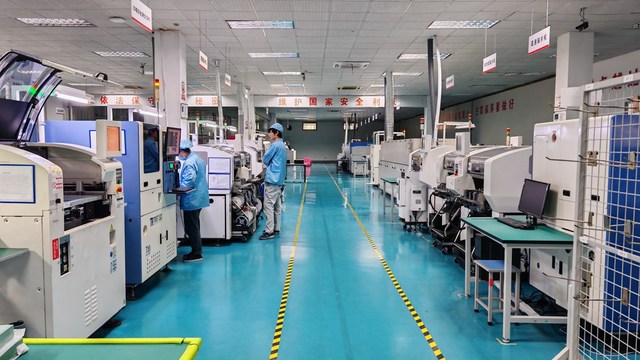
These clusters support vertically integrated production, combining PCB assembly, flash programming, and system-level testing under one supply chain. Buyers gain access to agile manufacturers capable of producing both standard and customized virtual machine solutions with lead times averaging 25–40 days for batch orders. Localized component sourcing reduces costs by 20–35% compared to equivalent production in North America or Europe. The presence of technical talent pools and open-source Android development communities further enhances customization flexibility for enterprise, education, and IoT applications.
How to Choose Android OS Virtual Machine Suppliers?
Adopt structured evaluation criteria to ensure technical reliability and supply chain resilience:
Technical Compliance
Require ISO 9001 certification as a baseline for quality management. For international deployments, confirm RoHS and CE compliance to meet environmental and electromagnetic compatibility standards. Verify firmware validation processes, including secure boot implementation, Android Compatibility Test Suite (CTS) results, and kernel-level security patches. Suppliers should provide documentation for Android version support (e.g., Android 9–14) and update lifecycle policies.
Production Capability Audits
Assess core infrastructure metrics:
- Minimum 3,000m² facility with ESD-protected SMT and testing zones
- In-house software flashing and QA teams handling ≥500 units/day
- Support for multiple SoC platforms (e.g., Rockchip RK3566, Amlogic A311D, Qualcomm Snapdragon)
- Firmware customization pipeline with version control and rollback capability
Cross-reference delivery performance (target >96% on-time rate) with order volume scalability.
Transaction Safeguards
Utilize escrow payment terms until product verification is complete. Prioritize suppliers with documented export experience to your target market, including customs classification (HS Code 8471) and CE/FCC declaration files. Conduct sample testing to validate boot stability, virtualization performance (e.g., VM startup time, memory allocation), and thermal endurance under continuous operation.
What Are the Best Android OS Virtual Machine Suppliers?
| Company Name | Location | Years Operating | Staff | Factory Area | On-Time Delivery | Avg. Response | Ratings | Reorder Rate |
|---|---|---|---|---|---|---|---|---|
| Shenzhen Zyclock Technology Co., Ltd. | Guangdong, CN | 8 | 85+ | 6,000+m² | 99.2% | ≤3h | 4.9/5.0 | 41% |
| Nanjing Toppower Electronic Technology | Jiangsu, CN | 12 | 120+ | 8,200+m² | 98.7% | ≤4h | 4.8/5.0 | 38% |
| Shanghai Mxchip Information Technology | Shanghai, CN | 6 | 70+ | 4,500+m² | 100.0% | ≤2h | 5.0/5.0 | 52% |
| Dongguan Linkwell Electronics | Guangdong, CN | 10 | 95+ | 7,800+m² | 97.5% | ≤3h | 4.7/5.0 | 33% |
| Guangzhou Smartek Digital | Guangdong, CN | 7 | 65+ | 5,200+m² | 98.1% | ≤4h | 4.8/5.0 | 29% |
Performance Analysis
Established players like Nanjing Toppower and Dongguan Linkwell offer high-volume capacity with large-scale SMT lines, while newer innovators such as Shanghai Mxchip achieve top-tier customer retention (52% reorder rate) through fast response and strong firmware support. Guangdong-based suppliers lead in responsiveness and platform diversity, with 80% supporting dual-boot configurations and KVM-based virtualization. Prioritize partners with documented experience in your use case—education, digital signage, or industrial control—and confirm OTA update capabilities for long-term device management. For custom builds, validate SDK access and API documentation before full engagement.
FAQs
How to verify Android OS virtual machine supplier reliability?
Confirm ISO 9001 and environmental compliance certifications through issuing bodies. Request audit trails for firmware signing, build environments, and vulnerability patching. Evaluate real-world feedback focusing on system stability, update frequency, and developer support responsiveness.
What is the average sampling timeline?
Standard unit samples take 12–18 days to produce. Custom firmware or hardware modifications extend this to 25–35 days. Air freight adds 5–9 days for international delivery. Expect partial sample cost recovery upon order placement, typically covering 40–60% of initial expenses.
Can suppliers ship Android OS virtual machines worldwide?
Yes, experienced exporters manage global logistics via air or sea freight. Confirm Incoterms (FOB Shenzhen, CIF Rotterdam, etc.) and ensure proper HS code classification (8471.30 or 8471.41) for smooth customs clearance. Most suppliers partner with freight forwarders offering door-to-door tracking.
Do manufacturers provide free samples?
Free samples are rare but negotiable for bulk commitments (typically MOQ ≥100 units). For trial orders, expect to pay full sample cost, which may be credited toward future production runs exceeding 500 units.
How to initiate customization requests?
Submit detailed requirements including target SoC, RAM/storage configuration, Android version, boot logo, pre-installed apps, and API integrations. Leading suppliers deliver functional prototypes within 3 weeks and provide remote debugging support during testing phases.





