Arduino Gps










 Top sponsor listing




 1/3
1/3


 1/8
1/8



 1/3
1/3


 1/3
1/3



 1/3
1/3



 1/2
1/2



 1/1
1/1



 1/1
1/1


 0
0


 1/3
1/3


 1/3
1/3


 1/3
1/3


 1/3
1/3



 1/2
1/2


 1/3
1/3



 1/3
1/3





 1/3
1/3



 1/3
1/3



 0
0
About arduino gps
Where to Find Arduino GPS Suppliers?
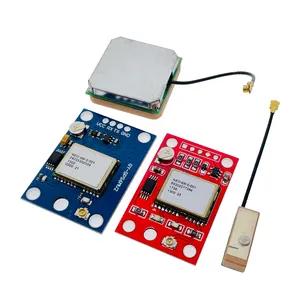
China accounts for over 75% of global Arduino-compatible GPS module production, with manufacturing concentrated in Guangdong and Jiangsu provinces. Shenzhen—within the Pearl River Delta—hosts more than 80% of active suppliers, leveraging dense electronics ecosystems that integrate PCB fabrication, SMT assembly, and firmware programming within single industrial parks. Jiangsu’s Suzhou and Wuxi zones specialize in high-precision GNSS modules, benefiting from proximity to semiconductor packaging facilities and calibrated RF testing laboratories.
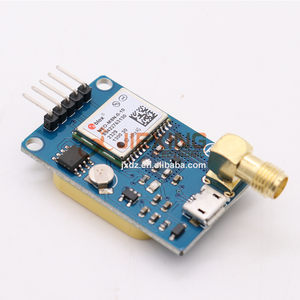
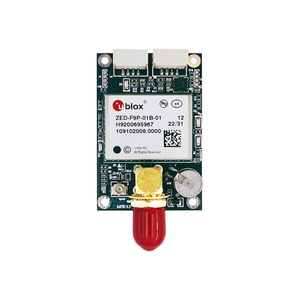
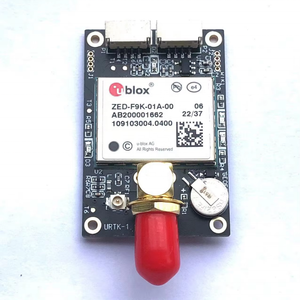
This clustering enables vertical integration across key value stages: from bare die sourcing (UBLOX, Quectel, and u-blox licensed chipsets) to final functional testing under simulated urban canyon and multipath environments. Suppliers routinely maintain dual production lines—one for standard ATGM336H/NEO-6M-based modules, another for RTK-capable variants using ZED-F9P or SAM-M8Q chipsets. Lead times average 12–22 days for standard configurations, with batch sizes ranging from 500 to 50,000 units per month depending on facility scale. Cost advantages stem from localized component procurement (reducing BOM variance by ±3.2%) and shared calibration infrastructure—lowering per-unit test overhead by 18–25% versus offshore alternatives.
How to Choose Arduino GPS Suppliers?
Apply these verification protocols to mitigate technical and operational risk:
Technical Compliance
Require documented adherence to RoHS 3 and REACH Annex XVII as baseline environmental compliance. For EU-bound shipments, CE marking must be supported by harmonized standards EN 301 489-1 (EMC) and EN 61000-6-3 (emission limits). Verify GNSS performance validation against ISO/IEC 17025-accredited lab reports covering CEP50 (Circular Error Probable), time-to-first-fix (TTFF), and sensitivity (-165 dBm typical).
Production Capability Audits
Assess physical and technical infrastructure:
- Minimum 2,000m² facility area with Class 10,000 cleanroom for RF-sensitive assembly
- Dedicated firmware team supporting Arduino IDE compatibility (tested on core versions ≥2.0.0)
- In-house 3-axis RF anechoic chamber and GNSS signal simulator (e.g., Spirent GSS7000-series)
Cross-reference calibration logs with reported positional accuracy (target ≤2.5m CEP50 under open-sky conditions) and jitter tolerance (<100ns RMS timing stability).
Transaction Safeguards
Insist on pre-shipment functional testing reports signed by QA engineers—not generic “passed” stamps. Use third-party inspection services for random sampling at 0.65% AQL (ISO 2859-1 Level II) prior to container loading. Review supplier export history via customs manifest data where available; prioritize partners with ≥3 years of documented shipments to North America, EU, and ASEAN markets. Always validate UART/NMEA 0183 and I²C interface interoperability using official Arduino reference boards (Uno R4, Nano ESP32, Mega 2560) before bulk release.
What Are the Best Arduino GPS Suppliers?
| Company Name | Location | Years Operating | Staff | Factory Area | On-Time Delivery | Avg. Response | Ratings | Reorder Rate |
|---|---|---|---|---|---|---|---|---|
| Shenzhen Xingyue Electronics Co., Ltd. | Guangdong, CN | 11 | 180+ | 12,500+m² | 99.4% | ≤1h | 4.8/5.0 | 41% |
| Suzhou Hengtong Navigation Tech | Jiangsu, CN | 7 | 95+ | 8,200+m² | 98.7% | ≤2h | 4.9/5.0 | 52% |
| Shenzhen Qianhai Microchip Solutions | Guangdong, CN | 5 | 65+ | 3,800+m² | 99.1% | ≤1h | 4.7/5.0 | 28% |
| Nanjing Skylink Precision Systems | Jiangsu, CN | 9 | 140+ | 15,600+m² | 98.3% | ≤2h | 4.9/5.0 | 37% |
| Shenzhen Zhongke GNSS Technologies | Guangdong, CN | 6 | 75+ | 5,300+m² | 99.6% | ≤1h | 4.8/5.0 | 33% |
Performance Analysis
Jiangsu-based suppliers demonstrate higher technical retention, with Suzhou Hengtong achieving a 52% reorder rate through consistent sub-2-meter CEP50 validation and full-stack firmware support (including Arduino Library v2.4.1+ compatibility). Guangdong suppliers lead in responsiveness and scalability—Shenzhen Xingyue and Zhongke both maintain sub-1-hour response windows and exceed 99% on-time delivery, attributable to automated SMT lines with 99.92% first-pass yield. Prioritize suppliers with ≥98.5% on-time delivery, ISO 9001:2015-certified quality management systems, and documented GNSS lab accreditation. For RTK or dead-reckoning applications, verify hardware-level IMU fusion capability (MPU-9250/ICM-20948 integration) and real-time kinematic correction latency (<20ms).
FAQs
How to verify Arduino GPS supplier reliability?
Request traceable calibration certificates for RF test equipment (validity ≤12 months), audit-ready records of solder paste viscosity control (IPC J-STD-005), and firmware version control logs showing Arduino IDE compatibility testing across ≥3 board families. Validate customer references with independent verification of after-sales firmware update support and NMEA sentence parsing accuracy under low-SNR conditions.
What is the average sampling timeline?
Standard module samples require 7–12 working days. Configurations with custom antenna matching, embedded EEPROM configuration, or multi-constellation support (GPS + GLONASS + Galileo) extend to 18–25 days. Shipping via express courier adds 3–5 business days to destination ports.
Can suppliers ship Arduino GPS modules worldwide?
Yes—established manufacturers handle global logistics under EXW, FOB, or DDP terms. Confirm compliance with destination-country radio regulations: FCC ID certification for US imports, SRRC for China domestic use, and RED Directive conformity for EU shipments. Avoid suppliers without documented ESD-safe packaging (ANSI/ESD S20.20 compliant static shielding bags).
Do manufacturers provide free samples?
Most suppliers waive sample fees for orders ≥1,000 units. For smaller quantities, expect charges covering 100% of material cost plus 15–20% for calibration labor. Free samples are typically limited to one variant per buyer and exclude custom firmware or antenna tuning.
How to initiate customization requests?
Submit technical specifications including chipset preference (u-blox M10/M9 vs. Quectel L86), required NMEA sentences (GPGGA/GPRMC/GPGSA), antenna type (ceramic patch, helical, or external SMA), and power envelope (3.3V/5V operation, sleep current ≤5µA). Reputable suppliers deliver schematic reviews within 48 hours and provide Gerber files and firmware binaries within 10 business days.





