





Arduino Lcd I2c




 1/3
1/3




 1/3
1/3




 1/2
1/2



 1/2
1/2




 0
0


 1/2
1/2


 1/3
1/3

 0
0



 1/2
1/2

 0
0


 1/3
1/3



 1/3
1/3




 1/3
1/3


 0
0



 1/3
1/3


 1/1
1/1


 1/3
1/3




 1/1
1/1



 0
0


 1/3
1/3
About arduino lcd i2c
Where to Find Arduino LCD I2C Suppliers?
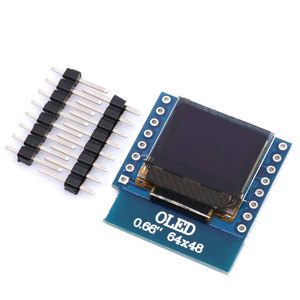
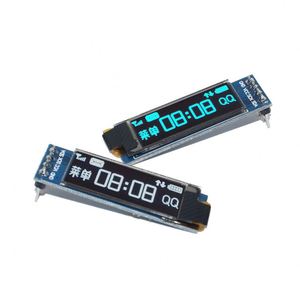
China remains the central hub for electronic components manufacturing, with Shenzhen and Wuxi emerging as key clusters for Arduino-compatible LCD I2C modules. These regions host vertically integrated supply chains specializing in display technologies, embedded systems, and prototyping hardware. Shenzhen’s electronics ecosystem—home to over 80% of China’s maker-focused component suppliers—offers rapid prototyping capabilities, access to IC distributors, and streamlined logistics for global shipping. Wuxi contributes through precision assembly facilities and strong integration with semiconductor packaging networks, enabling cost-effective production of compact OLED and character LCD modules.
Suppliers in these zones leverage localized access to driver ICs (e.g., PCF8574T, SSD1306), glass substrates, and flexible PCB fabrication services, reducing material lead times by 20–30%. The proximity to contract manufacturers allows for scalable output, with monthly production capacities ranging from 10,000 to over 100,000 units per supplier. Buyers benefit from low minimum order quantities (MOQs), often starting at 1 piece for standard configurations, and fast turnaround times typically within 3–7 days for sample orders.
How to Choose Arduino LCD I2C Suppliers?
Effective supplier selection requires a structured evaluation across technical, operational, and transactional dimensions:
Technical Compatibility
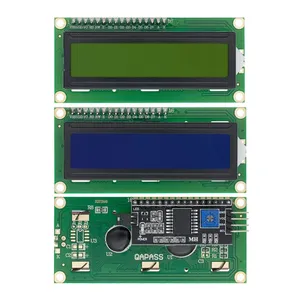
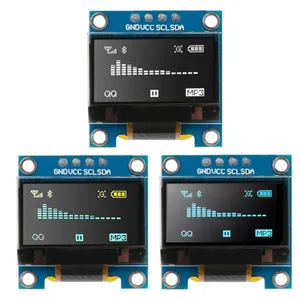
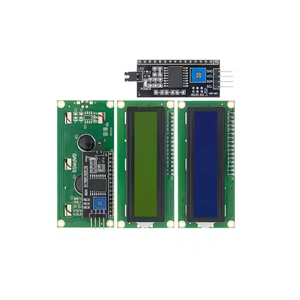
Confirm that products support standard I2C communication protocols and are compatible with common microcontrollers (Arduino Uno, Nano, ESP32). Verify pinout configurations, operating voltage (typically 3.3V or 5V), and library support (e.g., Wire.h, LiquidCrystal_I2C). For OLED variants, assess contrast ratio, refresh rate, and grayscale levels. Prioritize suppliers offering datasheets, schematic diagrams, and code examples to ensure seamless integration.
Production & Quality Assurance
Evaluate suppliers based on measurable performance indicators:
- On-time delivery rate exceeding 95%
- Response time under 4 hours, ideally ≤2h
- Online transaction volume above US $50,000 annually indicating market validation
- Compliance with RoHS standards for hazardous substance control
Cross-reference product listings with consistent specifications across multiple SKUs to identify suppliers with stable quality control processes. Look for evidence of aging tests, ESD protection, and batch traceability.
Customization and Transaction Security
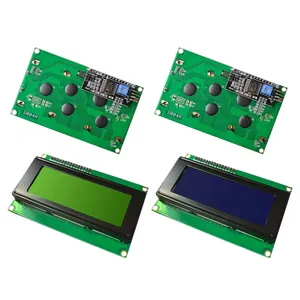
Assess customization capabilities including screen color (blue, green, yellow-green), backlight options, I2C address configurability, and labeling. Some suppliers offer PCB modifications or firmware adjustments upon request. Use secure payment mechanisms such as escrow services and insist on clear dispute resolution terms. Sample testing is critical—validate display clarity, I2C address conflicts, and connector durability before scaling procurement.
What Are the Best Arduino LCD I2C Suppliers?
| Company Name | Main Products | Online Revenue | On-Time Delivery | Avg. Response | Reorder Rate | Min. Order | Price Range (USD) | Customization |
|---|---|---|---|---|---|---|---|---|
| Shenzhen Xuantejia Electronics Co., Ltd. | LCD Modules, Educational Kits, Prototyping Boards | US $20,000+ | 91% | ≤4h | <15% | 1 piece | $0.70–0.95 | No |
| Shenzhen Lida Screen Co., Ltd. | LCD/OLED Modules, Touch Screens, Graphic Displays | US $5,000+ | 100% | ≤4h | <15% | 1–2 pieces | $4.50–12.50 | Limited |
| Shenzhen Zhicheng Electronic Technology Co., Ltd. | OLED Modules, Character LCDs, I2C Adapters | US $100,000+ | 95% | ≤2h | <15% | 1–10 pieces | $0.56–13.85 | Yes |
| Shenzhen Tengwei Electronic Technology Co., Ltd. | OLEDs, Development Boards, Sensor Kits | US $80,000+ | 99% | ≤1h | 21% | 1–2 pieces | $0.90–1.50 | No |
| Wuxi Siminuo Technology Co., Ltd. | LCD/OLED Modules, Character & Graphic Displays | US $60,000+ | 98% | ≤3h | <15% | 1 piece | $1.88–6.30 | No |
Performance Analysis
Shenzhen Zhicheng leads in customization and scale, backed by the highest annual revenue (US $100,000+) and sub-2-hour response times, making it ideal for buyers requiring tailored I2C interfaces or volume orders. Shenzhen Tengwei stands out with a 99% on-time delivery rate and the fastest average response (≤1h), combined with competitive pricing for entry-level OLED and LCD1602 modules. Wuxi Siminuo offers reliable quality across character and graphic displays, while Shenzhen Lida focuses on higher-resolution OLED and TFT variants suitable for advanced visualization projects. Although reorder rates remain generally low (<15% except Tengwei), high delivery reliability (>95%) across all five indicates consistent fulfillment performance. Buyers seeking plug-and-play compatibility should prioritize suppliers listing I2C backpacks (PCF8574) pre-installed and clearly specifying address settings.
FAQs
How to verify Arduino LCD I2C supplier reliability?
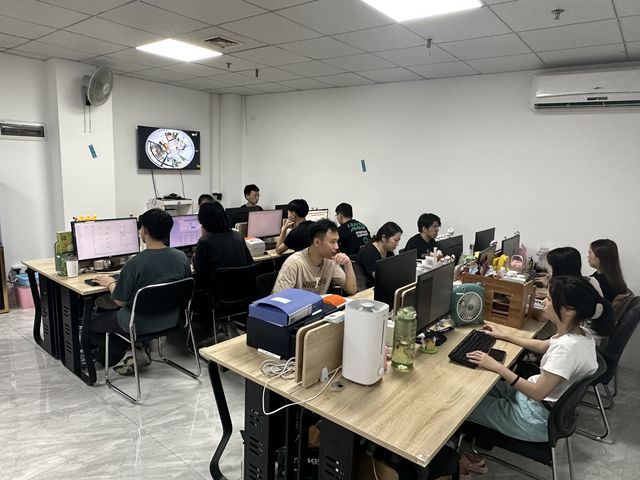
Review on-time delivery metrics, response speed, and transaction history. Request product certifications (RoHS, CE), validate electrical specifications against standard Arduino libraries, and examine customer feedback for recurring issues like dead pixels or communication failures. Video calls to inspect production lines can confirm operational legitimacy.
What is the typical MOQ and lead time?
Most suppliers offer MOQs as low as 1 piece for standard models, with lead times of 3–7 days for samples and 7–15 days for bulk orders (100+ units). Custom designs may extend lead times to 20–30 days depending on complexity.
Do suppliers support I2C address customization?
Some suppliers, particularly those offering PCF8574-based modules, allow I2C address modification via solder jumpers or EEPROM programming. Confirm availability during inquiry, especially when deploying multiple displays on a single bus.
Are free samples available?
Free samples are rare; most suppliers charge a nominal fee (often 50–100% of unit cost) refundable upon subsequent order. Cost-effective sampling strategies include ordering multi-unit batches at discounted rates.
Can these modules be used with non-Arduino platforms?
Yes, I2C-based LCD modules are platform-agnostic and compatible with Raspberry Pi, ESP32, STM32, and other microcontrollers supporting I2C protocol. Ensure logic level compatibility (3.3V vs 5V) and use appropriate pull-up resistors if required.





