Arduino Remote Control Car







 1/2
1/2

 1/1
1/1




 1/3
1/3


 1/3
1/3



 1/3
1/3


 0
0












 1/1
1/1





 1/20
1/20


 1/3
1/3




 1/3
1/3


 1/3
1/3


 1/3
1/3


 1/12
1/12






 1/7
1/7





 1/20
1/20


 1/2
1/2
About arduino remote control car
Where to Find Arduino Remote Control Car Suppliers?
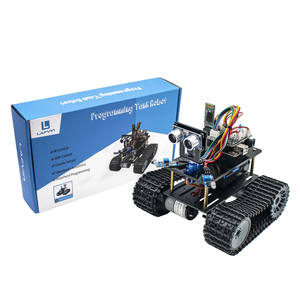
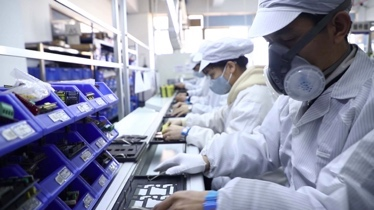
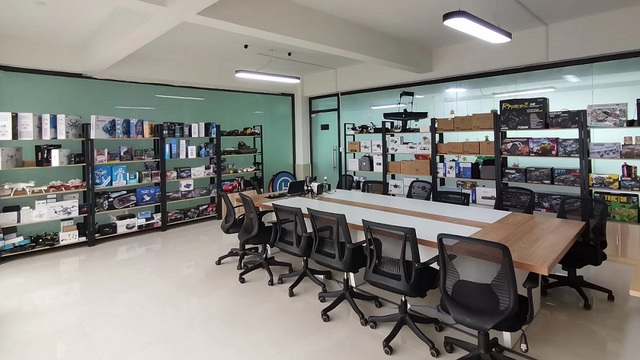
China remains the central hub for electronics and robotics manufacturing, with Shenzhen-based enterprises leading production of Arduino-compatible remote control car kits. The city's advanced electronics ecosystem—supported by dense component supply chains, rapid prototyping infrastructure, and specialized OEM/ODM service providers—enables agile development and scalable output. Most suppliers operate within integrated industrial zones where microcontrollers, motor drivers, sensors, and chassis components are sourced within a 10-km radius, reducing lead times and logistics costs.
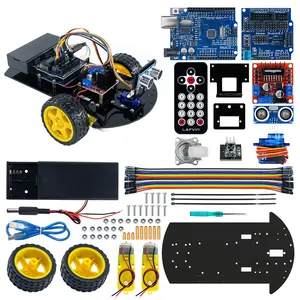
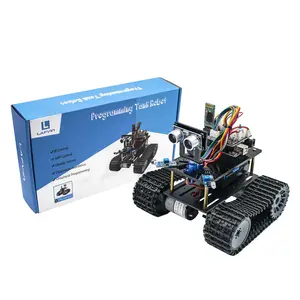
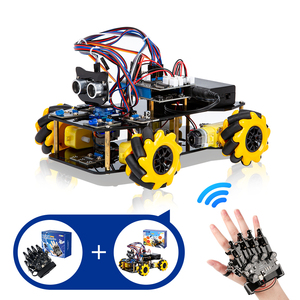
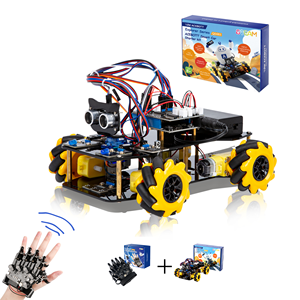
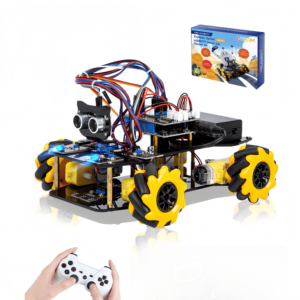
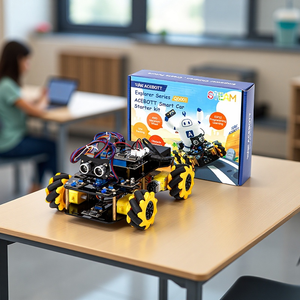
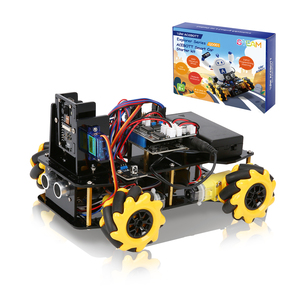
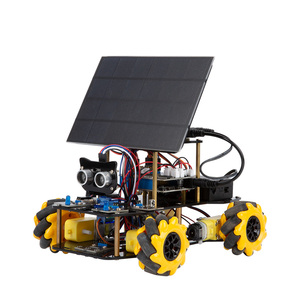
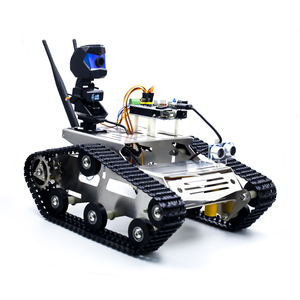
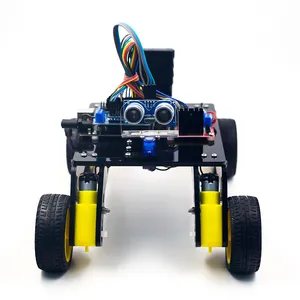
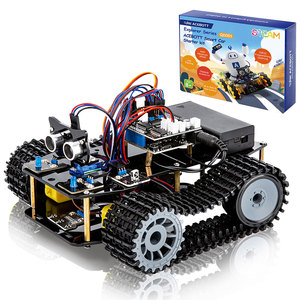
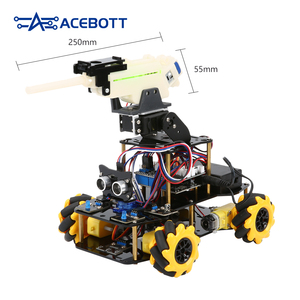
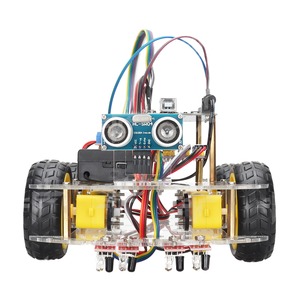
Suppliers in this sector typically combine standardized kit assembly with flexible customization capabilities, catering to educational institutions, STEM product distributors, and tech hobbyists. Monthly production capacities vary significantly, with top-tier manufacturers capable of fulfilling bulk orders exceeding 5,000 units. Key advantages include access to pre-tested firmware libraries, compatibility with open-source platforms like Arduino IDE and ESP32 SDKs, and modular designs supporting ultrasonic avoidance, WiFi/Bluetooth control, and mecanum wheel configurations.
How to Choose Arduino Remote Control Car Suppliers?
Procurement decisions should be guided by objective evaluation criteria focused on technical reliability, operational efficiency, and transaction security.
Technical Compatibility & Design Validation
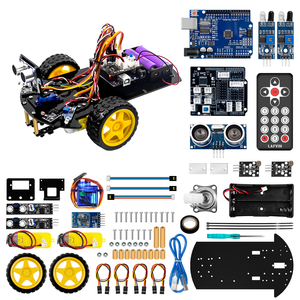
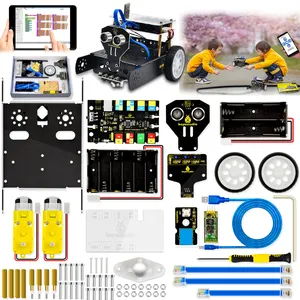
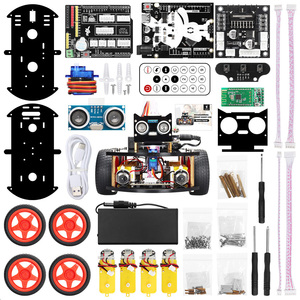
Confirm product alignment with target microcontroller platforms (e.g., Arduino Uno, ESP32). Demand full bill-of-materials (BOM) disclosure including motor specifications (TT motors, gear ratios), sensor types (HC-SR04, IR modules), and wireless protocols (nRF24L01, Bluetooth HC-05). Verify inclusion of programming tutorials or code repositories, which reduce integration time for end users.
Production and Customization Capability
Assess supplier flexibility through the following indicators:
- Offering PCB customization, logo printing, packaging design, and RAM/starter kit bundling
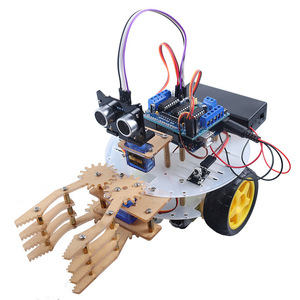
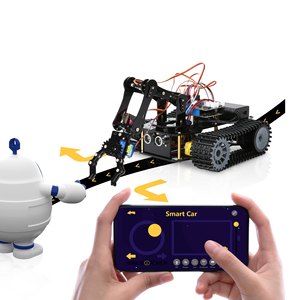
- Support for multiple drive configurations (2WD, 4WD, robotic arm integration)
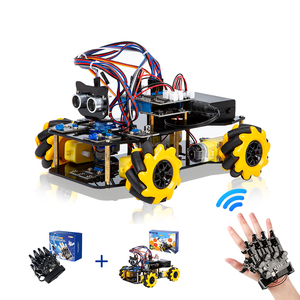
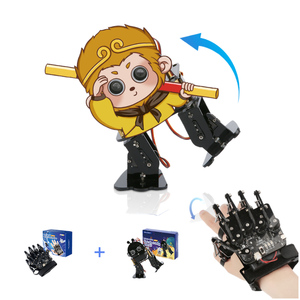
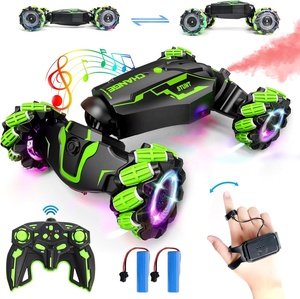
- Evidence of R&D activity via product variation depth (e.g., exoskeleton gloves, solar-powered variants)
Cross-reference listed product portfolios with reorder rates above 30% as a proxy for market acceptance and quality consistency.
Transaction Reliability Metrics
Prioritize suppliers with documented performance records:
- On-time delivery rate ≥95%
- Average response time ≤3 hours
- Minimum two-year operating history and verifiable online revenue (US $50,000+ preferred)
Utilize third-party assurance mechanisms where available. Conduct sample testing to validate build quality, signal range, and software stability before scaling orders.
What Are the Best Arduino Remote Control Car Suppliers?
| Company Name | Location | Main Product Focus | Online Revenue | On-Time Delivery | Avg. Response | Reorder Rate | Min. Order Quantity | Price Range (USD) |
|---|---|---|---|---|---|---|---|---|
| Shenzhen Hong Shu Yuan Technology Co., Ltd. | Shenzhen, CN | Robotics & Educational Kits | US $150,000+ | 92% | ≤9h | 31% | 1–5 sets | $0.50–$43 |
| Acebott Co., Ltd. | Shenzhen, CN | STEM Robotics (546 listings) | US $20,000+ | 97% | ≤2h | 17% | 1–2 pieces | $12.70–$76.69 |
| Shenzhen Bxf Electronic Technology Co., Ltd. | Shenzhen, CN | Robotics & Educational Kits (736 listings) | US $110,000+ | 100% | ≤3h | 31% | 1–2 pieces | $12.70–$68.59 |
| Shenzhen Boruijintong Technology Co., Ltd. | Shenzhen, CN | Development Boards & ICs (6,500+ listings) | US $40,000+ | 100% | ≤2h | <15% | 1–2 sets | $25.10–$104 |
| Shenzhen Robotlinking Technology Co., Ltd. | Shenzhen, CN | Robotics & Oscilloscopes | US $70,000+ | 95% | ≤3h | 33% | 2 pieces | $12.70–$76.99 |
Performance Analysis
Shenzhen Bxf Electronic Technology and Shenzhen Boruijintong achieve perfect on-time delivery records (100%), indicating strong production planning and inventory control. Shenzhen Robotlinking stands out with a 33% reorder rate—the highest in the cohort—suggesting superior product satisfaction and after-sales consistency. Acebott Co., Ltd. demonstrates high responsiveness (≤2h) and extensive product diversification in STEM education, though its lower reorder rate may reflect competitive market positioning. Suppliers with higher online revenue (>$100,000) tend to offer broader customization options, including color, material, and packaging modifications. For cost-sensitive buyers, Shenzhen Hong Shu Yuan offers entry-level TT motor components at $0.50/unit, while premium balance car kits reach up to $104 from specialized vendors.
FAQs
How to verify Arduino remote control car supplier reliability?
Evaluate on-time delivery history, response speed, and reorder rate as primary KPIs. Request evidence of quality management practices, such as pre-shipment inspection protocols or firmware validation procedures. Analyze customer reviews for recurring feedback on assembly clarity, component durability, and software compatibility.
What is the typical minimum order quantity (MOQ)?
MOQs range from 1 piece for sample testing to 5 sets for discounted bulk pricing. Many suppliers allow mixed-model orders at MOQ=2, enabling buyers to evaluate multiple configurations simultaneously.
Do suppliers support customization?
Yes, leading suppliers offer customization in color, branding (logo, packaging), and functional bundling (e.g., adding GPS modules or starter kits). Structural modifications require engineering review and may involve NRE fees for tooling changes.
What are common lead times for samples and mass production?
Sample lead time averages 7–15 days. Mass production for 500–1,000 units typically requires 25–35 days, depending on customization level and component availability. Air freight adds 5–10 days for international delivery.
Are these products compliant with international standards?
While not always explicitly stated, most suppliers produce RoHS-compliant electronic assemblies. For commercial distribution in regulated markets, buyers should independently verify EMC and safety certifications (CE, FCC) prior to import.





