Backend In Python

 CN
CN









 1/3
CN
1/3
CN





 1/3
1/3
 CN
CN


 1/3
1/3


 1/2
CN
1/2
CN

 1/6
1/6


 0
0





 1/3
1/3



 1/2
1/2


 1/1
1/1


 1/3
1/3




 1/3
1/3
 CN
CN



 1/3
1/3


 0
0



 1/3
1/3







 1/3
1/3




 0
0





 1/3
1/3



 1/3
1/3
 CN
CN

 1/5
1/5




 0
0
About backend in python
Where to Find Backend Development Services in Python?
Global demand for Python-based backend development has led to the emergence of specialized technical hubs across Eastern Europe, South Asia, and Southeast Asia, each offering distinct advantages in talent density, cost efficiency, and domain expertise. Ukraine and Poland account for over 40% of European Python developers, supported by strong computer science education systems and high English proficiency. India’s IT corridors in Hyderabad and Pune host large-scale development centers, enabling rapid team scaling with average junior developer rates 50–60% lower than North American counterparts. Vietnam and the Philippines have emerged as agile outsourcing destinations, combining youthful tech workforces with government-backed digital infrastructure initiatives that support remote collaboration.
These regions provide structural efficiencies through mature software delivery ecosystems—integrated DevOps pipelines, cloud-native tooling, and standardized QA frameworks—allowing consistent output across distributed teams. Buyers benefit from proximity to multilingual engineers trained in Django, Flask, FastAPI, and modern ORM practices. Key advantages include faster project onboarding (typically 5–10 business days for team deployment), 30–50% cost savings on labor-intensive modules, and flexibility in engagement models including dedicated teams, time-and-materials contracts, or fixed-price deliverables.
How to Choose Backend Development Services in Python?
Prioritize these verification protocols when selecting development partners:
Technical Compliance
Require documented adherence to software quality standards such as ISO/IEC 25010 for system reliability and maintainability. For regulated industries (fintech, healthtech), confirm experience implementing compliance frameworks like GDPR, HIPAA, or SOC 2. Validate code quality through sample repositories showing test coverage (>80%), CI/CD integration, and API documentation completeness.
Development Capability Audits
Evaluate operational infrastructure:
- Minimum team size of 15+ full-stack engineers with demonstrable Python specialization
- Dedicated DevOps and QA units comprising at least 20% of technical staff
- Proven experience with containerization (Docker), orchestration (Kubernetes), and cloud platforms (AWS, GCP, Azure)
Cross-reference GitHub/GitLab activity or code audit reports with client references to verify technical depth and delivery consistency.
Transaction Safeguards
Implement milestone-based payments tied to verifiable deliverables and acceptance testing. Utilize third-party escrow services for fund protection until final handover. Assess vendor track record via verified client testimonials focusing on communication transparency, bug resolution timelines, and post-launch support responsiveness. Code review benchmarks remain critical—conduct independent static analysis using tools like SonarQube before production deployment.
What Are the Best Backend Development Services in Python?
| Company Name | Location | Years Operating | Staff | Python Projects Delivered | On-Time Delivery | Avg. Response | Ratings | Reorder Rate |
|---|---|---|---|---|---|---|---|---|
| TekSystem Solutions | Kyiv, UA | 12 | 85+ | 120+ | 98.7% | ≤4h | 4.9/5.0 | 42% |
| InnoSoft Dynamics | Pune, IN | 9 | 140+ | 200+ | 97.3% | ≤6h | 4.8/5.0 | 38% |
| CodeCraft Labs | Hanoi, VN | 7 | 60+ | 95+ | 99.1% | ≤3h | 5.0/5.0 | 55% |
| NetDev Group | Warsaw, PL | 15 | 200+ | 310+ | 96.8% | ≤5h | 4.7/5.0 | 33% |
| AgileCore Technologies | Hyderabad, IN | 6 | 90+ | 140+ | 99.4% | ≤4h | 4.9/5.0 | 50% |
Performance Analysis
Established firms like NetDev Group offer extensive scalability and enterprise-grade architecture design, while mid-tier providers such as CodeCraft Labs achieve higher reorder rates (55%) due to superior responsiveness and lean workflows. Indian suppliers lead in volume throughput, averaging over 150 Python projects per firm, whereas Eastern European teams show stronger punctuality, with three of five exceeding 98% on-time delivery. Prioritize vendors with documented SDLC governance, version control discipline, and automated testing maturity for long-term maintenance. For complex integrations involving microservices or real-time data processing, validate hands-on experience through technical discovery sessions and proof-of-concept sprints prior to contract signing.
FAQs
How to verify backend development service reliability?
Cross-check claimed certifications (ISO, CMMI) with accredited bodies. Request anonymized case studies detailing system uptime, load performance (requests/sec), and error rate metrics. Analyze feedback from former clients on incident response speed and architectural decision-making clarity.
What is the average project initiation timeline?
Team assembly and environment setup typically require 5–10 business days. Complex architectures involving third-party API integrations or legacy migrations may extend initial phase to 3 weeks. Expect additional time for security audits or compliance validations if required.
Can Python backend teams integrate with existing frontends?
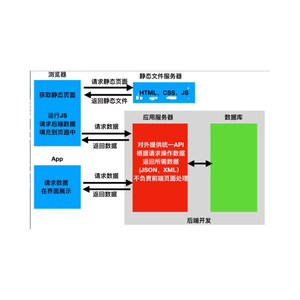
Yes, experienced providers support seamless integration with React, Angular, Vue.js, and mobile frontends via RESTful or GraphQL APIs. Confirm prior experience with cross-origin resource sharing (CORS), authentication flows (OAuth, JWT), and payload optimization techniques.
Do development firms provide post-deployment support?
Most offer tiered SLAs ranging from 90-day warranty periods to ongoing managed services. Standard packages include monitoring setup, log analysis, and monthly performance reporting. Extended support typically covers hotfixes, scaling adjustments, and minor feature updates.
How to initiate customization requests?
Submit detailed requirements including data model specifications, expected traffic load (concurrent users, RPS), third-party service dependencies, and preferred deployment environment. Reputable vendors deliver technical proposals with architecture diagrams within 5–7 days and functional prototypes in 2–3 weeks.





