







Badminton Racket String




 1/3
1/3



 0
0



 1/3
1/3




 1/10
1/10


 1/3
1/3


 1/3
1/3


 1/3
1/3



 0
0
 0
0



 1/3
1/3



 0
0



 1/3
1/3


 1/3
1/3



 1/19
1/19



 1/3
1/3


 1/3
1/3


 0
0

 0
0




 1/3
1/3



 1/3
1/3
About badminton racket string
Where to Find Badminton Racket String Suppliers?
China remains the central hub for badminton racket string manufacturing, with key production clusters in Zhejiang, Guangdong, and Anhui provinces. These regions host vertically integrated supply chains that support both high-volume OEM operations and specialized string production. Quzhou and Hangzhou in Zhejiang are recognized for precision polymer processing used in performance-grade strings, while Shenzhen excels in automated stringing machinery integration. Anhui has emerged as a cost-competitive base for carbon fiber composite materials used in durable, tension-resistant strings.
The industrial ecosystems in these zones enable tight coordination between raw material suppliers, extrusion facilities, and quality control labs—reducing lead times and ensuring consistency. Suppliers benefit from localized access to nylon 6, polyethylene terephthalate (PET), and high-modulus polyethylene fibers, which are critical for string elasticity and durability. Average monthly output across verified suppliers ranges from 50,000 to over 200,000 meters per facility, supporting bulk procurement with typical lead times of 15–25 days for standard orders. Export infrastructure is well-developed, with most suppliers experienced in FOB and CIF shipping terms for global distribution.
How to Choose Badminton Racket String Suppliers?
Procurement decisions should be guided by technical capability, compliance verification, and operational responsiveness:
Material & Performance Specifications
Confirm string gauge (0.65–0.70mm standard), tensile strength (>12 kgf/mm²), and elongation rate (10–15%) based on application. High-performance strings often use multifilament braiding or resin-coated monofilament construction to enhance shock absorption and repulsion power. Request test reports for abrasion resistance and knot strength, particularly for tournament-grade products.
Quality Assurance Protocols
Prioritize suppliers with documented quality management systems. While formal ISO 9001 certification is not universally listed, consistent on-time delivery rates above 94% and response times under 8 hours indicate operational discipline. Verify batch traceability and in-line inspection processes for diameter consistency and coating uniformity.
Customization & MOQ Flexibility
Evaluate capacity for private labeling, custom spool packaging, and color variations. Minimum order quantities vary significantly—from 10 pieces for retail-ready packs to 200+ units for wholesale reels. Some manufacturers offer co-engineering support for proprietary string formulations or hybrid tension profiles.
Transaction Security
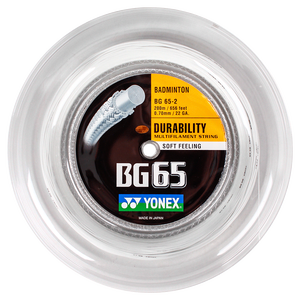
Utilize platform-based trade assurance programs where available. Require sample validation before full production runs, especially when sourcing for branded equipment compatibility (e.g., Yonex BG65 or Victor VBS61 equivalents). Confirm packaging durability for international transit, including moisture-resistant sealing for tropical markets.
What Are the Best Badminton Racket String Suppliers?
| Company Name | Location | Main Products | Online Revenue | On-Time Delivery | Avg. Response | Reorder Rate | Min. Order | Price Range (USD) |
|---|---|---|---|---|---|---|---|---|
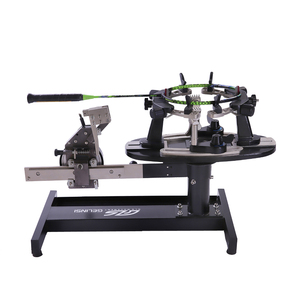
| Shenzhen Gelinshi Sport Equipment Co., Ltd. | Guangdong, CN | Racket Stringing Machines | US $70,000+ | 94% | ≤8h | <15% | 1 set | $200–480 |
| Hangzhou Sunshine Trading Co., Ltd. | Zhejiang, CN | Strings, Rackets, Shuttlecocks | US $80,000+ | 100% | ≤3h | <15% | 10 pcs / 1 roll | $7.20–165 |
| Quzhou Rewin Sports Co., Ltd. | Zhejiang, CN | Strings, Shuttlecocks | US $30,000+ | 100% | ≤2h | <15% | 25 pcs | $0.75–38.40 |
| Anhui Baton Sports Co., Ltd. | Anhui, CN | Custom Strings, Carbon Rackets | US $70,000+ | 100% | ≤2h | <15% | 2–200 pcs | $3.50–25.50 |
| Changsha Cheongar Technology Co., Ltd. | Hunan, CN | Stringing Machines | US $6,000+ | 100% | ≤3h | 15% | 1 set | $180–980 |
Performance Analysis
Hangzhou Sunshine and Quzhou Rewin demonstrate strong specialization in consumable strings, offering competitive pricing and fast response cycles. Hangzhou’s product range includes direct equivalents to premium brands like Yonex and Victor, positioning it as a go-to for replacement string sourcing. Quzhou Rewin stands out with ultra-low entry MOQs and prices starting at $0.75 per piece, ideal for small retailers or training academies. Anhui Baton provides notable customization depth, including logo printing and packaging design, suitable for private-label development. On the equipment side, Shenzhen Gelinshi and Changsha Cheongar offer professional-grade stringing machines ranging from drop-weight to fully automatic models, catering to club-level and commercial stringing services. All top-tier suppliers maintain 100% on-time delivery except Shenzhen Gelinshi (94%), though its broader machine portfolio may justify slight variance.
FAQs
How to verify badminton racket string supplier reliability?
Assess on-time delivery history, response time metrics, and transaction volume through supplier dashboards. Request physical or digital samples to evaluate coating integrity, knot strength, and dimensional accuracy. Confirm compatibility with common racquet grommet systems and tensioning standards (typically 20–30 lbs).
What is the average sampling timeline?
Standard string samples ship within 5–10 days after request confirmation. Custom-branded reels or specialized gauges may require 15–20 days for tooling and production setup. Air freight adds 7–12 days for international delivery.
Can suppliers produce private-label badminton strings?
Yes, multiple suppliers—including Anhui Baton and Quzhou Rewin—offer full customization of labels, spools, and packaging. MOQs for branded strings typically start at 200 units, with options for Pantone-matched colors and multilingual instruction inserts.
Do manufacturers provide free samples?
Sample policies vary. Many suppliers offer paid samples (priced at 1–2x unit cost) refundable against first orders. Free samples are occasionally provided for high-potential buyers committing to minimum annual volumes.
How to assess string durability and performance?
Request lab test data on tensile strength, elongation percentage, and friction coefficient. Conduct real-world trials measuring string bed degradation over 30 hours of play. Compare dynamic stiffness and energy return against industry benchmarks like Yonex BG65 (approx. 1.25 mm diameter, 120 m breaking strength).





